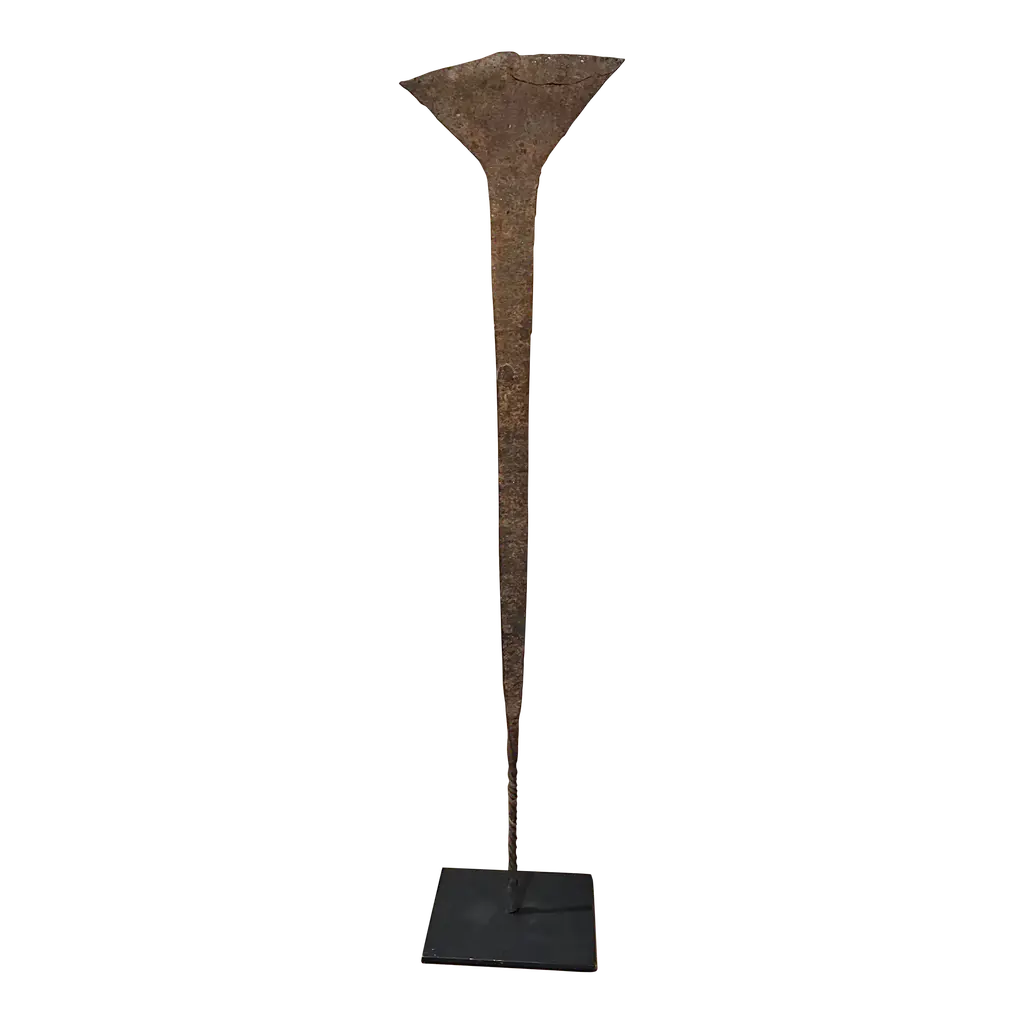
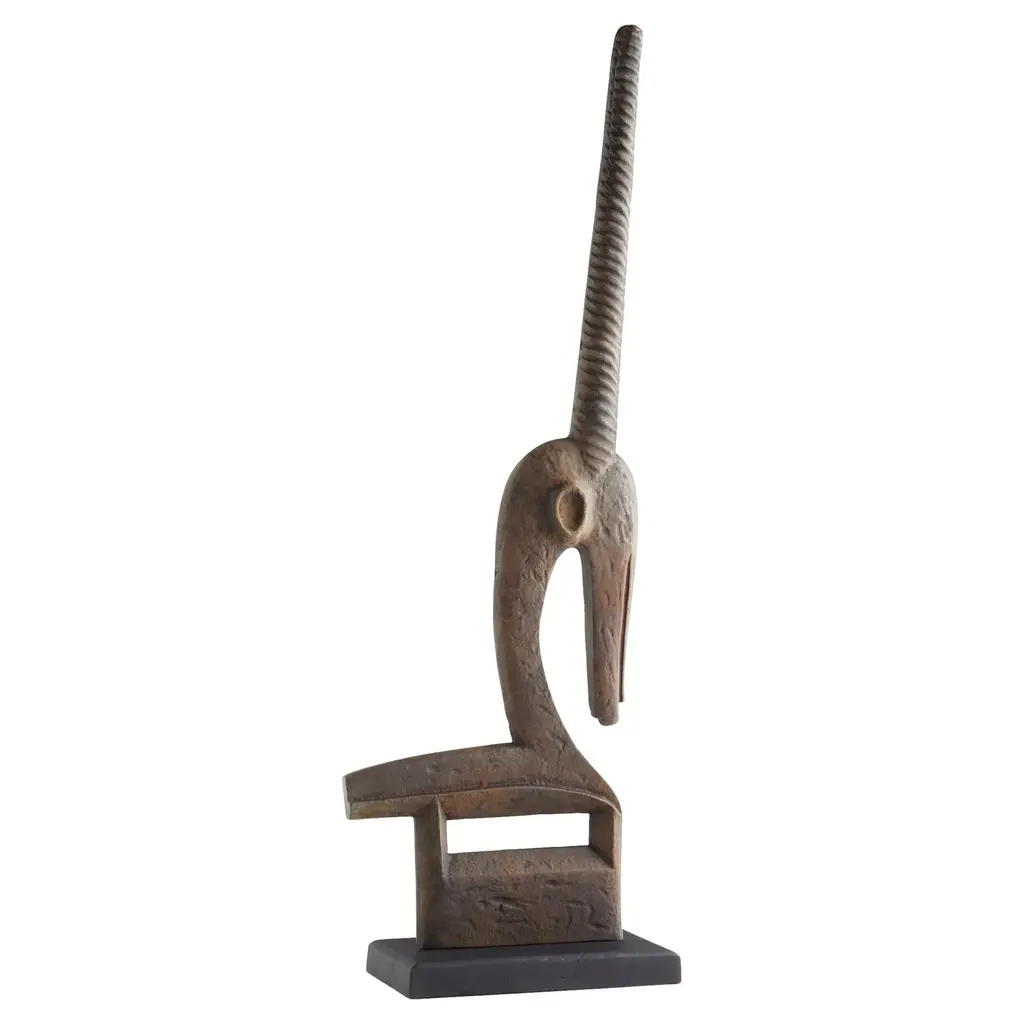
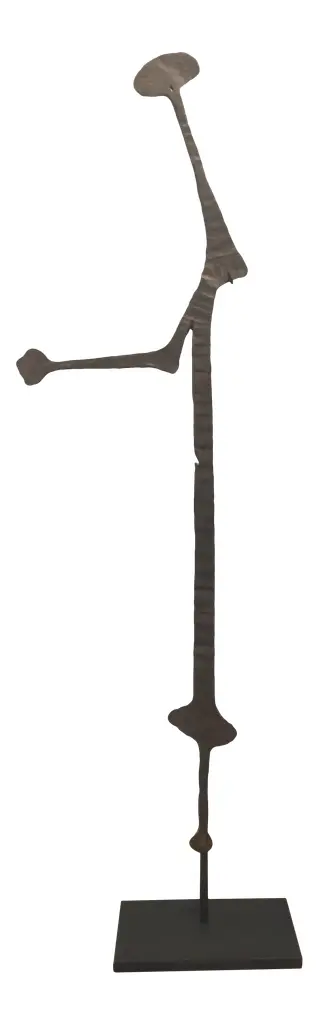
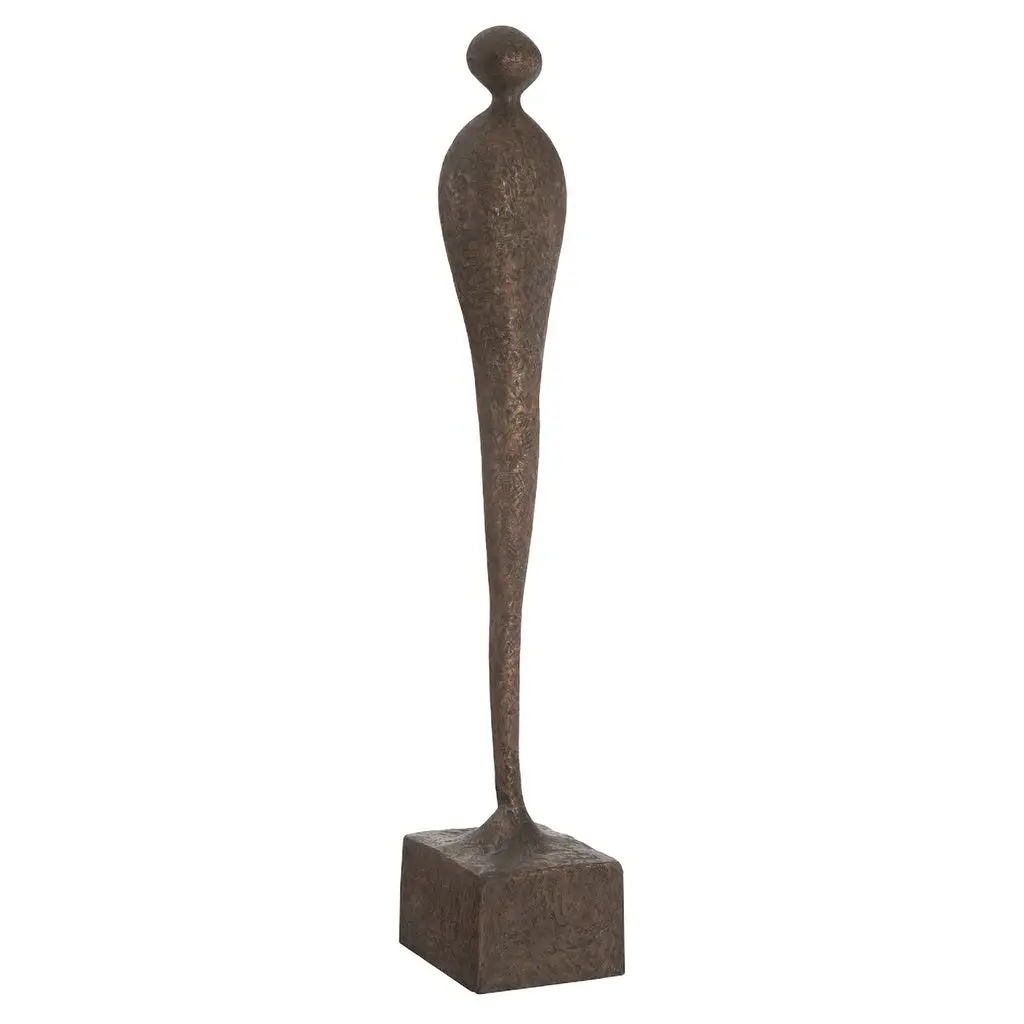
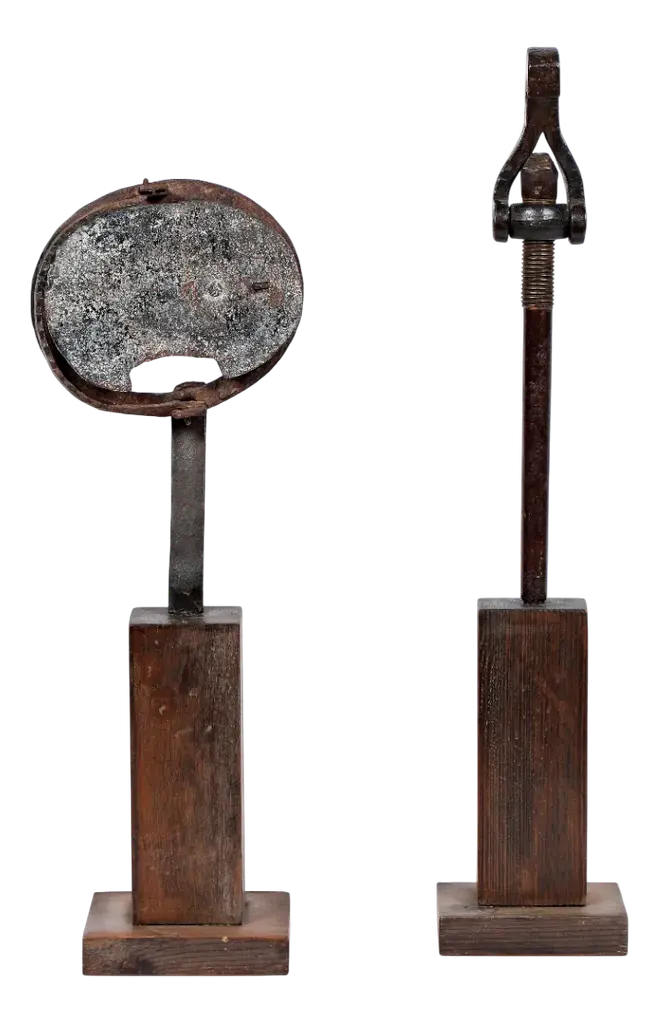
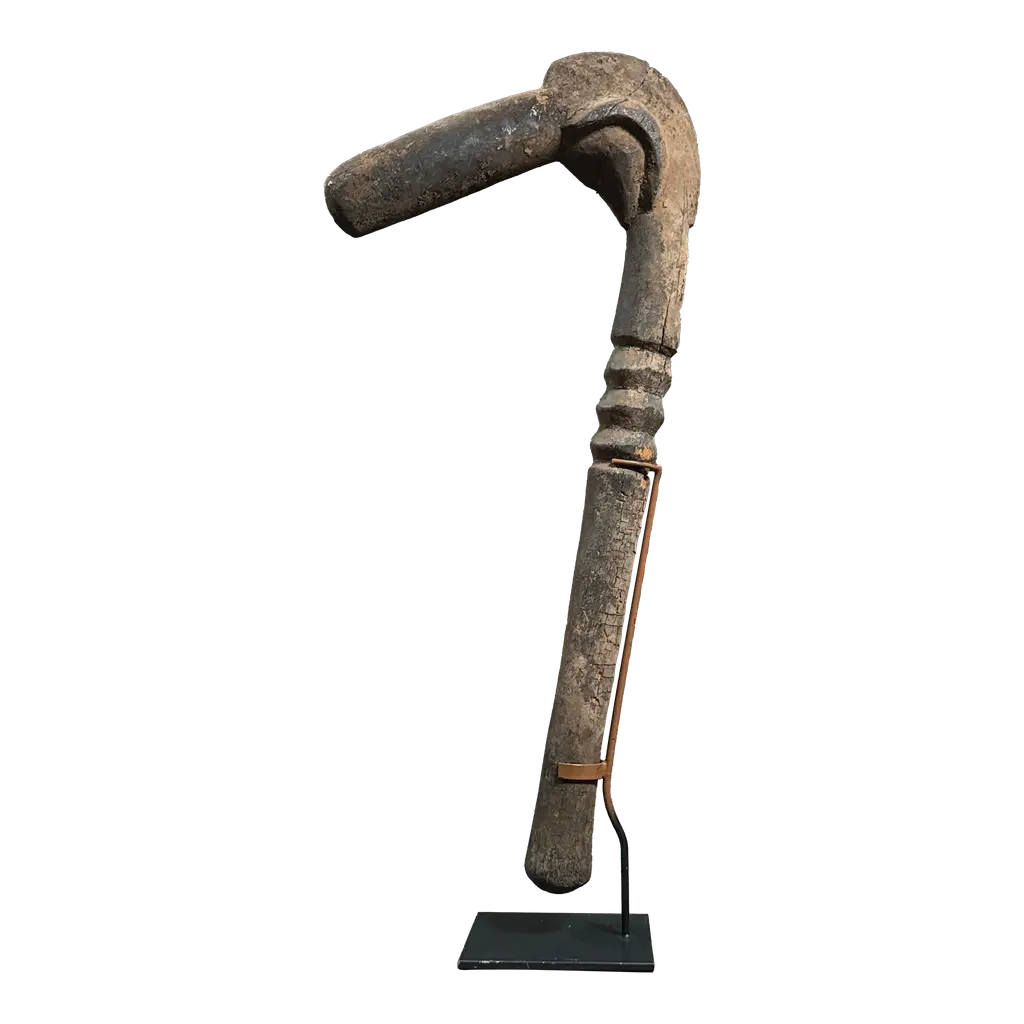
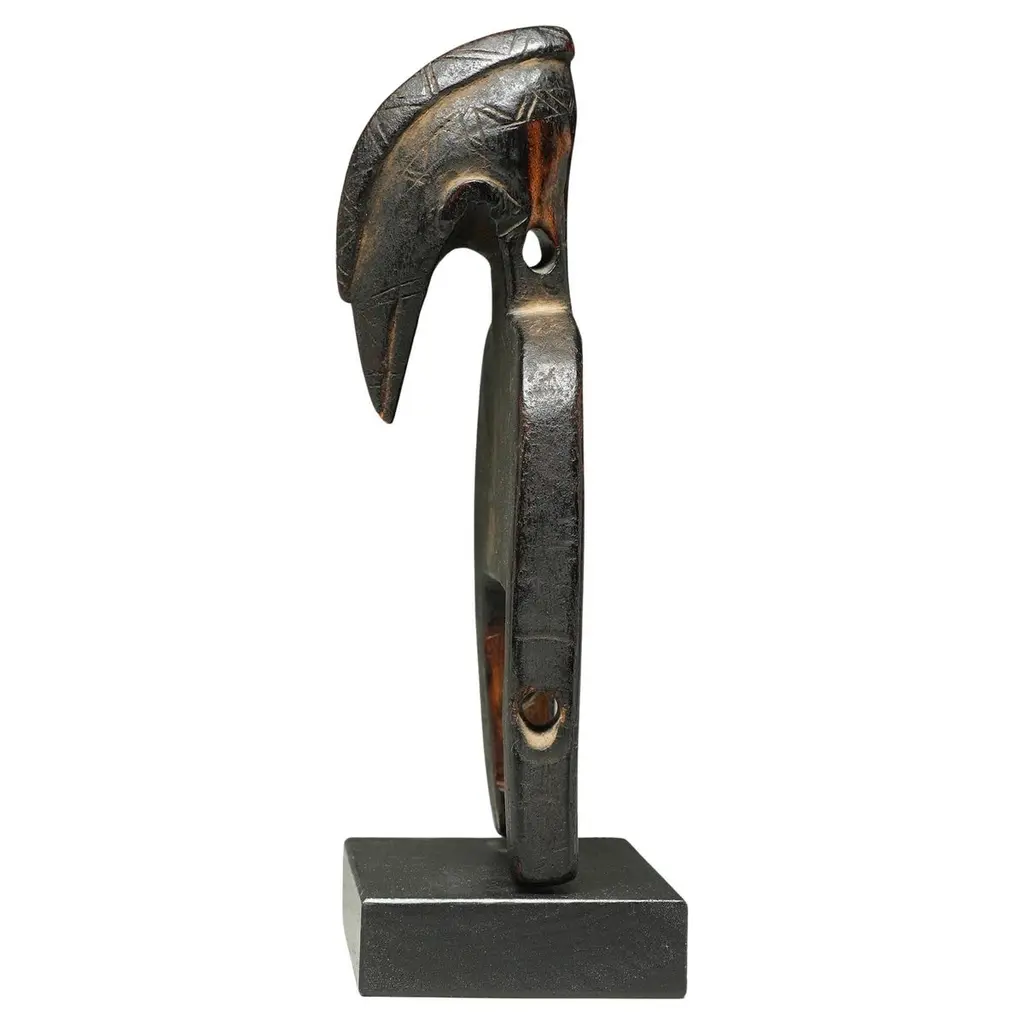
Rolf Hans Frankfurt am Main 1938 - 1996 Basel Stele with handle, 1988 Wood Signed, dated and titled on the underside size incl. base: 63 x 16 x 12 cm incl. a catalog about the artist Poetry of things At the beginning of the 1970s, Rolf Hans first begins to create objects. They are small sculptures that he assembles from iron tubes with round or square profiles. With them he seeks to create a new, three-dimensional experiential reality parallel to his paintings, which were being created at the same time. In 1987 Hans takes up the medium of sculpture again. Now the working process is no longer a conscious construction, but a letting oneself be guided by the given. And as with his painterly work, his objects now arise out of an inner necessity, not to fill an intellectual vacuum. "This compulsion has had a grip on me for decades, and for a few years I've been trying to pacify it with the cycle 'Poetry of Things.'" The intellectual climate was prepared." Thus, in the last decade of his life, Hans concentrates on working on the sculpture cycle. And as if in a frenzy, he draws on the newly given possibilities that the shaping of the objects offers him: "The poetry of things grows, it swallows all time, much is neglected, hardly any letters, the diary is largely silent, concert visits are limited to essentials. It becomes a compulsion and yet started as a game, but attempts were always a serious thing that demand the whole guy. [\.] The objects have crept into my ratio, carefully and unnoticed, claiming their place, taking it, being part of myself." "It's a difficult thing with art, looking at the predecessors you try to find the way, the spirit of the times and its aesthetics influence the direction, you know whether the discontent in which you move. Now, in the midst of the 'poetry of things' a sense of being free, yet closely connected to much that went before, there is also no program, only a title that allows any work of freedom." But despite the models before his eyes, Hans succeeds from the beginning with his object cycle to find completely independent formulation possibilities. What connects him with Max Ernst, Brancusi, Duchamp, is only the source material: found objects. These are quite banal things of everyday life - formerly necessary, useful and practical things such as tools, utensils, devices - that have been stripped of their function and now serve the artist as a door to the imagination. This piece has an attribution mark, I am sure that it is completely authentic and take full responsibility for any authenticity issues arising from misattribution
Similar products