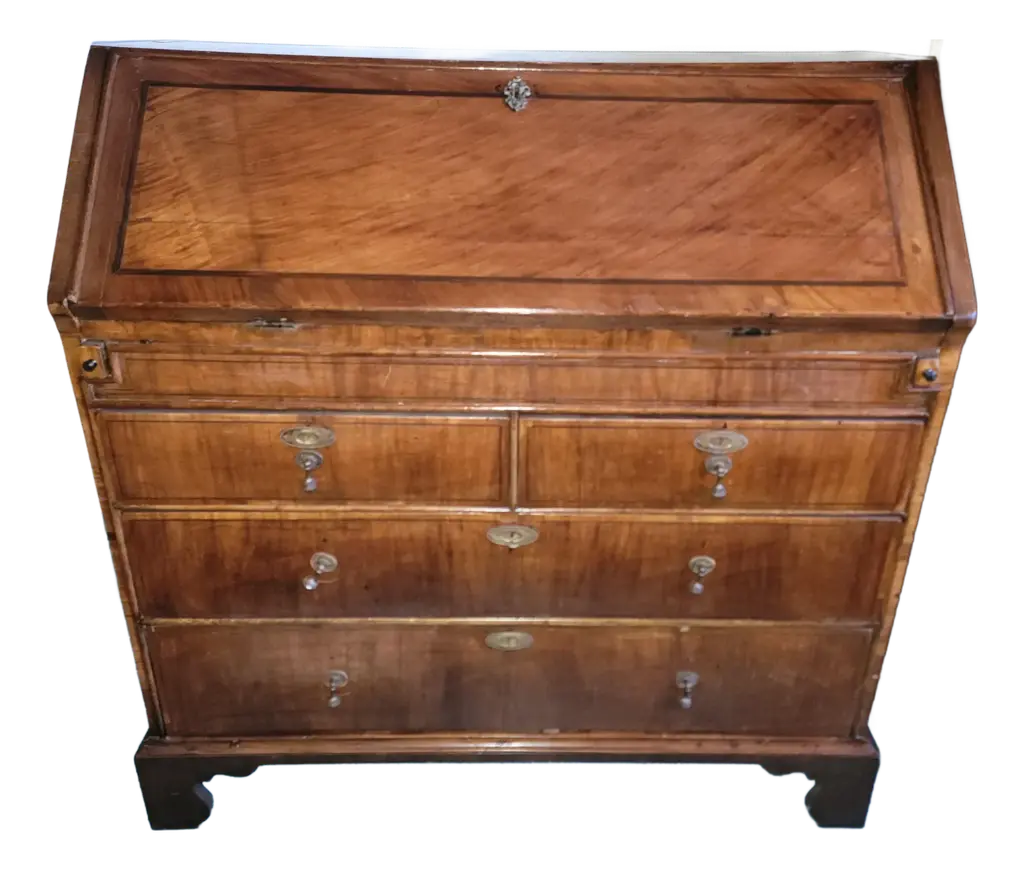
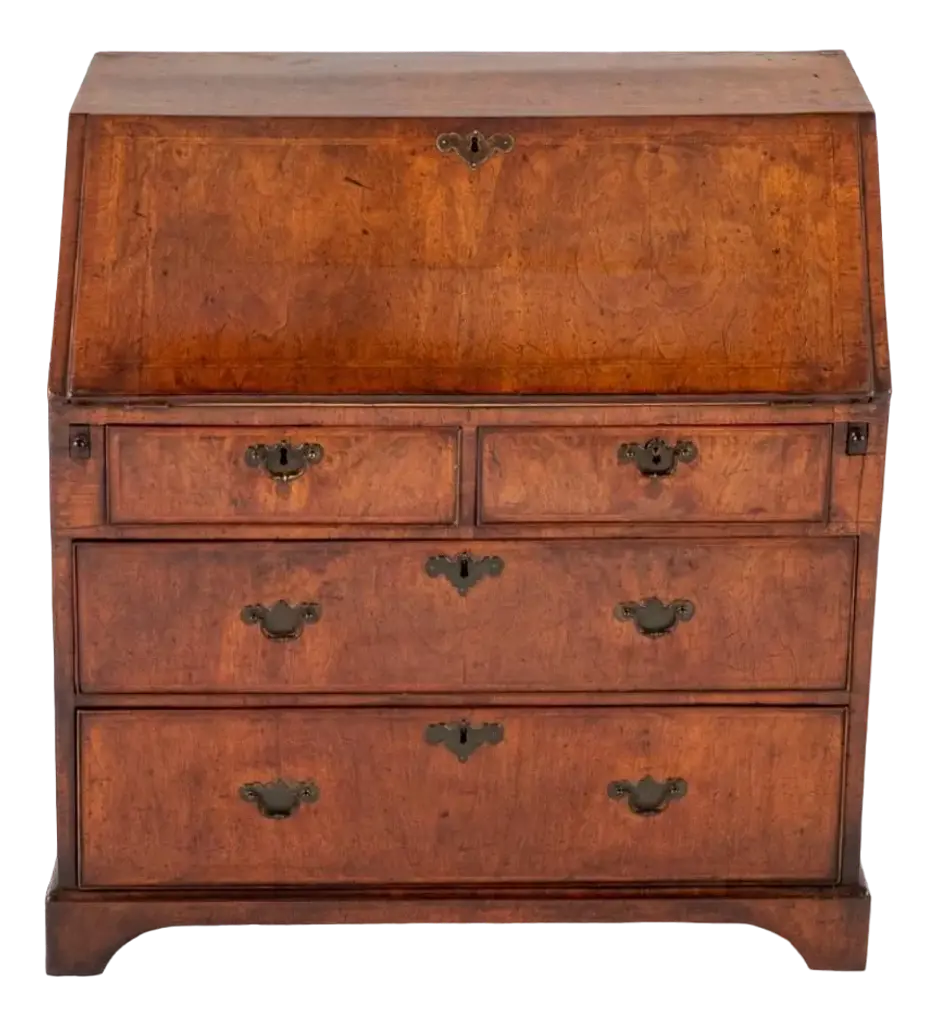
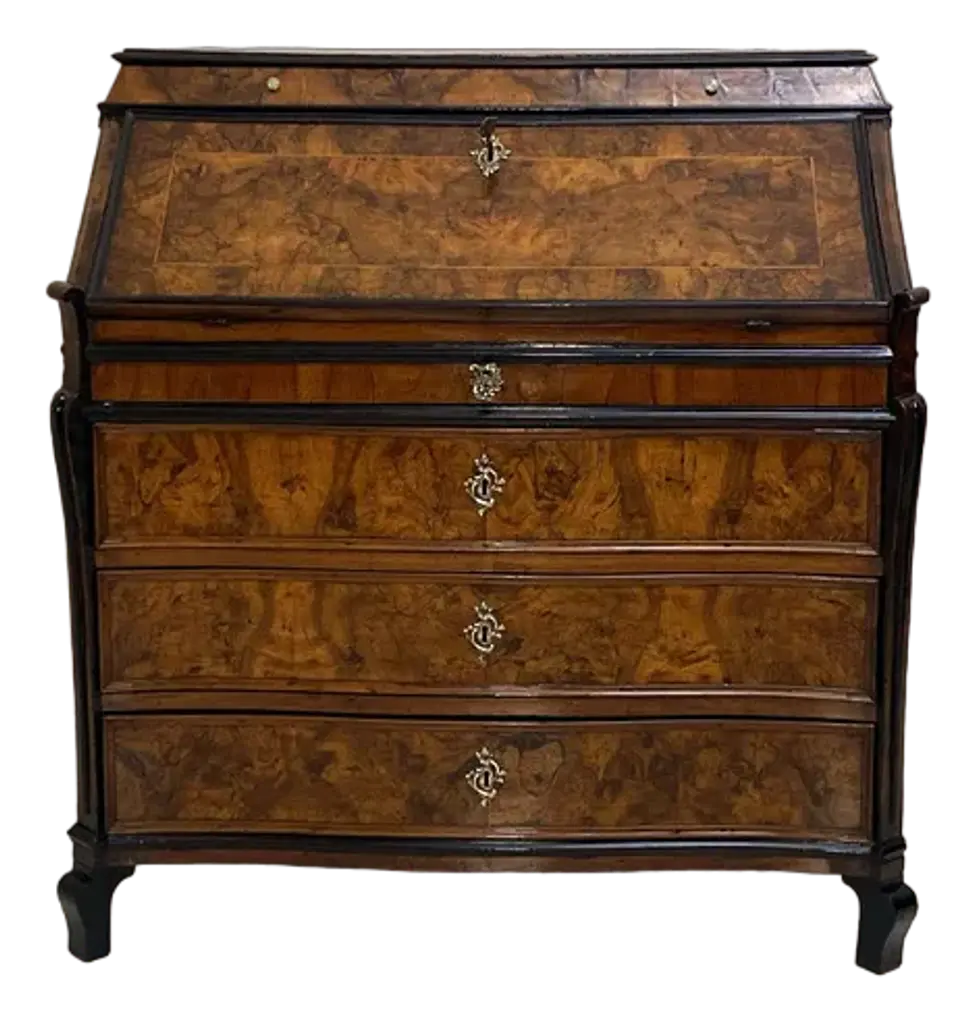
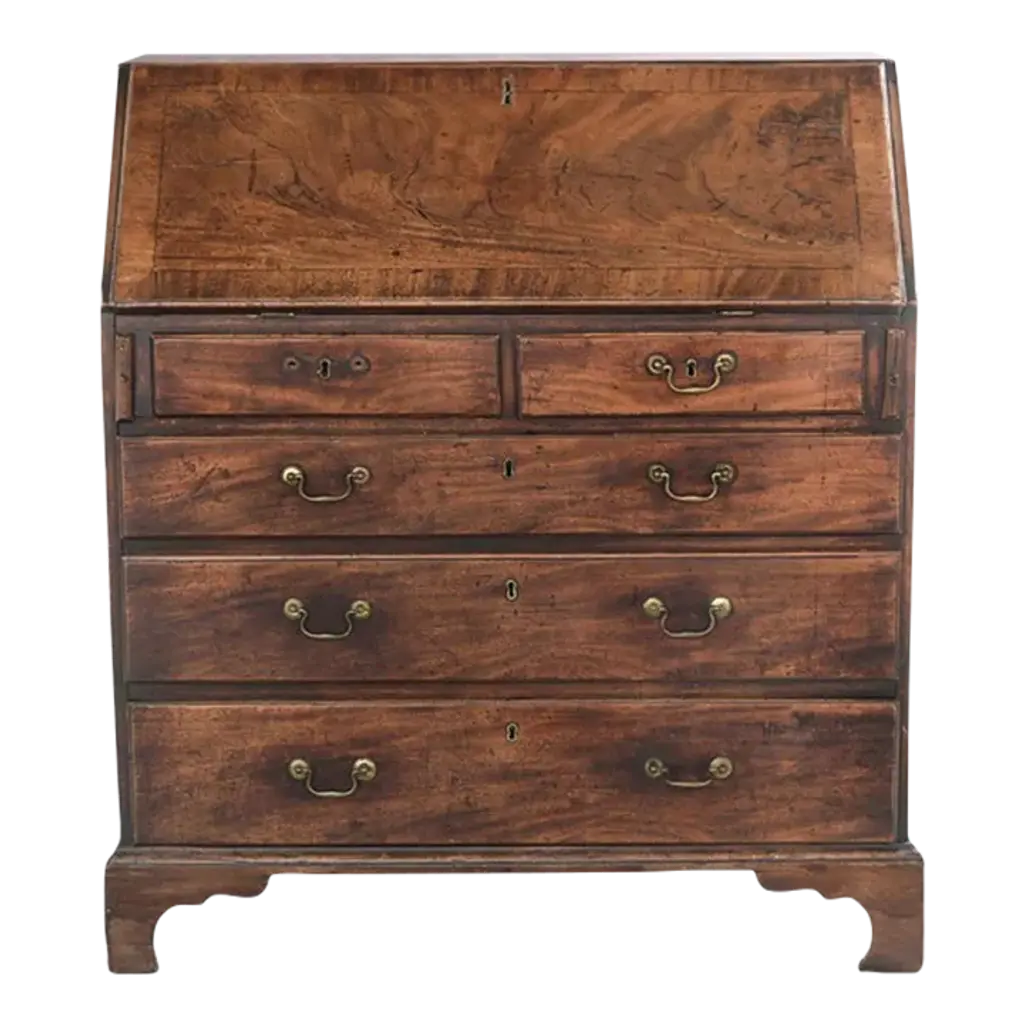
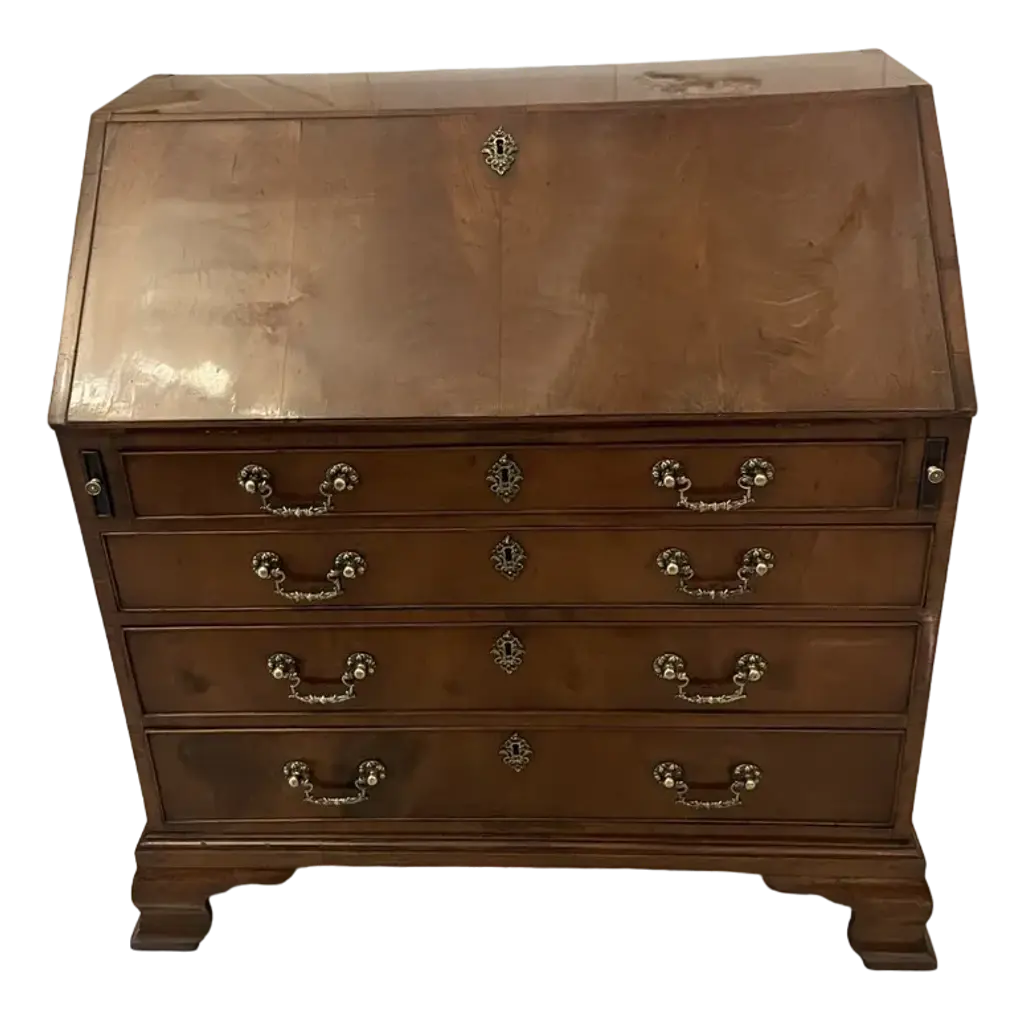
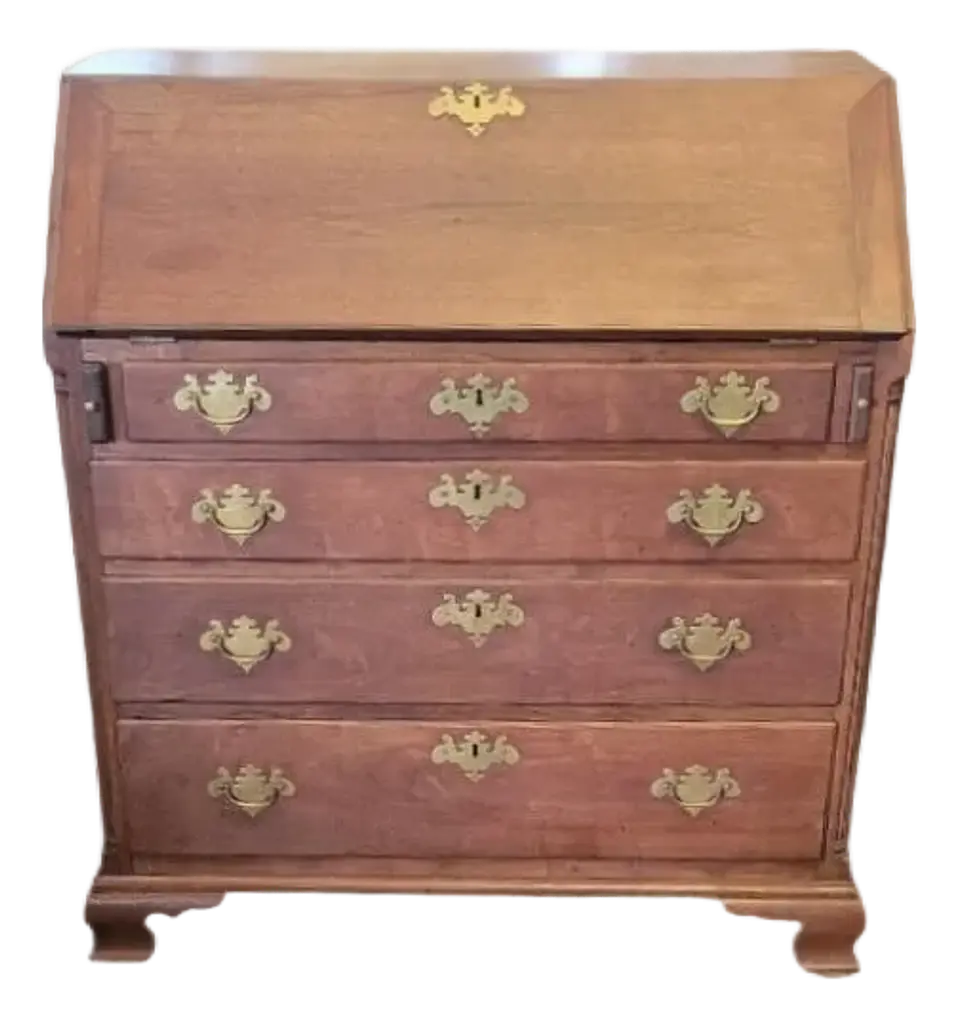
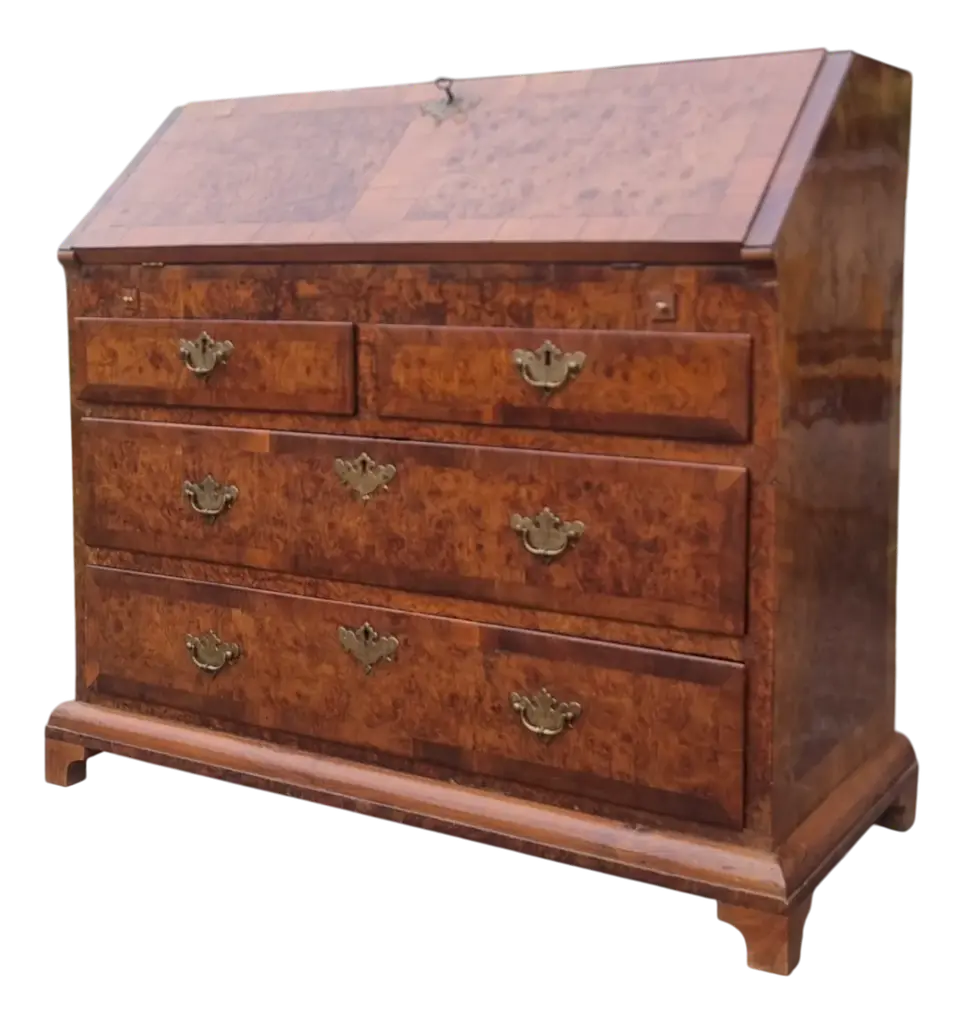
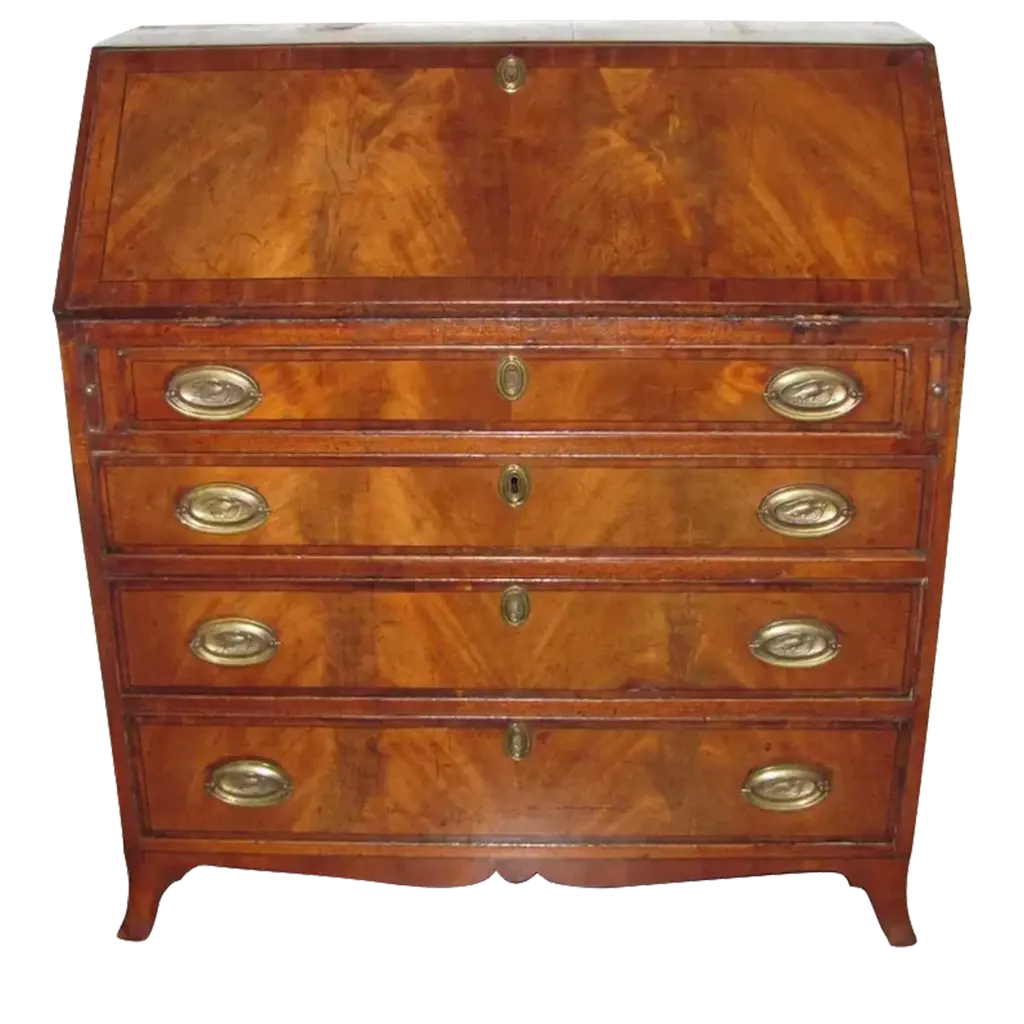
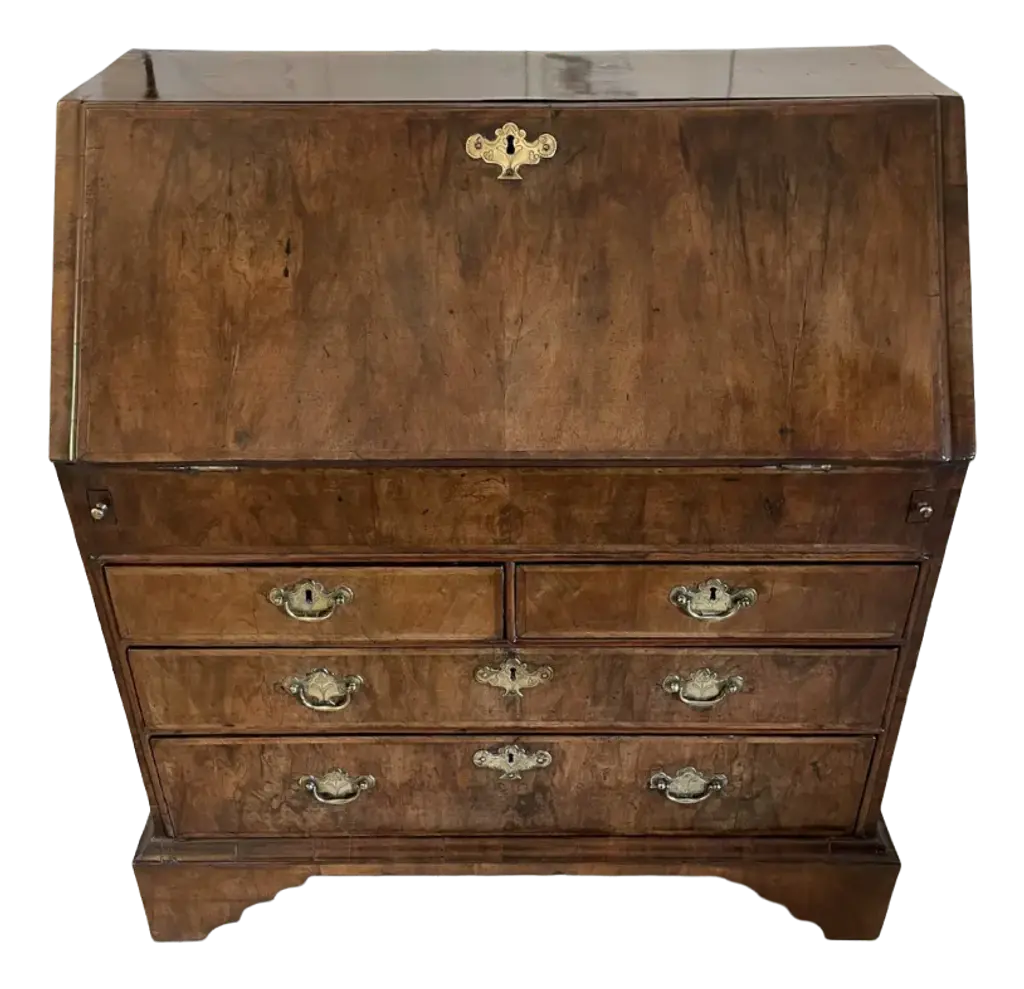
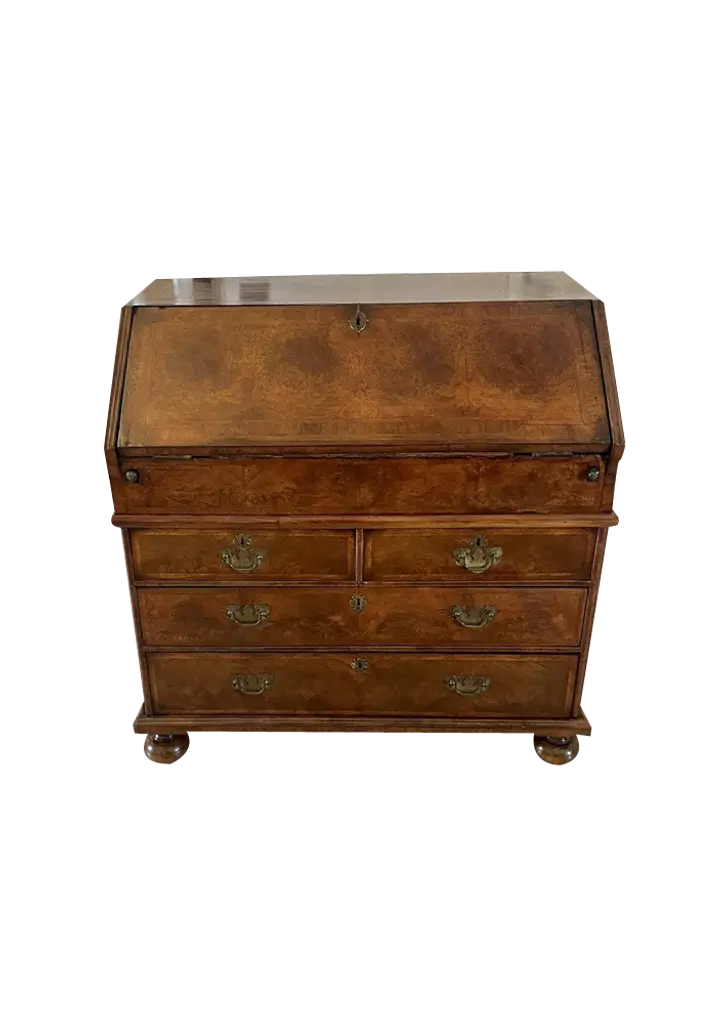
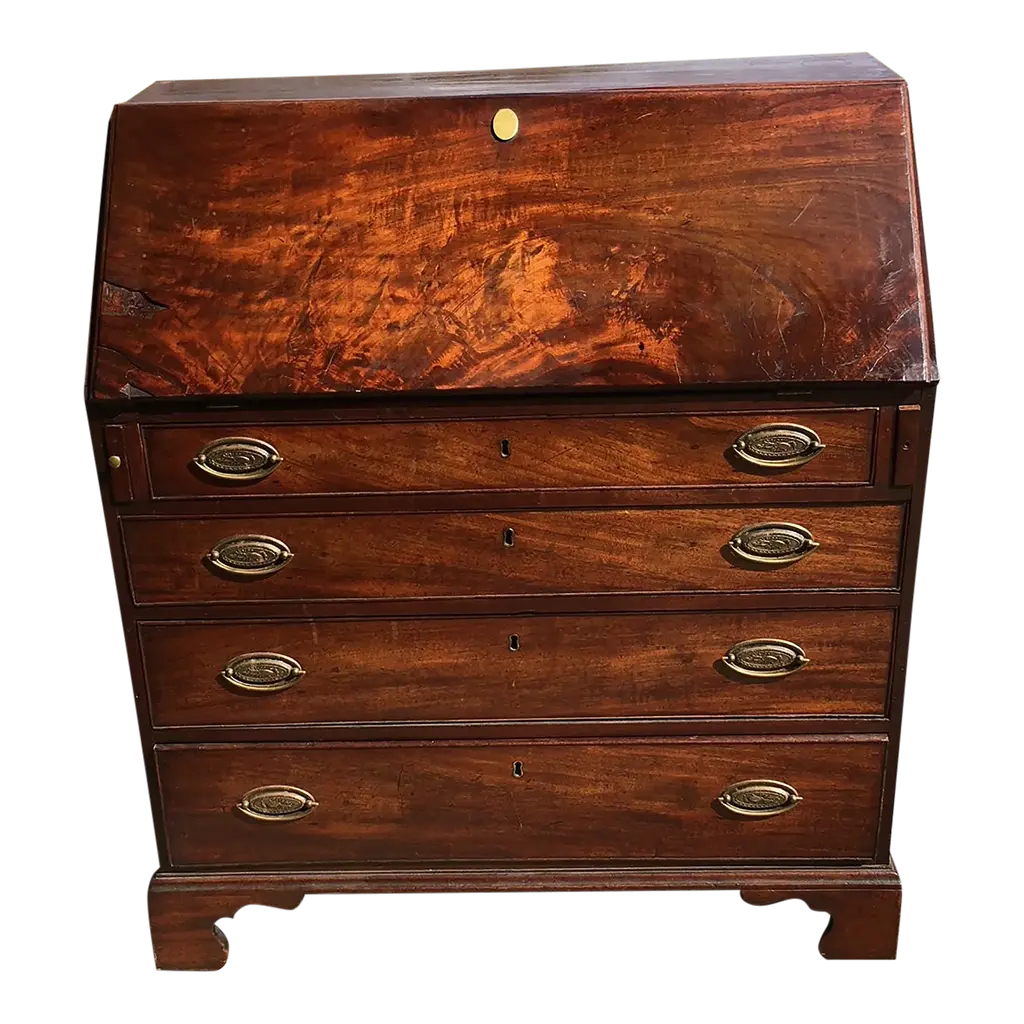
This flap features a walnut frame, a fine wood prized for its warm hue and rich grain, arranged to create natural decorative patterns. Lower Body (Dresser): Drawers: The lower body consists of four horizontal drawers of sloping height from bottom to 'top. These drawers provide significant storage space and feature walnut fronts with a finish that highlights the wood grain. Feather Banding: A notable stylistic detail is the presence of feather edging (or ""feather banding"") on the drawer fronts. This decorative technique involves juxtaposing thin, mirror-cut wood veneers, creating a herringbone pattern that adds a touch of sophistication and elegance. Handles: The drawers are fitted with brass handles, original to the period. These handles have a drop or stirrup shape with decorated plaques, typical of the period. Feet: The base of the flap rests on shelf feet or ""bracket feet."" These feet are sturdy and slightly shaped, giving stability and a sense of elevation to the cabinet. Fold-down writing surface: The top of the chest of drawers features a fold-down top that, when opened and supported by wooden side arms, serves as a convenient writing surface. Inserts: The top is covered in a light-colored cloth bordered by a wooden border. This insert creates a pleasant surface for writing. Locks: The locks, made of brass, are all coeval as are the vents and handles. Riser (Interior Desk): Compartments and Drawers: The interior of the flap, revealed when the top is open, is organized into a series of small drawers, open compartments, and niches. This internal subdivision provided space to neatly store letters, documents, pens, and other writing instruments. Carved Columns: On either side of a central compartment are small fluted columns with capitals, a decorative element reminiscent of classical architecture and adding a touch of elegance to the interior. Secret compartments present. Central Door: In the center of the riser is a vertical door, also veneered in walnut and decorated . This door conceals a larger compartment. Feather edging (Interior): The continuation of the feather edging can also be seen on the interior in some places, testifying to the attention to detail in the making of the cabinet. Conservation status: The cabinet is perfectly restored with shellac polish. Dimensions: 91 x 52 ( 87 open) , height 104. Age: 19th cent.
Similar products