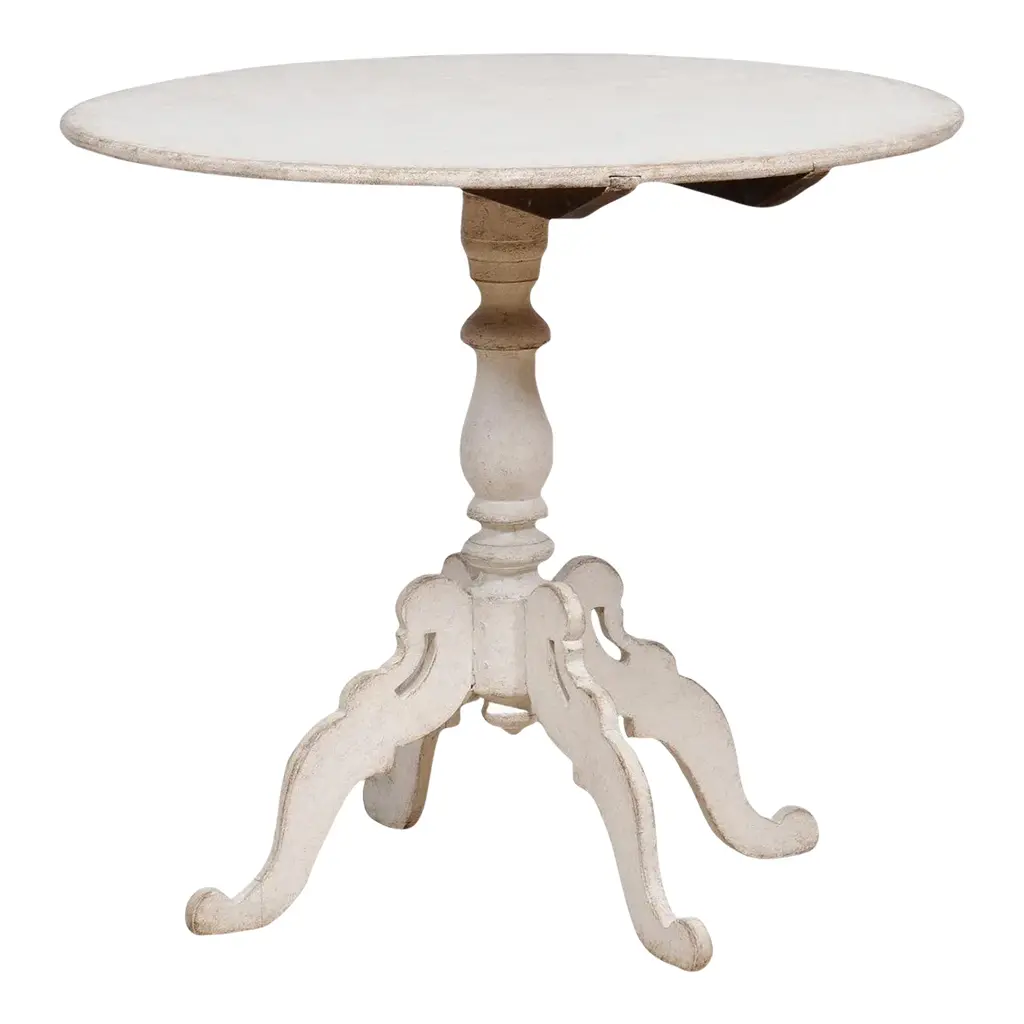
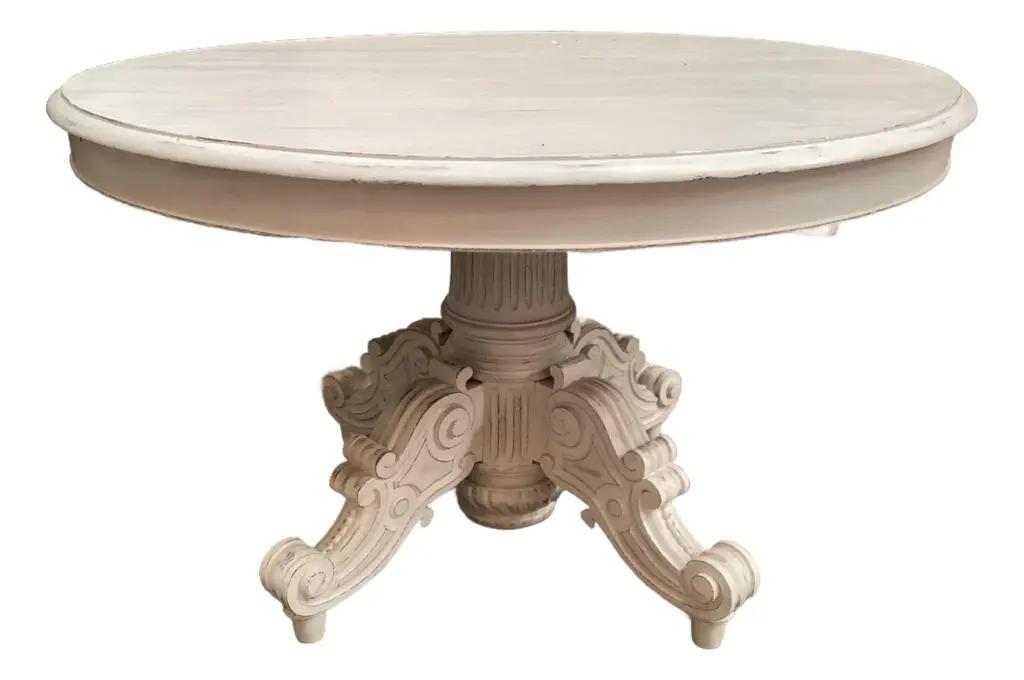
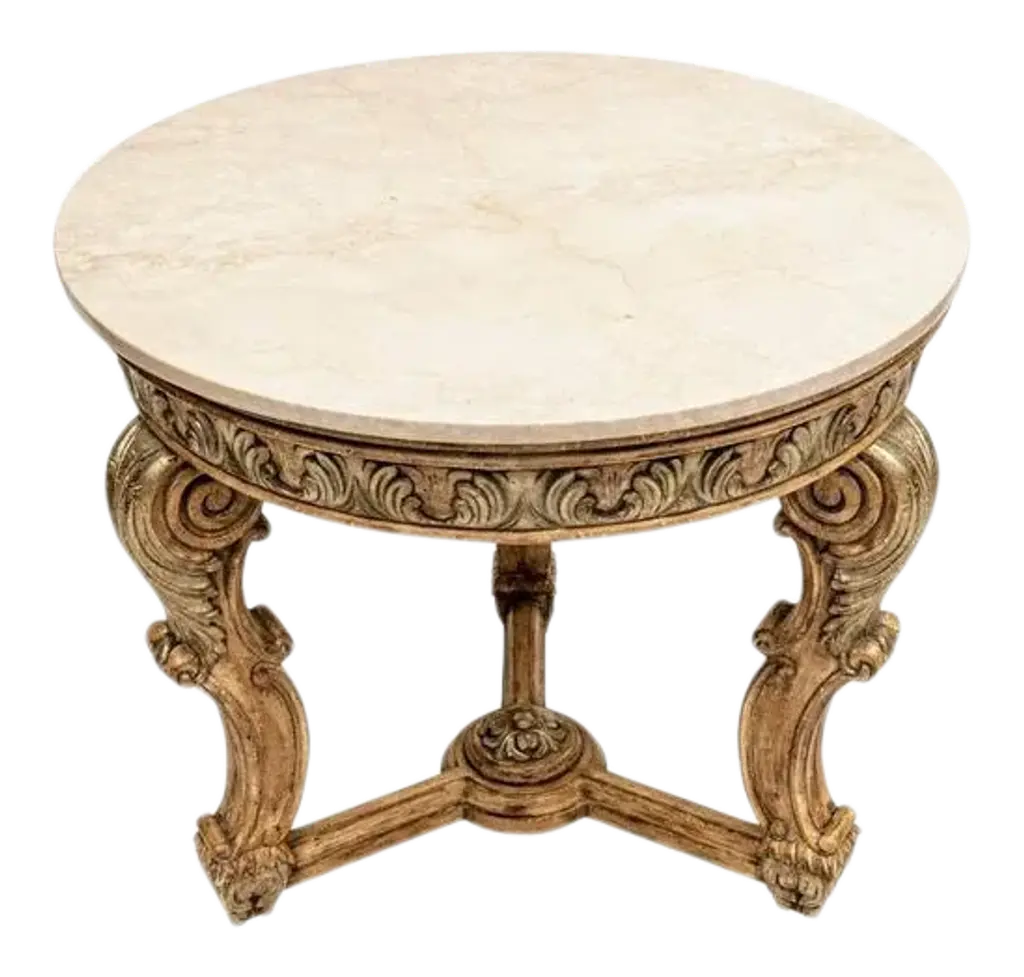
Quick Hits Brand/Maker: Rose Tarlow (attributed) Piece Name: Nantucket Side Table Style: Coastal Transitional / Art Nouveau Influence Materials: Painted wood Era: Late 20th Century Condition: Exceptional vintage condition with intentional distressing and age-appropriate wear Why We Love It: Softly sculptural and quietly coastal — the kind of table that feels straight out of a Nancy Meyers interior. More About This Item SKU AT-233. This elegant side table features a beautifully chipped off-white painted finish with an arched apron, delicate scrollwork corbels, and a central pedestal base supported by four curved feet. The silhouette feels refined without becoming fussy — relaxed coastal living with a distinctly tailored point of view. There’s an understated sophistication to this piece that immediately recalls the layered interiors of Something’s Gotta Give. In fact, similar tables appeared throughout Diane Keaton’s iconic Hamptons home in the film, which explains why this style still resonates so strongly with designers and collectors today. Purchased from an estate containing several documented Rose Tarlow pieces, this table is unmarked but strongly attributed based on its construction, finish, and overall design language. It works beautifully beside a linen slipcovered chair, between twin beds, or layered into a lighter transitional interior needing warmth and character. Design Style This piece blends coastal transitional design with subtle Art Nouveau influences visible in the curved supports and flowing lines. The intentionally weathered painted finish keeps the form relaxed and livable rather than formal. Furniture in this vein pairs especially well with Belgian linen interiors, English Country spaces, organic modern homes, and the relaxed sophistication often associated with California design. It has that “collected over time” quality designers are constantly trying to recreate. Brand Legacy Rose Tarlow furniture is widely admired for its restrained elegance, softly aged finishes, and European-inspired forms. Her designs helped define a quieter, more sophisticated version of luxury — one rooted in texture, patina, and proportion rather than ornament. Collectors and designers continue to seek out her pieces for their ability to make interiors feel deeply layered, warm, and effortlessly established.
Similar products