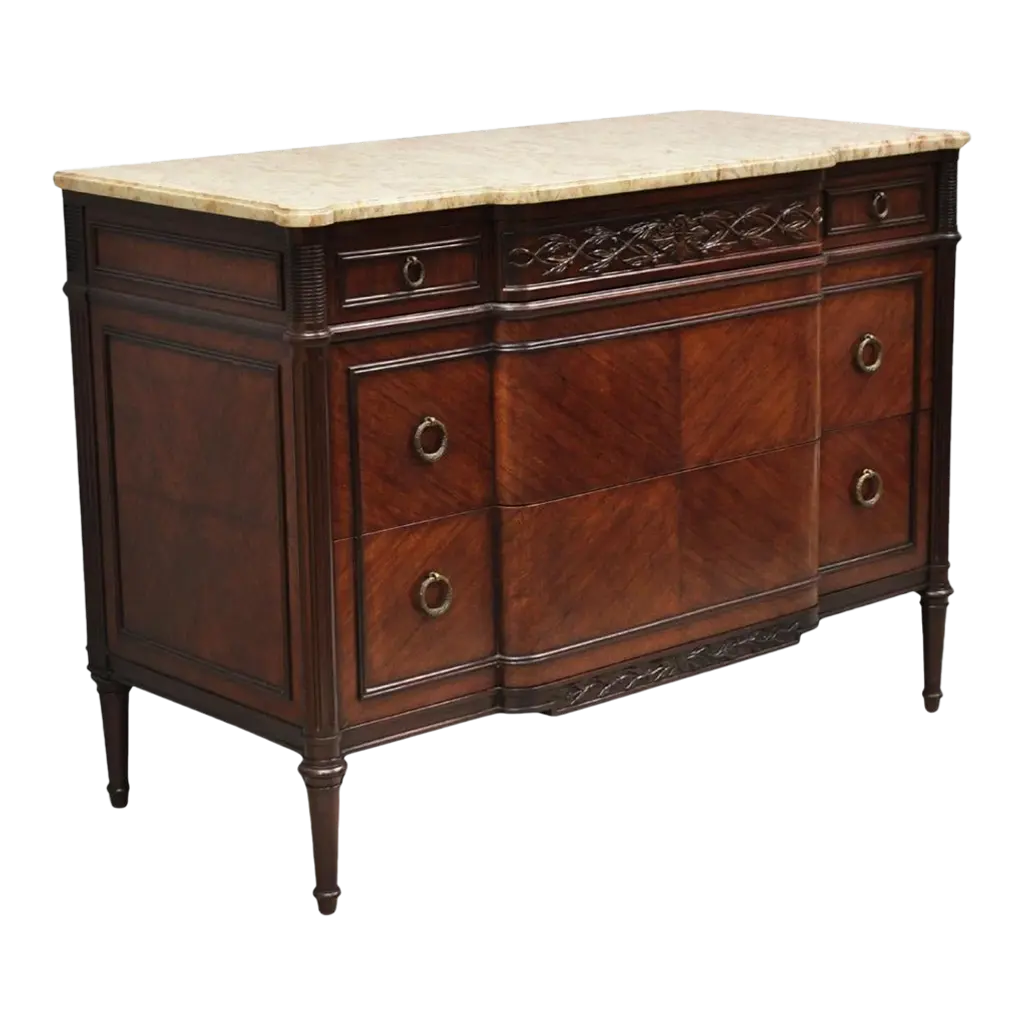
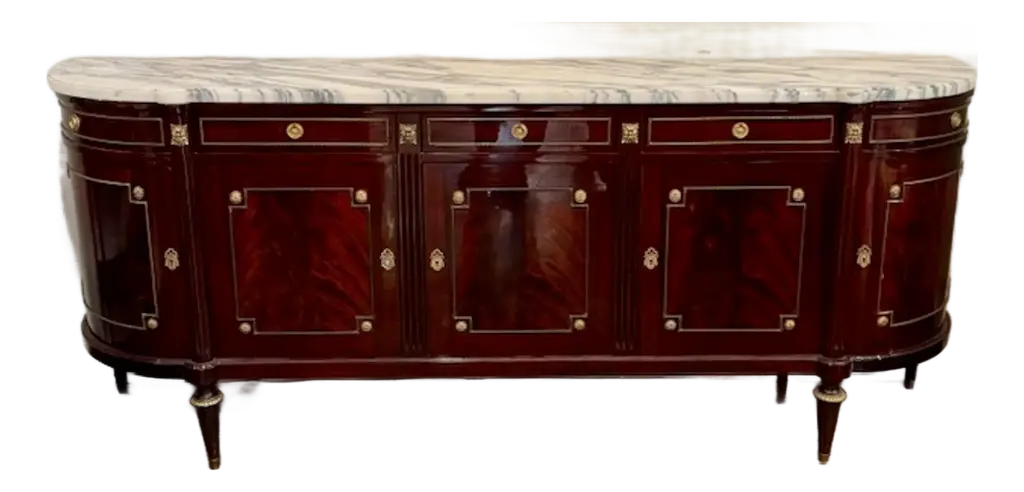
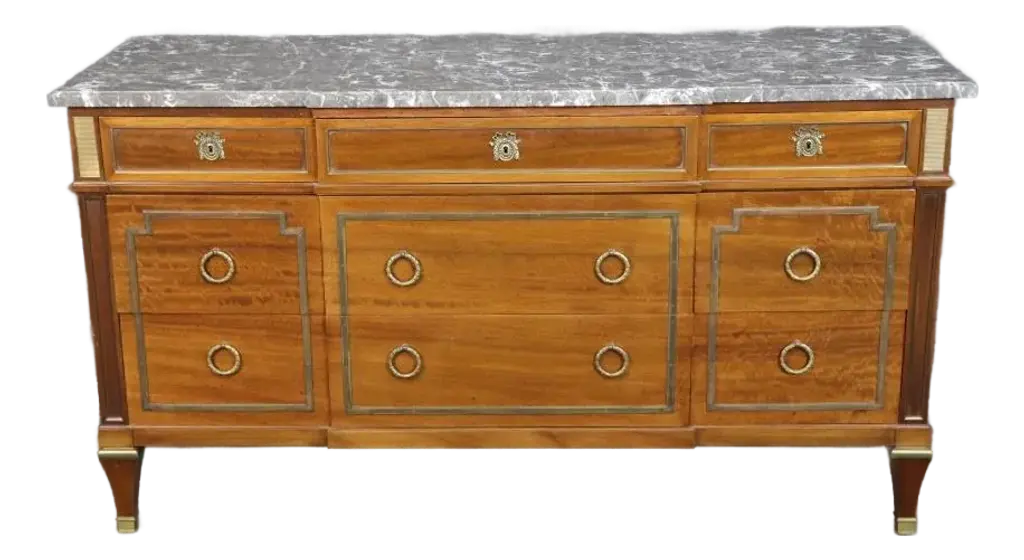
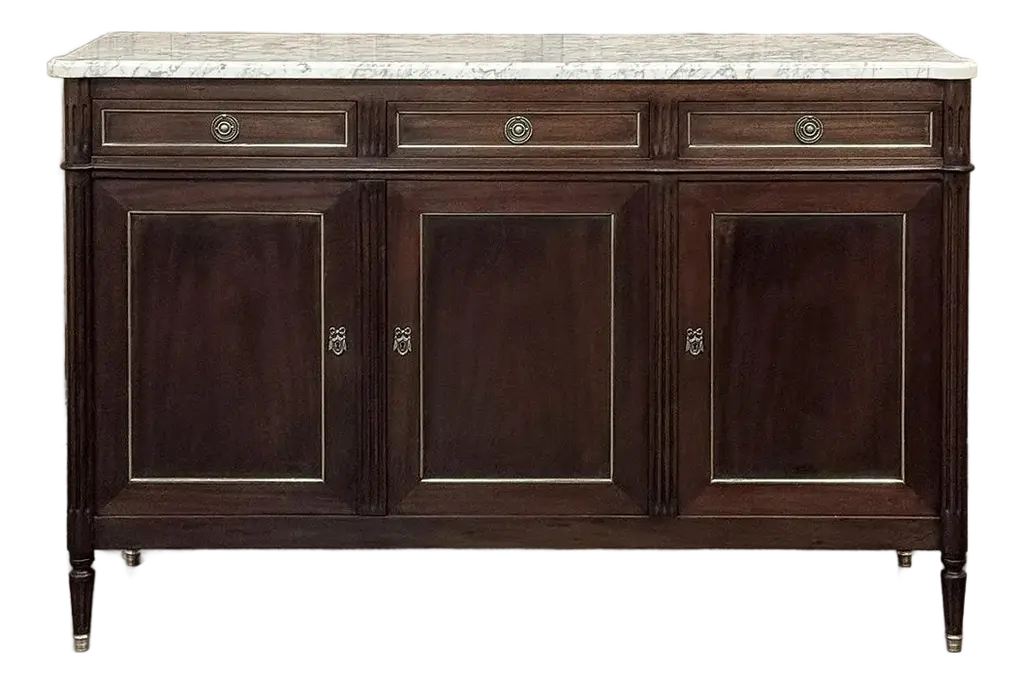
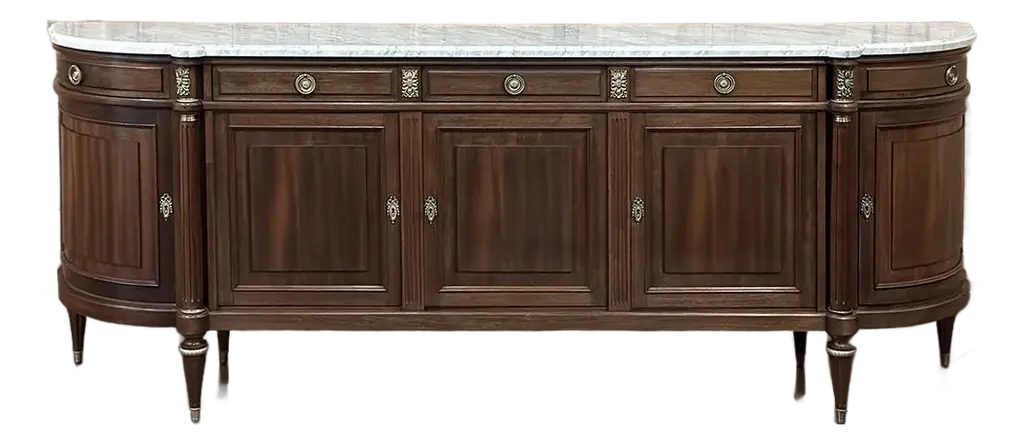
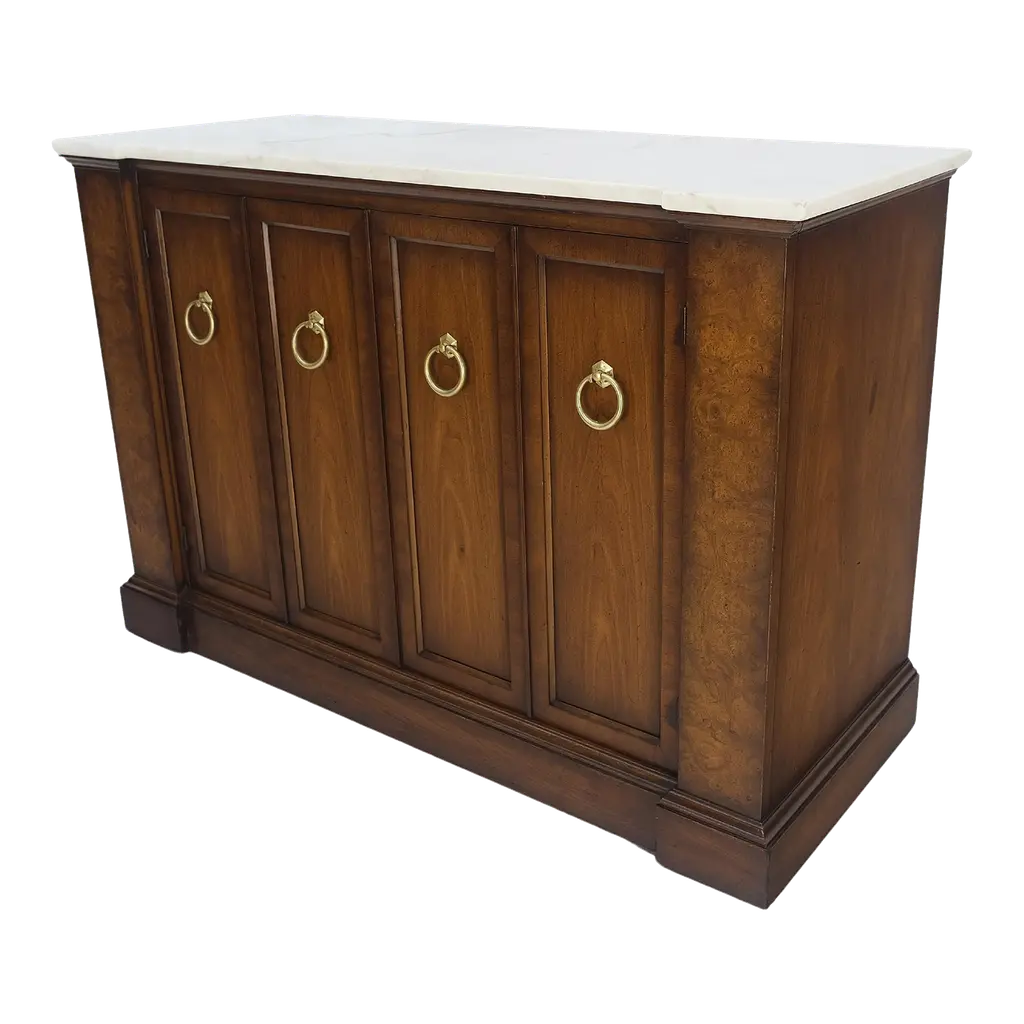
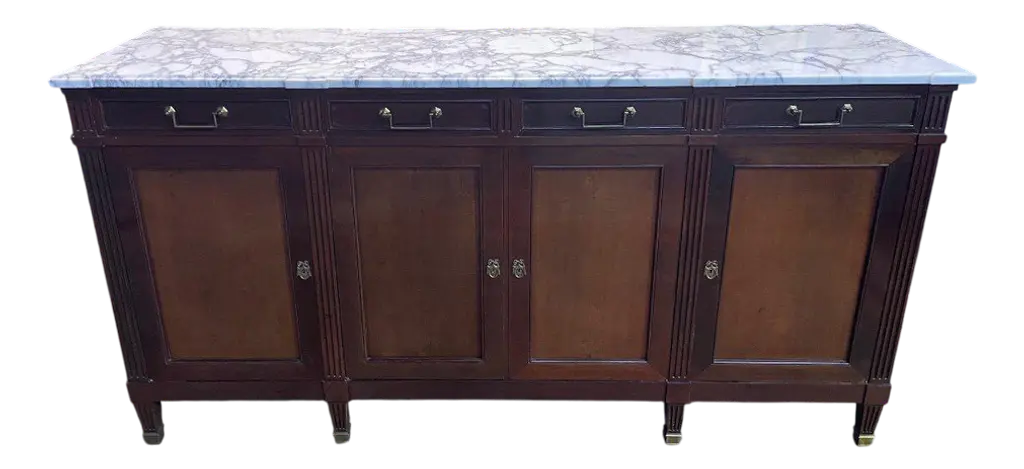
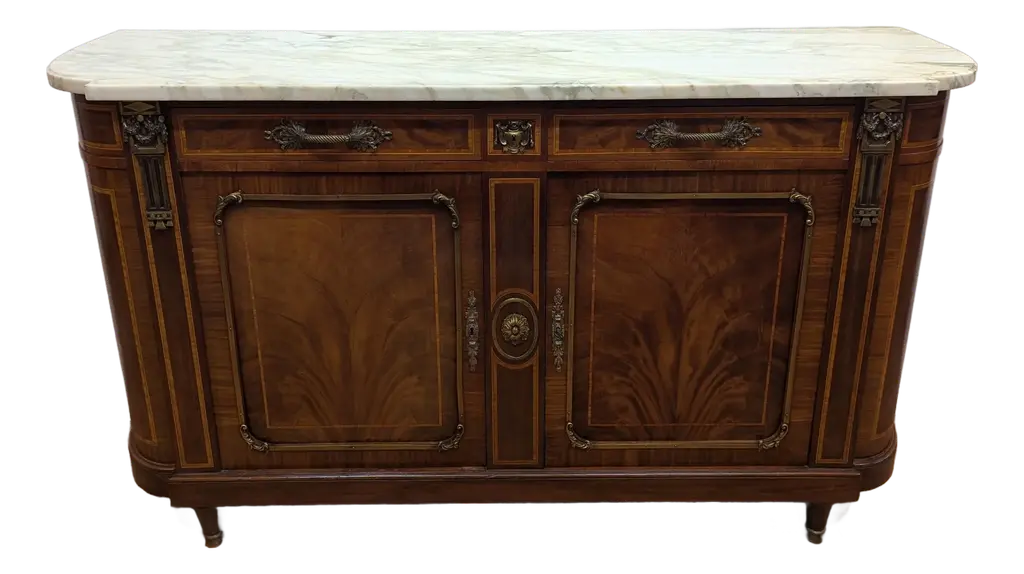
Gemini said This is an elegant Louis XVI style sideboard (or enfilade), likely a high-quality "Revival" piece from the late 19th to early 20th century. It captures the neoclassical transition that occurred in France when furniture moved away from the curvy Rococo "Louis XV" look toward more disciplined, architectural lines. Below is a review of its key features, material quality, and what to look for regarding its value. ### 1. Key Design Features Style: Louis XVI (16th) Neoclassical. Note the tapered, fluted legs (resembling Greek columns) and the strictly rectangular silhouette. The Marble Top: This appears to be Arabescato Corchia or a similar Italian "brecciated" marble. The heavy, dramatic grey-black veining against a white/ivory background is highly desirable and adds significant weight and value to the piece. Marquetry & Inlays: The doors feature a Greek key or geometric border inlay (marquetry). This was a hallmark of the "Greek style" (le goût grec) popular during the late 18th century, symbolizing a return to antiquity. Ormolu Mounts: The gilt-bronze (or brass) decorative elements—specifically the floral garlands on the stiles and the ring-pull hardware—are classic Louis XVI motifs. ### 2. Condition & Quality Observations Craftsmanship: The piece shows signs of authentic age but refined construction. The way the marble is contoured to follow the slight "breaks" or projections in the wood frame suggests a skilled maker. Wear: There is visible scuffing and finish wear along the base and legs (typical for its age). The wood looks to be mahogany or kingwood, common for this level of French cabinetry. Hardware: The ring pulls are consistent with the era. If they are original "fire-gilded" bronze (mercury gilded), they will have a soft, deep gold glow that doesn't tarnish like cheap brass. ### 3. Estimated Value & Market Appeal The "Marble Factor": A significant portion of the value is in that specific slab of marble. If it is crack-free, it is a major asset.
Similar products