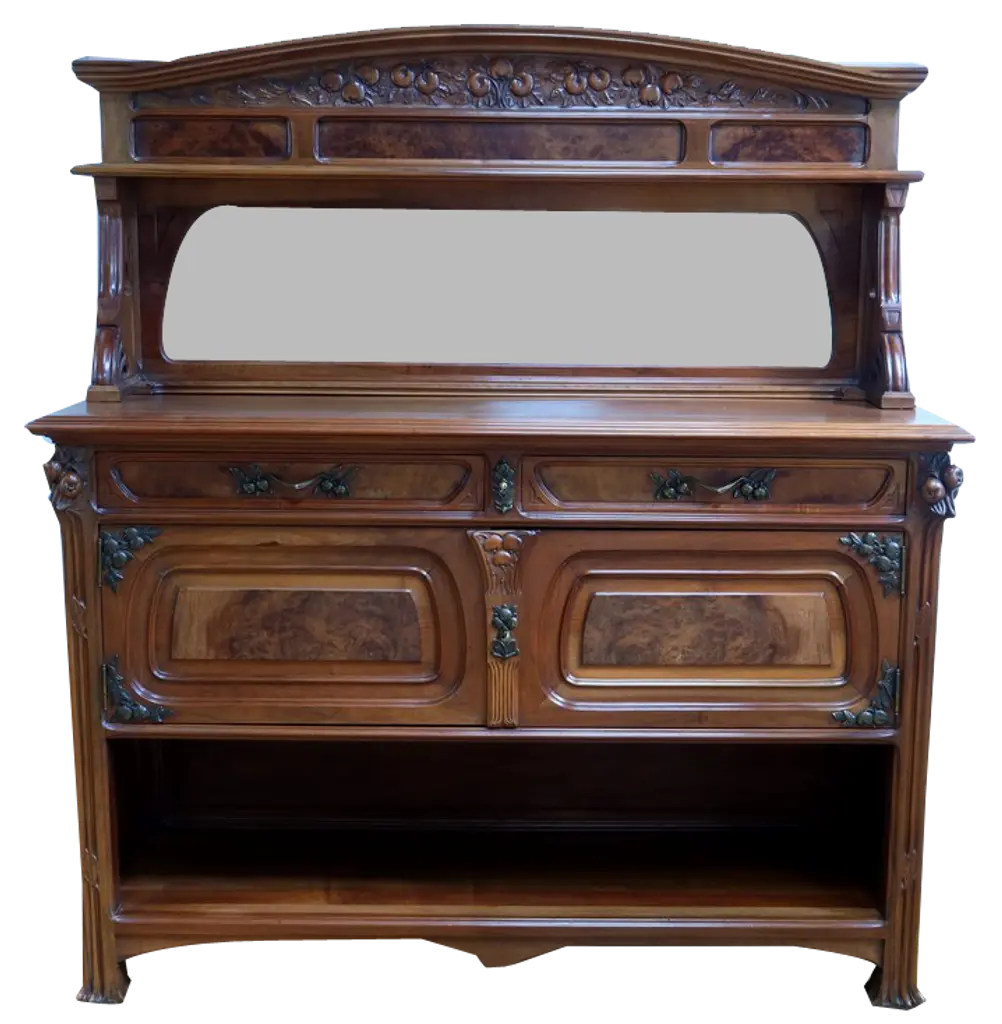
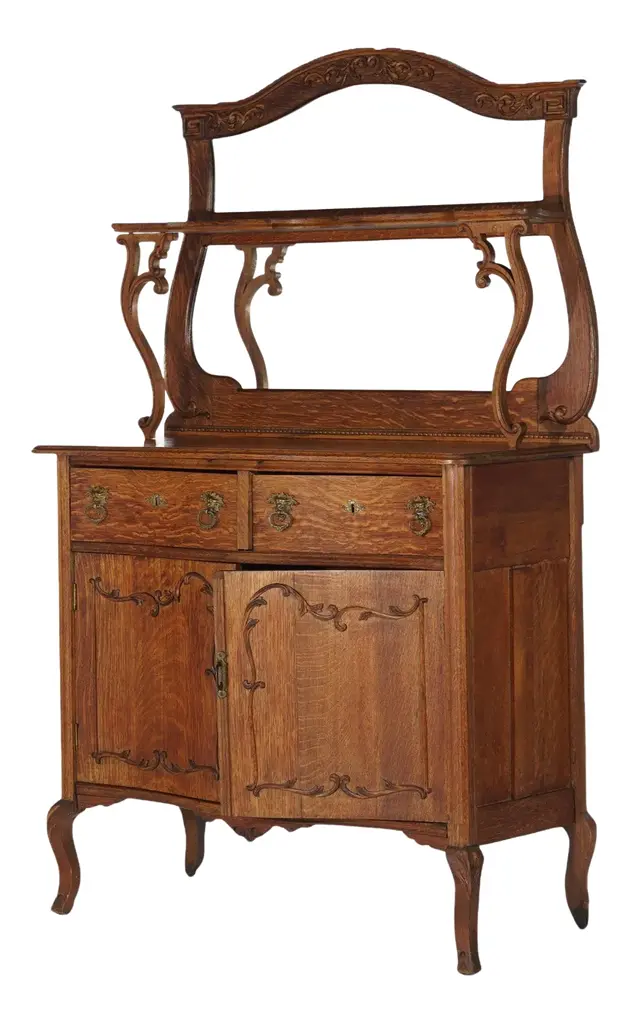
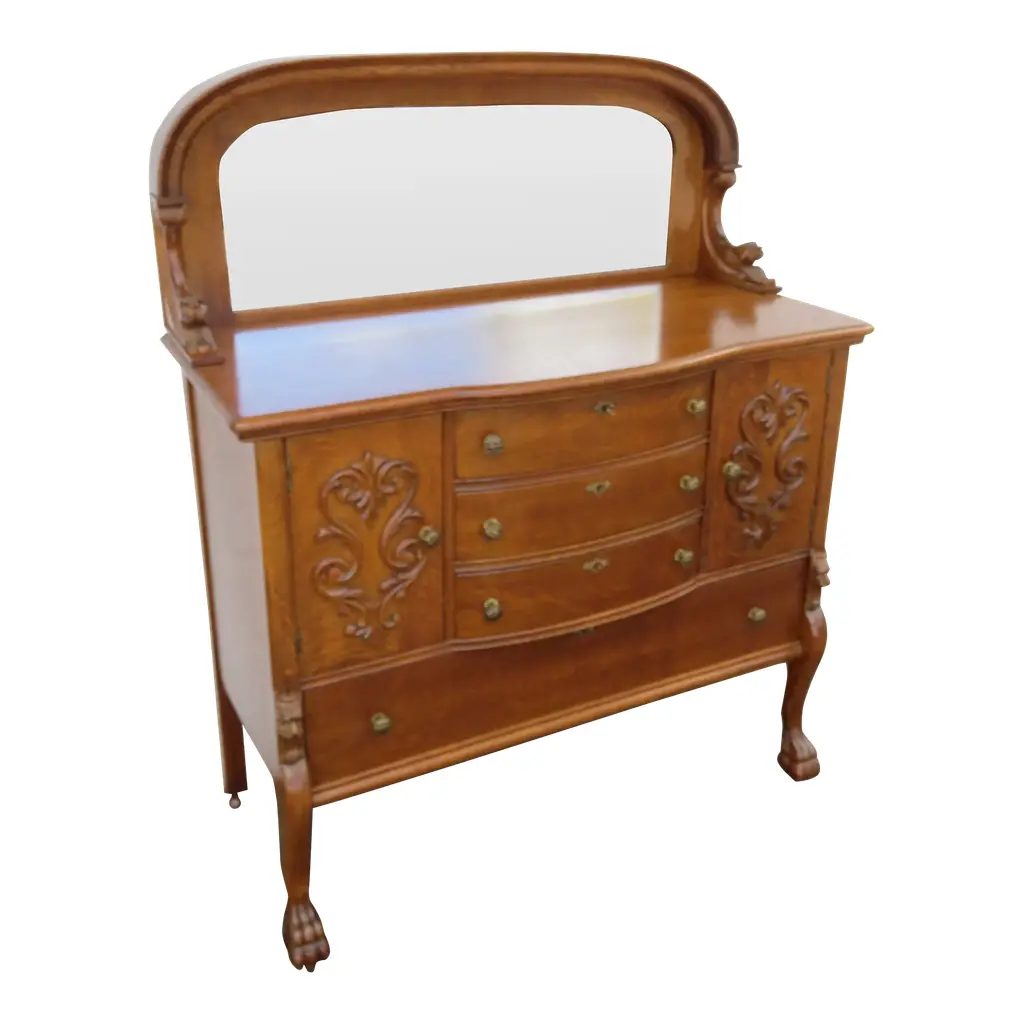
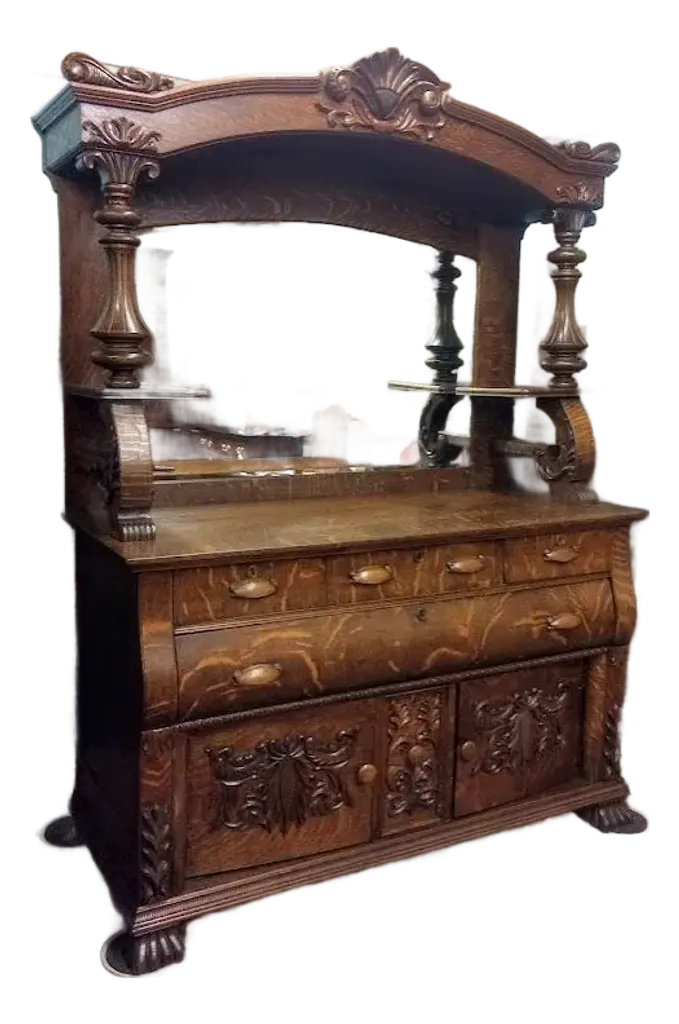
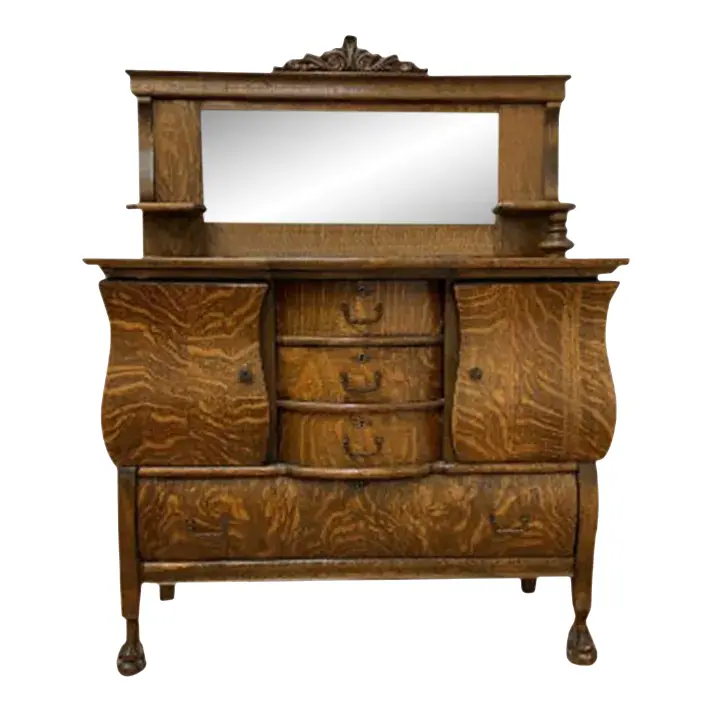
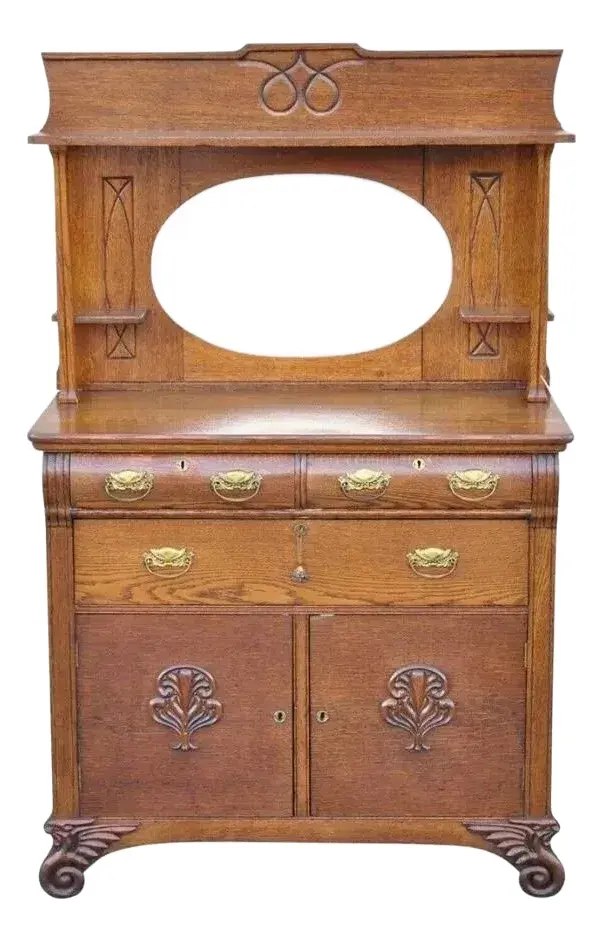
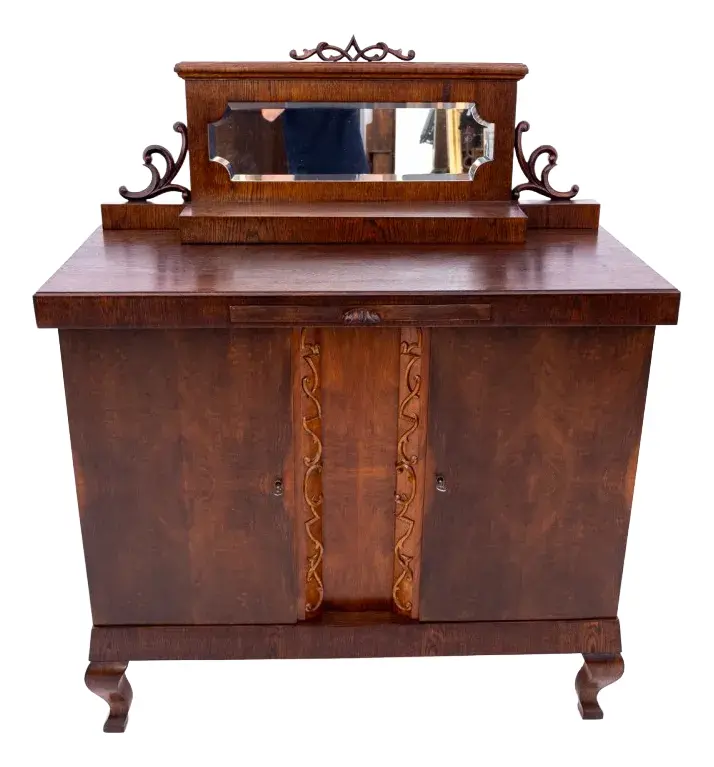
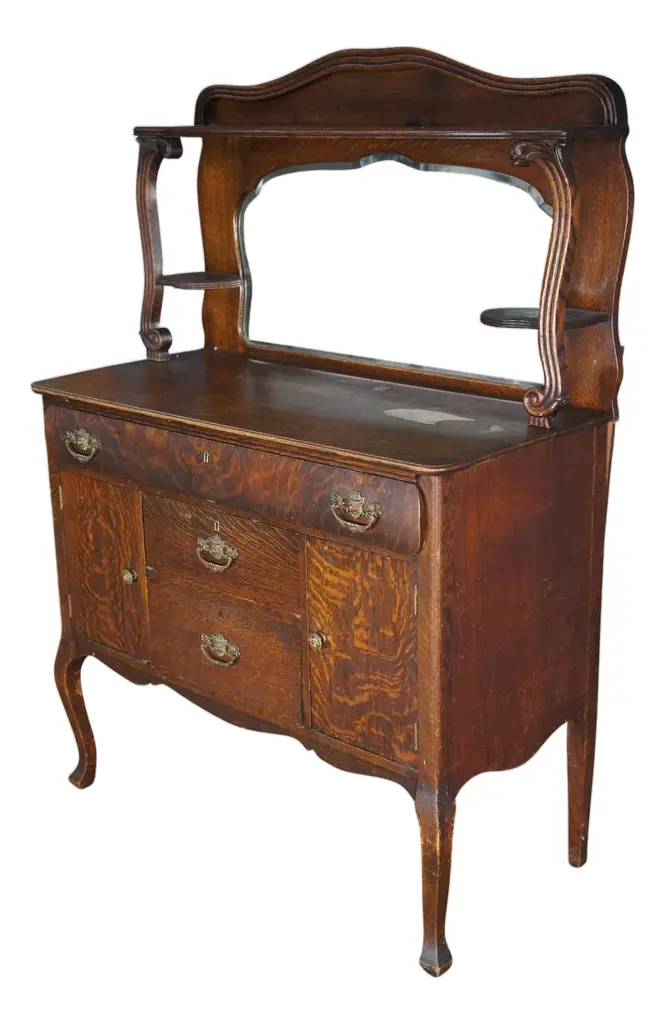
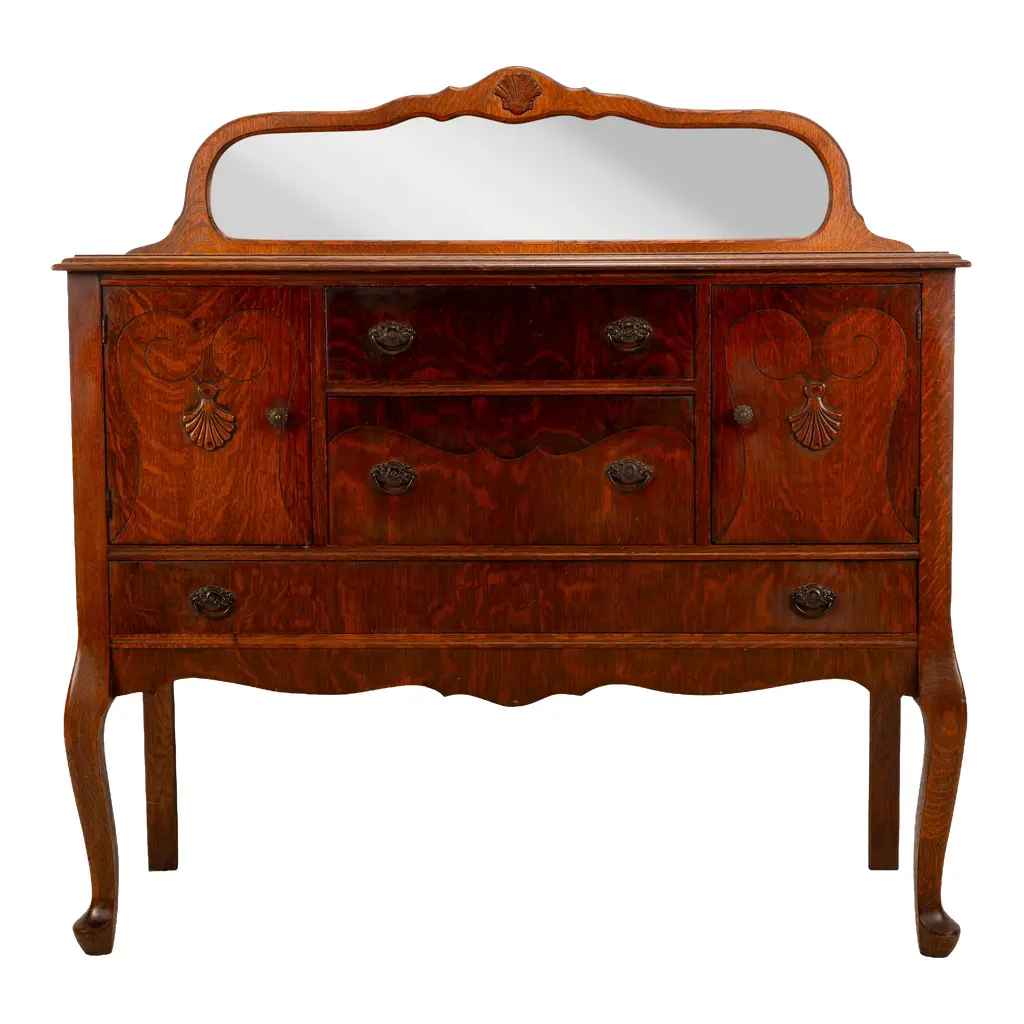
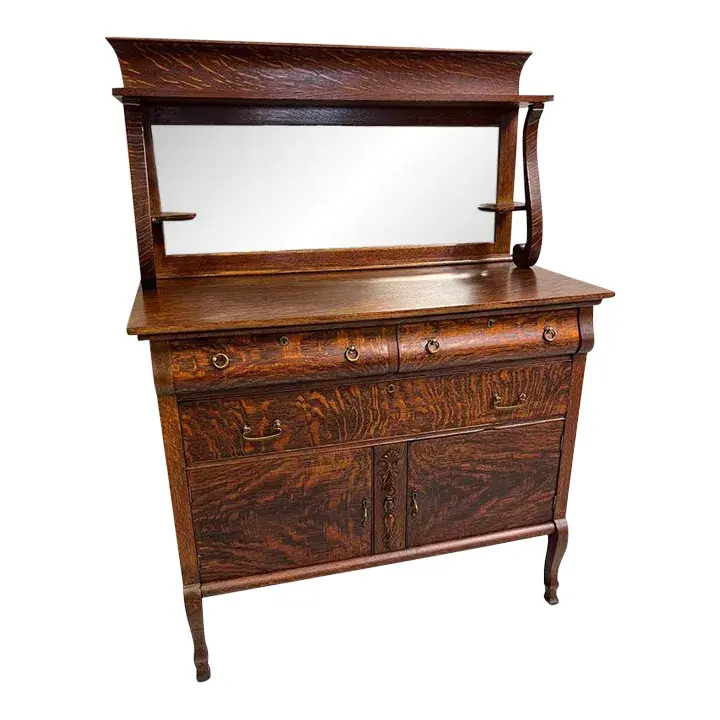
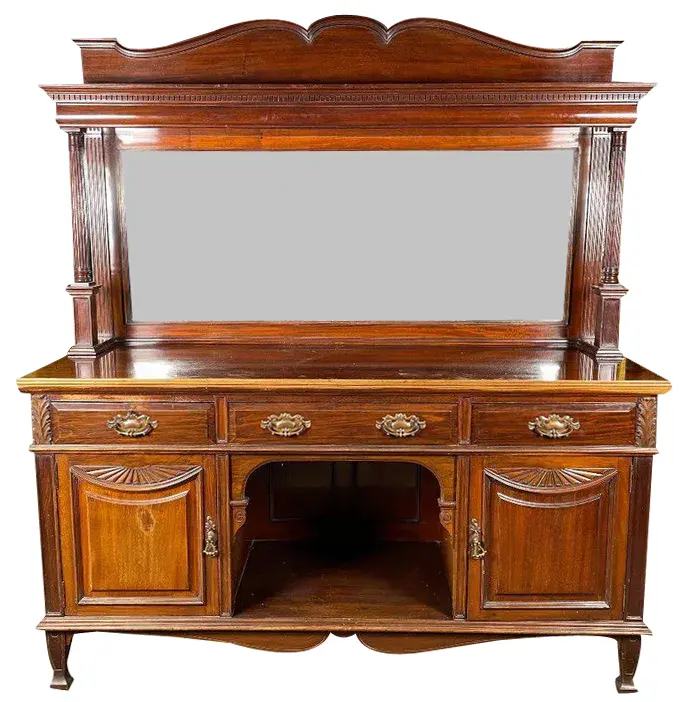
Antique American sideboard or buffet dating to the late 19th or early 20th century, attributed to the Victorian era with strong Eastlake and Jacobean Revival influences. Constructed from quarter-sawn oak with pronounced ray flake (“tiger oak”) grain and a naturally developed medium-to-dark brown patina. Likely produced in the United States, with comparable examples originating from New York or Grand Rapids, Michigan manufacturers. The piece consists of a lower cabinet base with drawers and storage compartments, topped by an attached upper gallery with a large beveled mirror. Detailed carved decoration includes scrollwork and foliage on the door panels and a shell-form crest at the mirror pediment. The drawers retain period-appropriate wooden pulls, and the front legs are cabriole in form, terminating in claw-and-ball feet. Original casters remain intact. Intended for use as a dining sideboard or buffet for storage and serving.
Similar products