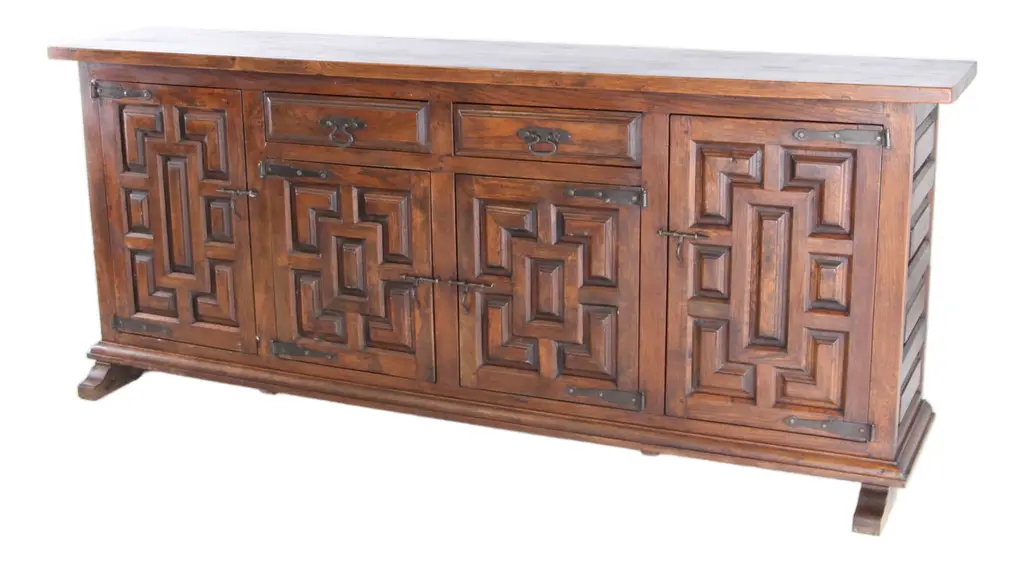
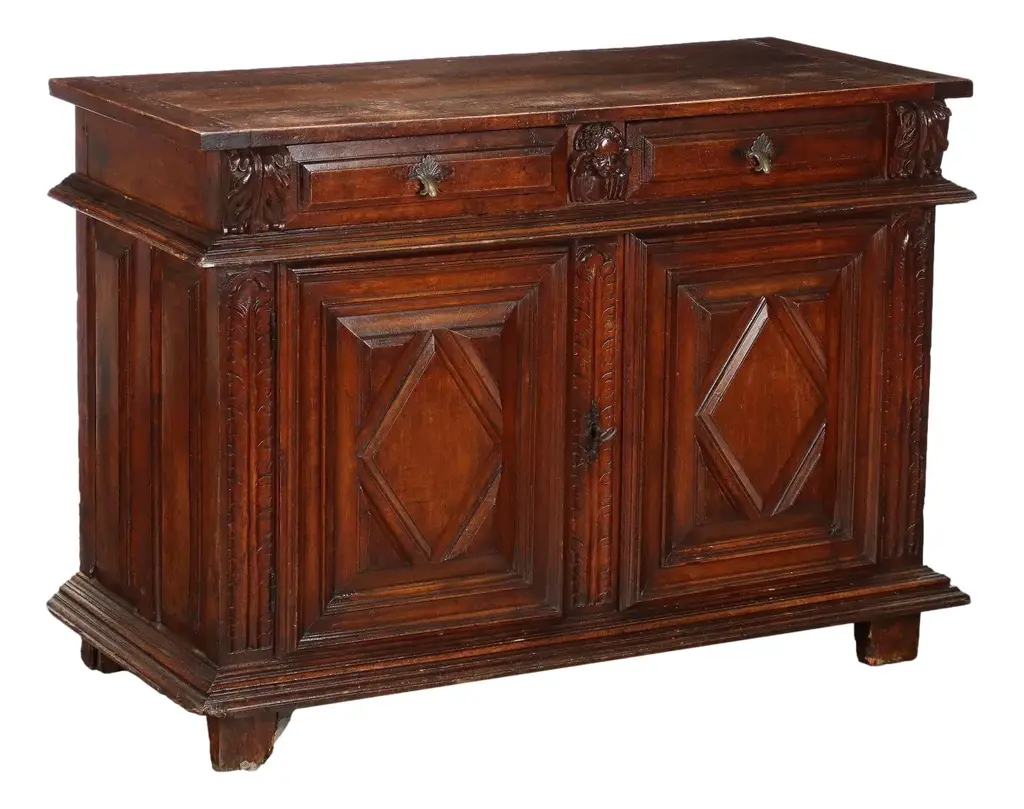
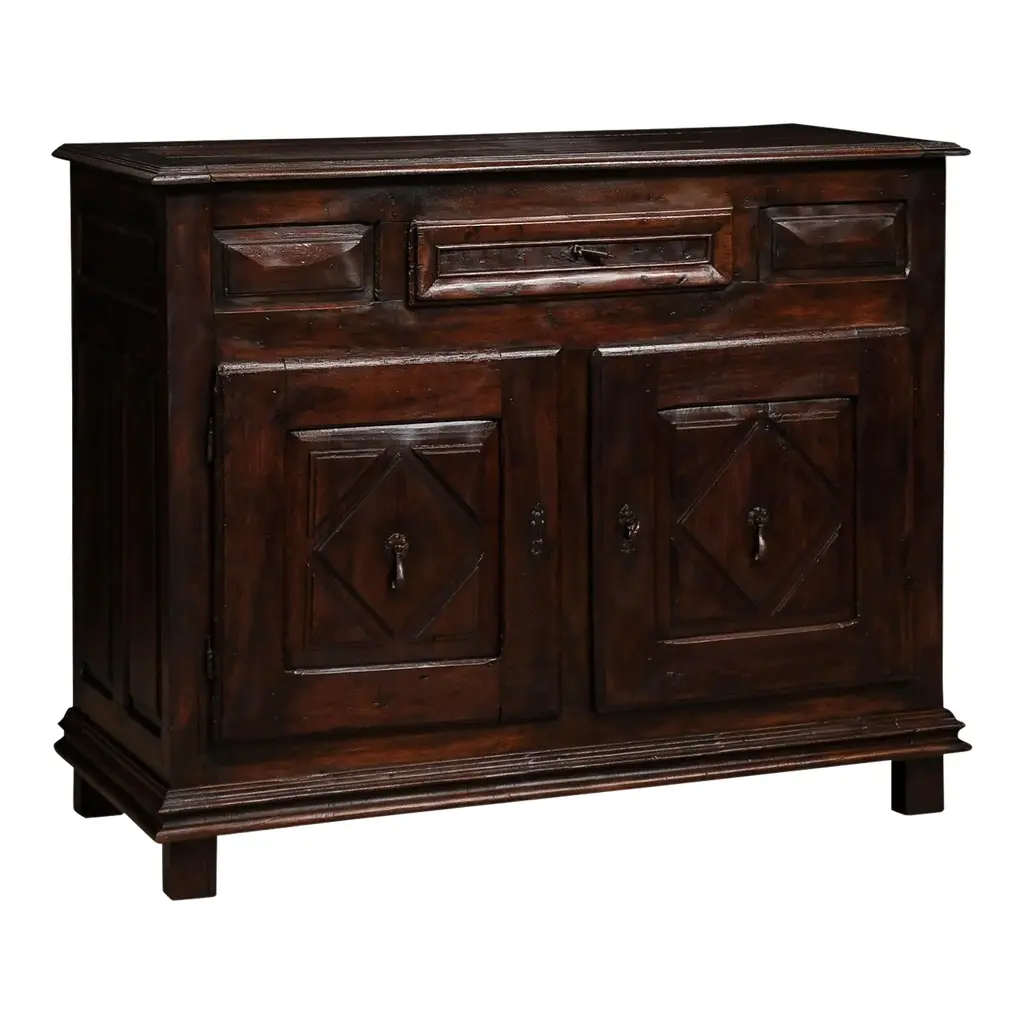
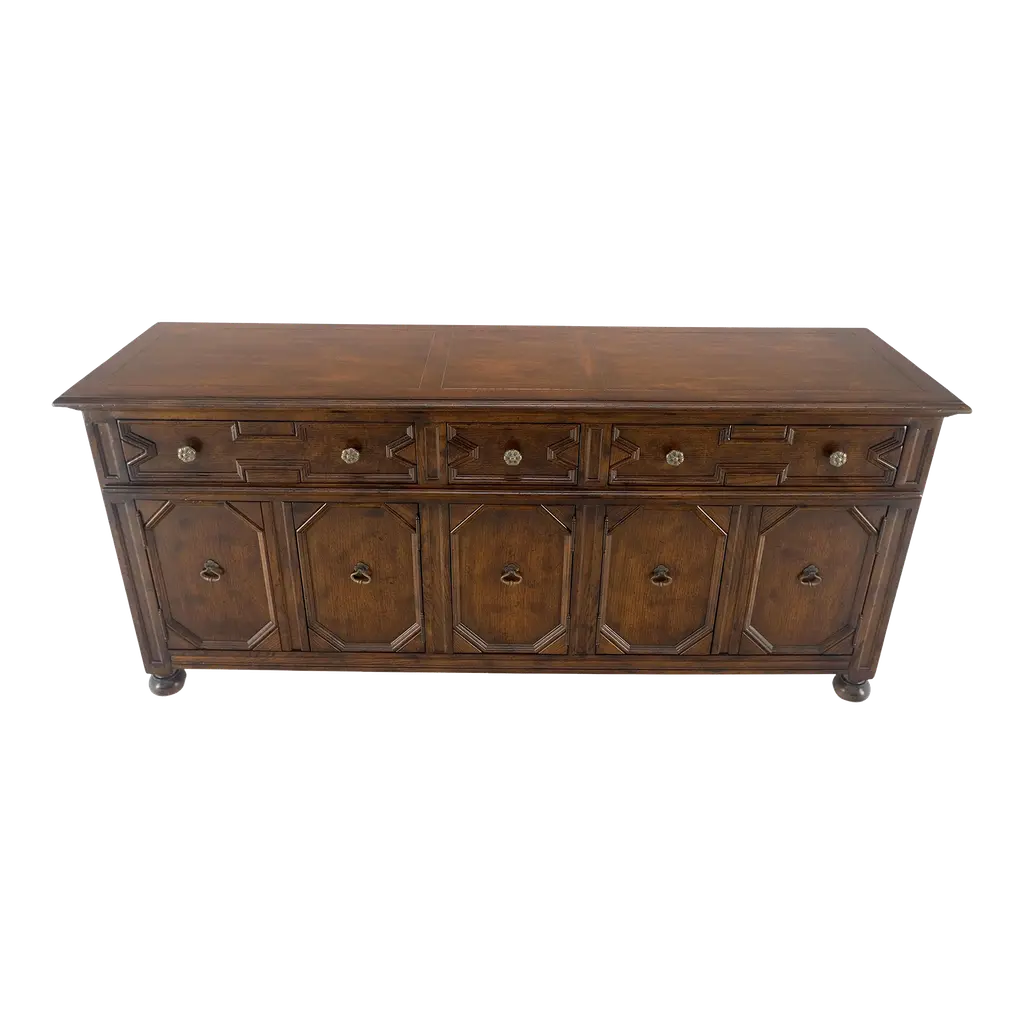
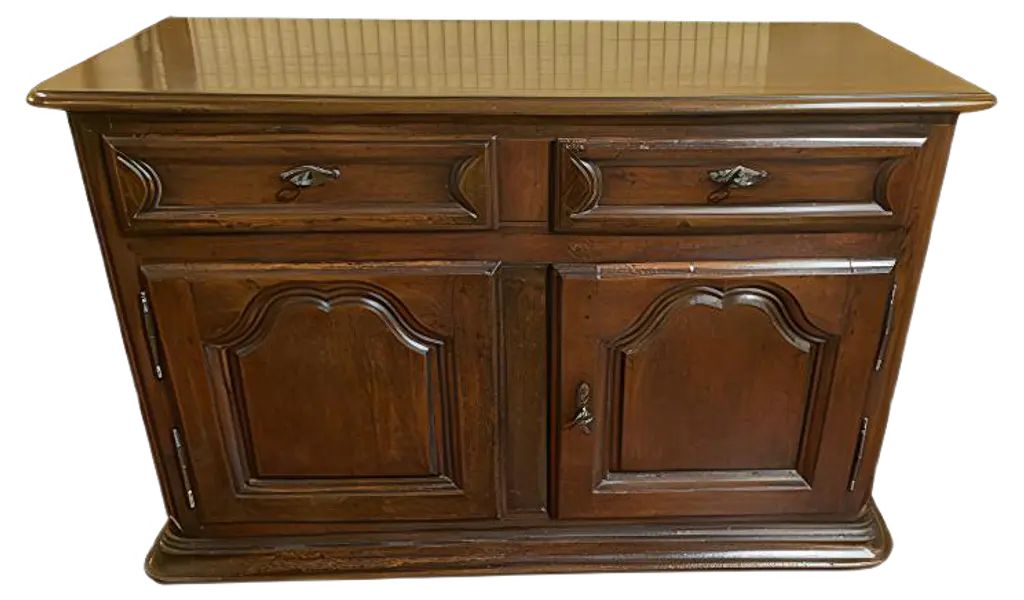
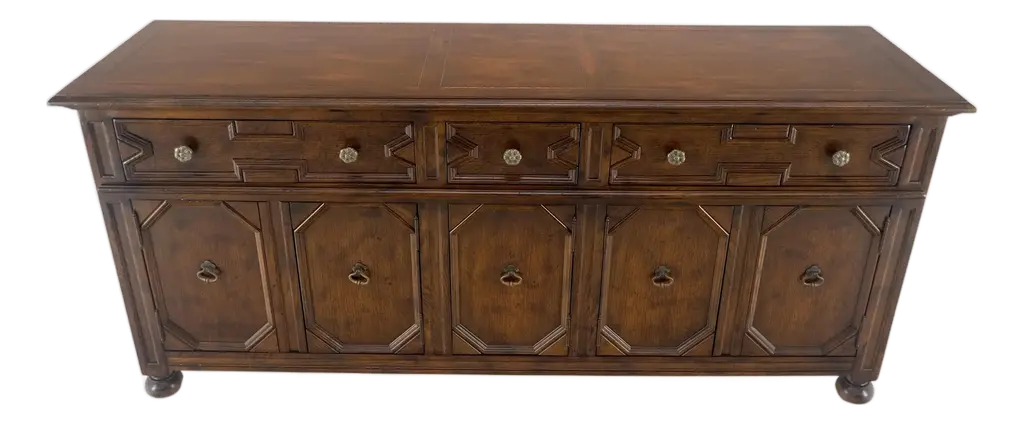
Traditionally all tables were called boards. They would have been large slabs of wood laid across trestles for dining and stacked against a wall when the meals were done. This is why we have terms like "room and board," "laying the board," "chairman of the board," etc. A sideboard was probably originally just a shelf where food which had been prepared before the main dishes were ready would be held before the trestles were brought out and the main tabletop assembled. But that's the boring version of the story. For the cool part we need to go to Italy, where a sideboard was called a credenza. Originally there was a whole room called a credenza, taken from the activity that happened there, the testing of trustworthiness. The same root word we use for "credence" or "credibility." A credenza was where a food taster would check the food for poison before it could be served. The table where the credenza (activity) would be performed eventually adopted the name and became a credenza. After the food taster had done their job the master and their guests would be served from these dishes. As customs changed and villas gave way to homes, the dedicated food tasting room went away, but the item didn't. It became a fixture of the dining room, and as such became more decorative. This is a Gothic Revival (1830-1890 approx) Walnut Credenza with original brass drop pins as well as the original lock, in working order and with key. The slightly compressed bun feet in the front provide great strength. The gothic vaulted arches we can see in cathedral ceilings from Notre Dame to Strasbourg has been reproduced on the main doors. The highlights of the figure of the walnut wood with a tiger stripe pattern are emphasized on the raised arches and frames. The top has a built in backboard to prevent items from falling behind it. The drawers have brass pulls with period correct, possibly original, designs. The sides are an elegant simplicity. A prior owner installed an adjustable shelf and a pass-thru for wiring or bringing power into the unit when it is closed.
Similar products