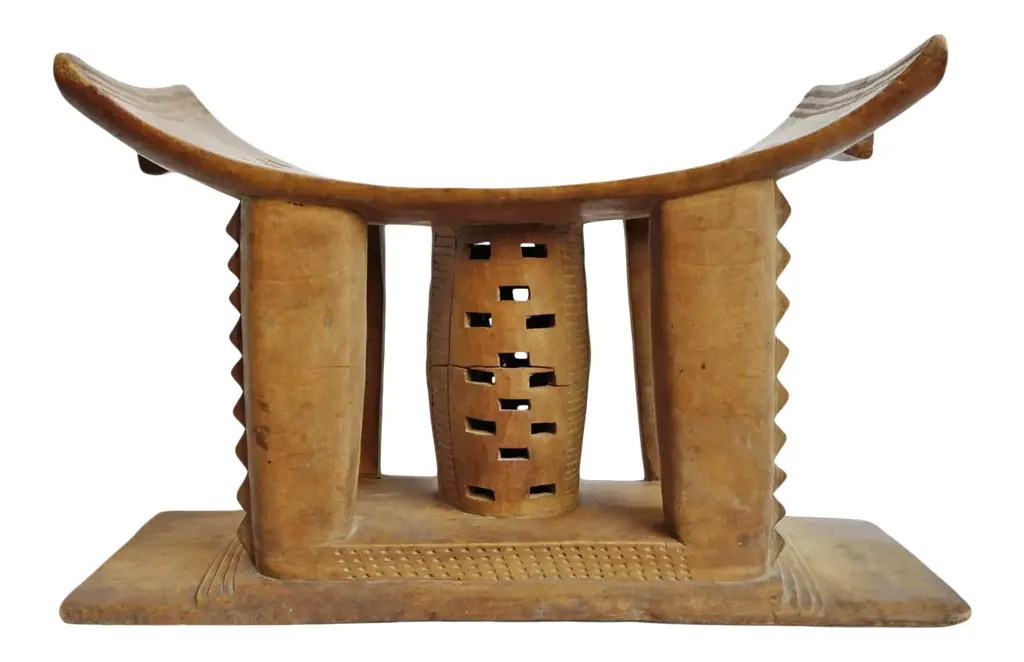
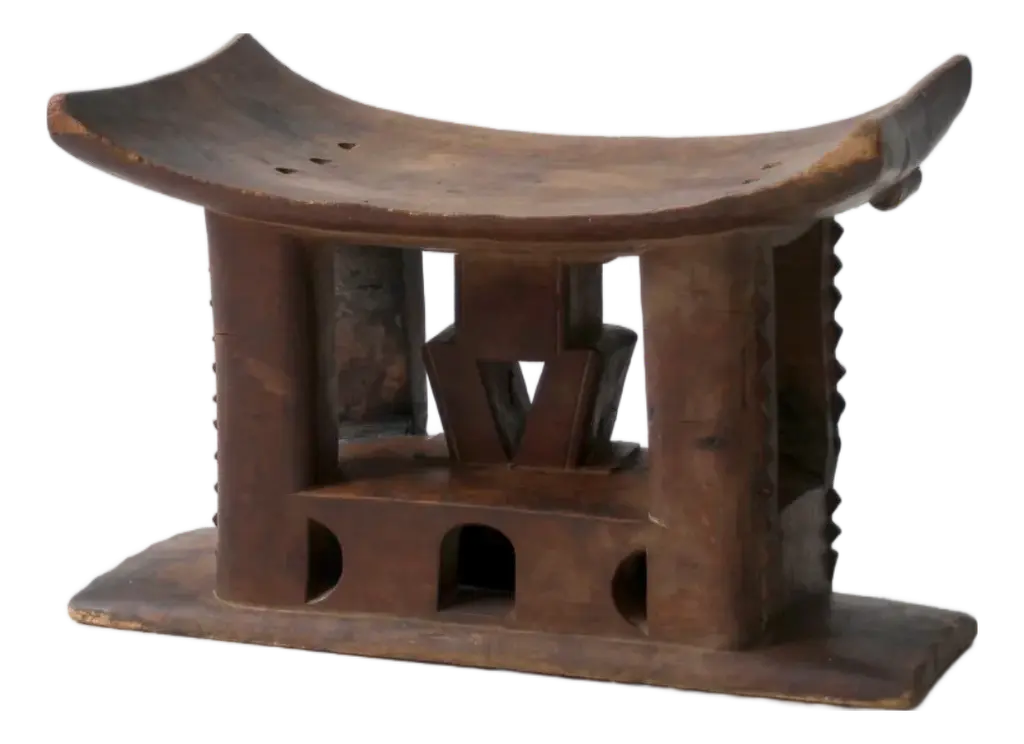
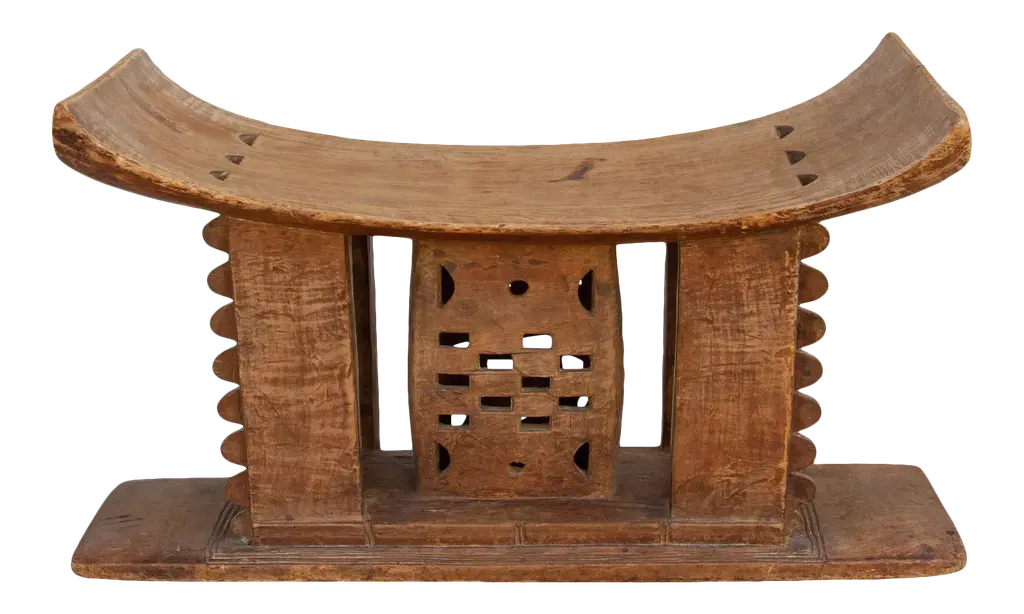
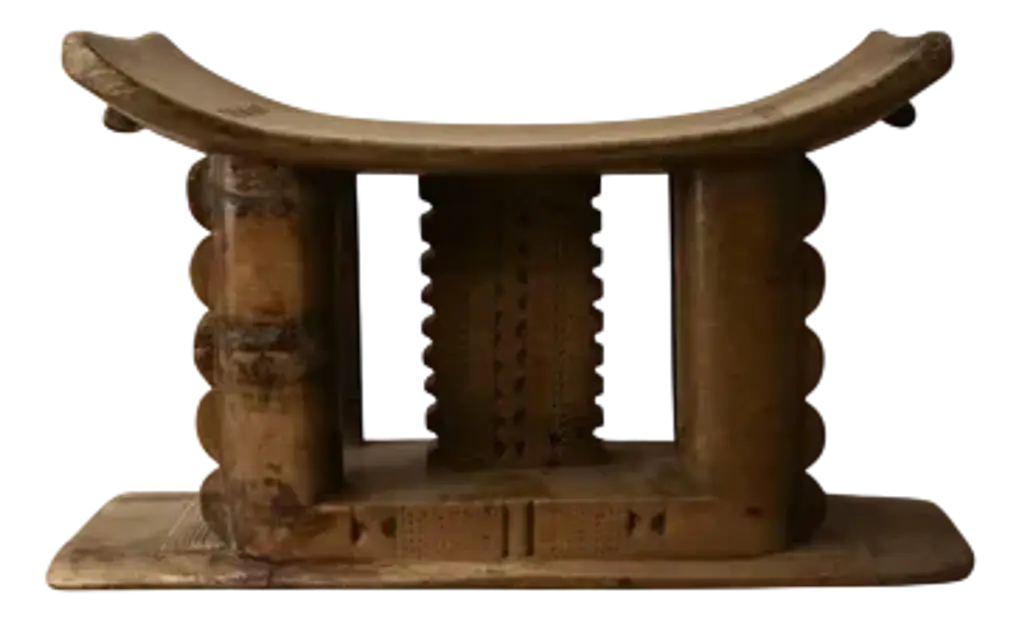
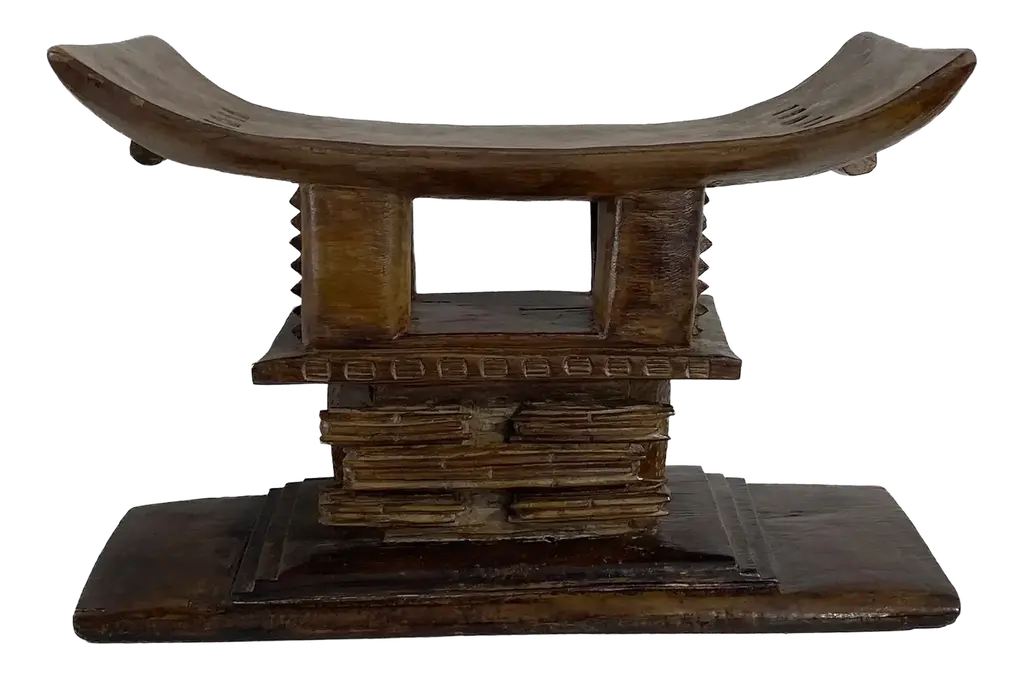
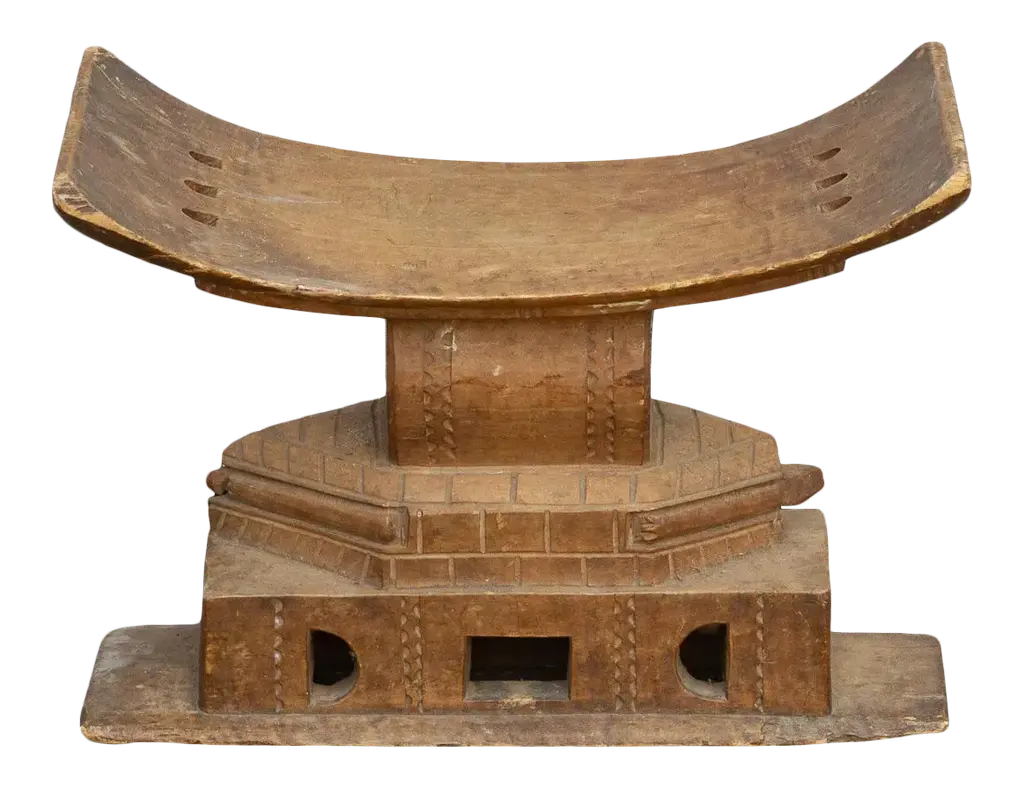
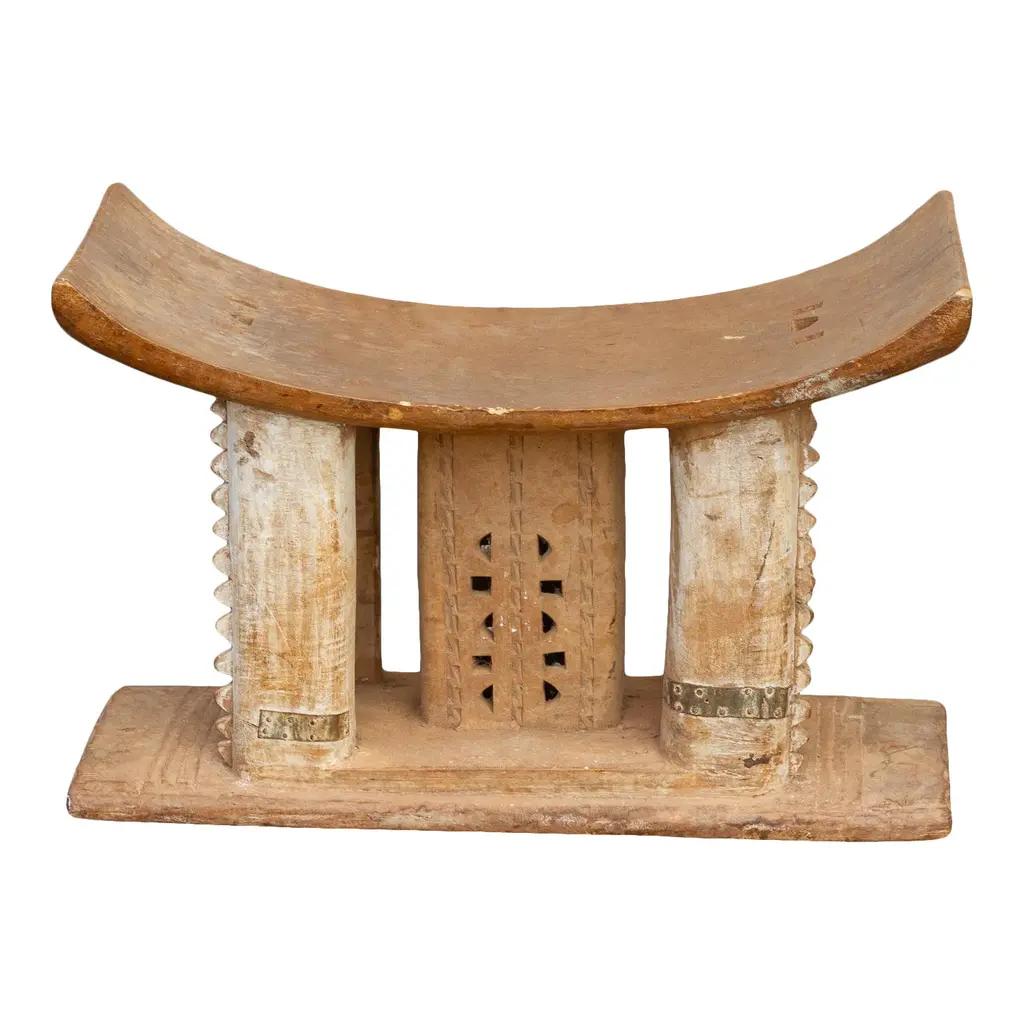
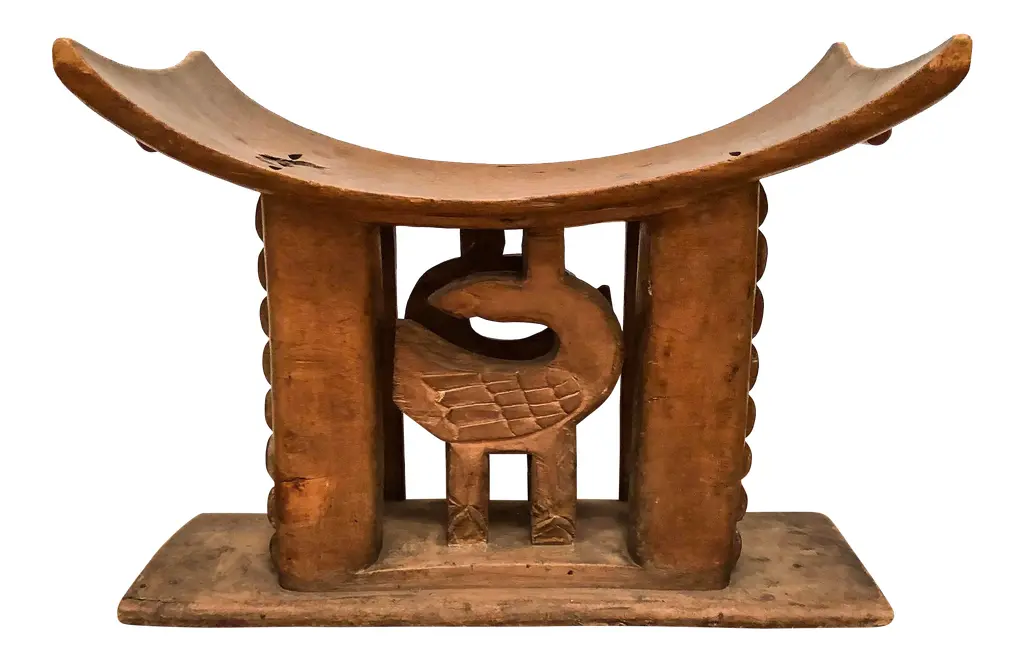
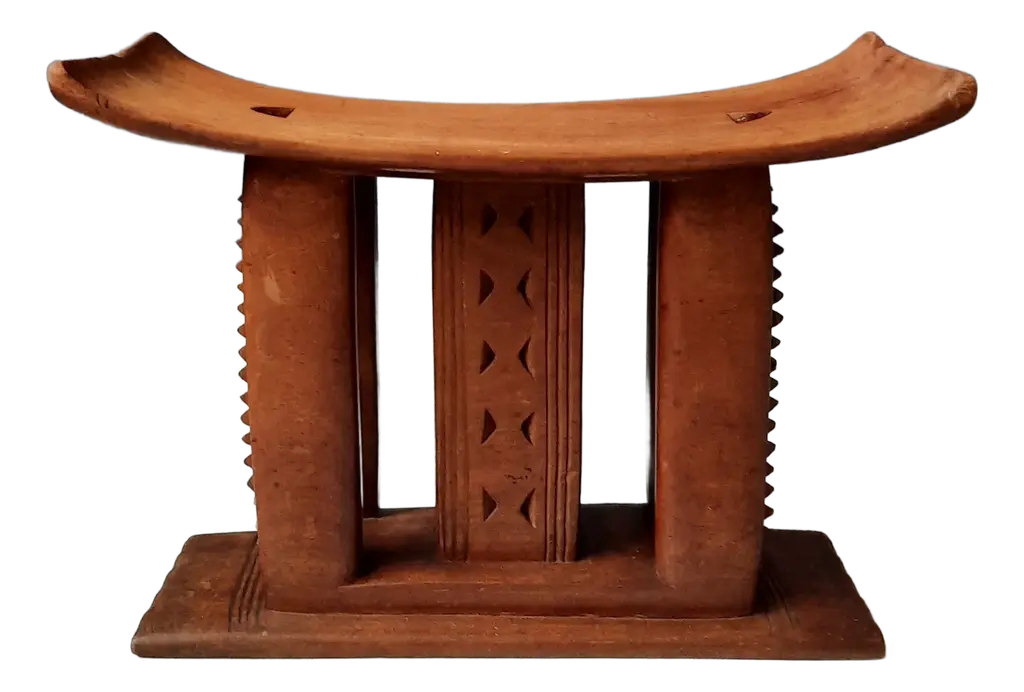
Ghana Ashanti African Wooden Stool Two small white dots on one side. Should come off with the proper cleaning. Condition consistent with age Cultural symbol among the Asante / Ashanti (Akan) people. Stools are traditionally carved from a single block of hardwood and represent the spirit (sunsum), identity, and social standing of their owner. Within Asante society, stools signify rank, lineage, and political authority. Each Asante king was keen to associate his reign with a stool bearing a new design, using form and innovation to mark his legacy. This tradition is most famously expressed in the Golden Stool (Sika Dwa Kofi), the sacred symbol of Asante unity and kingship. Many stool shapes have specific meanings or saying associated with them. Antique stools, with their deep patina and signs of use, are therefore valued not only as sculptural works but as records of Ghana’s historical continuity. This is likely a Mma Dwa Women's stool. Traditionally, a man would give a woman this stool after marriage.
Similar products