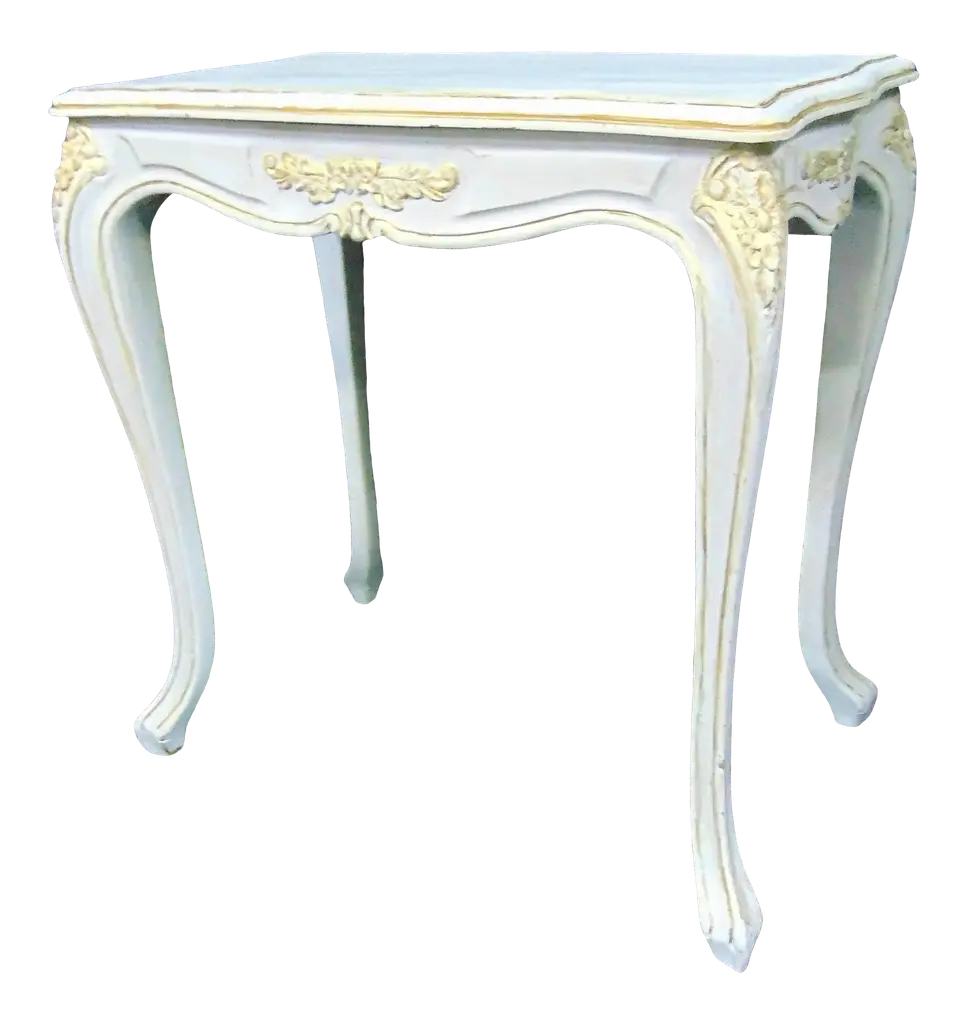
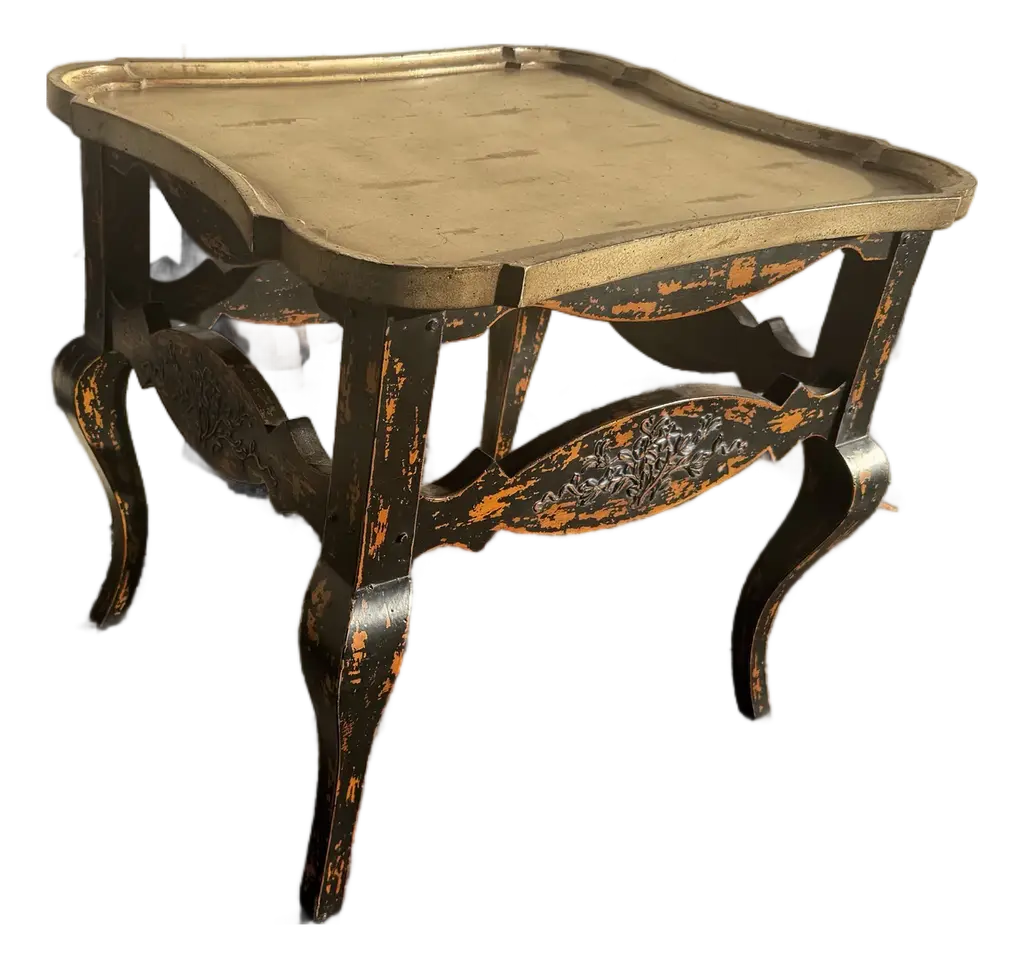
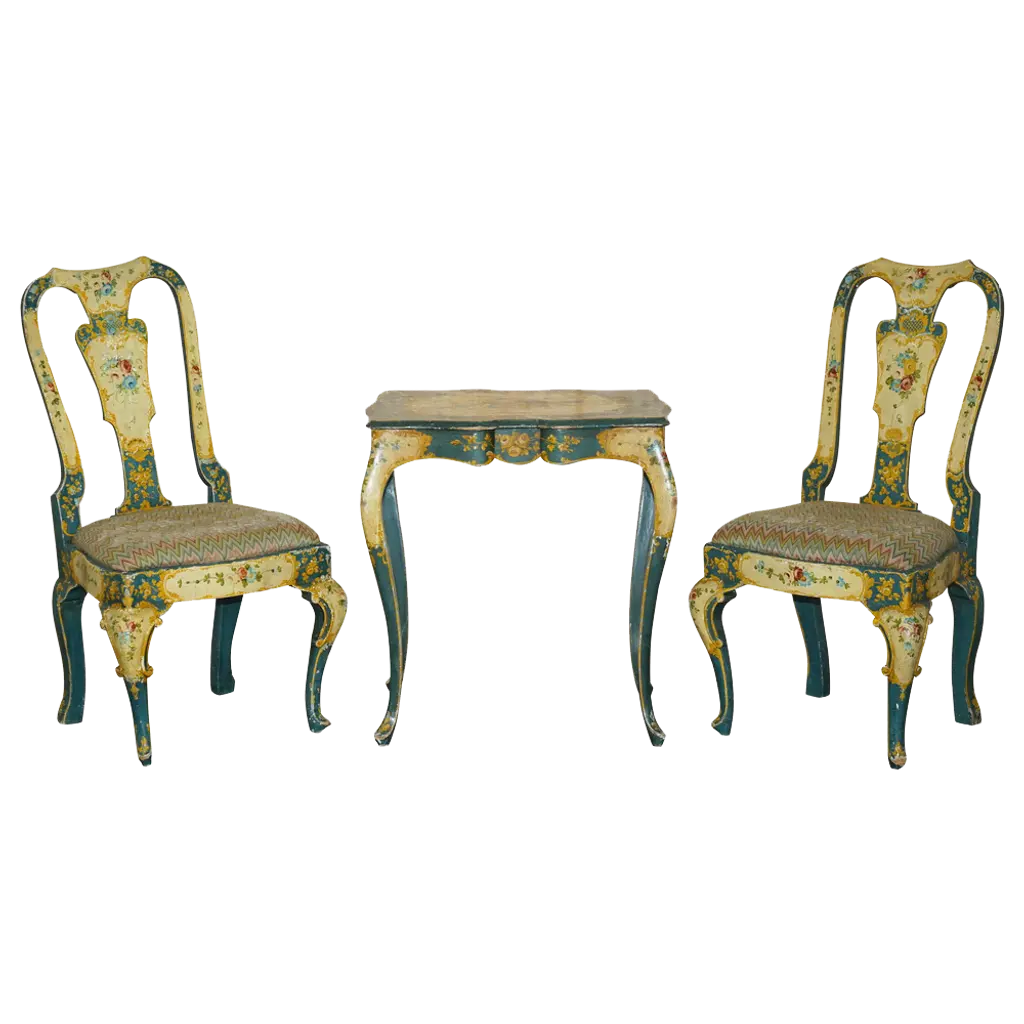
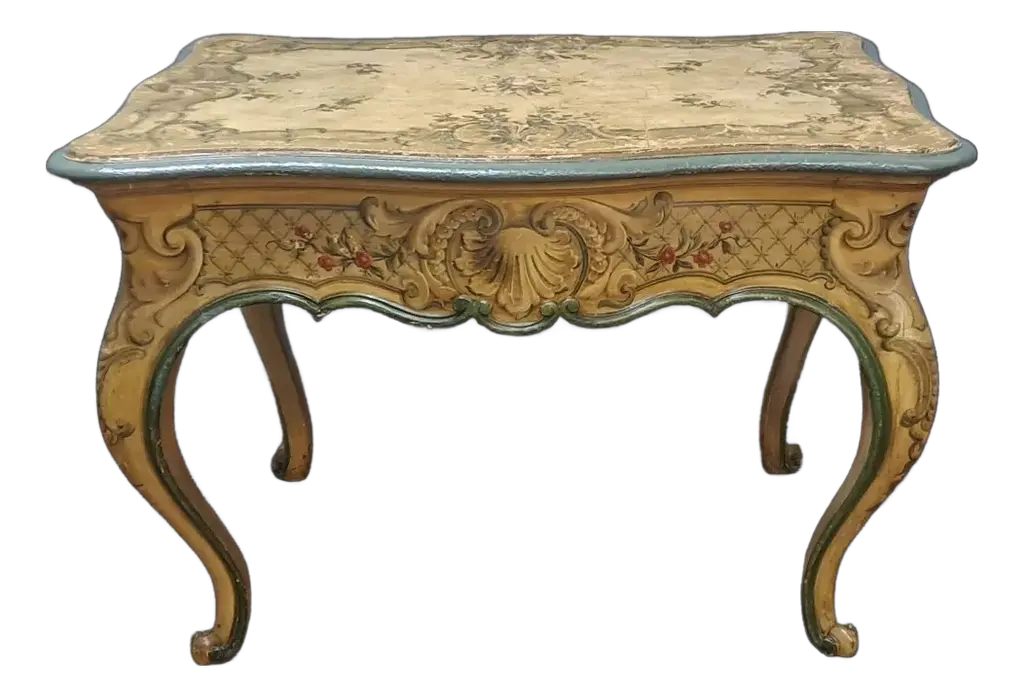
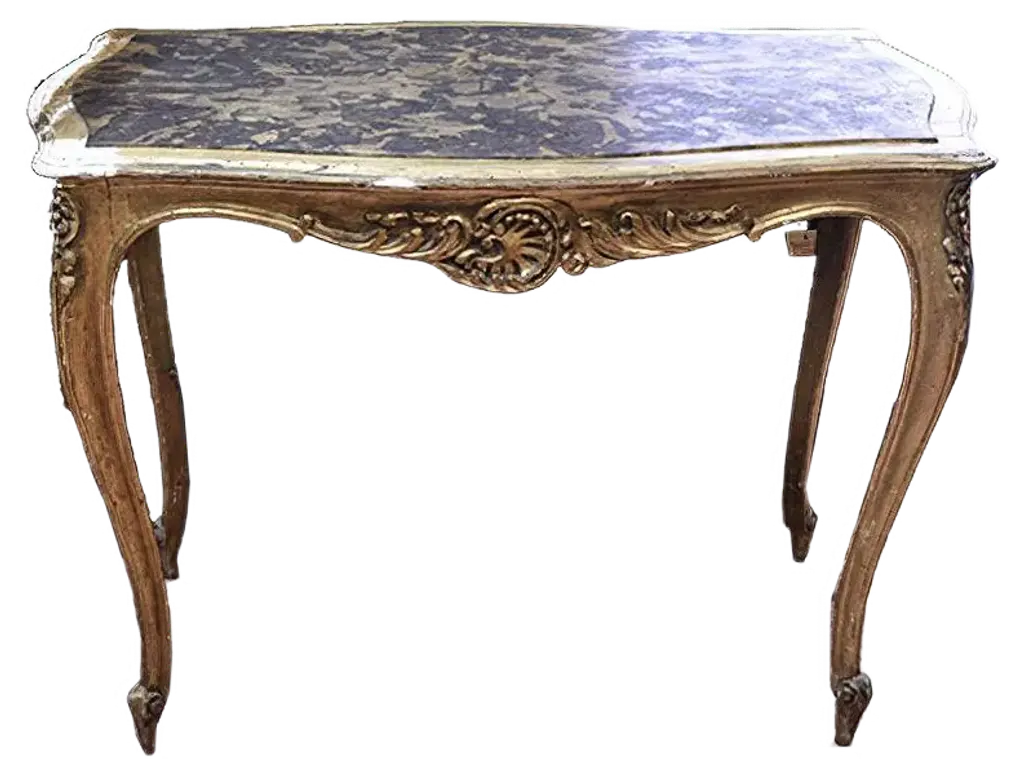
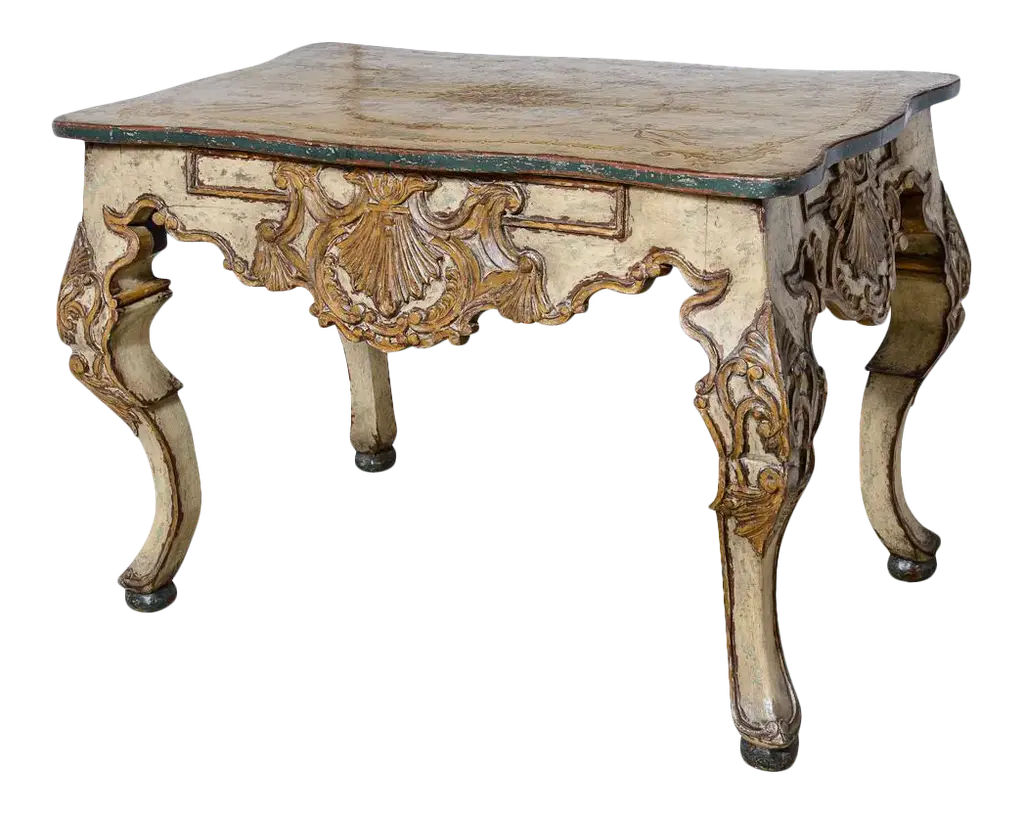
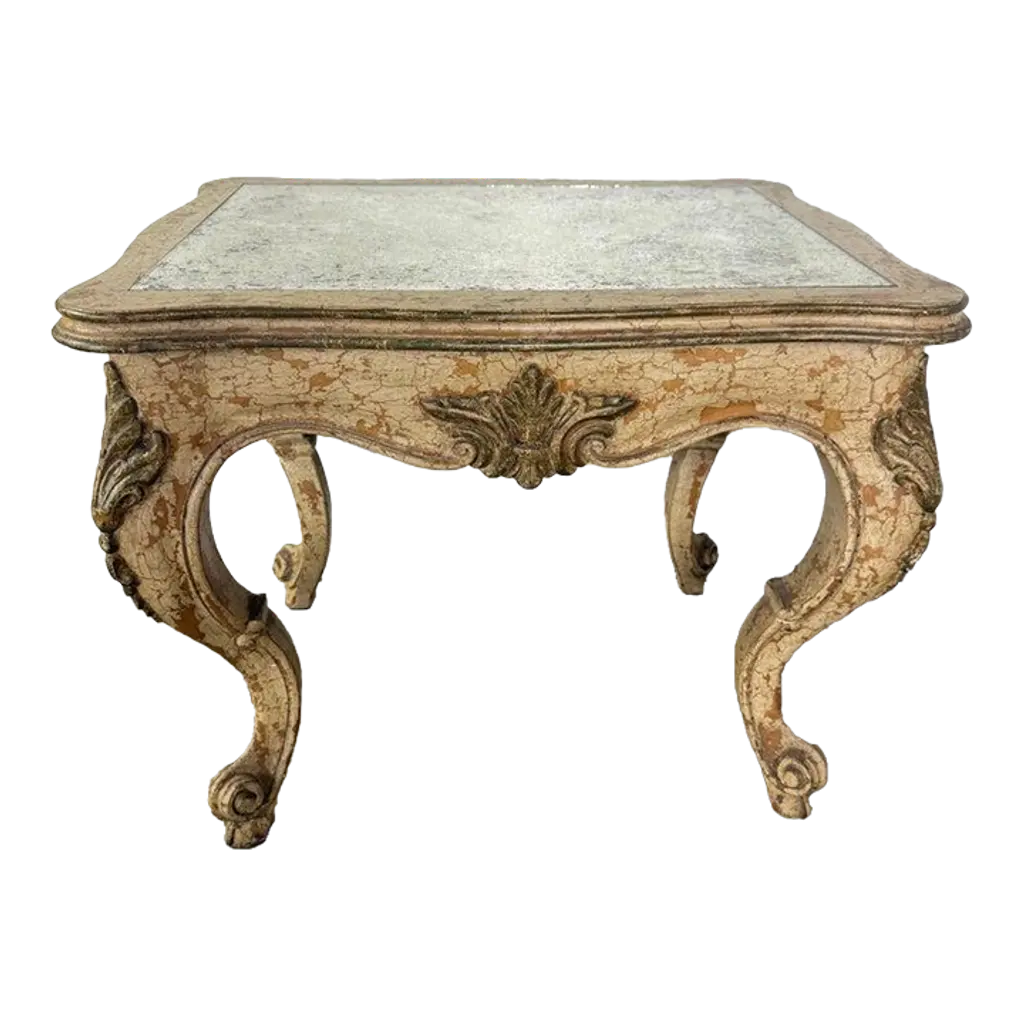
The history of tabourets is quite fascinating, as they represented status symbols when first introduced during the reign of Louis XIV in the mid-1600s. Our painted and parcel giltwood tabouret is from Italy and was hand-carved circa 1850 with an abundance of graceful, asymmetrical curves and motifs inspired by nature. Some of the original gilding is still visible and has been paired with hand-painted golden accents over the wonderful light blue finish. Four sweeping cabriole legs, each adorned with a roquillard embellished with fluting, support the curvaceous seat that has a bombe protrusion on each edge. The apron of the longer sides features an asymmetrical leaf margent that engulfs a pierced circle. A small flowering cartouche adorns the aprons of the two shorter sides, continuing the organic theme. Originally designed to be seating for high-ranking noblewomen in the presence of a king or queen, tabourets eventually morphed into more versatile furnishings. Our Italian painted and gilt tabouret can also be used as a footstool, a small end table, or even a stand for an indoor plant or sculptural object.
Similar products