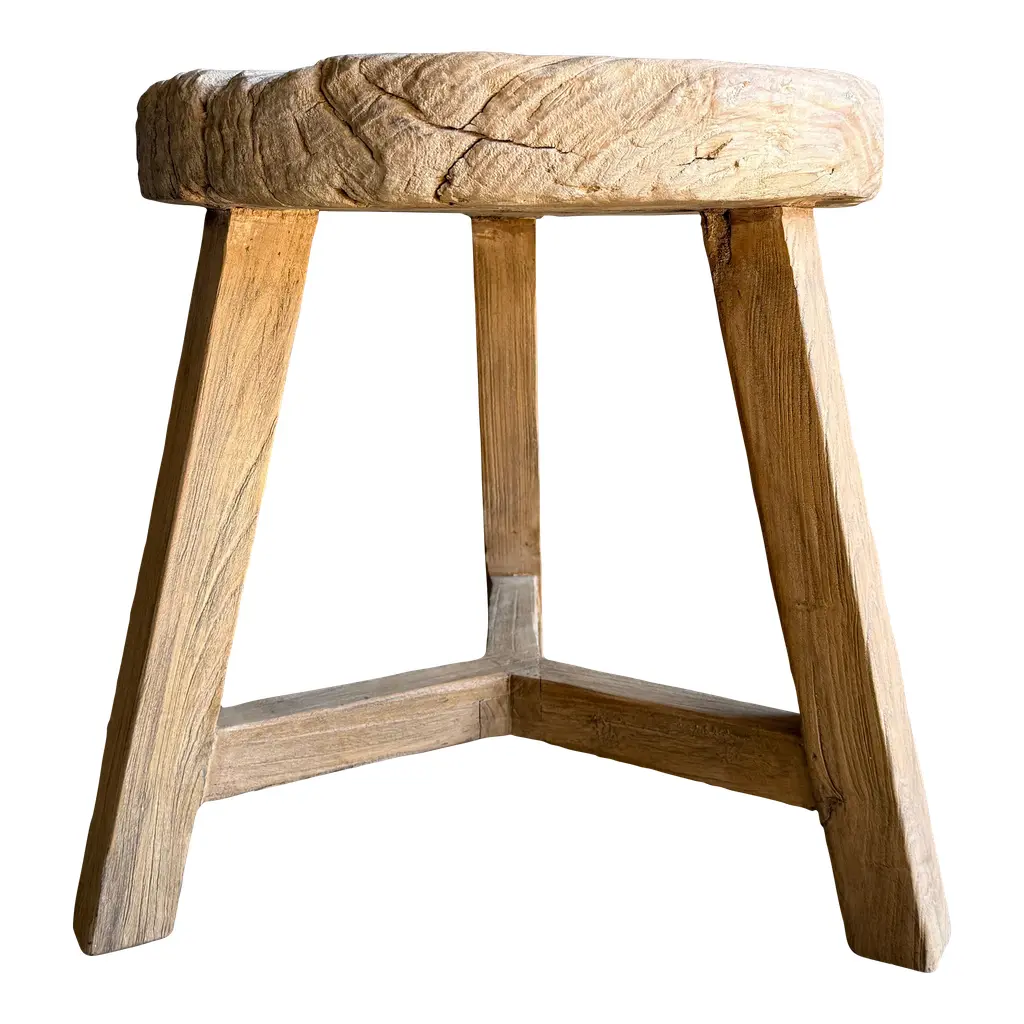
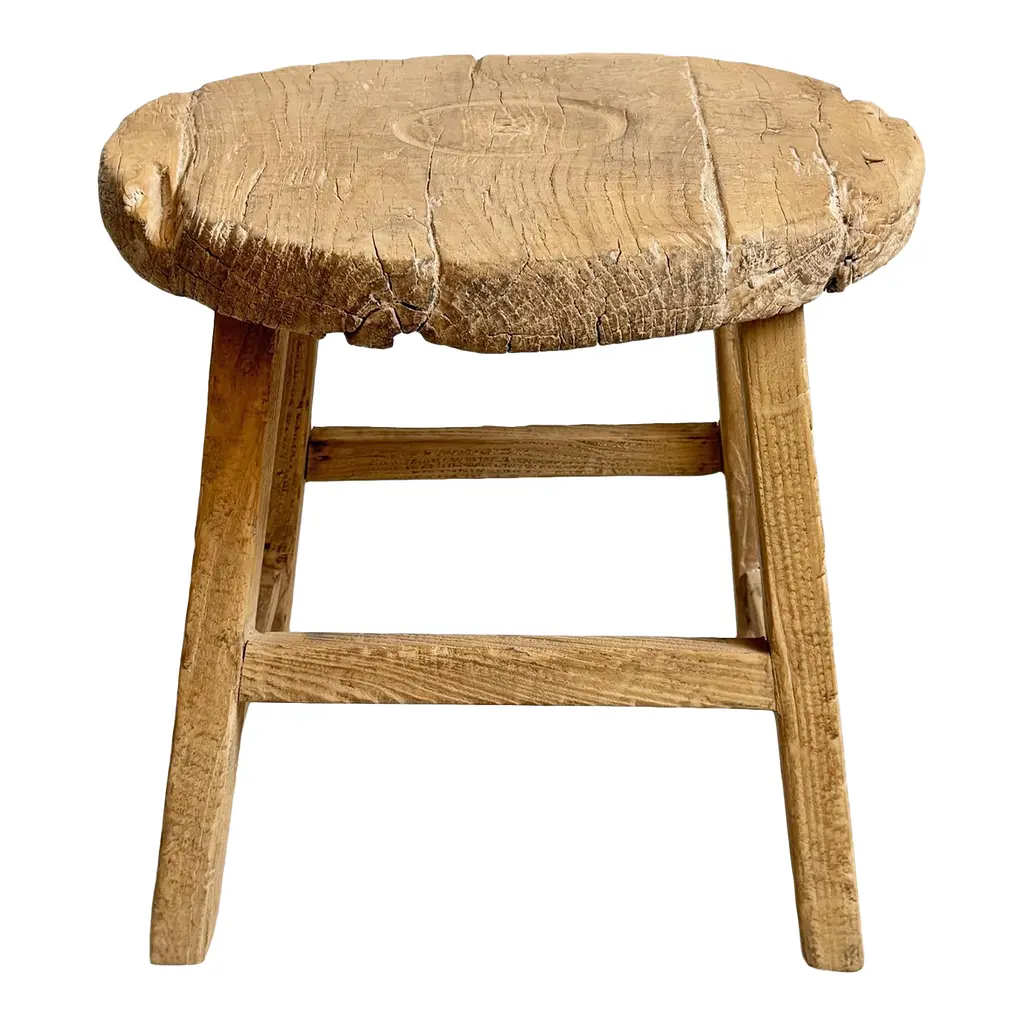
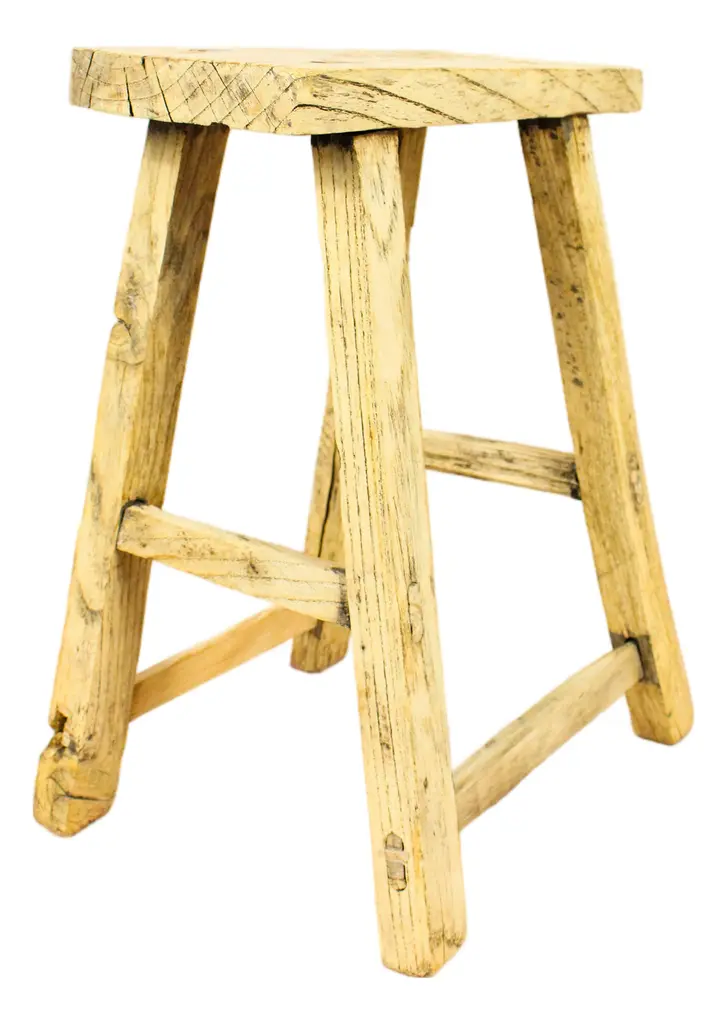
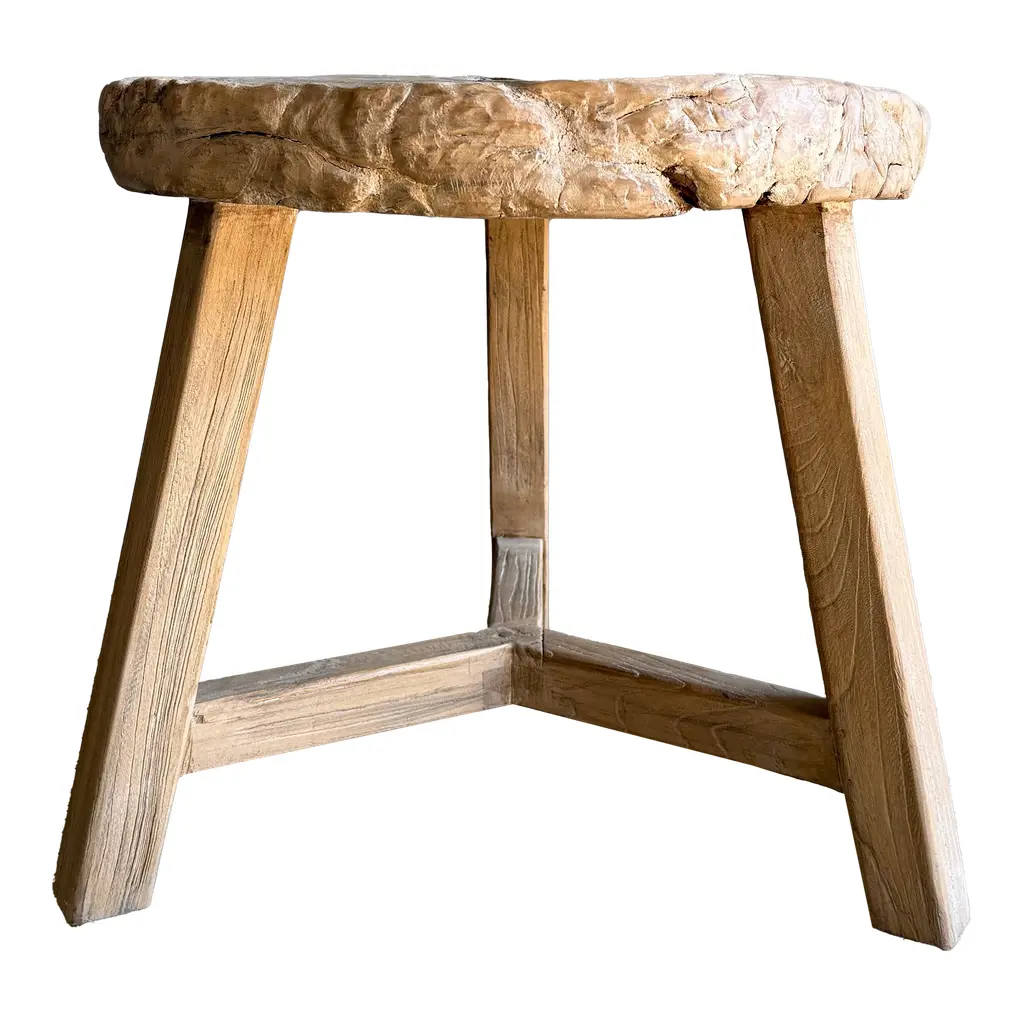
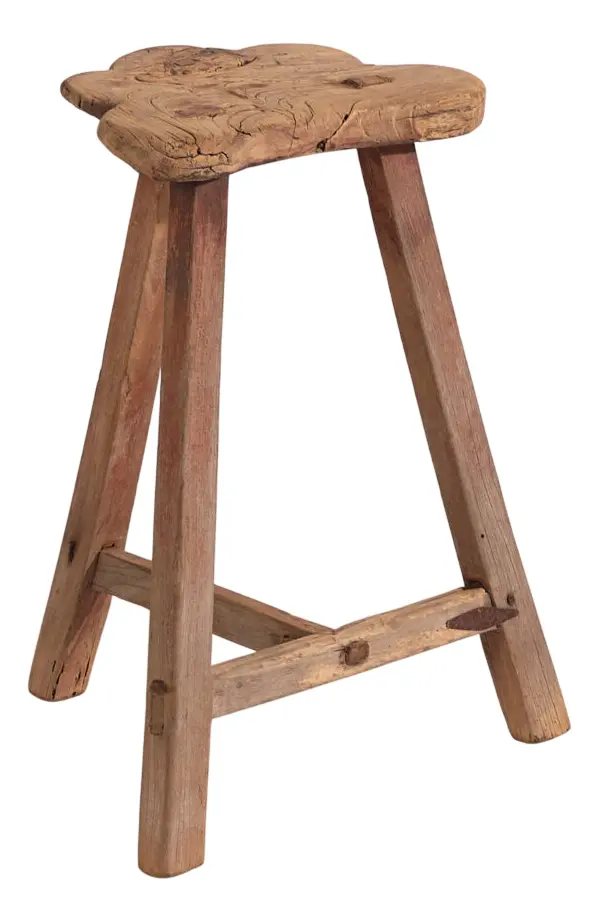
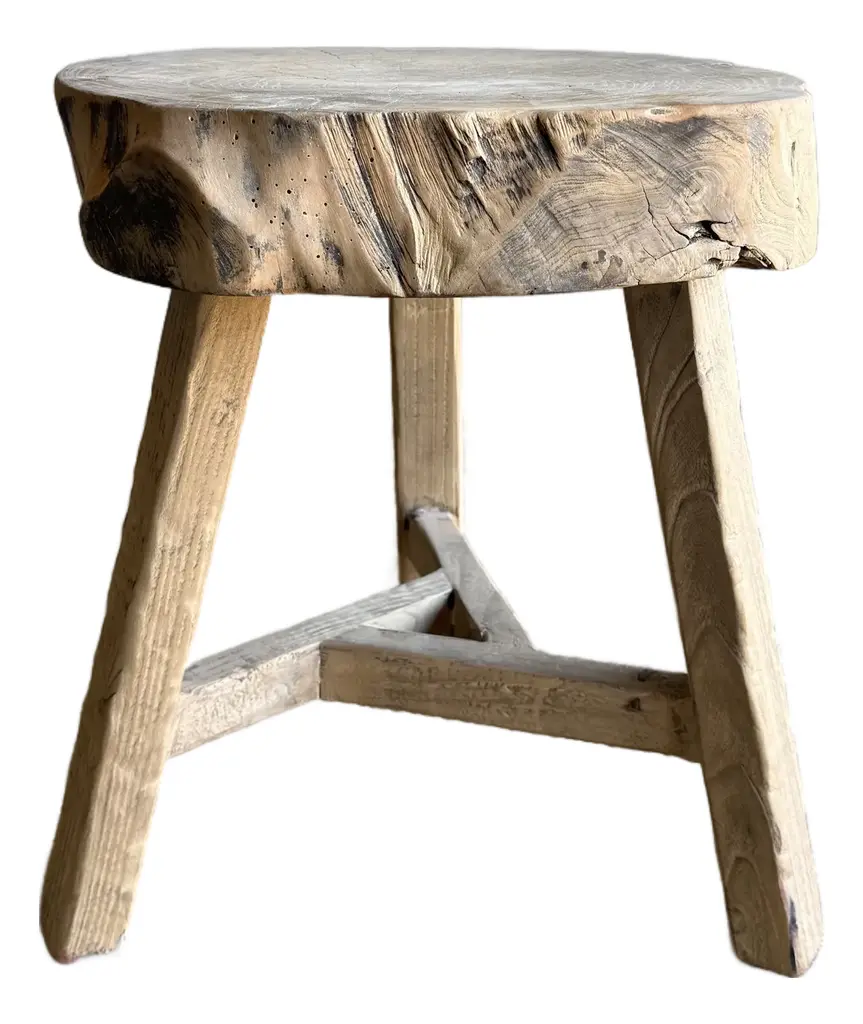
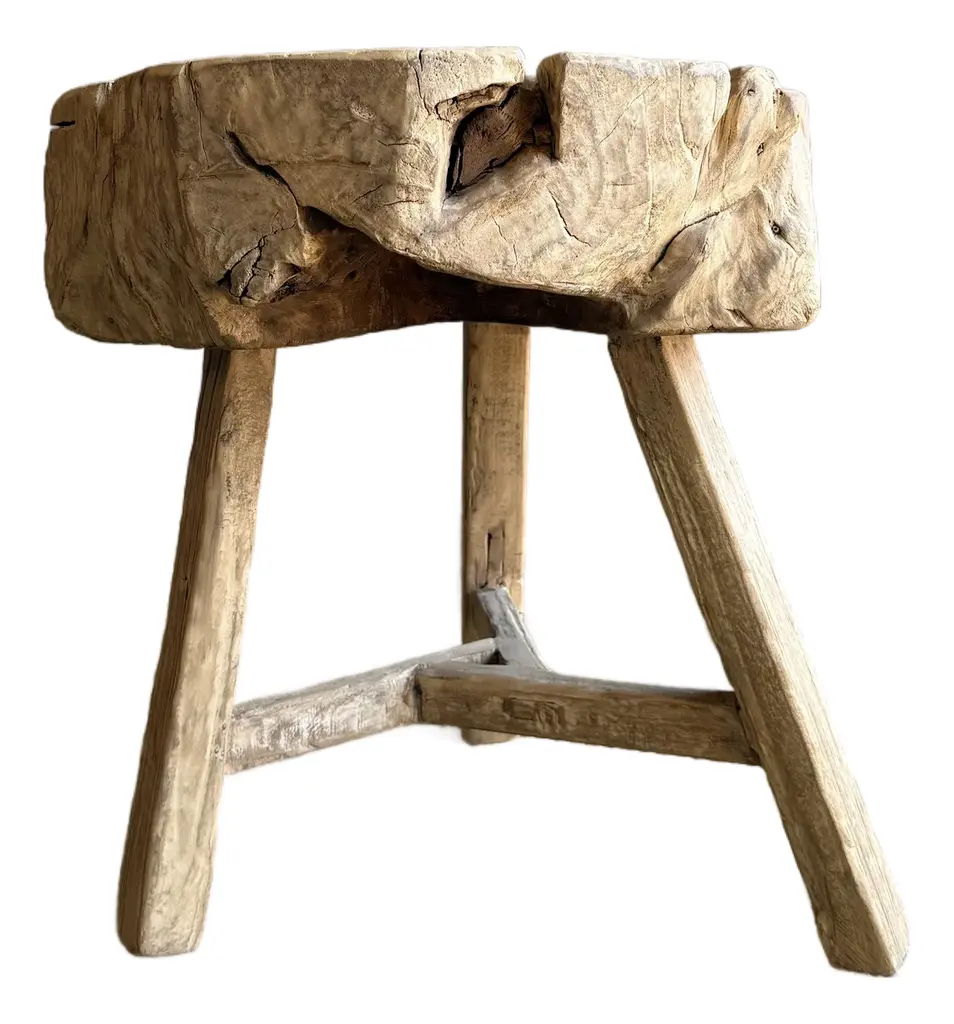
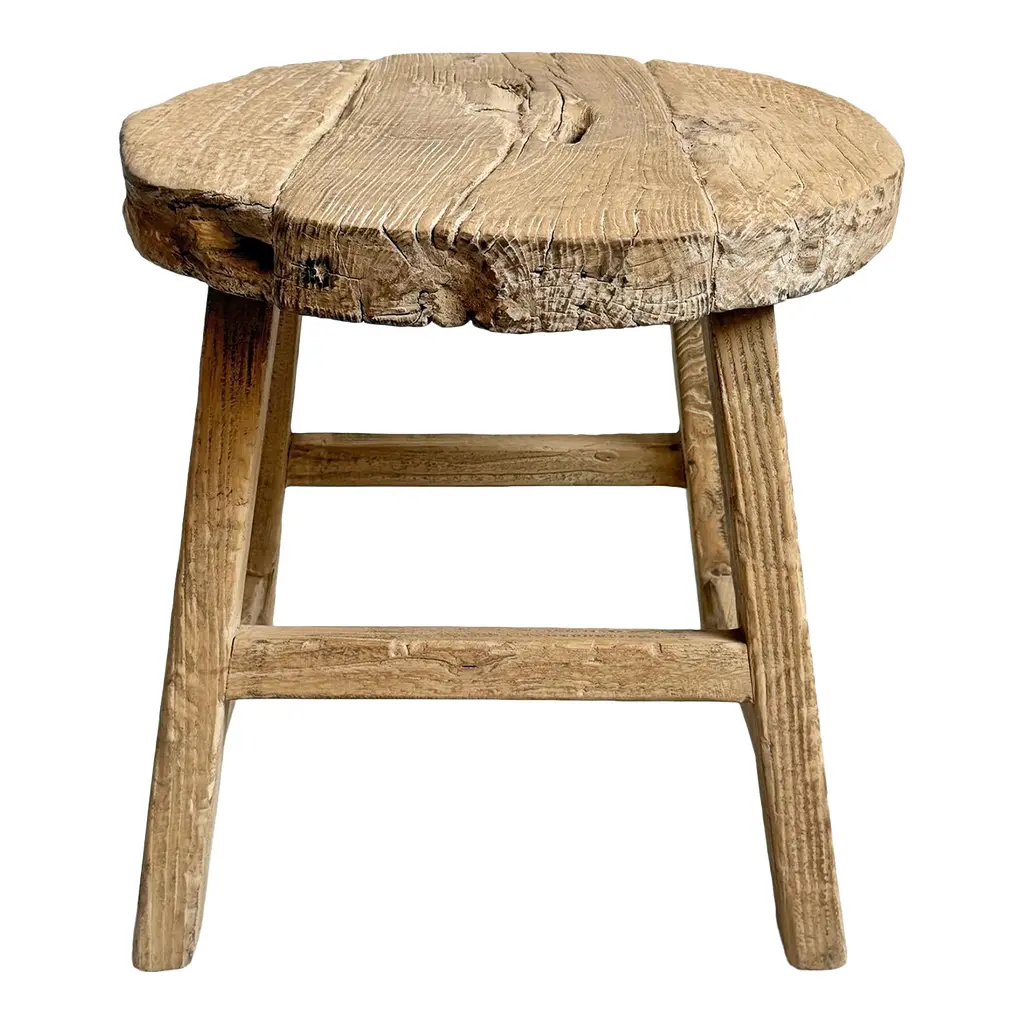
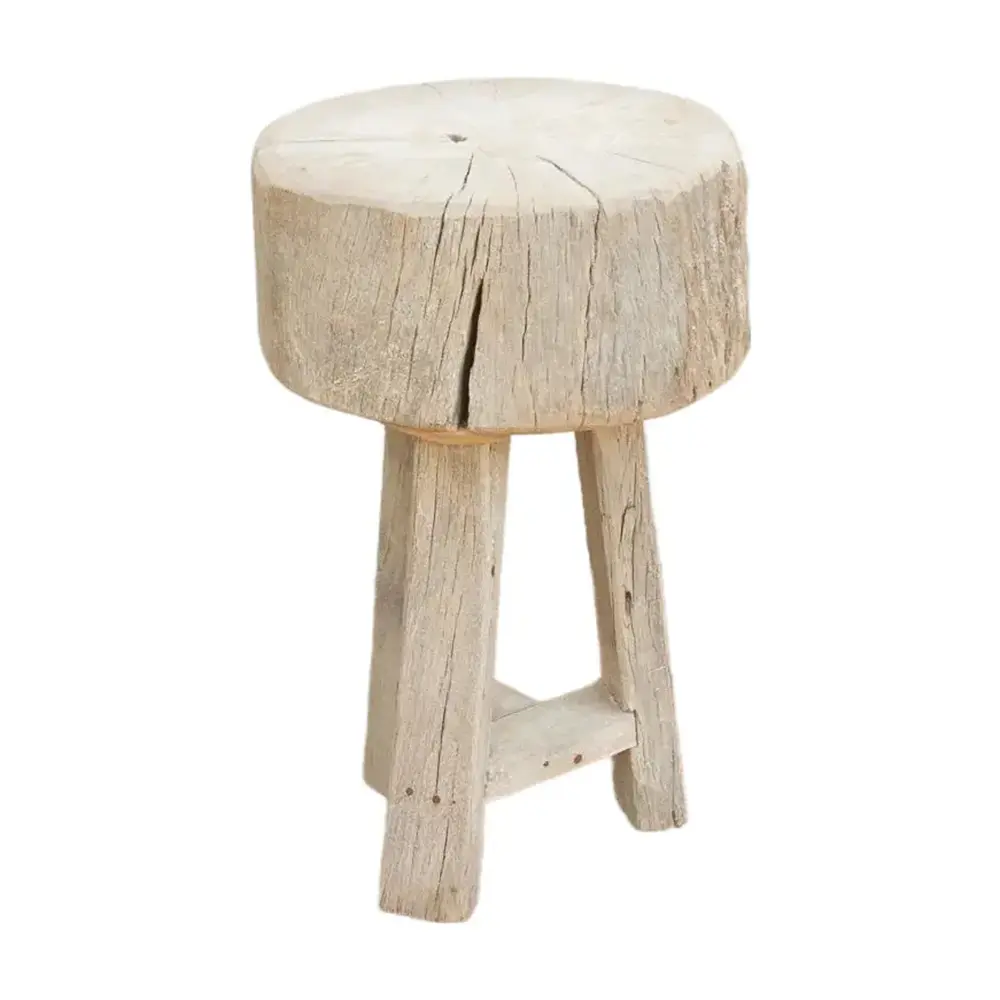
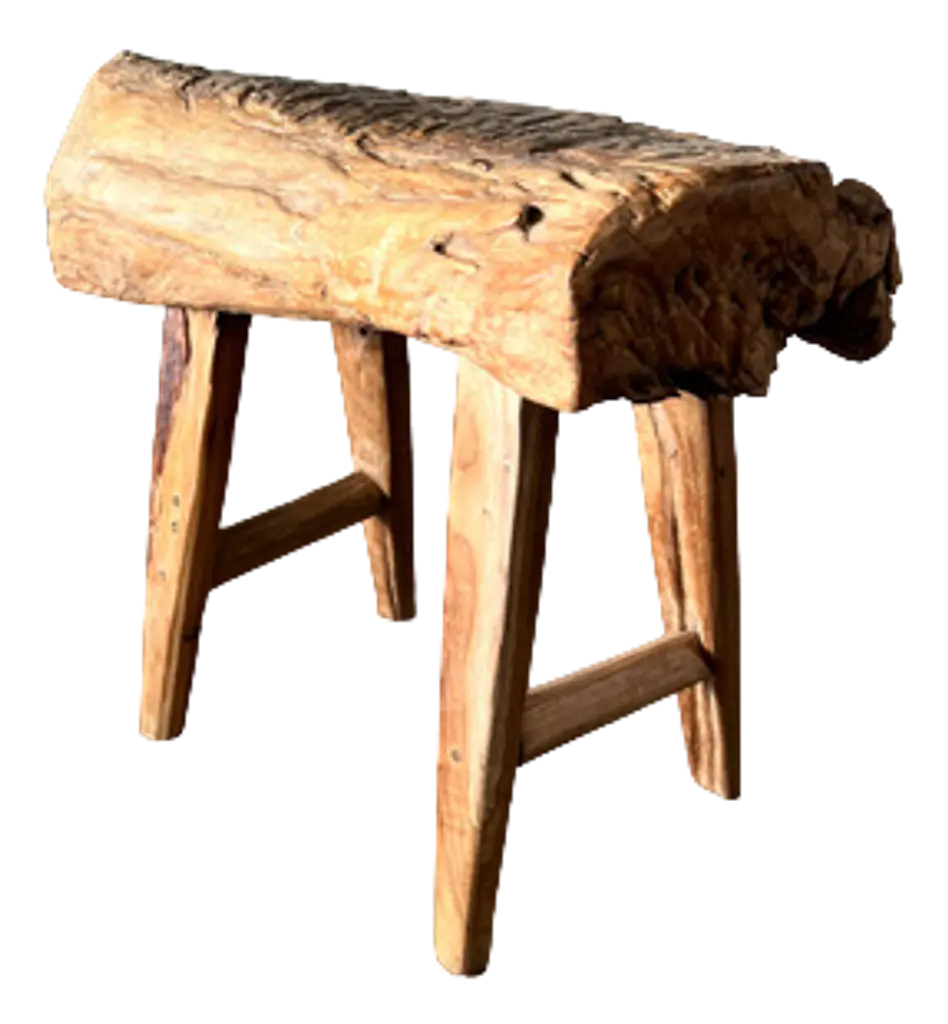
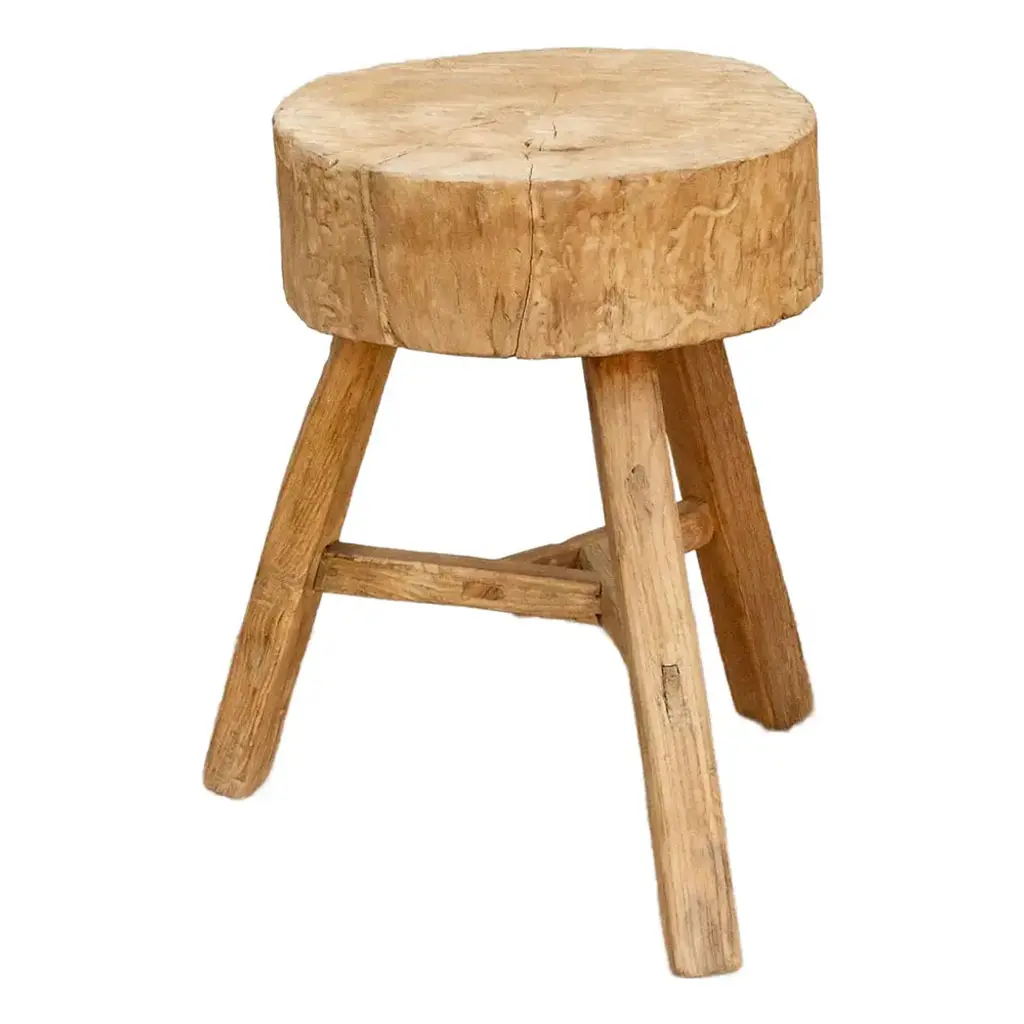
This 19th-century stool from China's Shanxi province charms with its top-heavy form and wabi-sabi texture. Likely cobbled together from spare wood, the stool's splayed leg form celebrates the twists and bends of northern elmwood (yumu) timber, no two pieces quite the same. A thick chunk of elm comprises the seat, sawn along the wood grain to an irregular shape with tree growth rings still traceable at one end. The heavy seat is supported by four splayed legs, each linked by straight stretchers using traditional mortise-and-tenon joinery. When not in use as a seat or side table, the rustic stool likely doubled as a kitchen chopping block, as evidenced by the many blade marks that texture the seat and enhance the natural beauty of the grain.
Similar products