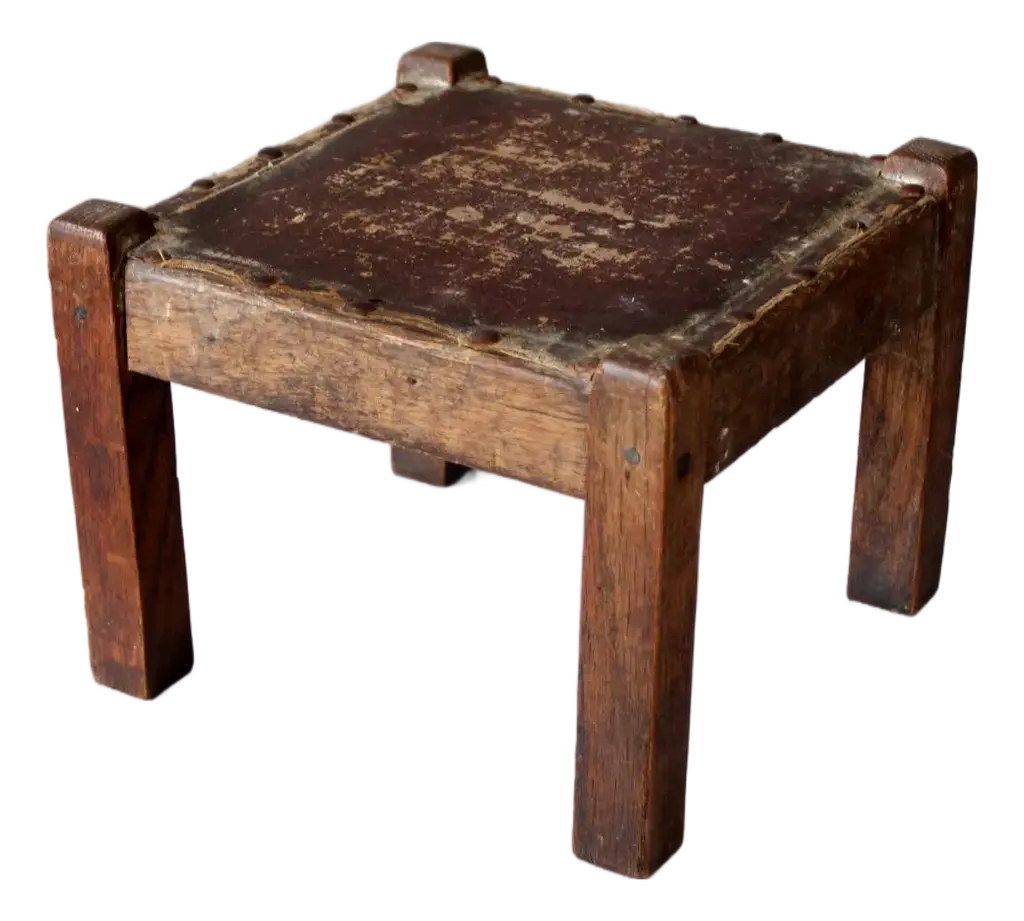
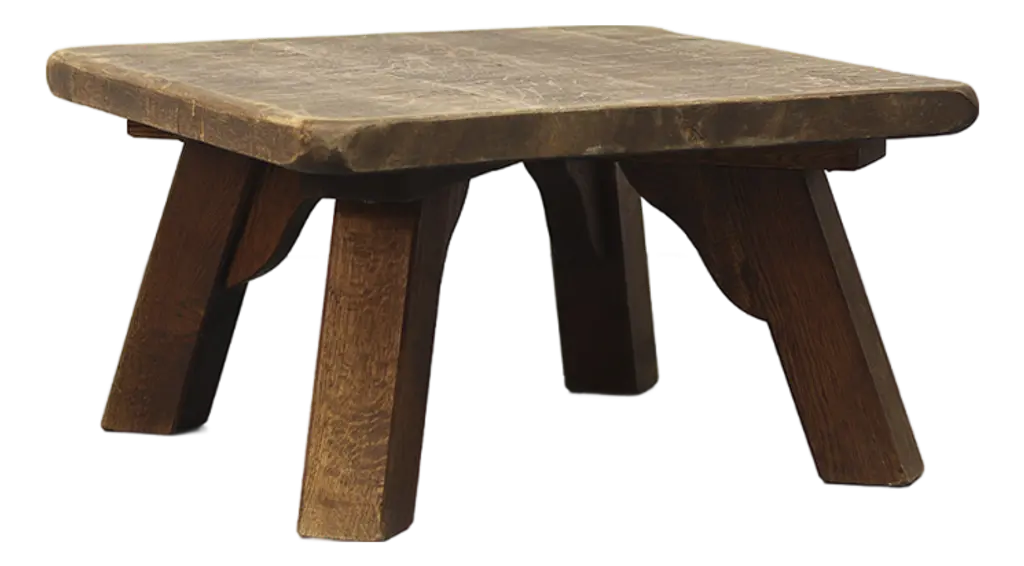
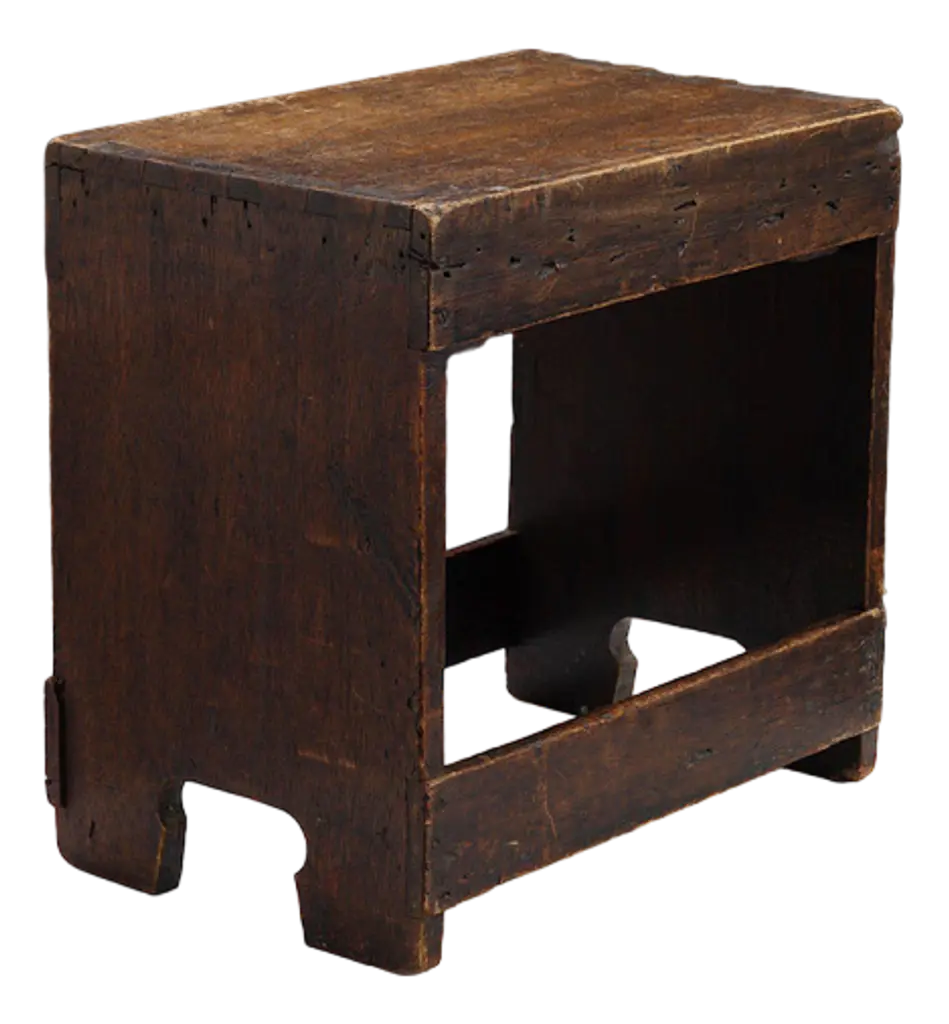
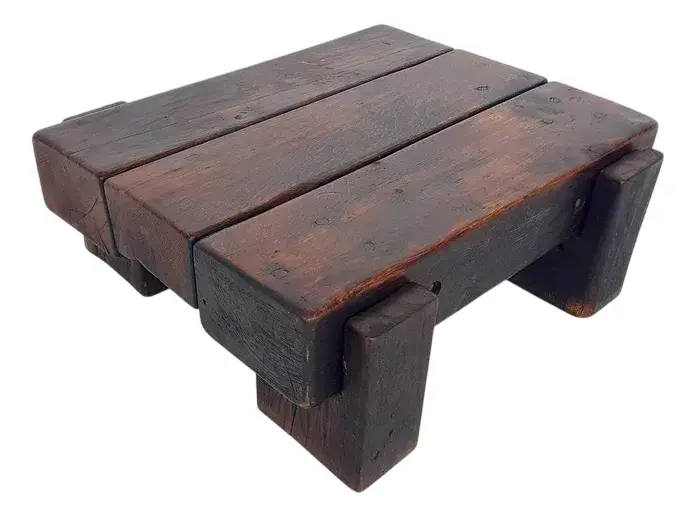
An early 20th century Gustav Stickley Arts and Crafts footstool, model No. 302, often referred to as the “Monk,” executed in quarter-sawn oak with its original leather seat. American, circa 1910. A partial original label remains affixed to the underside and a maker's mark is stamped beneath a foot. This compact yet substantial piece exemplifies Stickley’s commitment to honest construction and refined simplicity. The thick oak plank seat is upholstered in its original leather, now richly aged to a beautifully mottled patina, with visible crackling and wear that speak to over a century of use. The surface retains a warm, time-softened character that enhances the stool’s authenticity and appeal. The stool is supported by four sturdy, slightly splayed block legs, lending it a grounded, architectural presence despite its modest scale. True to the Arts and Crafts ethos, the joinery is straightforward and durable, emphasizing function and material over ornament. The quarter-sawn oak displays pronounced medullary ray figuring, a hallmark of Stickley’s preferred timber. Both practical and sculptural, this versatile piece can serve as a footstool, low seat, or accent object, embodying the enduring appeal of American Arts and Crafts design.
Similar products