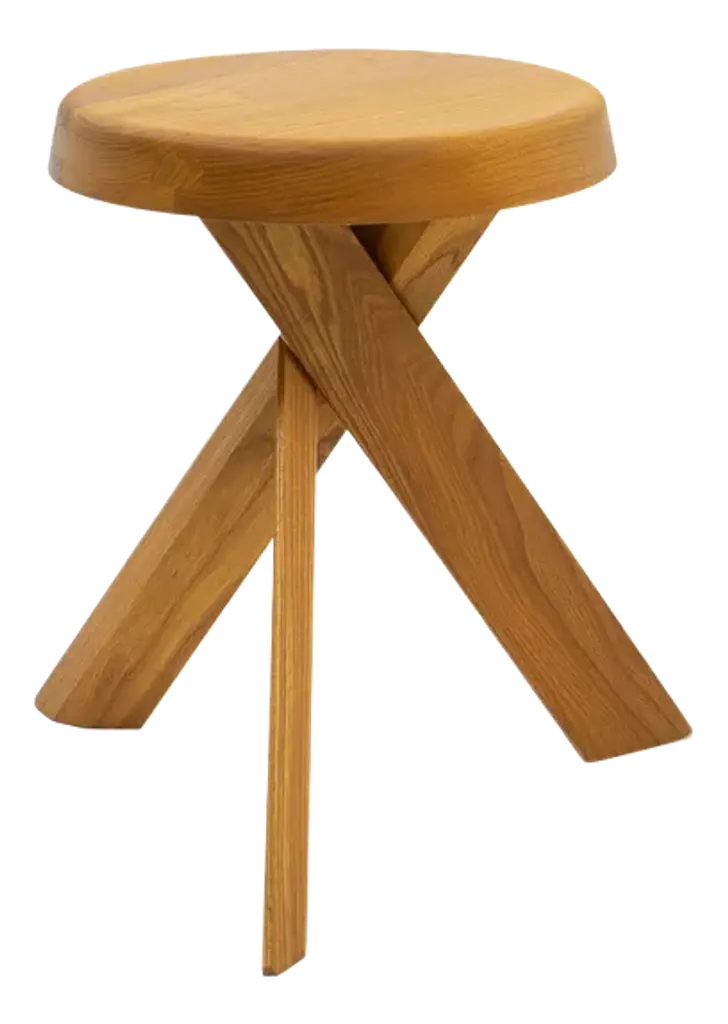
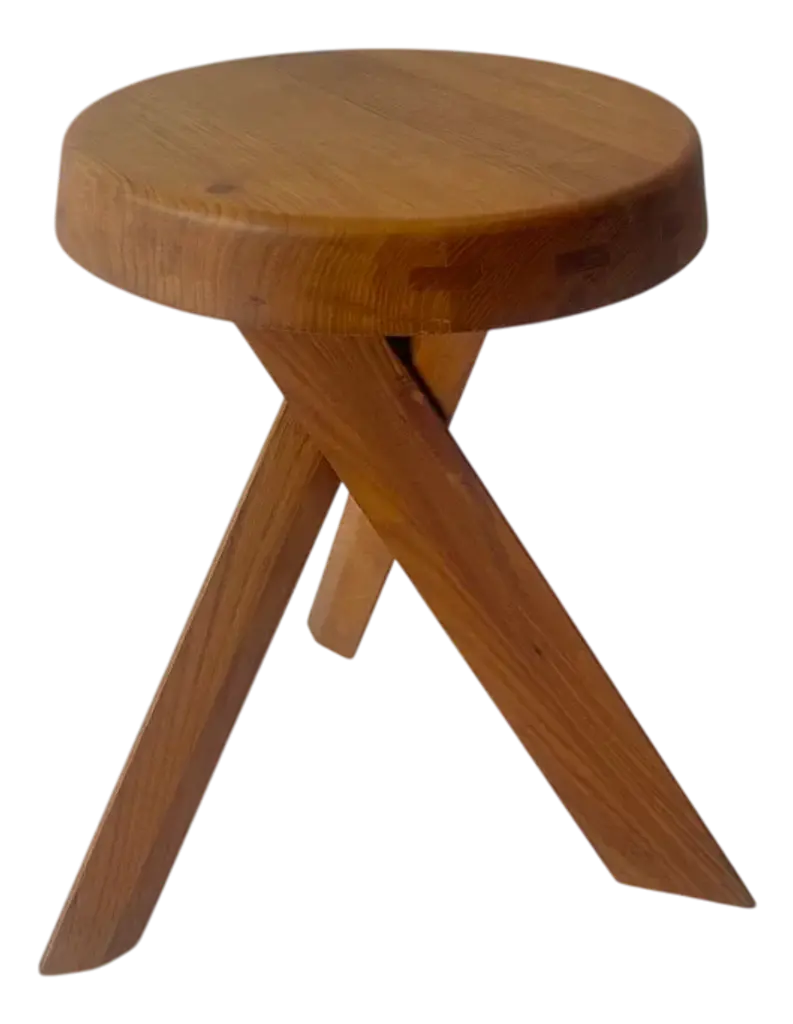
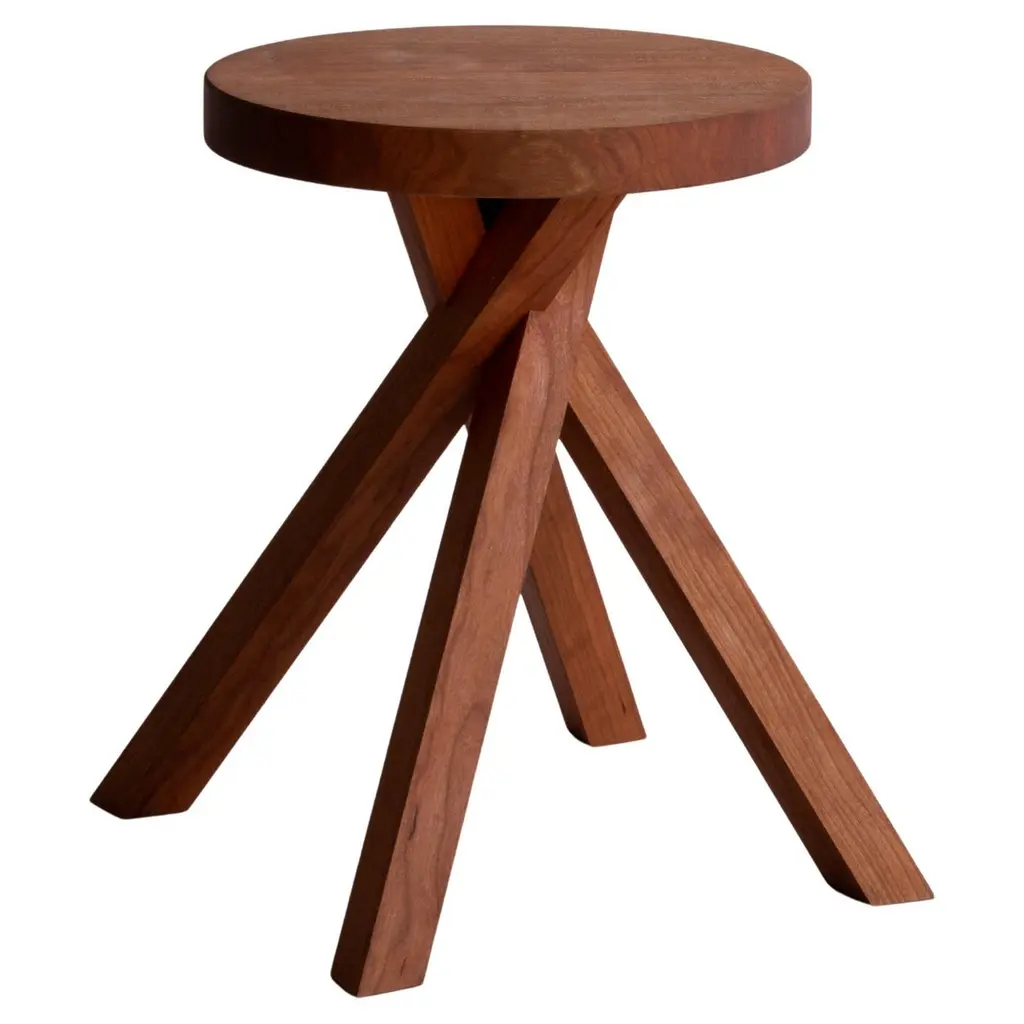
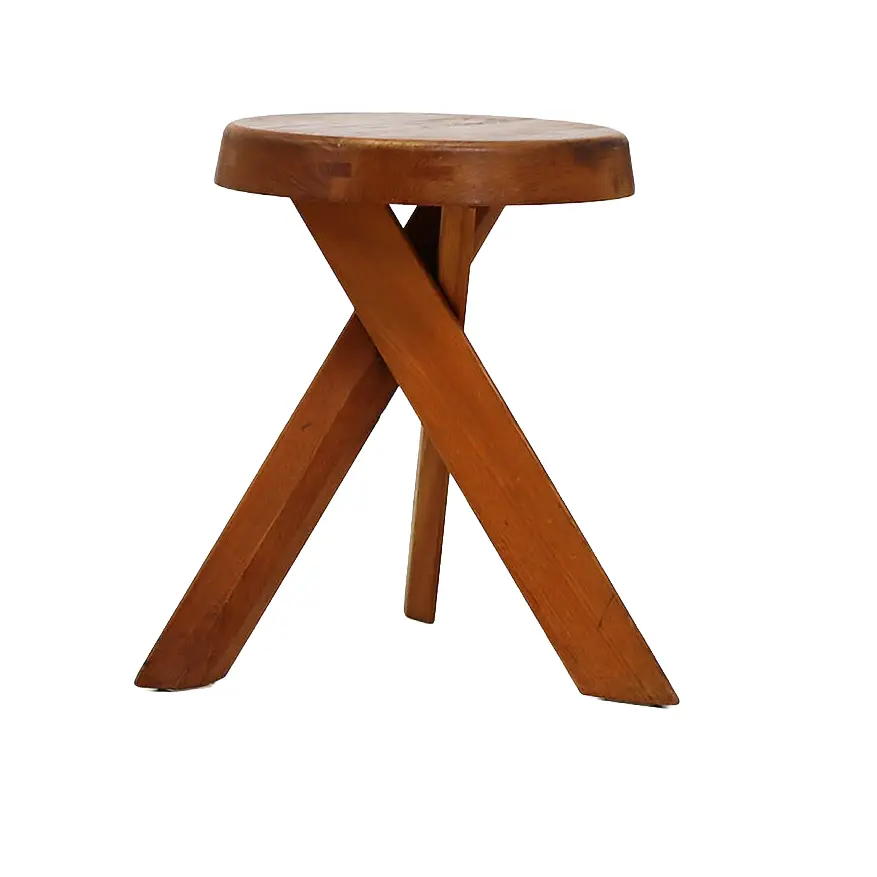
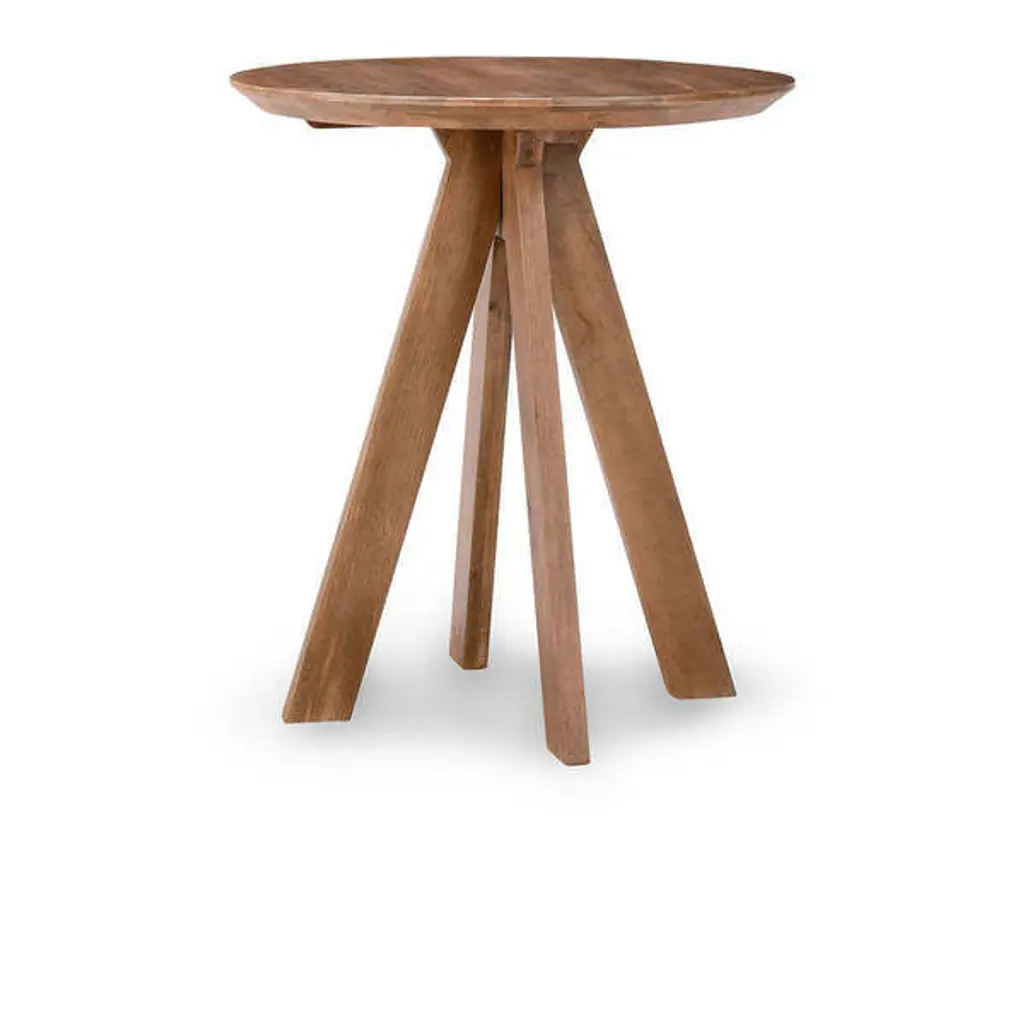
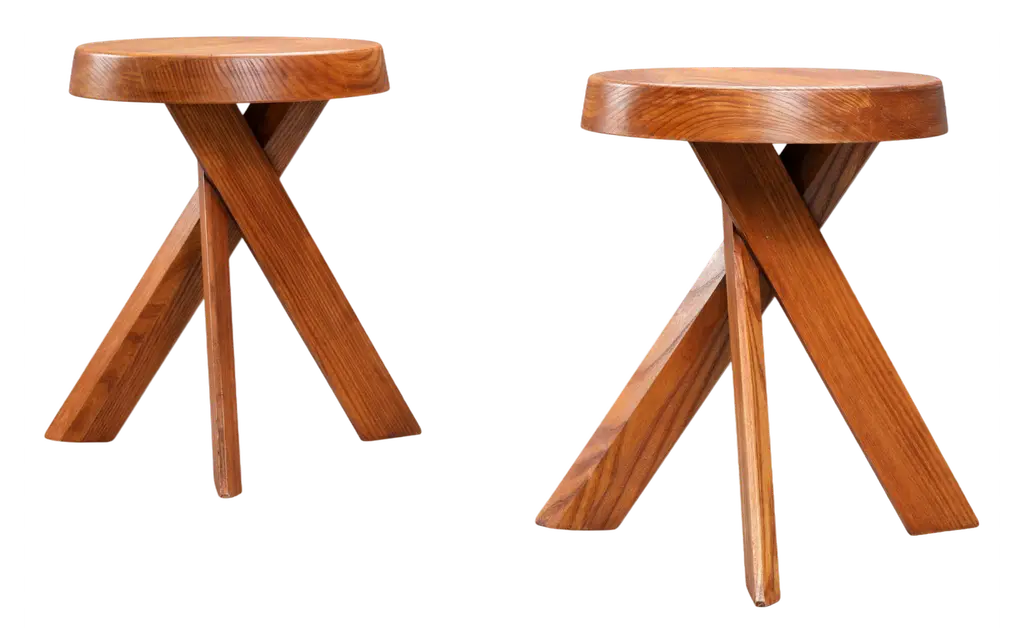
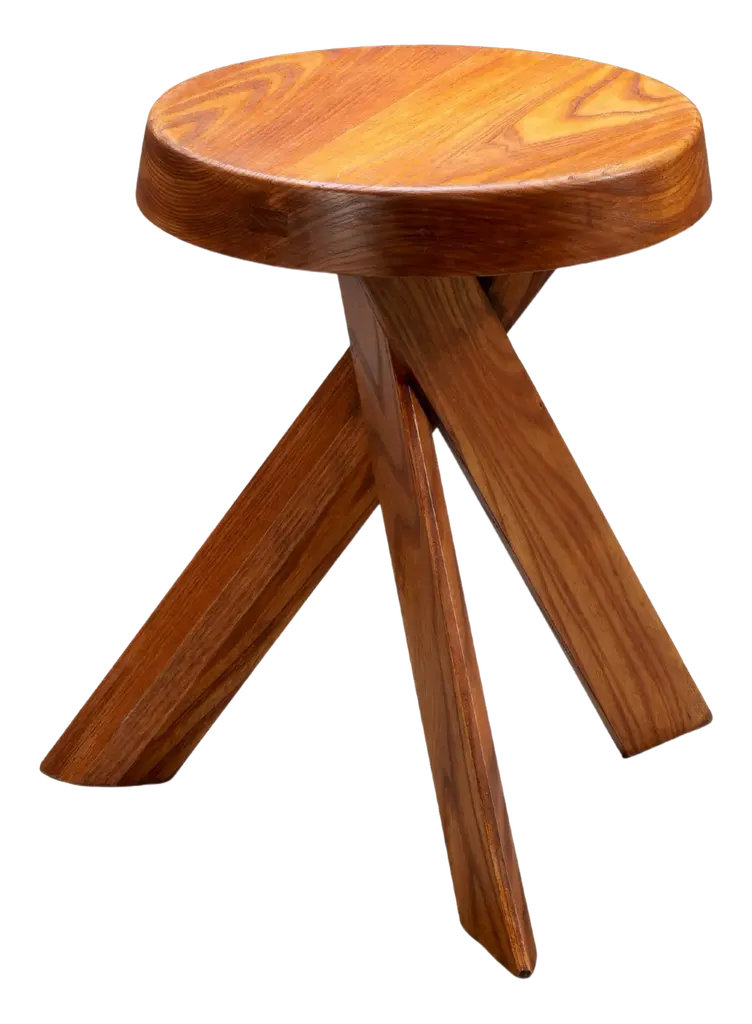
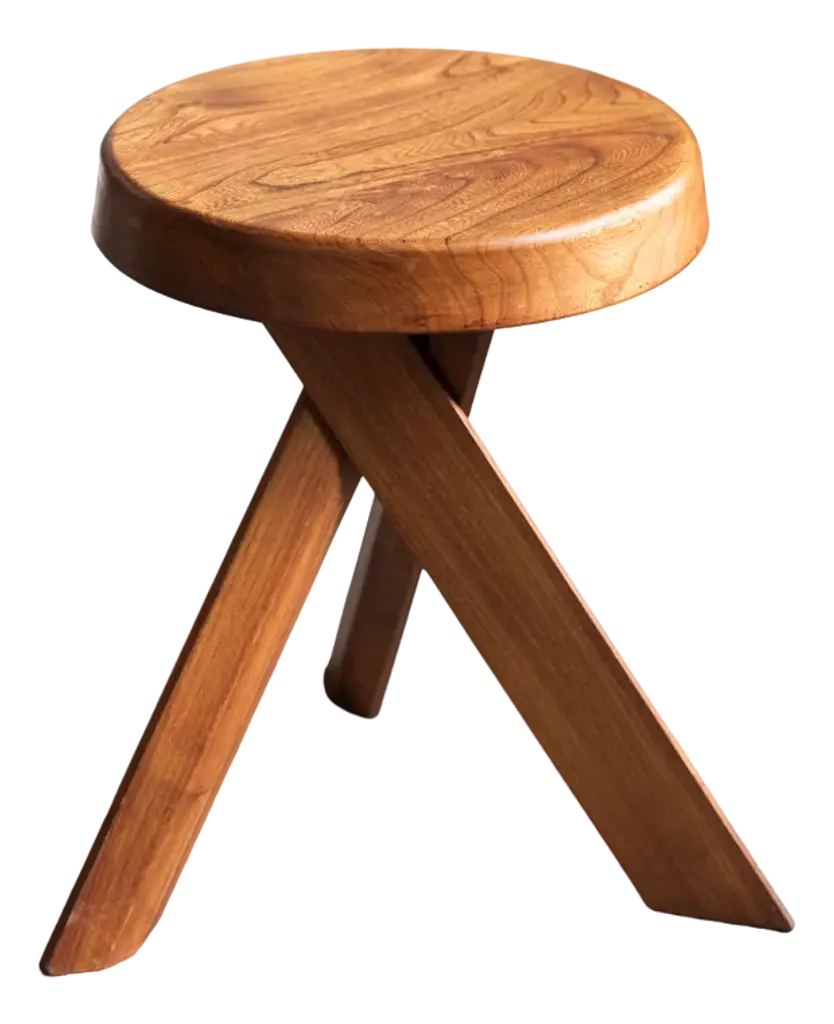
This stool is crafted from Japanese zelkova (Keyaki) by a Japanese carpenter who studied French stereotomy (L’art du Trait), a geometric drafting tradition passed down among French masons and carpenters since the Middle Ages.Inspired by the techniques and philosophies cultivated in both Japan and France, the maker sought to merge these two lineages of craftsmanship to create a form of furniture where structure itself becomes beauty.French stereotomy is a discipline that interprets three-dimensional structures through precise lines, deriving form from geometric and structural necessity.Japanese wood joinery, by contrast, is rooted in centuries of understanding material behavior, force flow, and rational structural design.This stool emerges at the intersection of these two traditions, both of which share the belief that structure is a form of aesthetics.The angles at which the Keyaki legs intersect, the flow of force supporting the top, and the tension created by a single line are all carefully calculated.Every element exists out of necessity; nothing is superfluous, and nothing is missing.Its beauty arises not from ornamentation but from the refined clarity of its structural logic.The presence of the stool is quiet yet powerful, humble yet impeccably balanced.Though a daily-use object, it stands as a symbolic expression of what occurs when two cultures and their technical heritages resonate to give birth to a new form.About French Stereotomy (L’art du Trait)French stereotomy originated in the Middle Ages as masons and carpenters developed geometric methods to design cathedrals—particularly pointed arches, ribbed vaults, and complex spiral staircases.By the 16th–17th centuries, these practical techniques began to be formalized.Mathematician Gaspard Monge later systematized them into descriptive geometry, establishing methods to precisely translate three-dimensional forms into two-dimensional drawings.These principles spread beyond stonework into French carpentry, shipbuilding, and fine craft, carrying forward the philosophy that lines generate form and form reveals structure.This stool embodies that spirit, merging the geometric clarity of stereotomy with the warmth and strength of Keyaki and the sensibility of Japanese woodworking—an elegant fusion of technique, culture, and structural expression.
Similar products