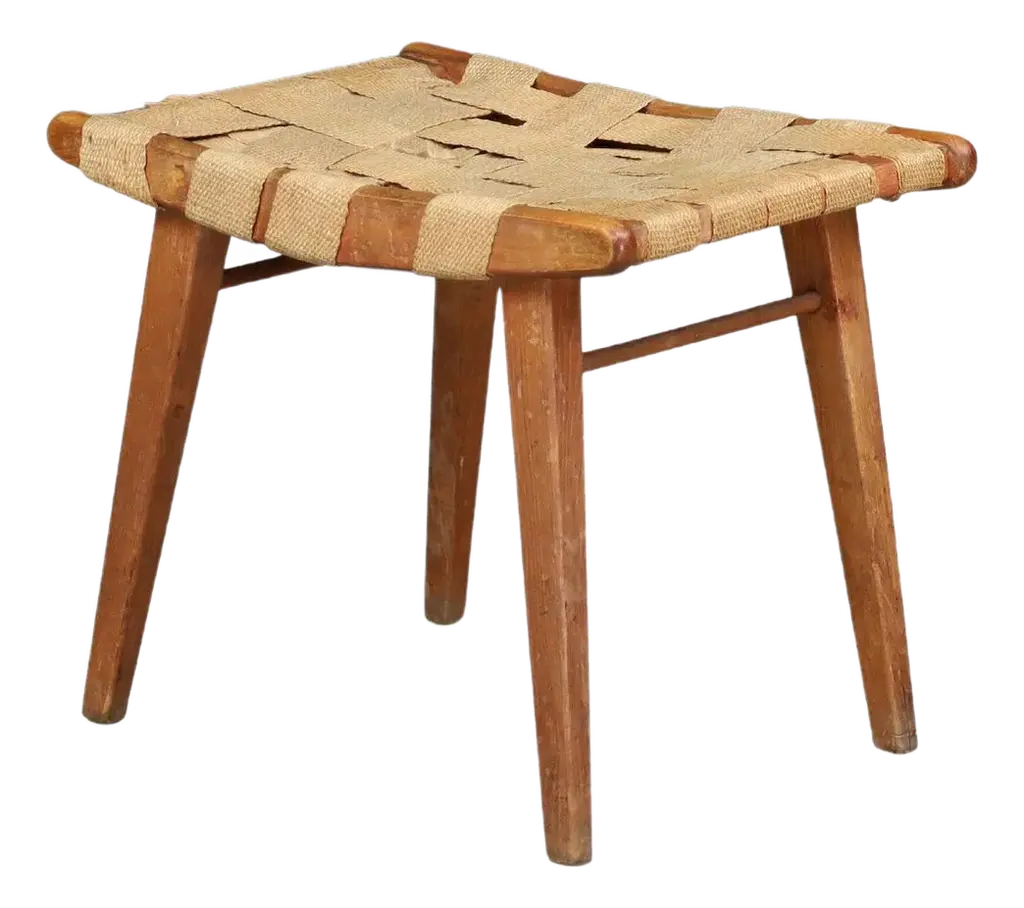
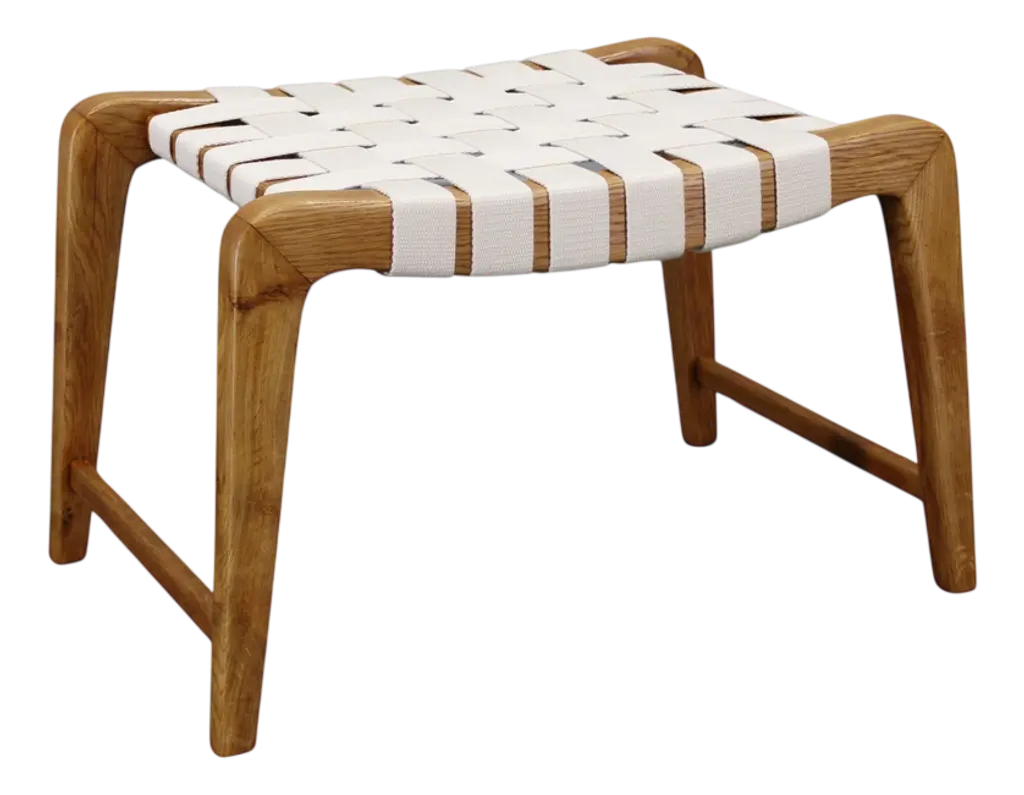
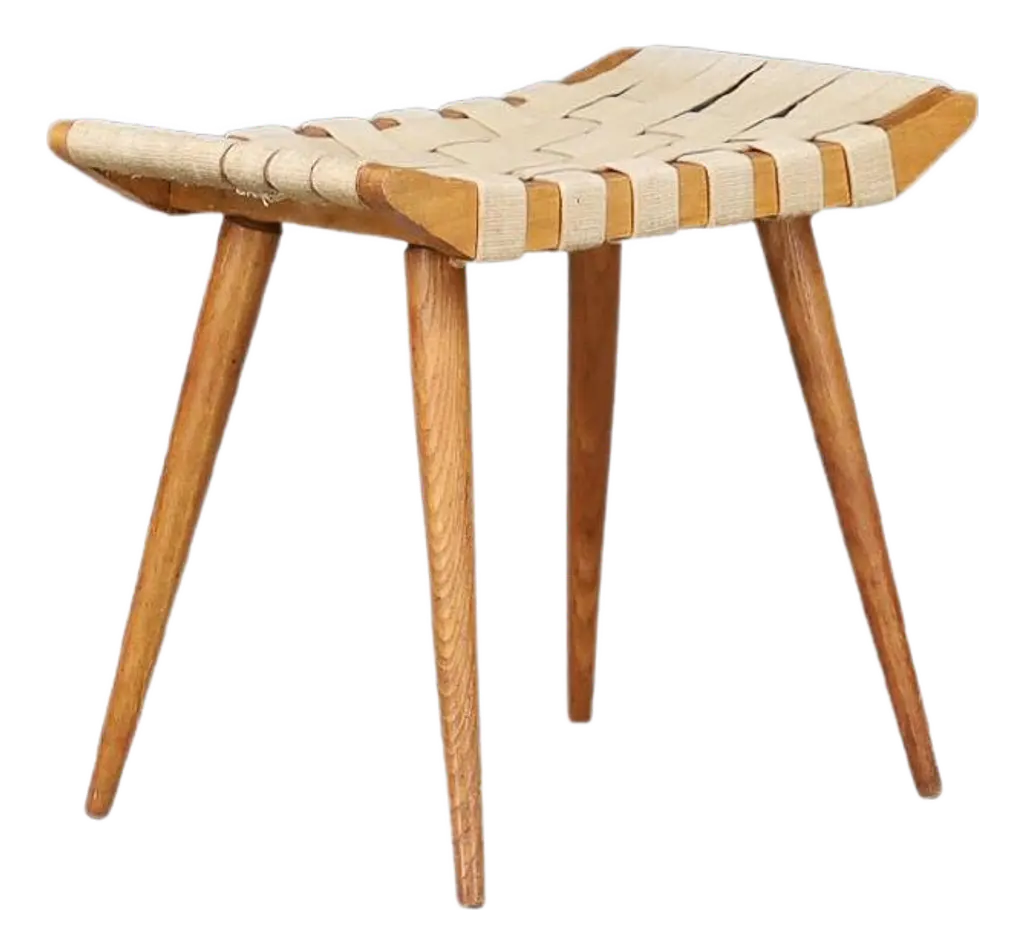
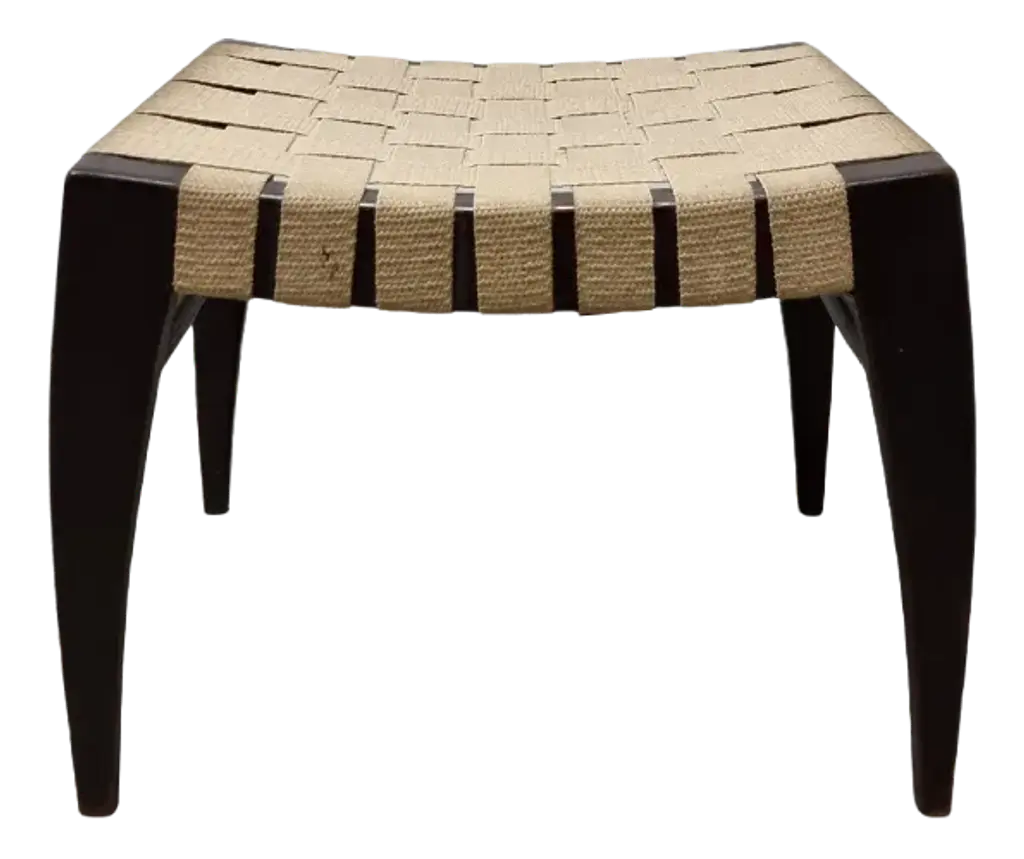
Woven Oak Stool by Jan Vaněk for Krásná Jizba, Czechoslovakia, 1940s This rare woven stool was designed by influential Czech modernist Jan Vaněk and manufactured by Krásná Jizba in 1940s Czechoslovakia. A celebrated figure in interwar and postwar European design, Vaněk's work merged functionalist ideals with refined craftsmanship — a quality evident in this modest yet sculpturally elegant piece. The stool features a solid oak wood frame, gently tapered and splayed, forming a stable, subtly dynamic silhouette. Its most distinctive element is the original woven cotton seat, rendered in a natural grid of interlaced straps — a hallmark of Vaněk's pragmatic yet poetic approach to design. The webbing provides both structural integrity and flexible comfort, making it suitable for occasional seating or display. This piece is compact yet expressive, 60 cm wide, 37 cm deep, and 41 cm high, making it ideal as a stool, ottoman, or decorative accent. The oak frame has acquired a rich patina over time, while the woven seat remains taut and intact, bearing minor signs of age that enhance its authentic vintage character. Krásná Jizba was one of the most important producers and promoters of modernist applied arts in Czechoslovakia, and this stool is a fine example of their collaboration with progressive designers like Vaněk. It reflects a moment in Central European design when utility, affordability, and aesthetics were thoughtfully balanced for the modern home. Highly collectible and rarely found on the market, this stool is a functional object and a piece of design history. Dimensions: Width: 60 cm Depth: 37 cm Height: 41 cm Designer: Jan Vaněk Manufacturer: Krásná Jizba Origin: Czechoslovakia, 1940s Materials: Solid oak wood, original woven cotton Condition: Good vintage condition with light patina This piece is attributed to the mentioned designer/maker. It has no attribution mark and no official proof of authenticity, however it is well documented in design history. I take full responsibility for any authenticity issues arising from misattribution
Similar products