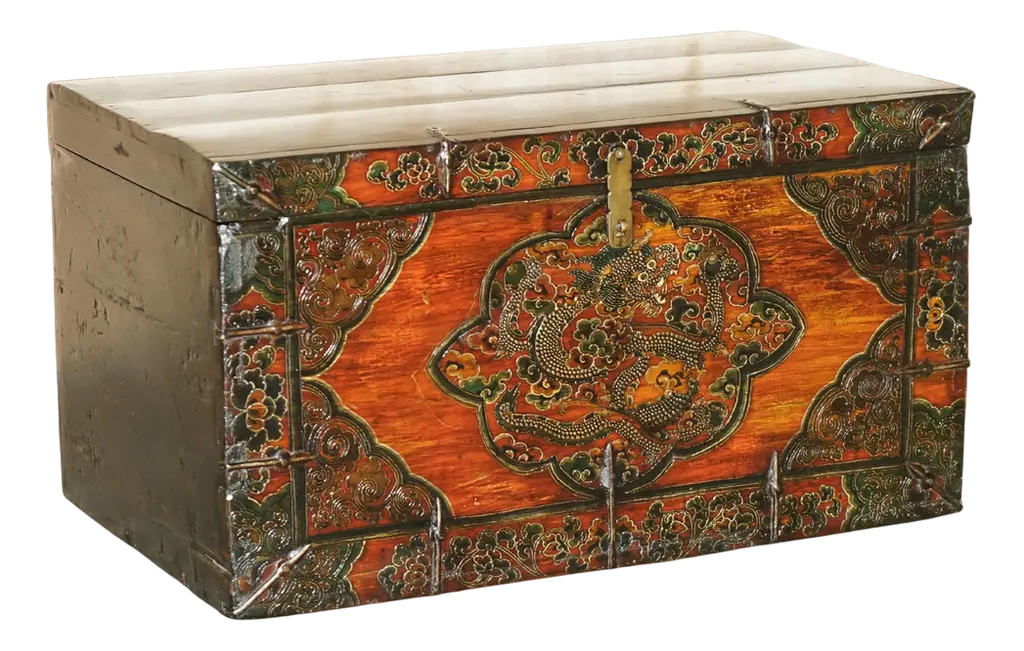
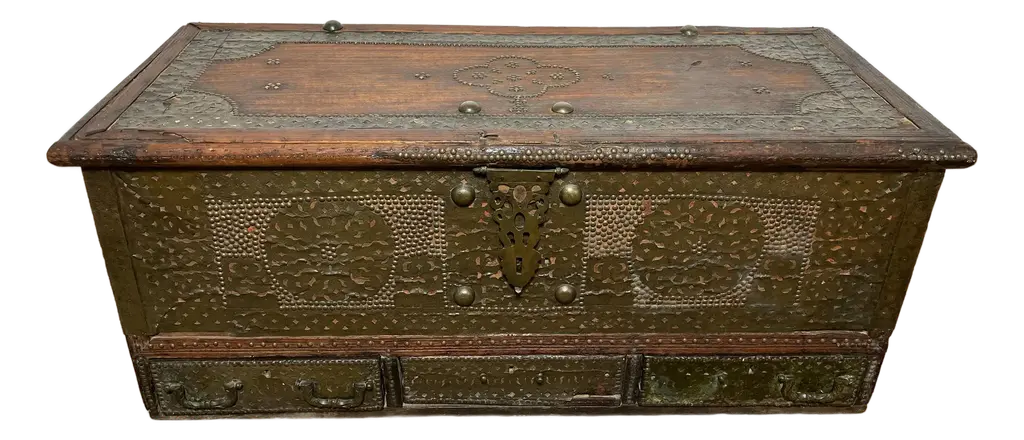
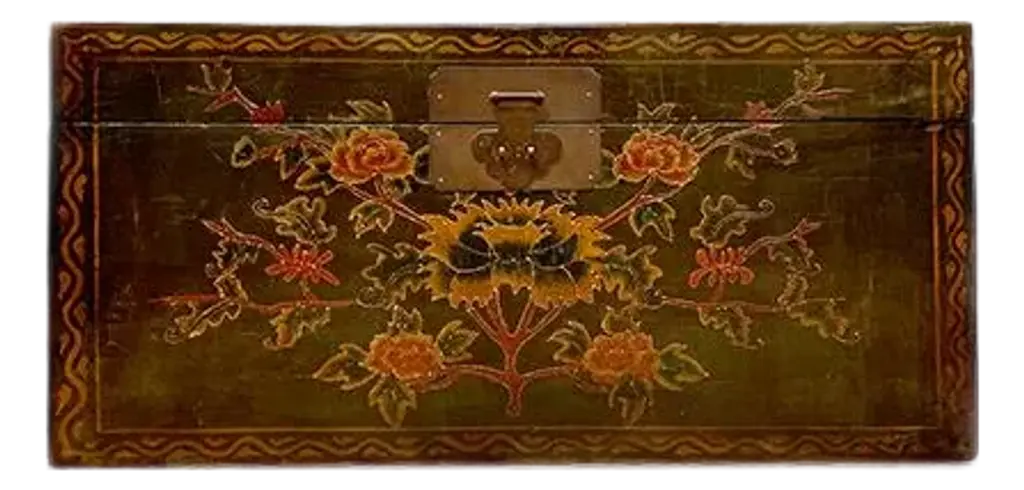
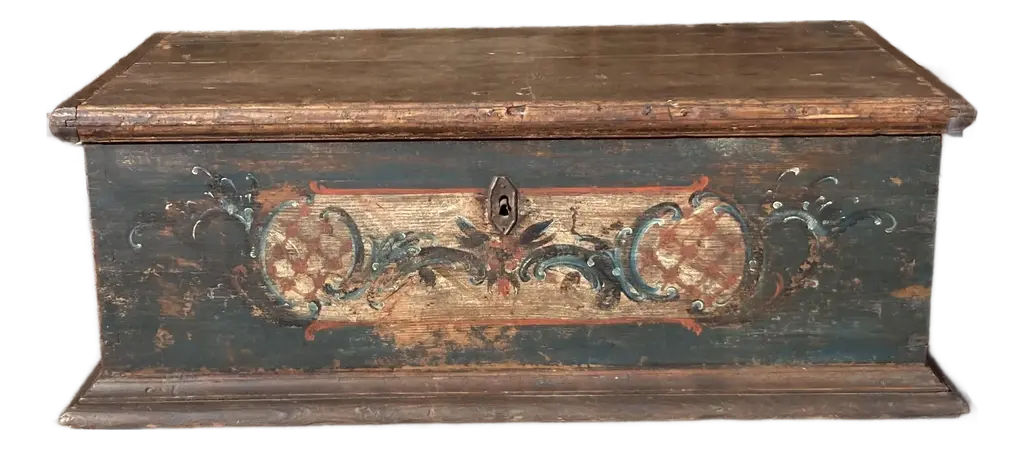
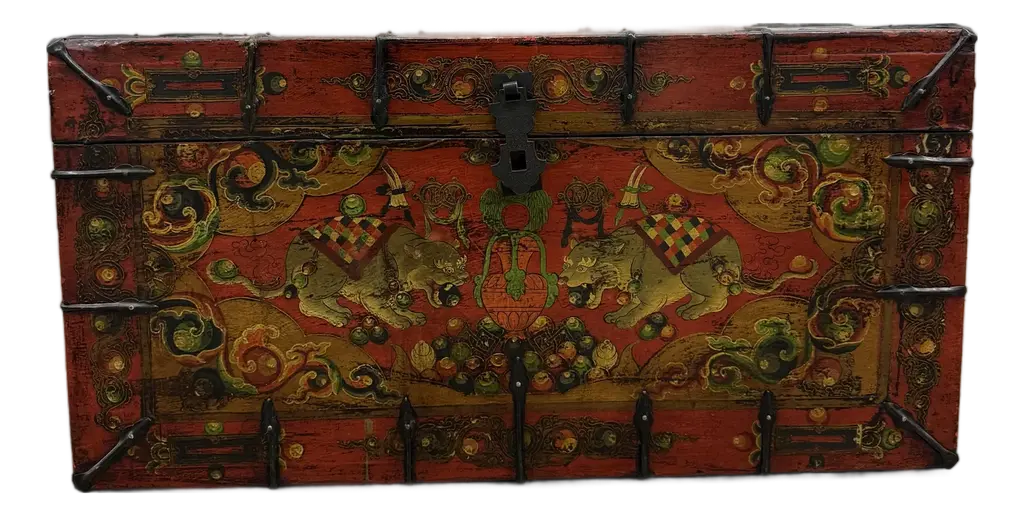
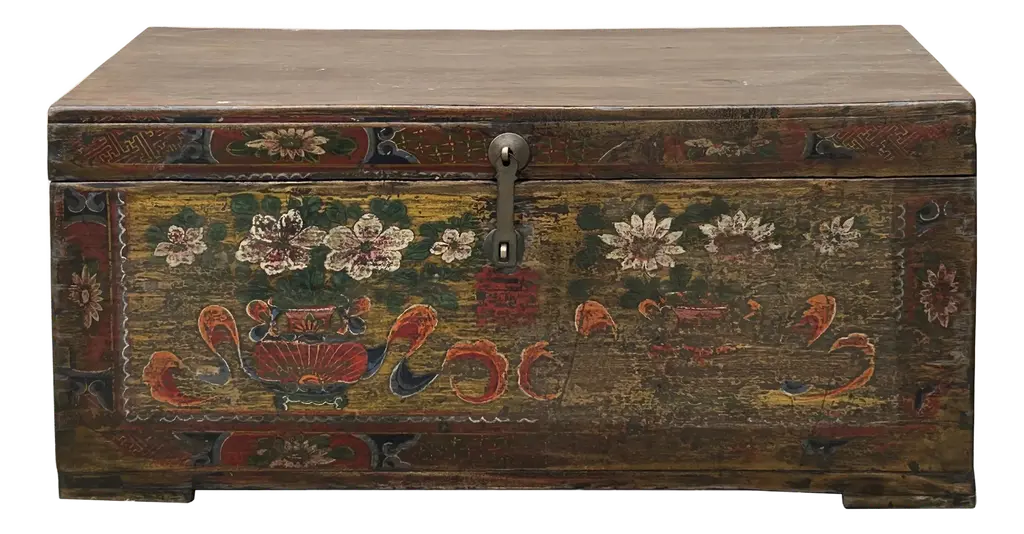
Chests of this quality, scale, and iconographic richness are increasingly rare in the market. The combination of Kati Rimo “brocade design”, symbolic iconography, and excellent preservation makes this a standout example for collectors of Himalayan art and Buddhist ritual objects. The highly skilled artist that painted sacred 'thangkas' often painted the intricate details of this symbolic furniture Title/Ritual Storage Chest Culture/Region/Tibet or Eastern Himalaya Date/16th - 17th century Materials/Ground mineral pigments; cinnabarar malachite green, and indigo blue Held together with wrought iron hindges and latch Description/This elaborately decorated ritual chest features a form fit lid set above a painted front panel executed in the Kati Rimo style, a refined tradition of Tibetan ornamental painting characterized by intricate geometric and floral designs. At the center of the composition is a raised cartouche enclosing an auspicious and protective figure in Himalayan iconography. 'Jambhala' is the Buddhist diety of fortune and wealth and member of the 'Jewel Family" This central motif is surrounded by large peonies and floral forms, emblematic of purity and prosperity. The entire front panel is bordered by gilt scrolling arabesques in the spandrels and enclosed within a floral cartouche, creating a rich and balanced visual frame that reinforces the sacred and protective function of the chest. The use of ground mineral pigments and fine gilt detailing demonstrates the high level of craftsmanship and the ritual significance of the piece. Function/Chests of this type were commonly used in monastic or aristocratic contexts for storing sacred texts, ritual implements, garments, or valuables. The symbolic imagery suggests it may have served both as a functional object and as a spiritual protector of its contents. Provenance/ While living and working in Kathmandu, Nepal, I met Dr. Ruth Sumerlin Hayward, a scholar and collector with a deep interest in Himalayan material culture. She was professionally associated with my husband, Julio (Andy) Andrews, and we quickly became close friends. During that period, we spent significant time at the 4th Century Stupa, Boudhanath, which held an enclave of Tibetan immigrants. Often even in the middle of the nigh caravans of newly arrived Tibetan refugees were unloading extraordinary chests, cabinets, and ritual furniture. Many of these pieces—then largely unknown in the West— would later appear in major publications, museum collection and a few tribal art dealers began to create an inventory. Dr. Hayward was among the early and discerning collectors of this material. A portion of her collection was later donated to the Los Angeles County Museum of Art (LACMA). My own collection, assembled during those same years and closely tied to these shared experiences, is only now being made available for scholarly and public appreciation. Selected References: Kamansky, David. Wooden Wonders. Pacific Asia Museum and Serinda Publications Inc., Chicago, IL, US Corona, Camilla & Corona, Luca. Auspicious by Design. Mera Publications Pvt. Ltd., 2021 Buckley, Chris. Tibetan Furniture. Floating World Editions, Warren, CT Marie is a Associate Member of ATADA The Authentic Tribal Art Dealers Association
Similar products