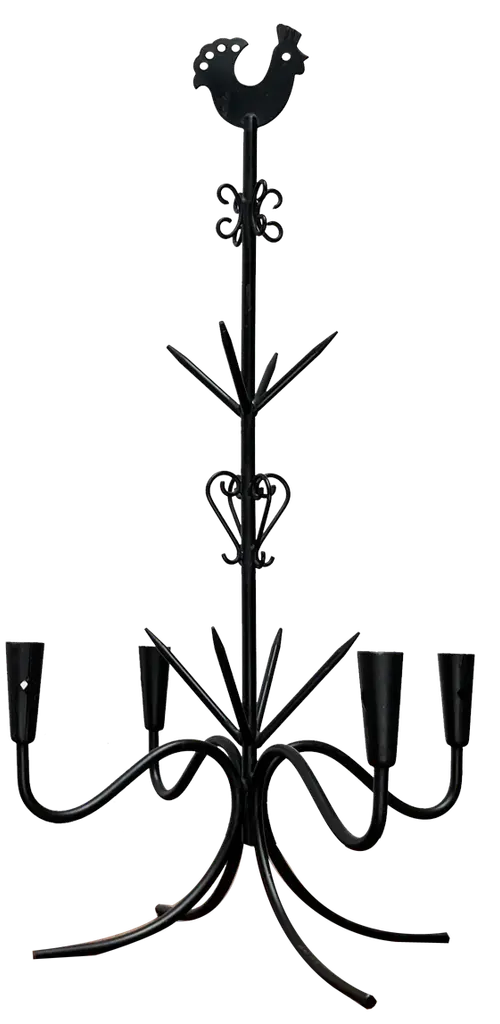
Jean Touret Ateliers De Marolles Midcentury Rooster Table Lamp, Pair Available
$14,500
1st Dibs
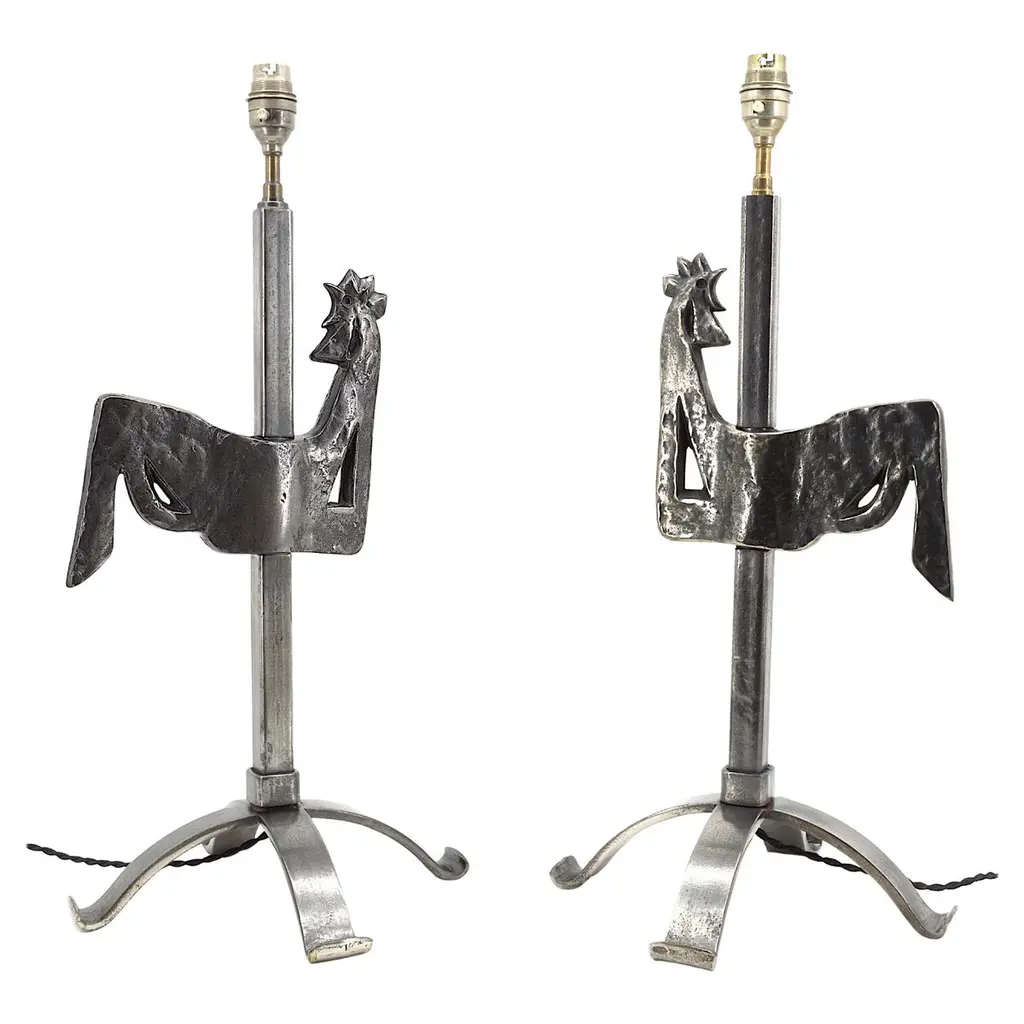
Mid-Century French Table Lamp by Ateliers de Marolles (Jean Touret), France, circa 1950. A striking mid-century French table lamp designed by Jean Touret for Ateliers de Marolles, circa 1950. This elegant tripod table lamp features a unique crowing rooster motif and is crafted from hammered wrought iron, showcasing the exceptional craftsmanship characteristic of Ateliers de Marolles.The lamp embodies the essence of mid-century French design, with its clean lines and sculptural form. The combination of the tripod base and intricate wrought iron detailing makes this piece a real statement in any interior.Dimensions:Height without socket: 50 cm (19.7 inches)Base diameter: 25.4 cm (10 inches)The lampshade shown in the photos is not included as it is for display purposes only and is not part of the offer. This lamp comes wired for your country (US, EU, Australia, etc.) and is LED compatible, offering modern functionality to this classic design.This pair of lamps is available and would make a stunning addition to any vintage French lighting or mid-century modern decor collection.Additionally, a floor lamp of this model was featured on the cover and page #144 of AD magazine (November-December issue, French version), adding even more prestige to the already iconic design.Key Features:Mid-Century French Table Lamp by Jean Touret for Ateliers de MarollesUnique crowing rooster motif on a hammered wrought iron baseTripod base design with exceptional craftsmanshipHeight: 50 cm (19.7 inches), Base Diameter: 25.4 cm (10 inches)LED compatible and comes hardwired for your countryShade not included (shown for display purposes only)Featured in AD Magazine, November-December issue (French version)A timeless example of French modernist lighting, this table lamp is a perfect representation of the craftsmanship and avant-garde design that defined mid-century French interiors.Jean Touret and the Ateliers de Marolles: Icons of Mid-Century French Decorative Arts.Jean Touret and the Ateliers de Marolles are key figures in the evolution of mid-century French decorative arts, with a diverse body of work spanning furniture, wrought iron, textiles, lighting, and ceramics. Their contributions extend far beyond a single discipline, positioning them as leading innovators in the post-war period when French craftsmanship was at the crossroads of tradition and modernity. Together, they embodied a holistic vision of French design, influencing the decorative arts and leaving a lasting legacy in diverse design fields.Jean Touret: A Pioneer of Multidisciplinary DesignJean Touret (1909-1991) was a visionary French artist and designer who played a central role in redefining the landscape of mid-century decorative arts. Touret’s work is not limited to ceramics, but spans a wide range of disciplines including furniture design, lighting, wrought iron, and textiles. His designs are known for their ability to fuse traditional craftsmanship with modern aesthetics, often resulting in highly functional yet artistically bold pieces.Touret’s style draws on his deep appreciation of French heritage while embracing new artistic directions of the 20th century. His designs, whether furniture, lighting, or decorative objects, all share a common thread of organic forms, clean lines, and a keen attention to texture and craft. His work has been widely acclaimed for its bold color palettes, abstract patterns, and minimalist yet expressive design ethic that defined much of the mid-century modern style.Les Ateliers de Marolles: A Hub of Artistic InnovationFounded in the early 1950s, Les Ateliers de Marolles in Paris became an influential design studio known for its diverse and comprehensive approach to the decorative arts. The studio was an incubator of artistic experimentation, collaborating with designers and artists such as Jean Touret to produce a range of pieces that included furniture, lighting, fabrics, and decorative accessories, in addition to ceramics.Located in the Marolles district, a center of avant-garde creativity in Paris, Les Ateliers de Marolles was a meeting point for the best of French artisanal design and modernist ideals. The studios produced items that combined artisanal expertise with the innovative spirit of the time. The studio's output was a synthesis of medieval-inspired forms, art deco elements, and modernist experimentation, contributing significantly to the look and feel of post-war French interiors.The pieces created at Ateliers de Marolles were highly sought after for their elegant simplicity, handcrafted quality, and unique style. Their work in furniture and lighting design, often imbued with a rustic and historical sensibility, made a bold statement in the world of mid-century modern decor.Touret’s collaboration with Ateliers de Marolles resulted in a wide range of art objects, including:Mid-Century French Furniture: Clean, functional pieces that combined traditional French craftsmanship with modernist design principles.Wrought Iron: Both sculptural and functional, their metalwork became a hallmark of post-war French interiors, with intricately designed gates, balustrades, and light fixtures.Textiles: Tapestries and upholstery that reflected the era’s embrace of natural materials and bold patterns, bridging the gap between art and utility.Lighting: Sculptural and innovative, their lighting designs reflected the era’s fascination with abstract forms and functional art.Decorative Objects: From ceramic vases to wall sculptures, their designs span the spectrum of decorative arts, each piece imbued with artistic flair and craftsmanship.Legacy and InfluenceThe influence of Jean Touret and the Ateliers de Marolles is still evident today, not only in the world of mid-century modern design. Their works became iconic examples of the French artisanal movement, where craftsmanship, artistic vision, and modernity coexisted. Today, Touret and the Ateliers de Marolles pieces remain highly sought after by collectors, designers, and art lovers alike, as they continue to embody the timeless elegance and craftsmanship of French decorative arts.Their work continues to be an important part of the legacy of French craftsmanship and mid-century modern design, influencing the direction of decorative arts and interior design worldwide.
Similar Items