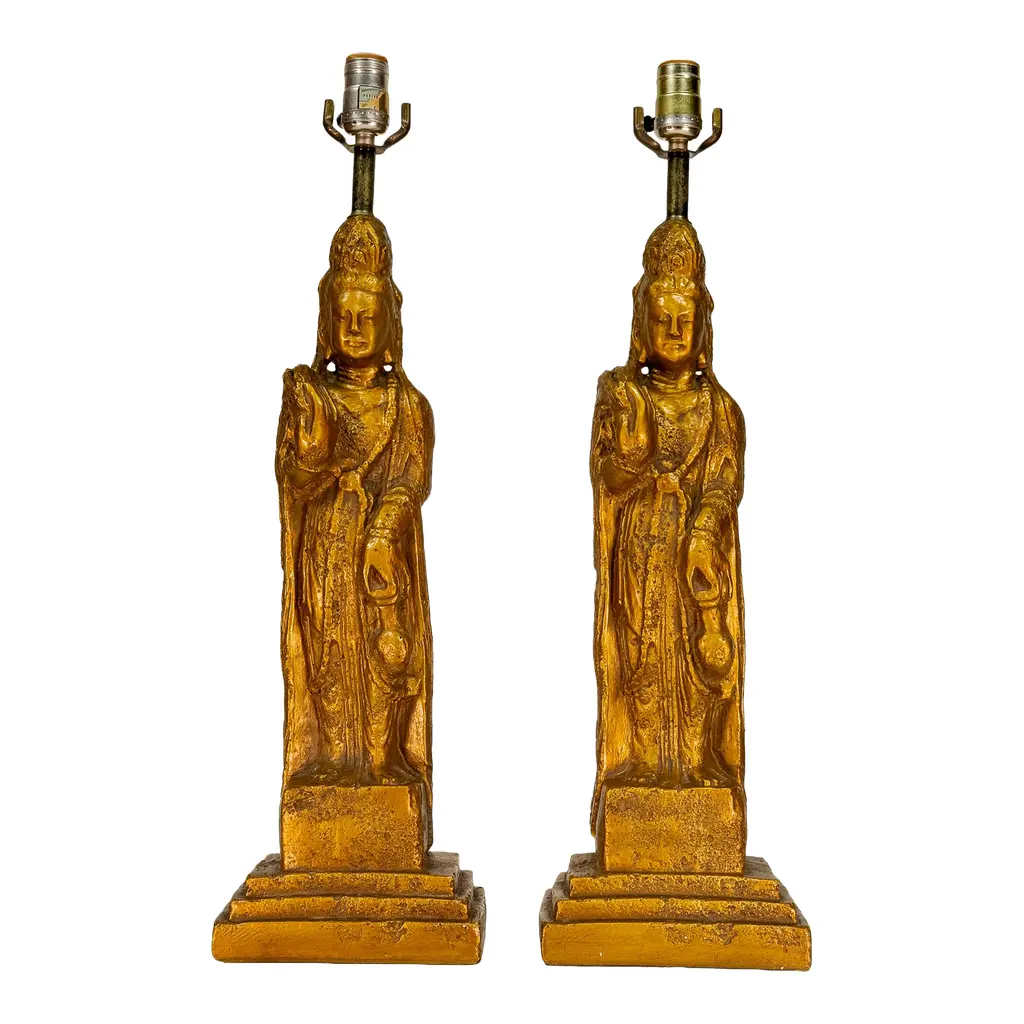
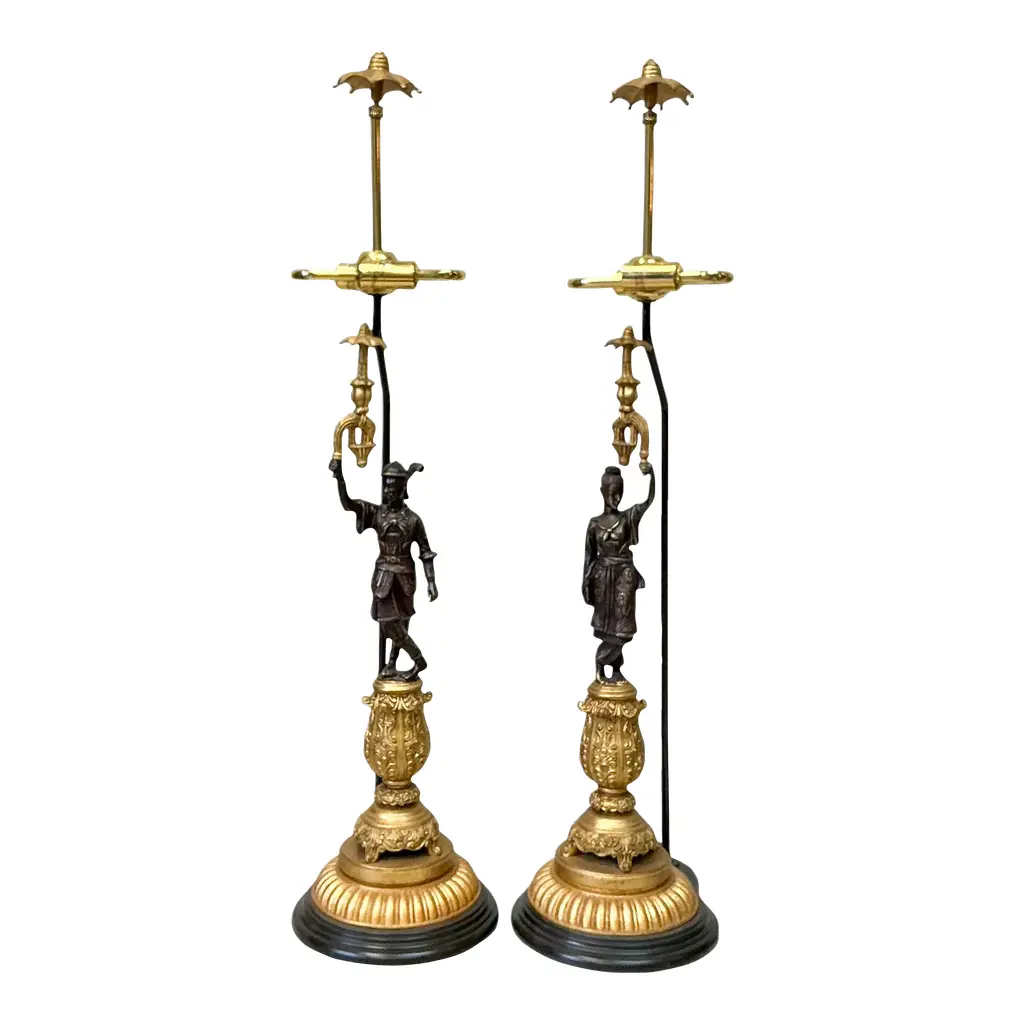
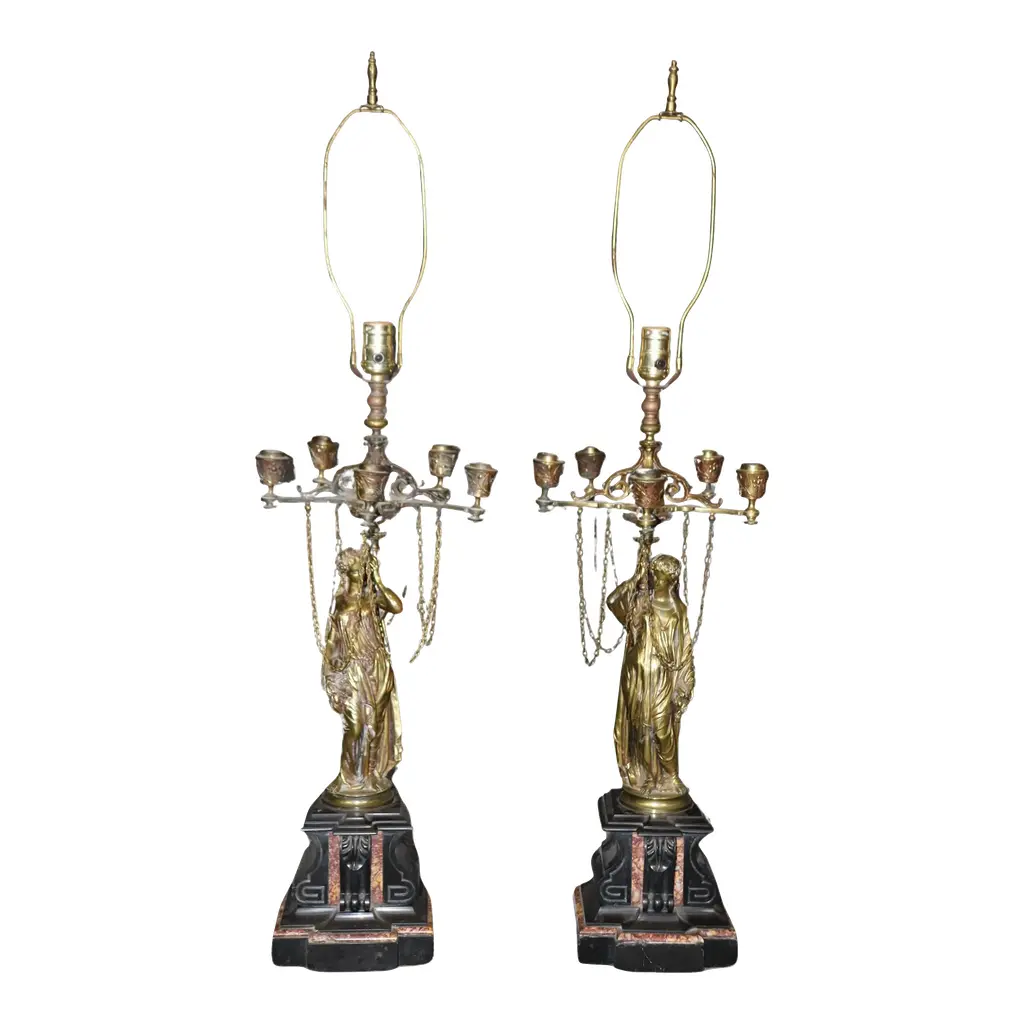
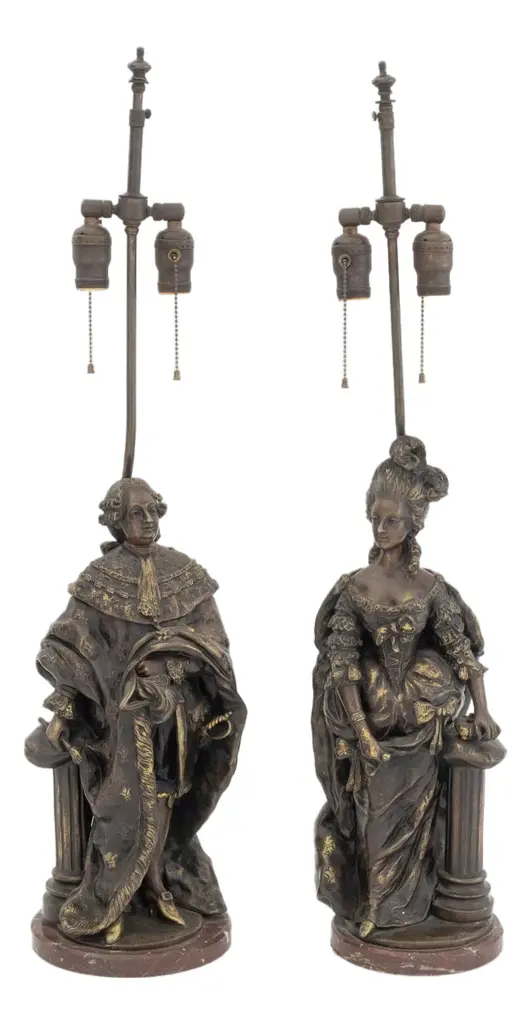
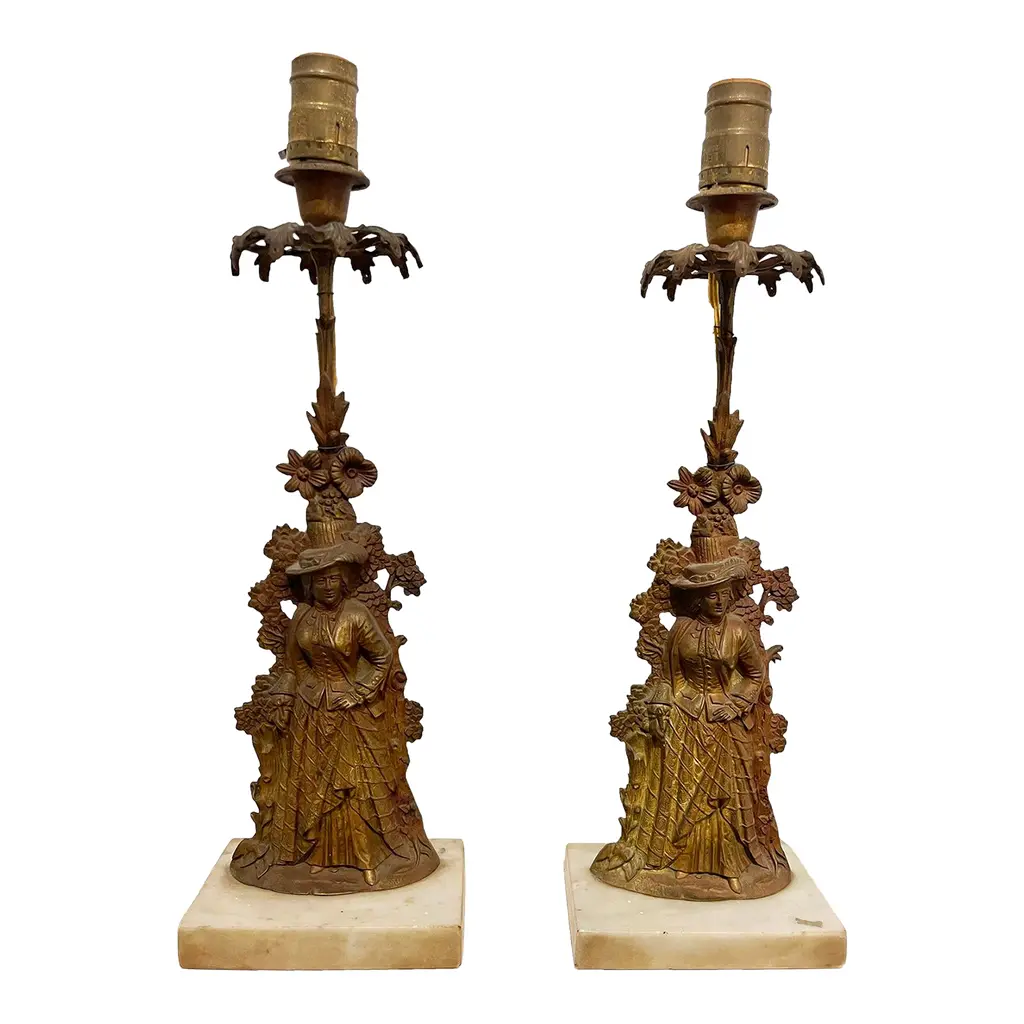
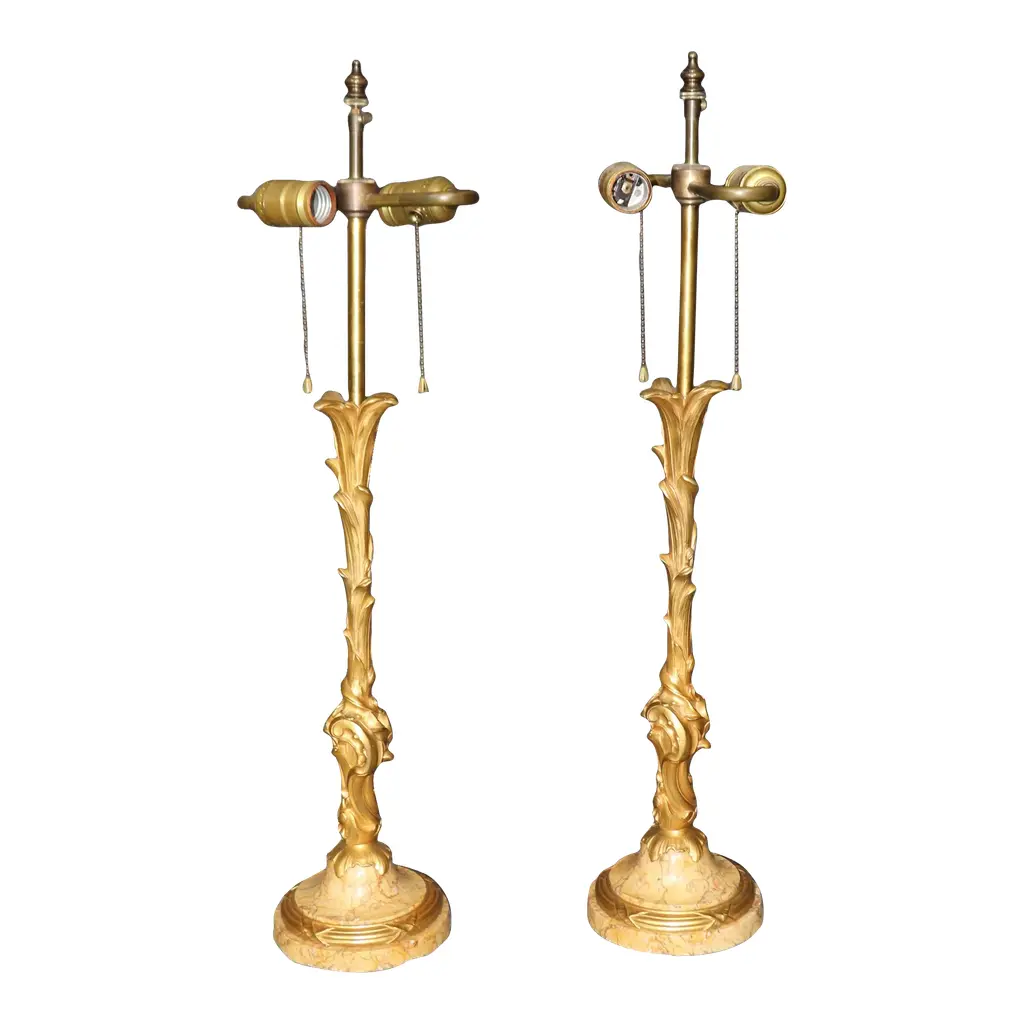
Pair of English Ormolu Lamps Depicting Tipu Sultan in Anglo-Indian Orientalist Style, Circa 1860s A dramatic and finely cast pair of mid-19th-century English ormolu figural lamps, depicting an idealized version of Tipu Sultan, the storied 18th-century ruler of Mysore, renowned for his resistance against British colonial rule. Executed in richly gilded bronze with intricate detail and now French-wired for electricity, these lamps exemplify the fascination with Eastern royalty that permeated Victorian decorative arts. Each figure is shown in high relief, dressed in a turbaned headdress and flowing, ornamented robes adorned with floral and textile-like motifs. In his right hand, the figure raises a crescent-topped ceremonial torch, symbolizing authority and spiritual power. In his left hand, he firmly grasps the hilt of a curved scimitar, the blade draped across his robe in a subtle nod to martial prowess and princely sovereignty. The visual cues—such as the crescent, sword, and Indo-Islamic attire—strongly reference Tipu Sultan as filtered through the Victorian Orientalist imagination, where figures of Eastern nobility were mythologized and reinterpreted for elite Western décor. Each lamp stands on a polished white marble plinth, creating a sharp contrast to the warm gold of the ormolu. The floral-lobed socket forms resemble stylized lotus petals, extending the theme of exoticism upward into the lighting element. These are rare survivals of Anglo-Indian taste at its most theatrical, likely repurposed from decorative garnitures or candlesticks into table lamps. Details: • Origin: England, circa 1860 • Style: Anglo-Indian/Victorian Orientalist • Material: Gilt bronze (ormolu) with white marble bases • Wiring: Professionally French wired • Dimensions (each): • Base: 3.5” D × 5” W • Height to socket: 13” • Figure height: 10” Symbolism: • Torch: Power, enlightenment, imperial identity • Sword: Martial authority and resistance—a key reference to Tipu Sultan’s historical role • Crescent: A widely recognized symbol in Islamic and Ottoman iconography
Similar products