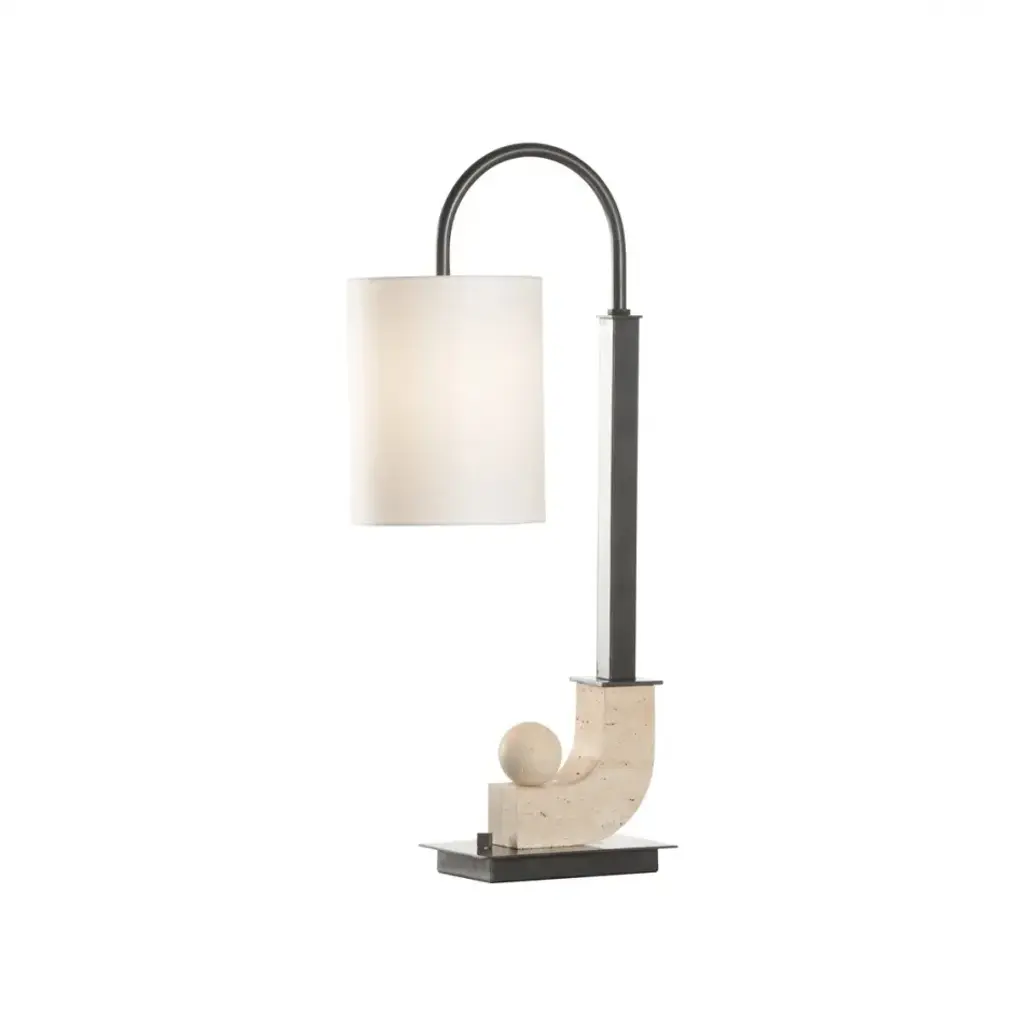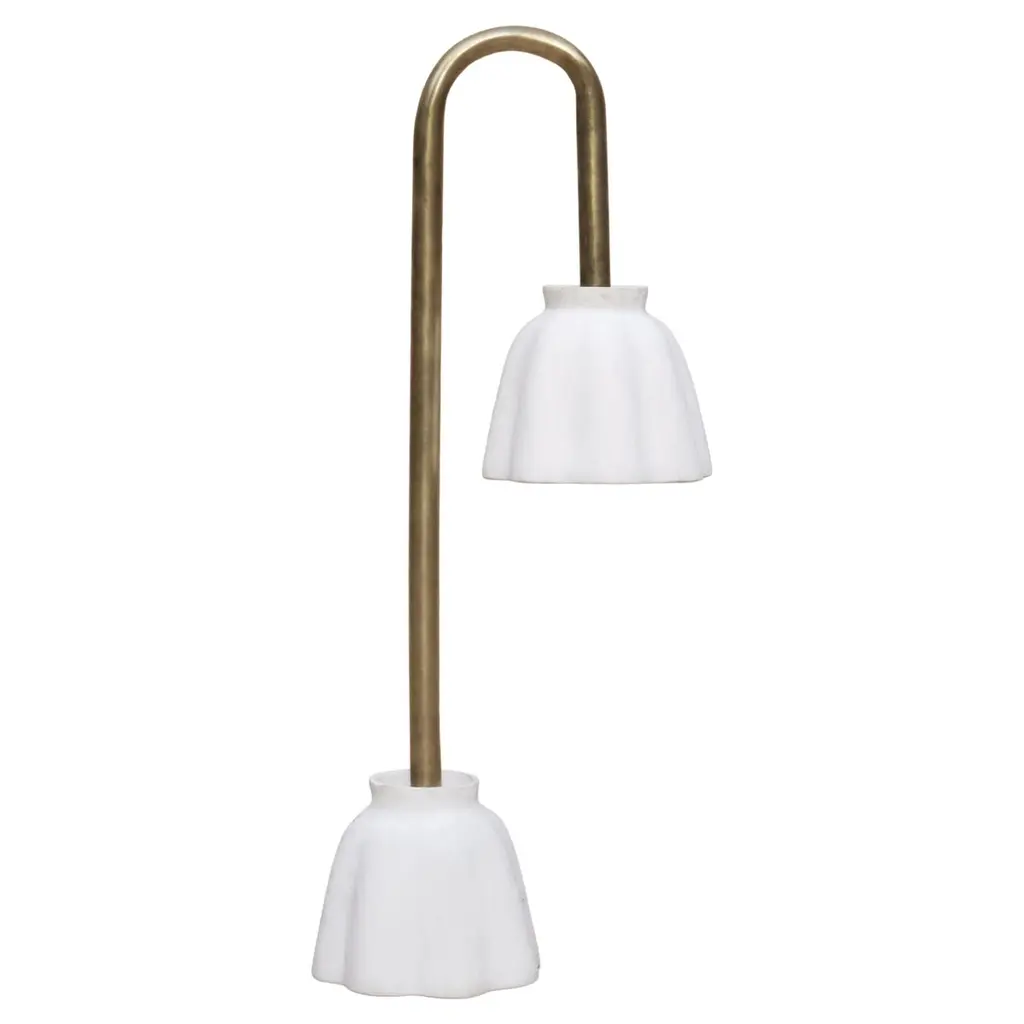
Skirt Down Lamp By Newblue
$5,391
1st Dibs
Skirt Down Lamp by NewblueUnique PieceDimensions: D 14 x W 31 x H 54 cm.Materials: Patent-pending Newblue recycled ceramic material, recycled sanitary ware, recycled glass, quartz, brass, metal, and plant-based binders.All ceramic furniture and lighting are handmade, making each piece unique. Inconsistency in texture, shape, and color may occur due to its natural material and firing procedures. All our lamps can be wired according to each country. If sold to the USA it will be wired for the USA for instance. Please contact us.The oldest form in Jaipur Blue Pottery - the ‘lotus’ is turned upside down to make the NewBlue skirts. The brass structure leads the eye to the light from the skirt.New∙blue is a design and craft innovation company reinventing traditional Indian craft practices by recycling industrial waste to co-create contemporary collectibles.New∙blue is the second technological intervention in Jaipur Blue Pottery since the 1860s. Rooted in Indian craft’s legacy of making with local material abundance, we are connecting the largest craft concentration in the world to some of the largest landfill sites, creating value for ecology and economy alike.Based and born in Jaipur (India), we’re a team of material scientists, artisans, and designers reimagining the future of Indian craft by collaborating with industrial waste streams from sanitary ware and the steel industries. We aim to combine our expertise in craft research, product design, and material science to refocus climate action through traditional technologies.Newblue was founded by designer Disharee Mathur, a Jaipur-native, during her masters in Innovation Design Engineering (IDE) at the Royal College of Art and Imperial College, London. It is a result of conversations between 4 institutions across two countries- the Material Research Center at the Malviya National Institute of Technology (MNIT) and Neerja Blue Pottery in Jaipur, brought together with IDE at the Royal College of Art and Imperial College, London. It takes a participatory approach to rethinking craft from the particle level of the material to the mass of form and function; that is relevant, receptive, and innovates as an act of preservation.
Similar Items