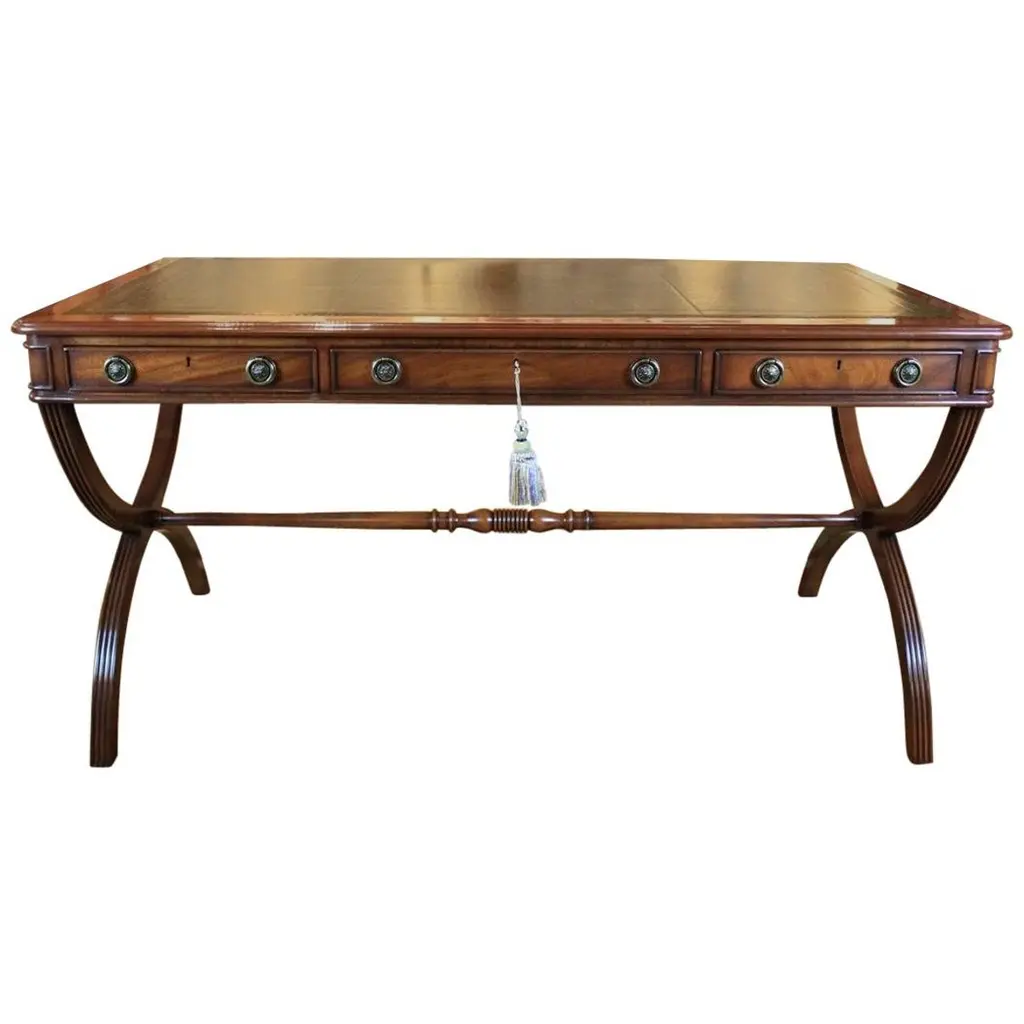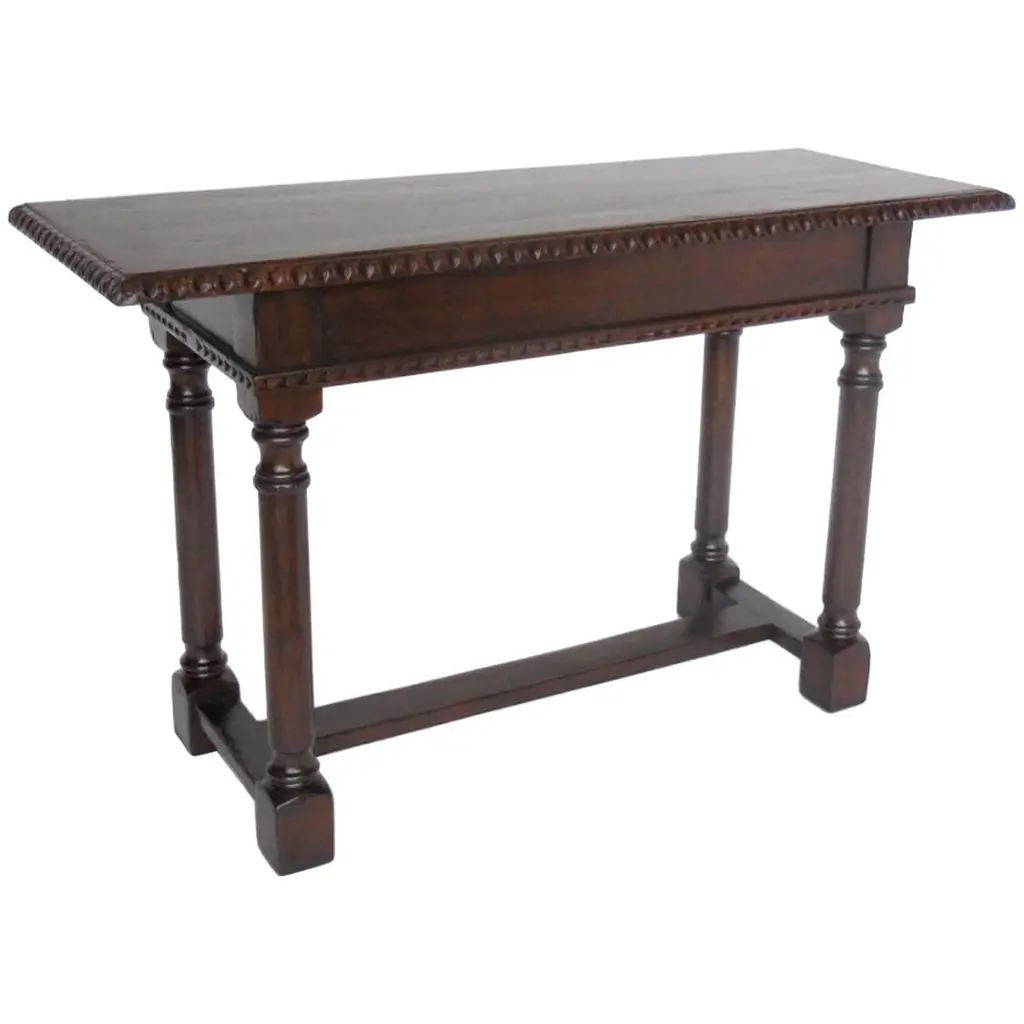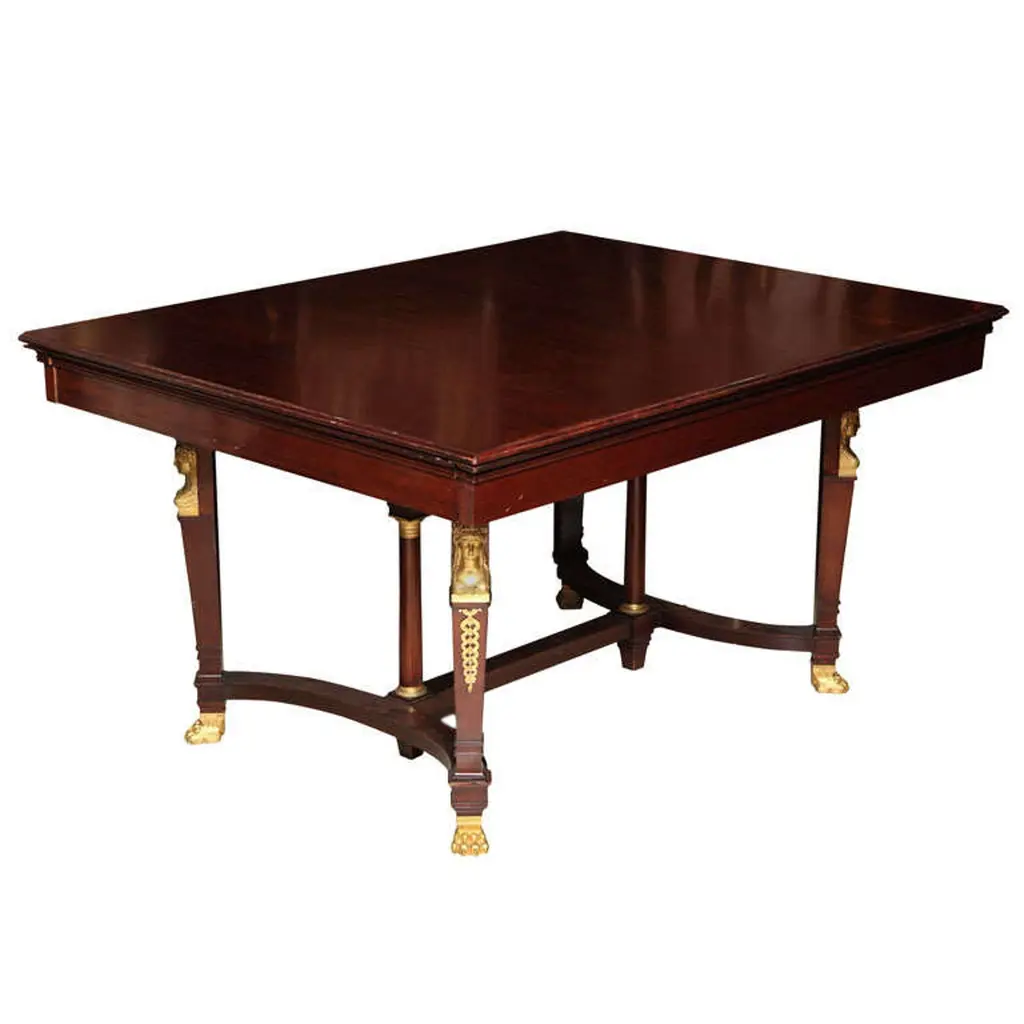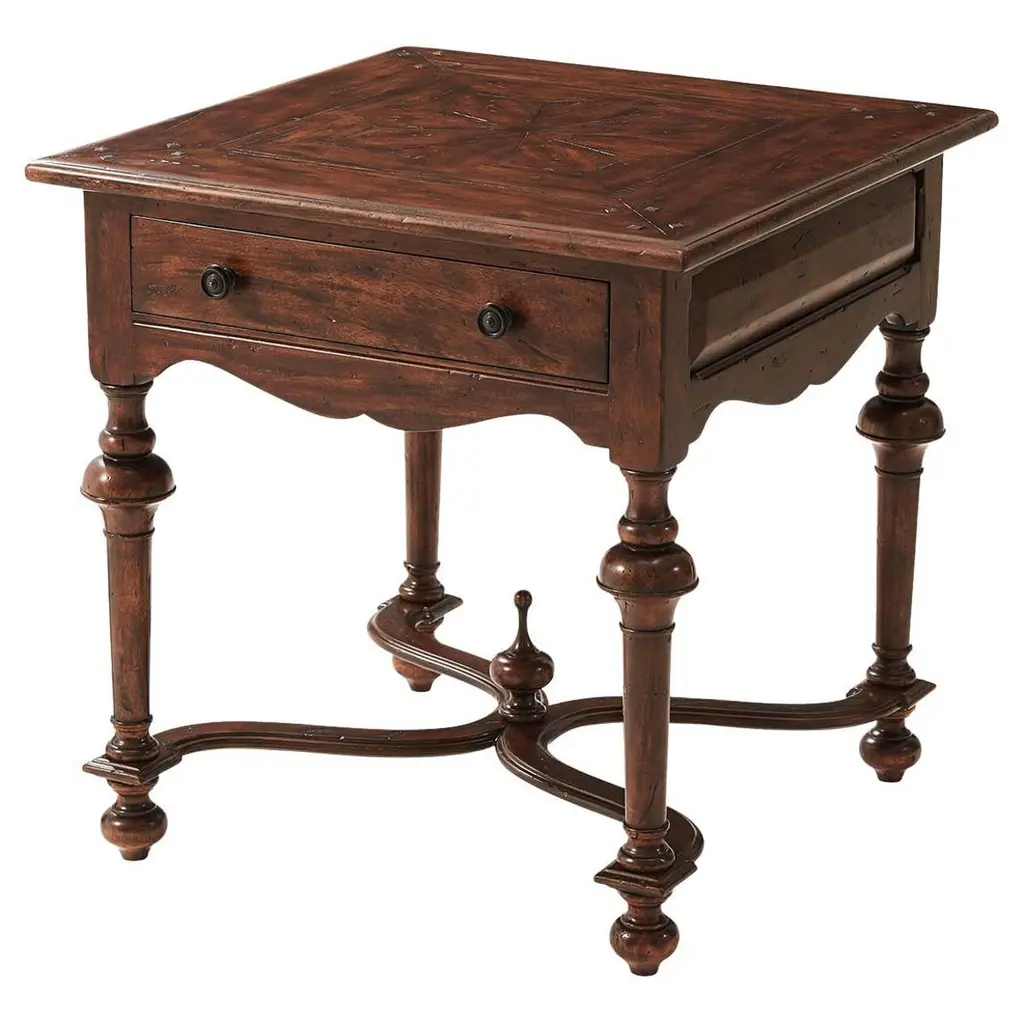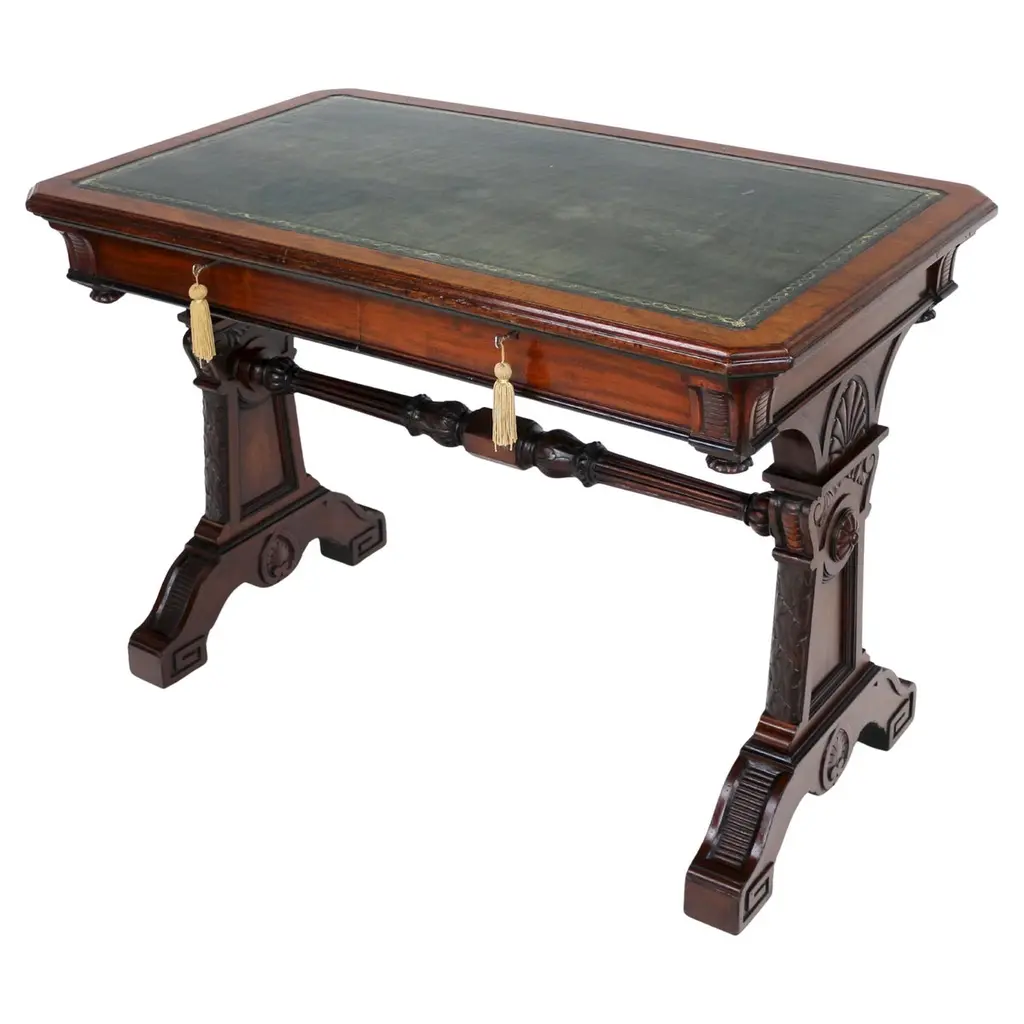
Regency Neoclassical Mahogany Library Table In The Manner Of Richard Bridgen
$3,509
1st Dibs
A superb quality late Regency mahogany and ebonised library table in the manner of the architect and designer Richard Bridgens (1785-1846). With a canted top with a green and gilt tooled leather inset writing surface above two mahogany lined frieze drawers and decorative corner corbels with pendant finials. On striking palmette carved end supports joined by a turned and carved stretcher rail and ending on arched trestle bases with Greek key carved feet and on original castors. Polished and carved to all sides and dating to circa 1830.In good solid condition, with original brass locks, the leather skiver with some watermarks and fading. Overall a very attractive library or writing table.Overall dimensions (approx)Width - 102cm (40 1/8in)Depth - 60.5cm (23 3/4in) Height - 72.5cm (28 1/2in)Knee height - 60.5cm (23 3/4in)Ref: 0738Richard Hicks Bridgens (1785–1846) was an English architect, furniture designer, and author, known for his contributions to interior design during the early 19th century. Born in Birmingham, he began his career in Liverpool, apprenticed to the renowned cabinet maker and sculptor George Bullock. He exhibited at Liverpool Academy between 1810-1812 and the Royal Academy between 1813-1826, and also took over Bullocks Abbotsford House commission for Sir Walter Scott. In 1814, he moved to London to continue working with Bullock, and after Bullock's death in 1818, Bridgens established his own business in Birmingham from 1819 to 1825. His most notable known work was for James Watt junior at Aston Hall designing furniture and making architectural alterations in the Jacobean style.Bridgens' designs encompassed styles admired in Britain at the time, including Grecian and Gothic, reflecting his versatility and the aesthetic preferences of the period. The book he wrote in 1838 entitled ‘Furniture with Candelabra and Interior Decoration’ detailed his ideas for interior design and included specific commissions, with the book divided into three sections for his designs in the Grecian, Elizabethan and Gothic styles showing various motifs and embellishment. Bridgens moved to Trinidad c.1826 following his wife's inheritance of the St Clair sugar plantation, where he published his drawings of plantation life in the West Indies and continued his work until his death in 1846.
Similar Items