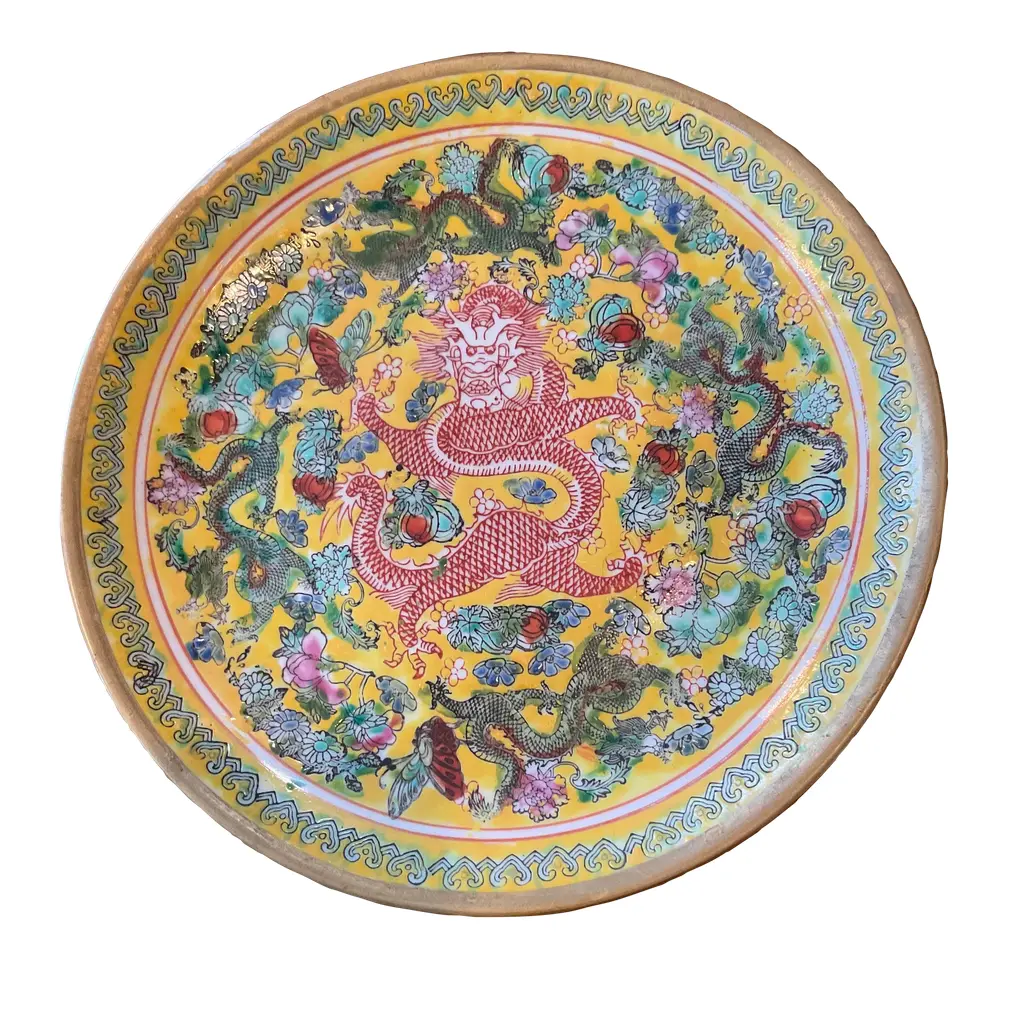
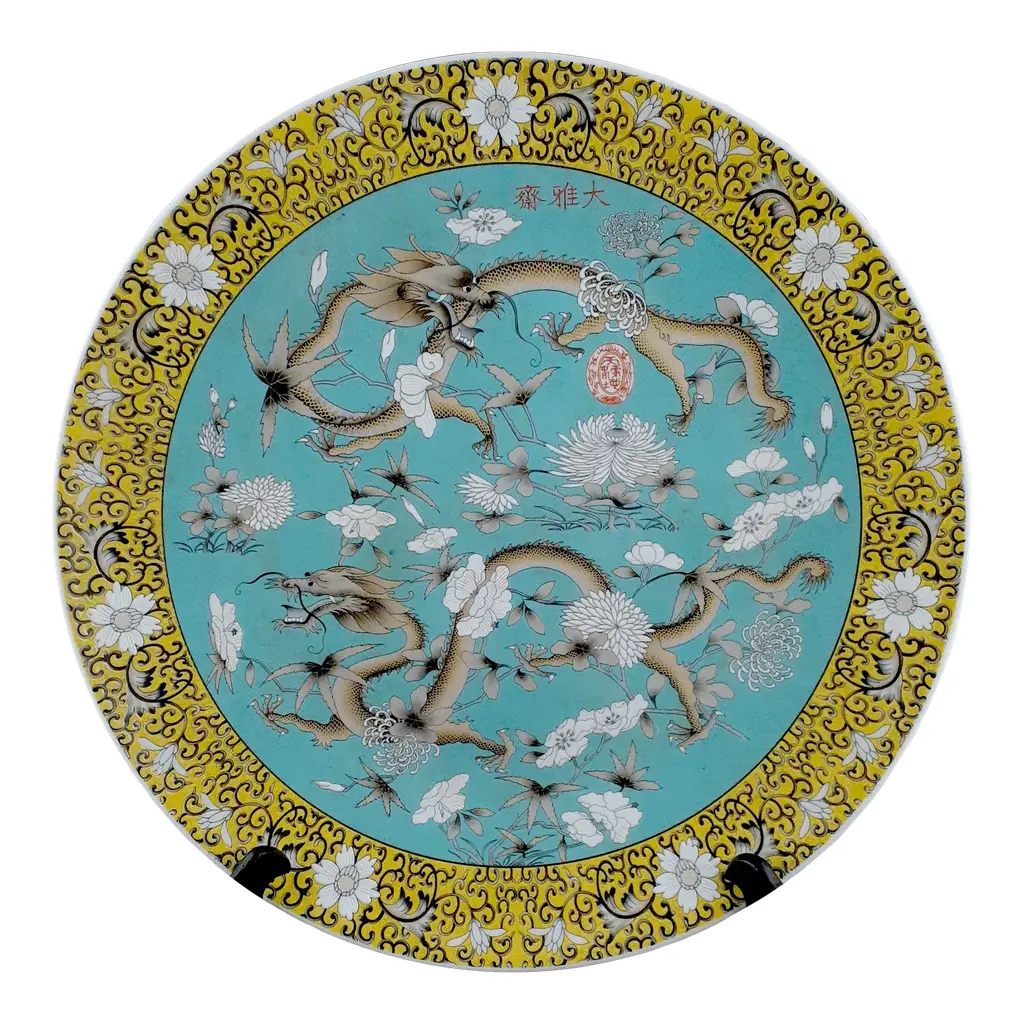
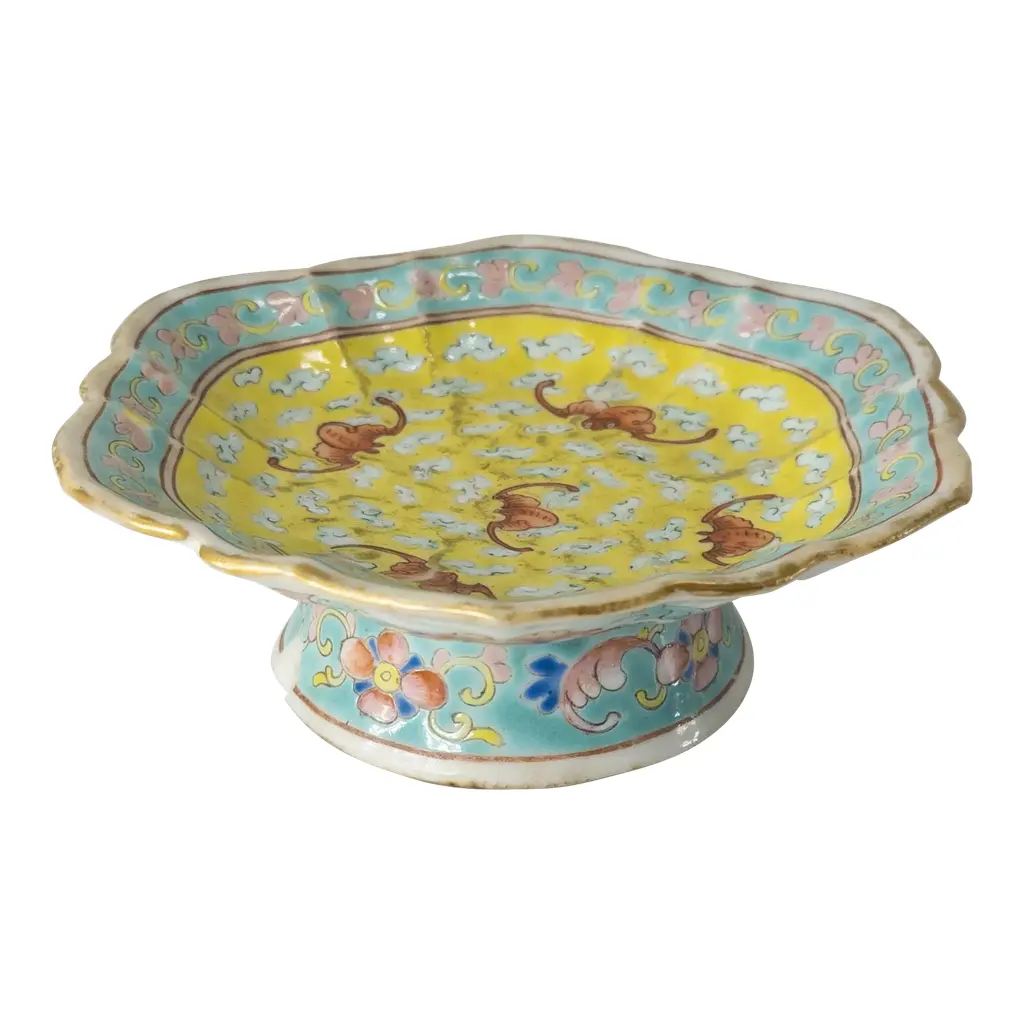
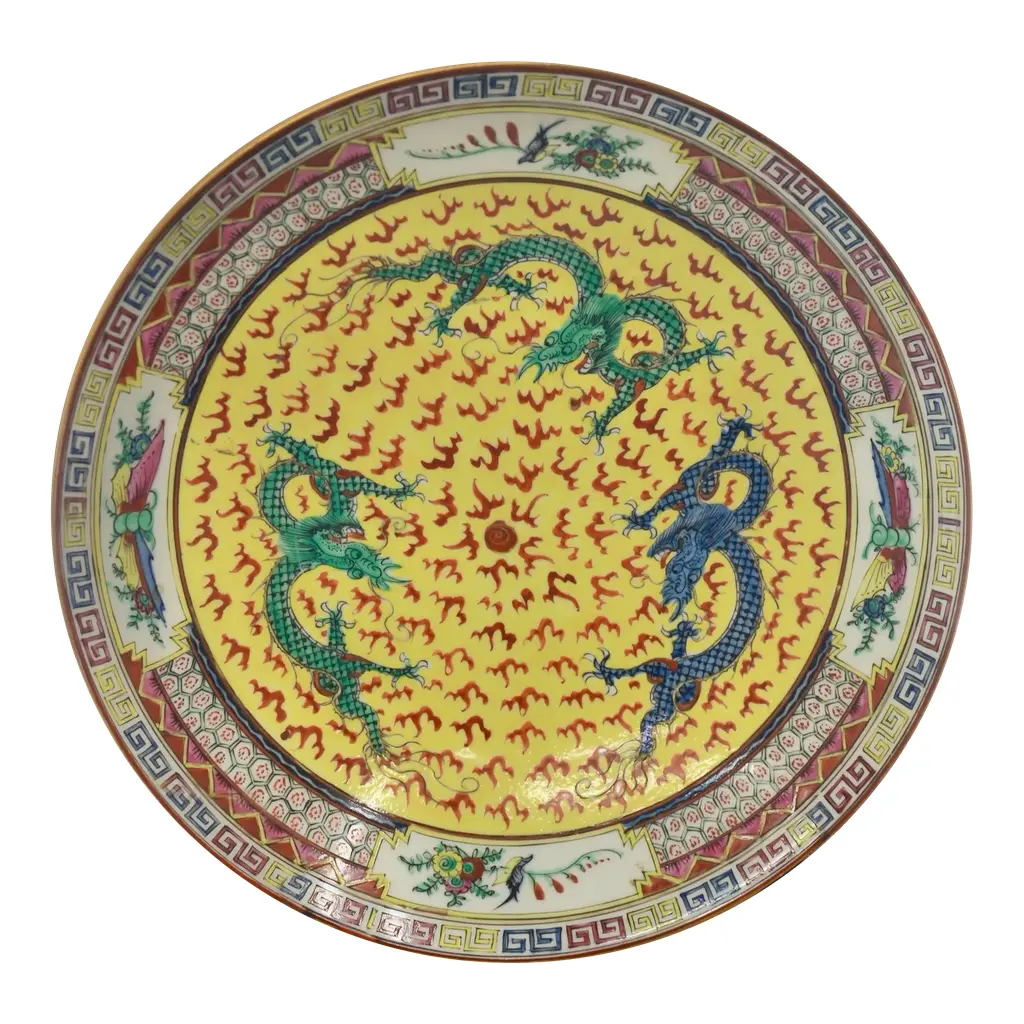
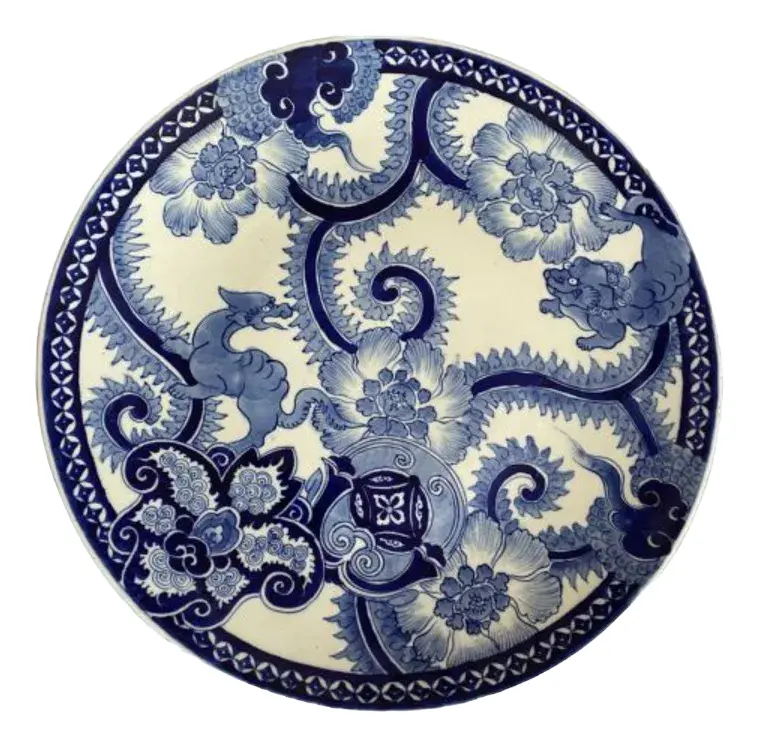
Chinese porcelain five shishis charger, a large, finely formed, a large, finely formed, serving plate with a polychrome, glazed interior, and a white glazed exterior and a double footed, inset base. The scalloped and dentated, shelf rim is decorated with four, embroidered ball medallions, on a sky blue ground amid green and white Auspicous clouds (xiangyun) and Taoist flames, bracketed by a thin, black ringlet atop and a green band below. The interior of the bowl has five, finely drawn and detailed shishi, frolicking among polychrome auspicious clouds (xiangyun) and Taoist flames, on a yellow ground. The central Fu Lion is holding the xiù qiú (embroidered ball). The yellow ground is parted at the top to reveal a blue Fu Bat flying in a blue sky. The exterior has three Taoist symbols embellished with ribbons, a Yin Yang, an xiù qiú, and a Jing. A blue, six character, Kangxi, reign mark is glazed to the center of the base. The finely carved, traditional, Chinese, hongmu, plate stand is included. Circa Republic of China era, no later than mid century. "embroidered ball" (繡球; xiù qiú): the external world. Jing: Open lozenge, represents the ability to ward off evil influences. The mirror’s reflection symbolizes truth and clarity, offering protection and fostering harmonious relationships. Yin Yang: represents the balance and harmony of opposing forces in the universe. xiangyun: Cloud motifs are rooted in agrarian culture of the Chinese people. Clouds are associated with good luck as the cloud makes rain which moisten all things, and therefore, it brings good fortune to people. In Chinese language, clouds are called yun (云; 雲; yún) which is a homonym for the Chinese character yun "good fortune" (运; 運; yùn). In Chinese culture, clouds (especially the five-coloured clouds) are perceived as an auspicious sign (e.g. an omen of peace, a symbol of Heaven, and the expression of the Will of Heaven. They also symbolize happiness and good luck. charger: 2.75" high x 17.75" diameter stand: 14" high x 14.25" wide x 6: deep
Similar products