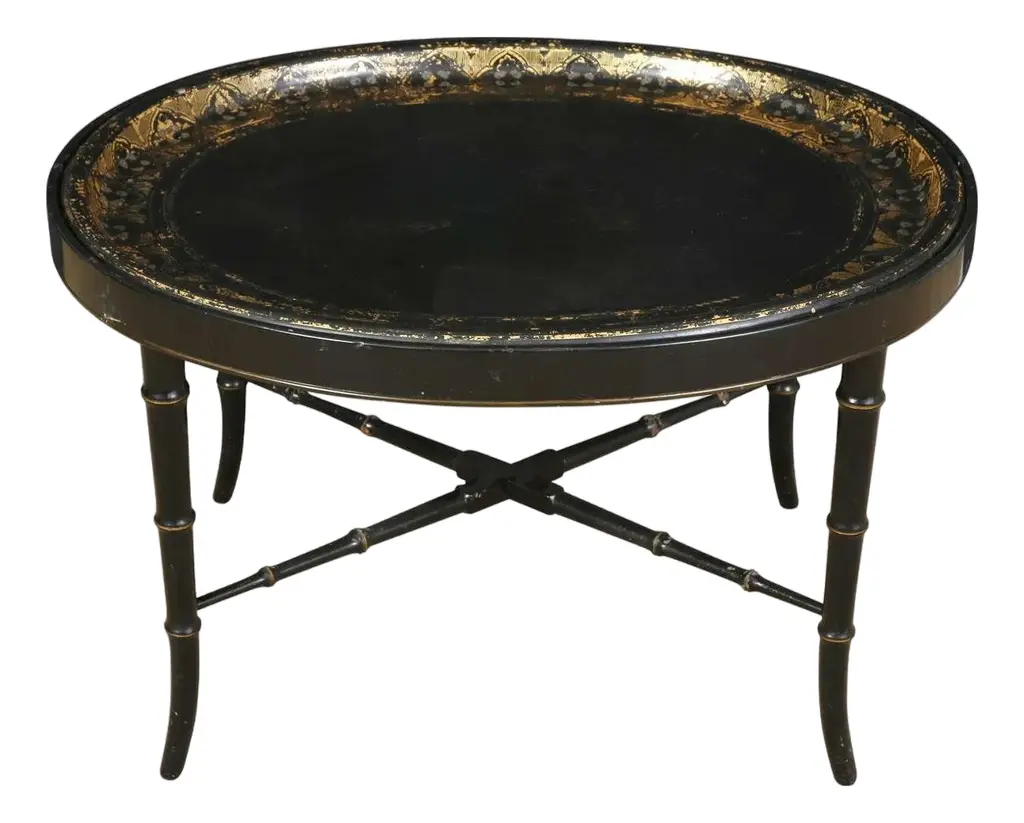
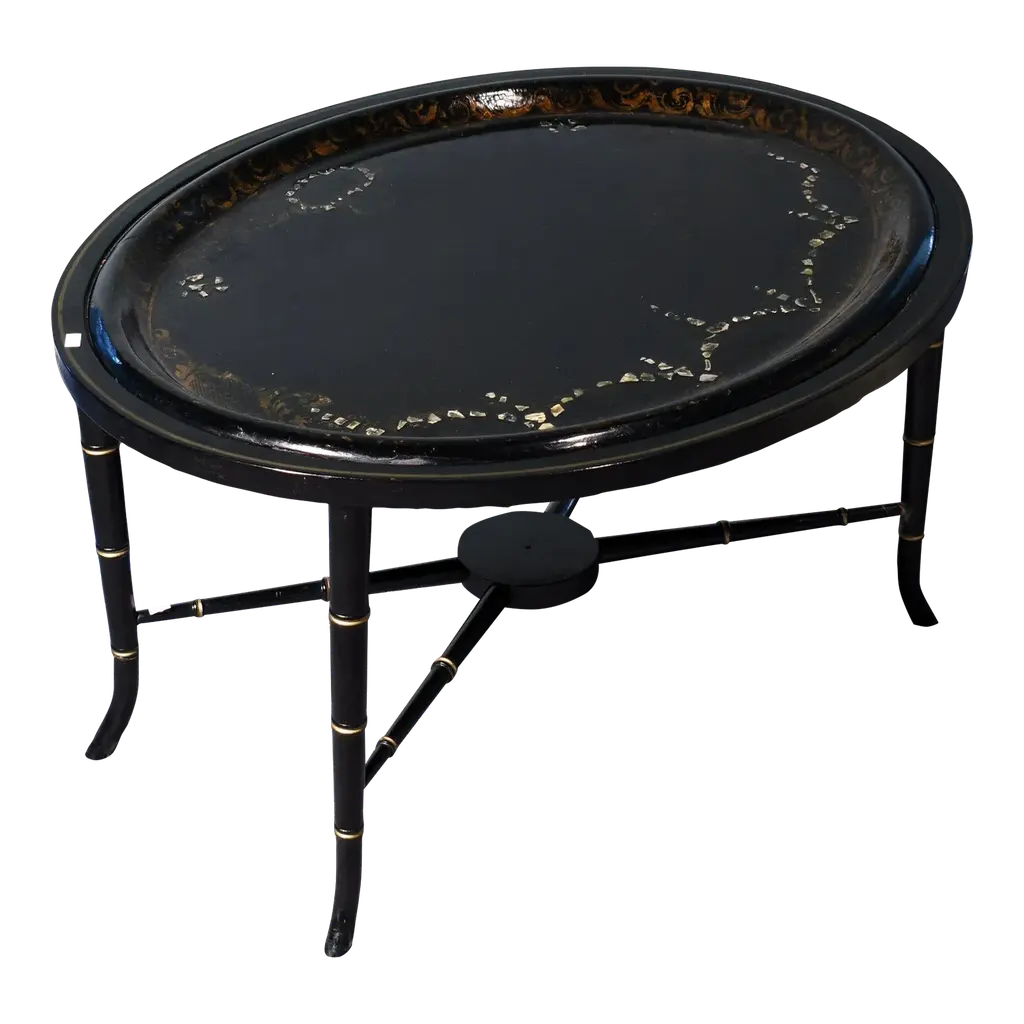
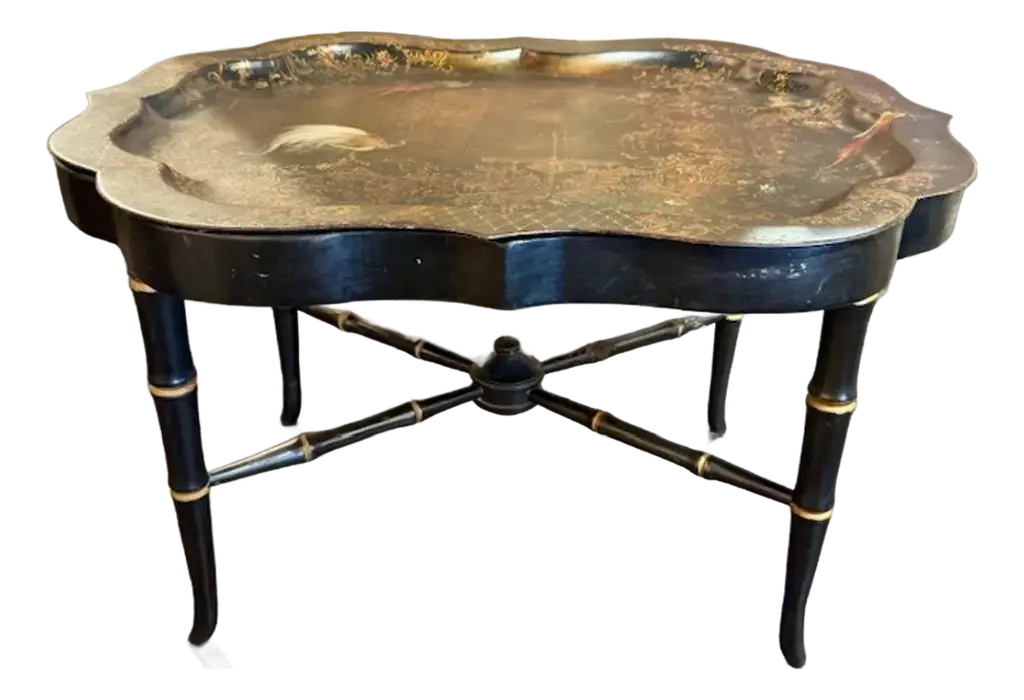
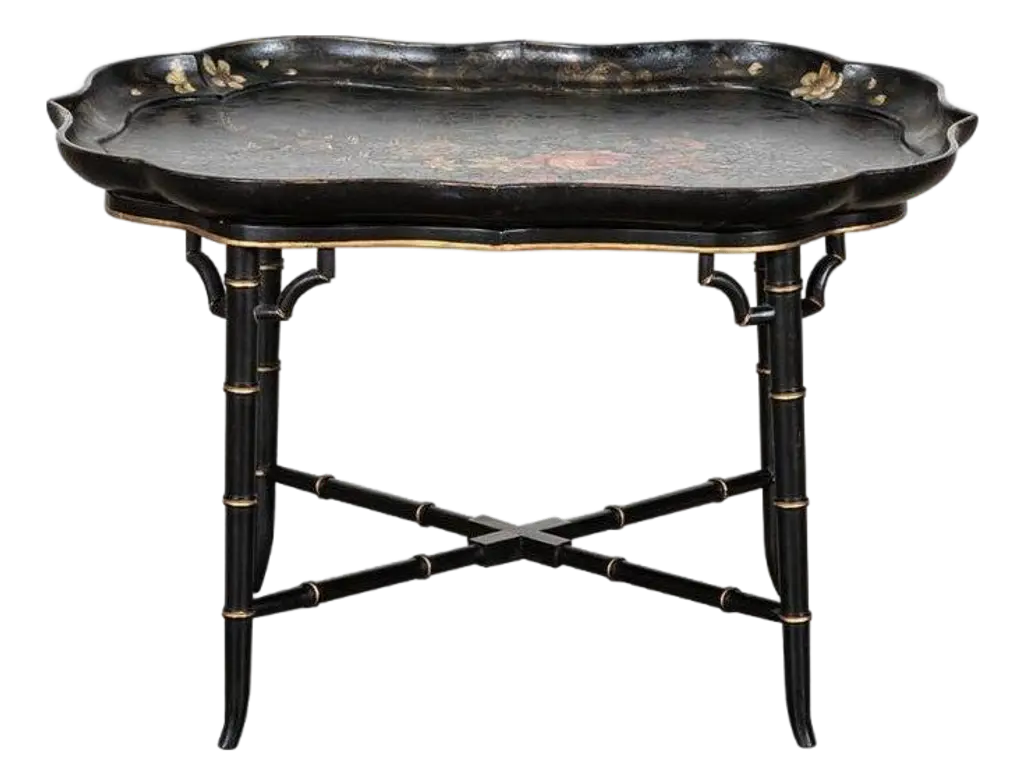
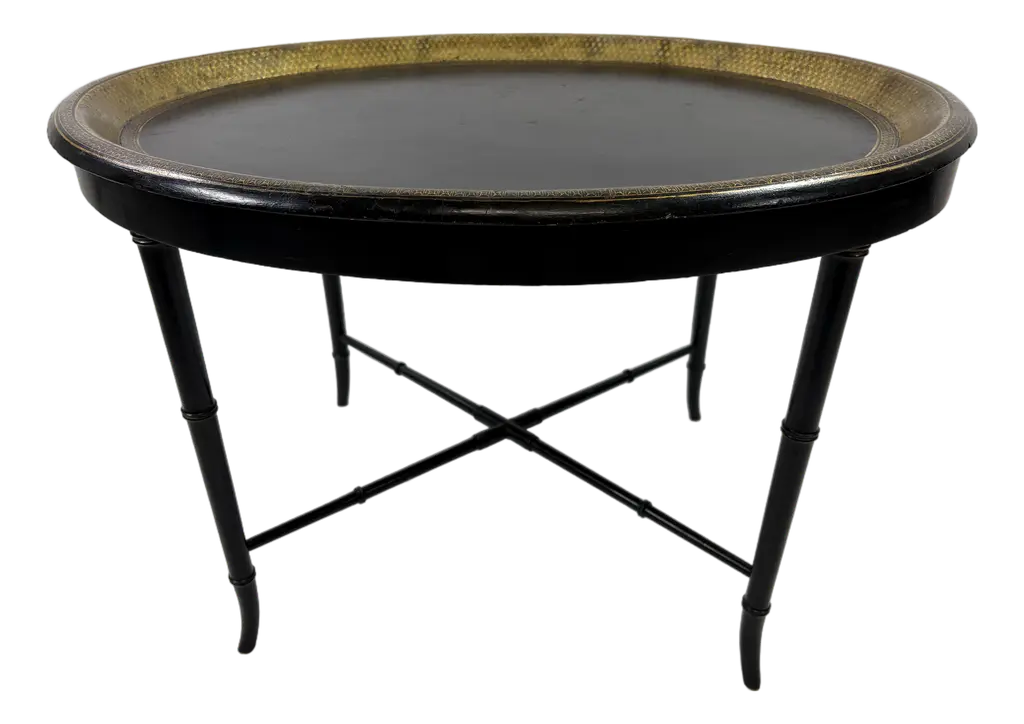
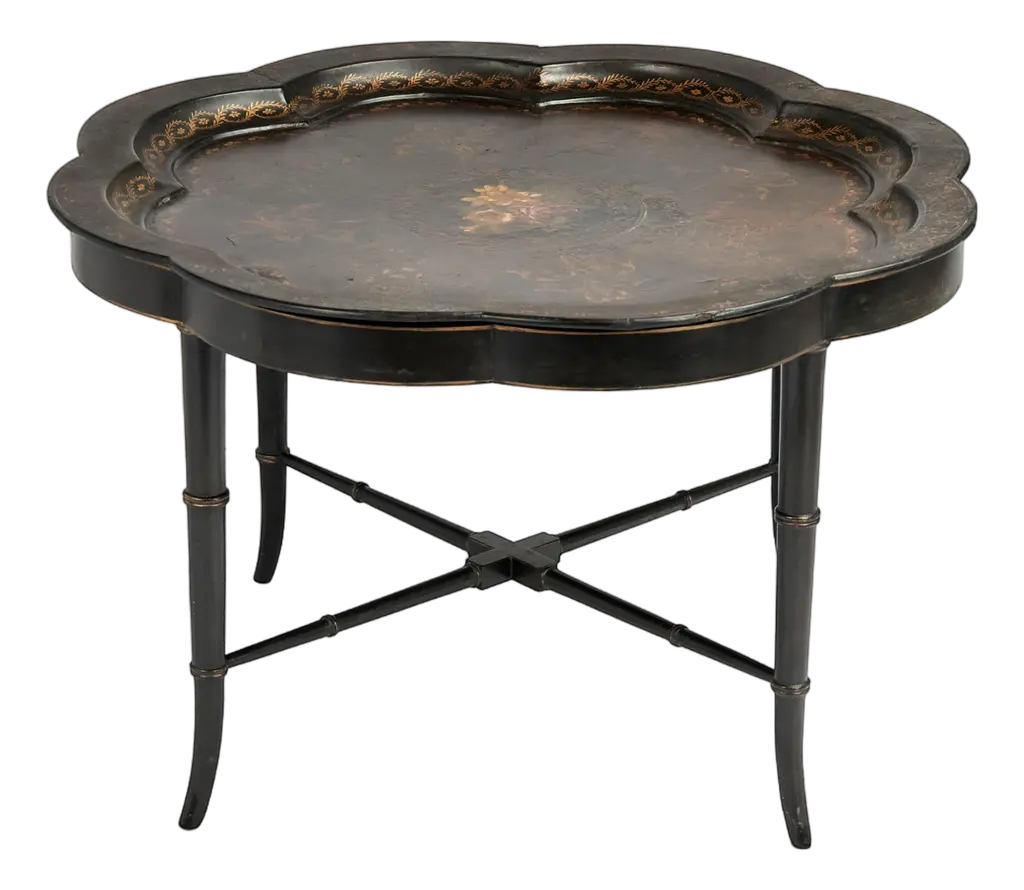
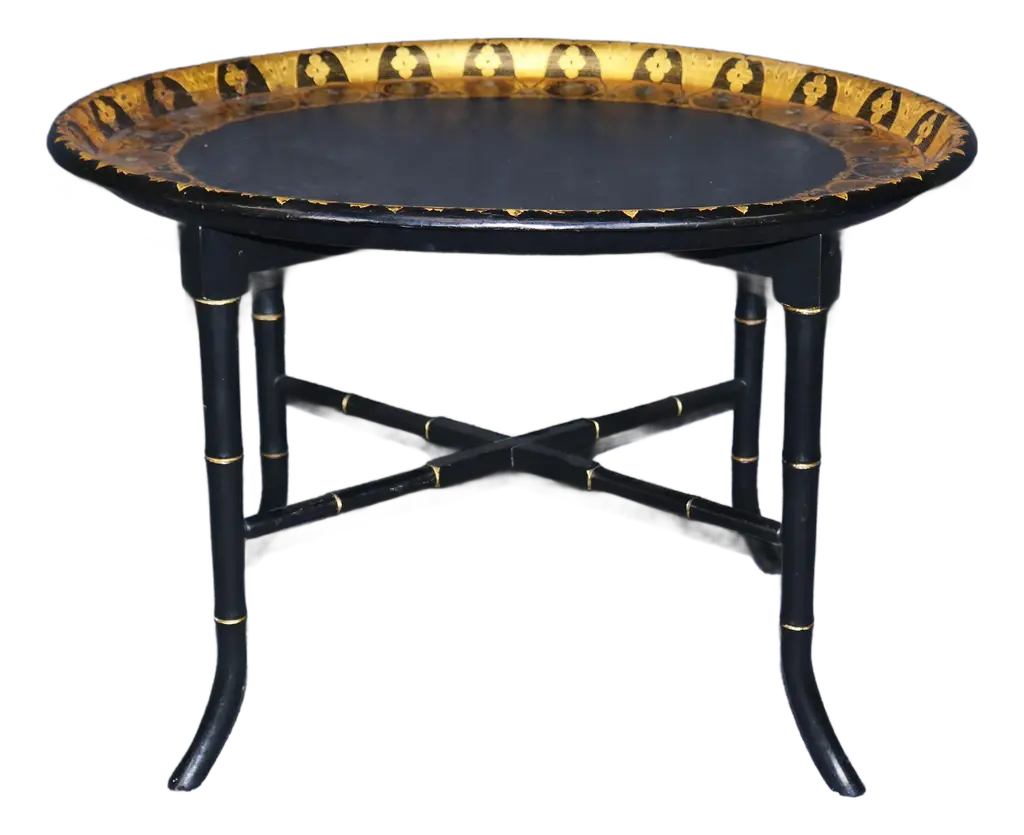
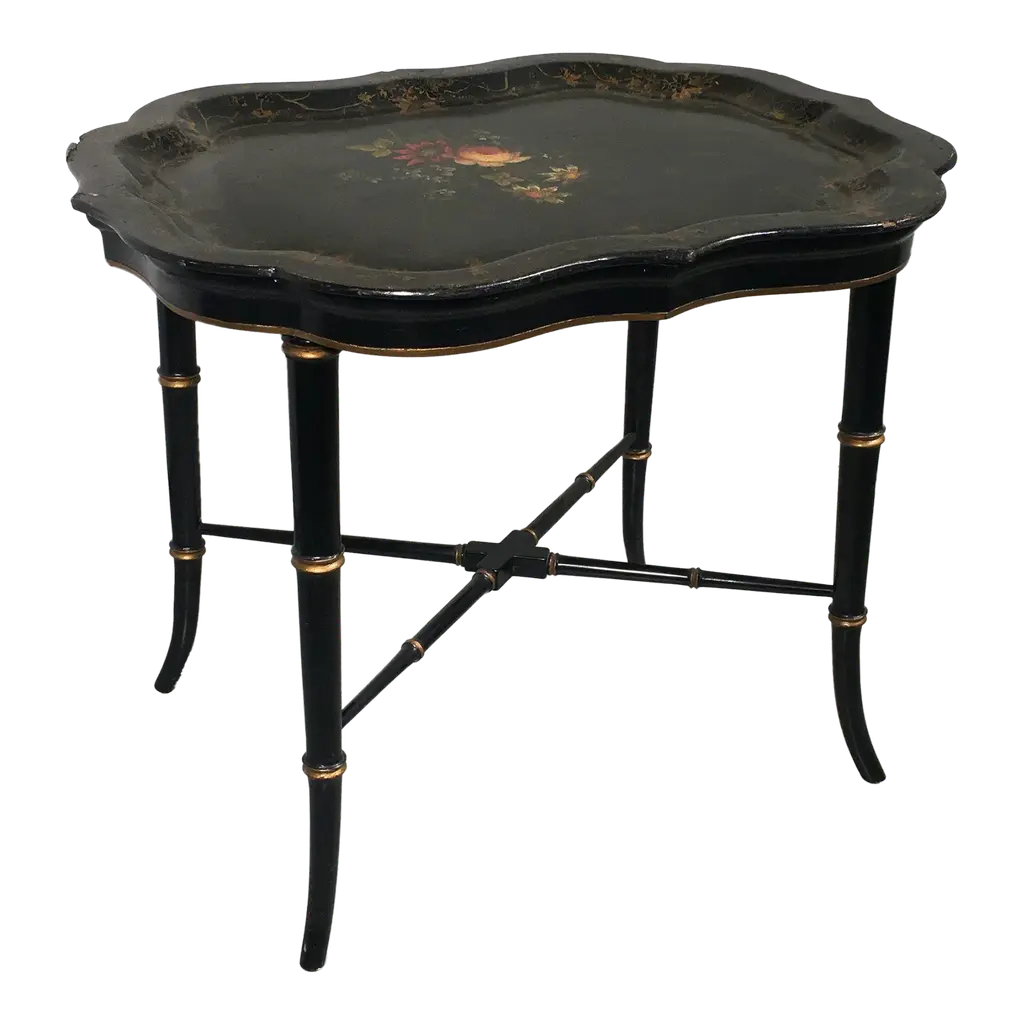
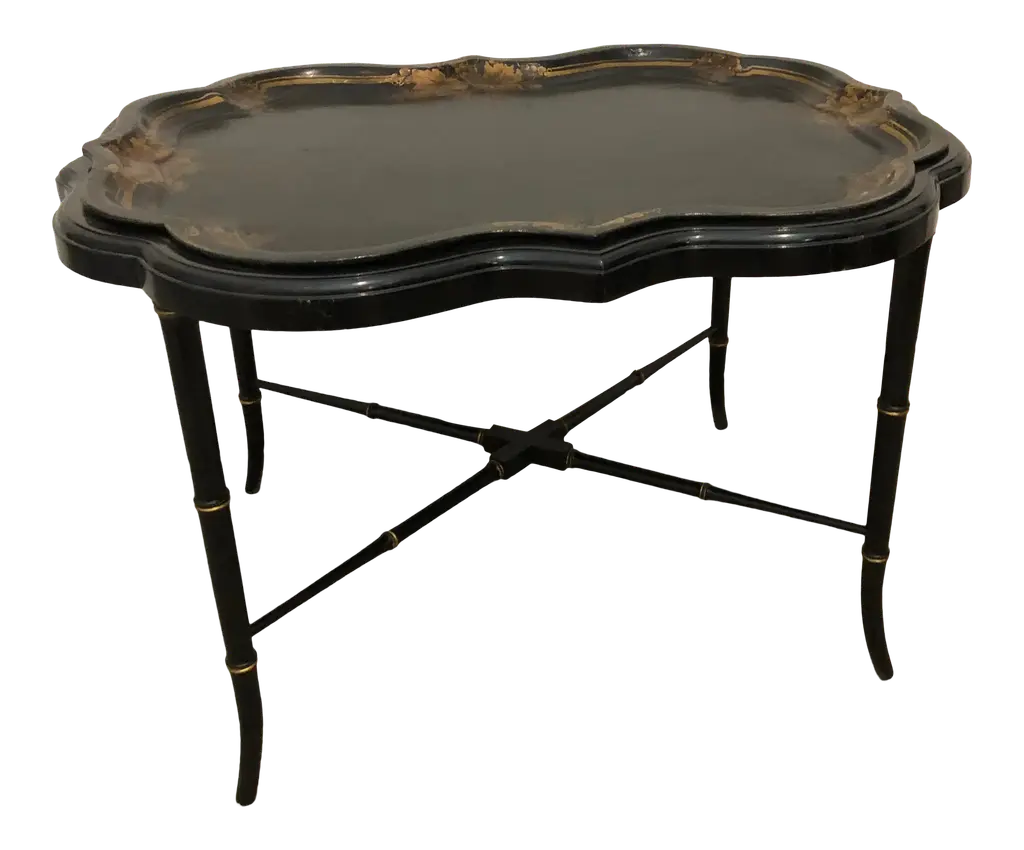
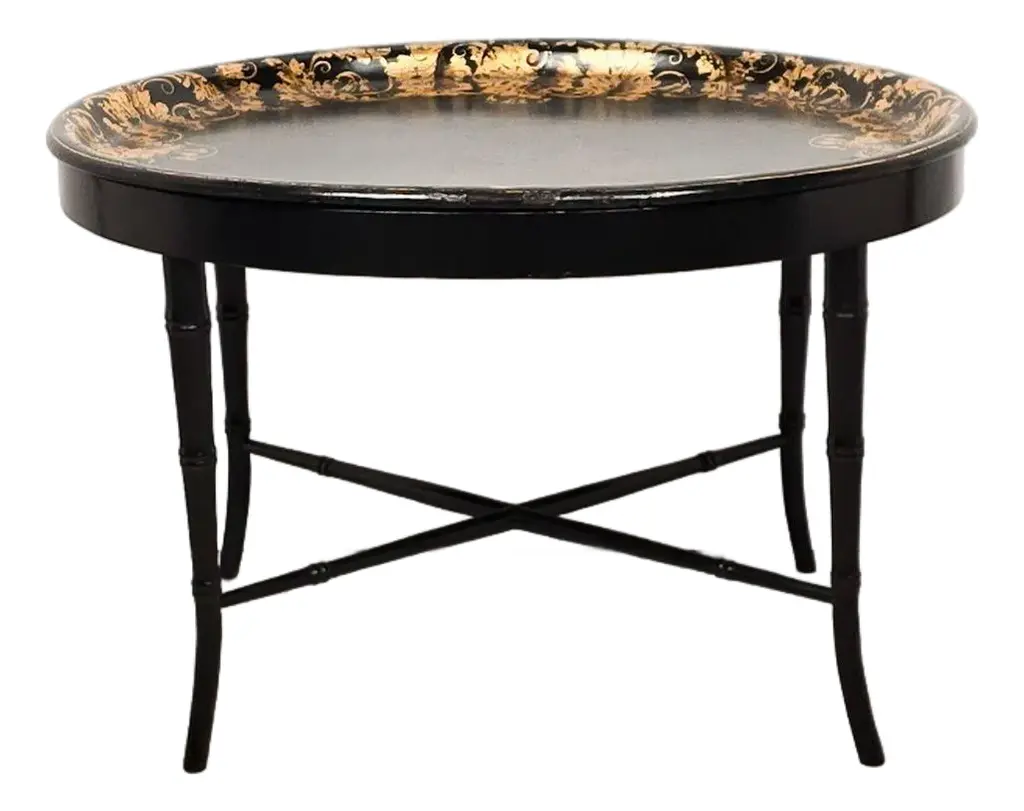
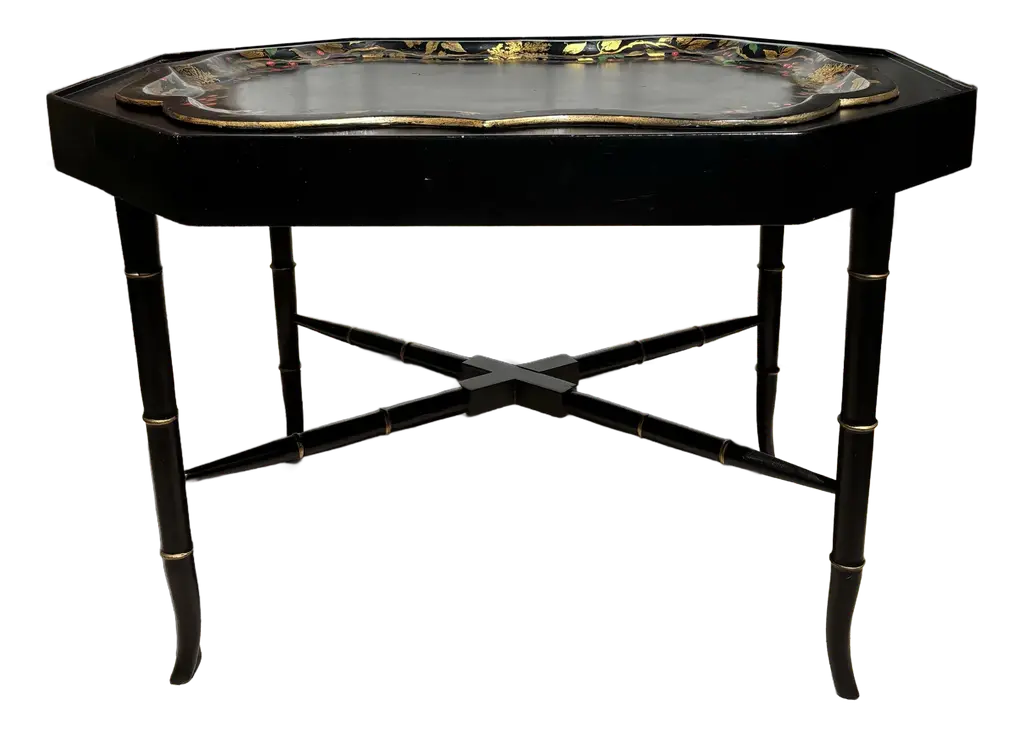
The art of lacquerware, particularly with mother-of-pearl (known as 'maki-e' in Japan or 'pietra dura' in Italy, though the latter is stone inlay), has a long and rich history across Asia and was adopted and adapted in Europe. These techniques involve applying multiple layers of lacquer, often derived from the sap of the lacquer tree, and then embedding finely cut pieces of shell or applying intricate gold or silver leaf designs. This process results in a durable, lustrous finish with exquisite decorative detail. Such decorative tables, often featuring faux bamboo elements, were popular in the late 19th and early 20th centuries, blending Eastern decorative arts with Western furniture styles. They served as elegant accent pieces, used for displaying small objects, holding refreshments, or simply as decorative elements in parlors and drawing rooms. The combination of lacquer, mother-of-pearl, and gold filigree signifies a high level of craftsmanship and luxury.
Similar products