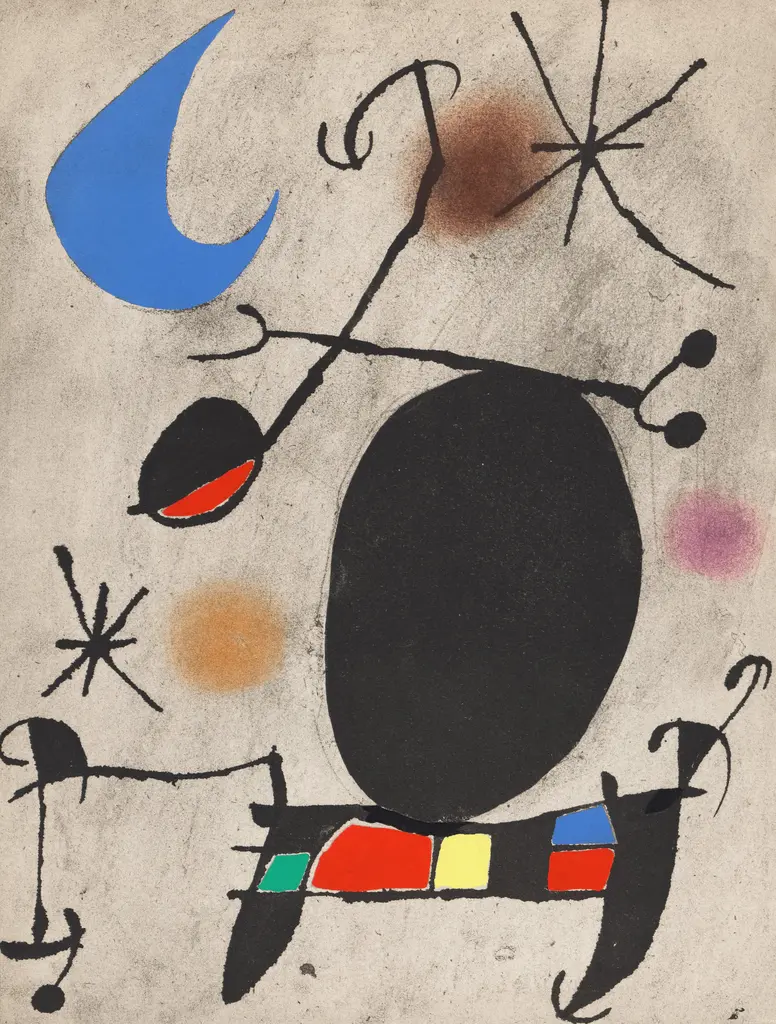
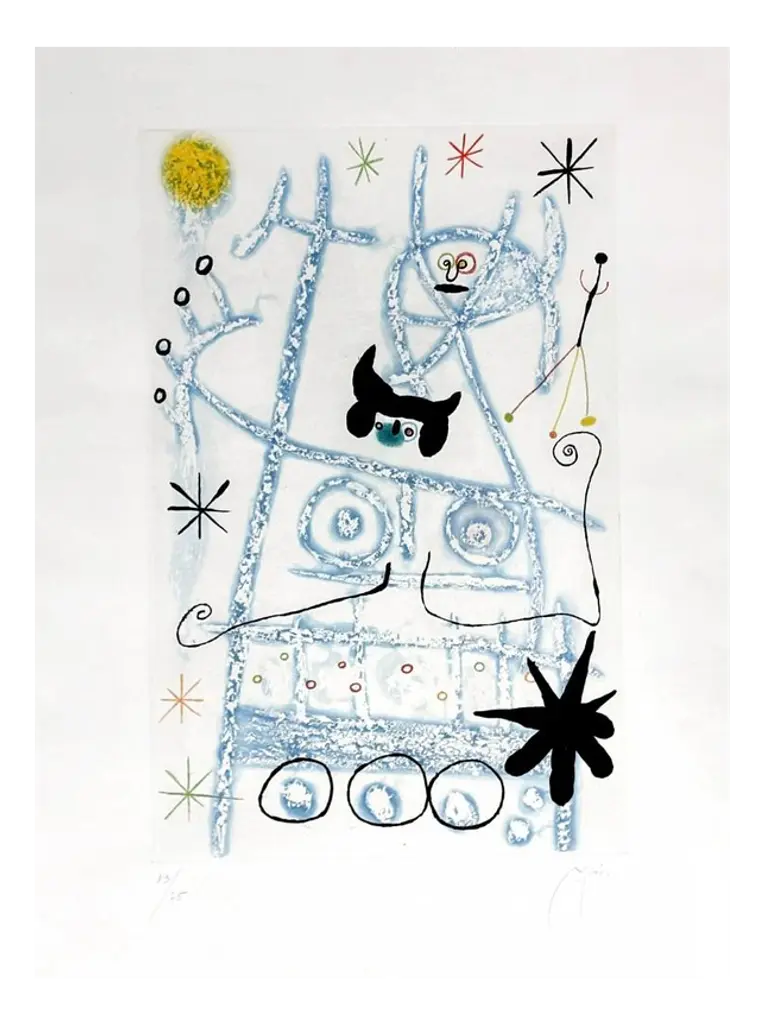
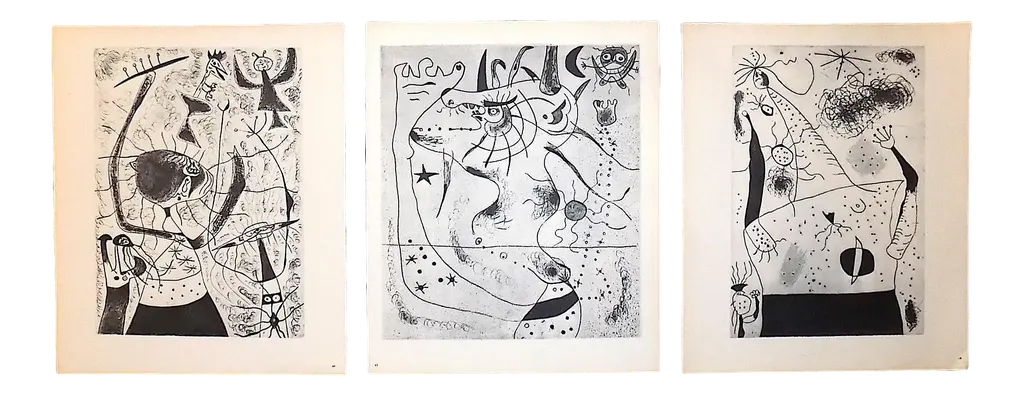
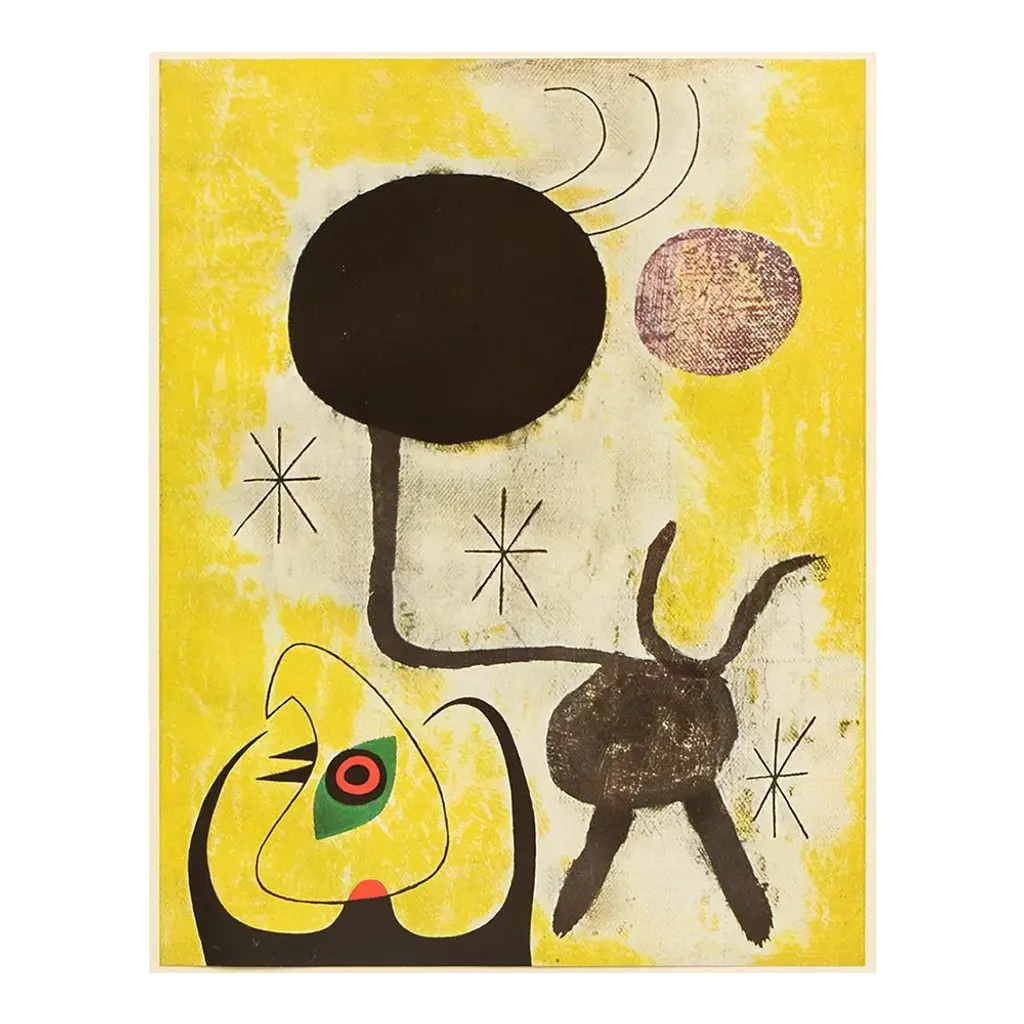
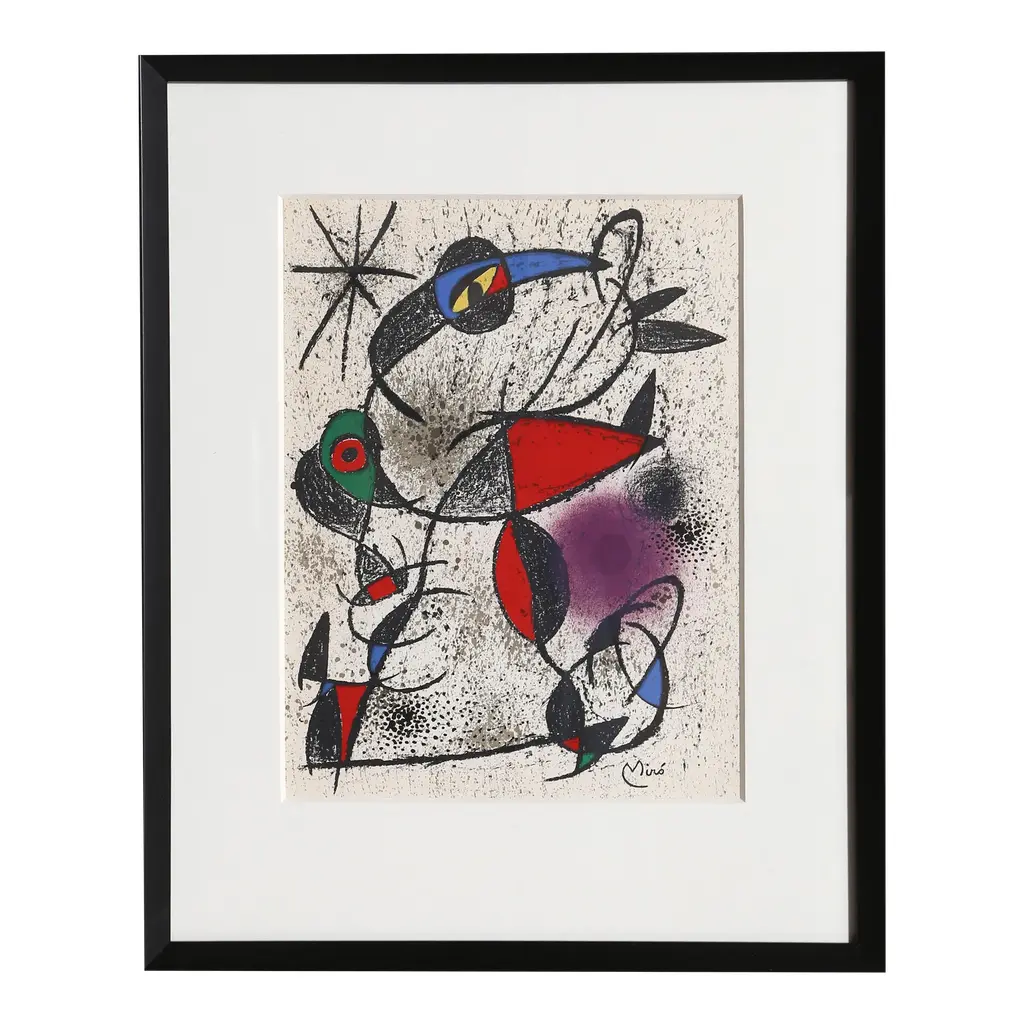
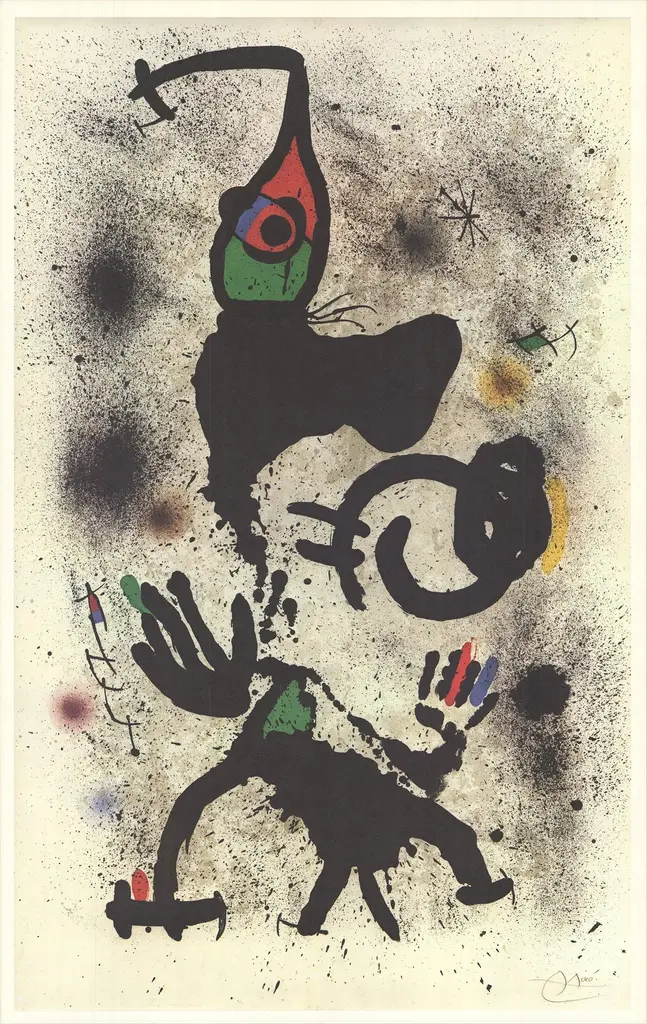
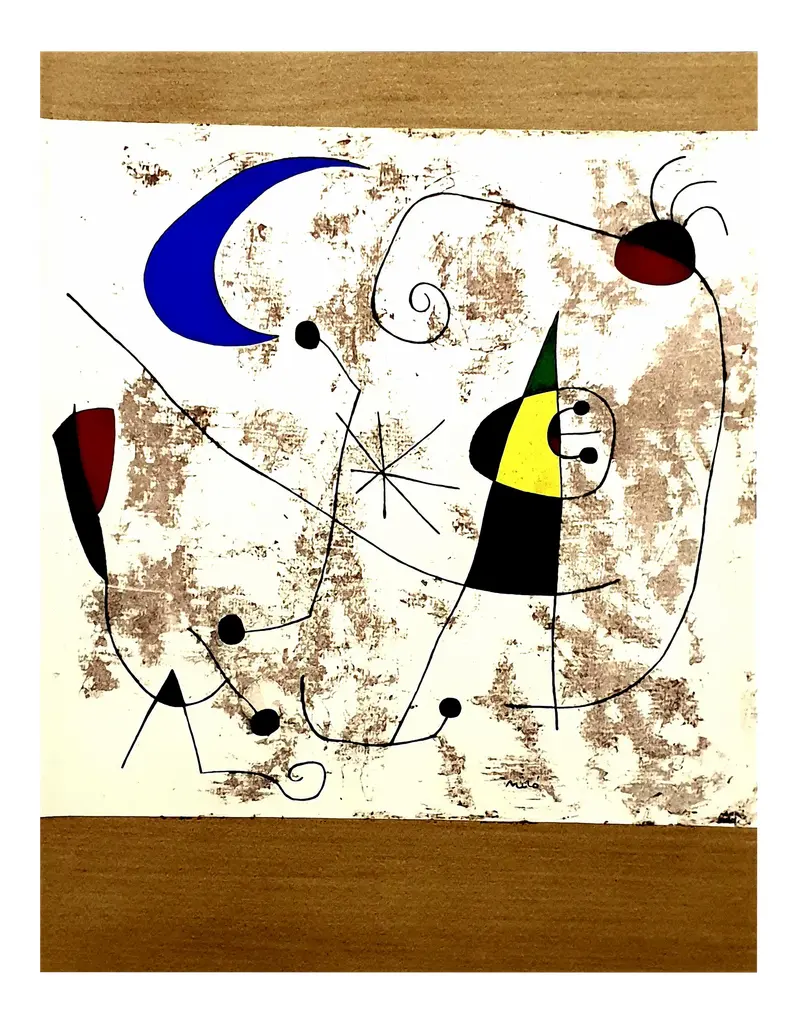
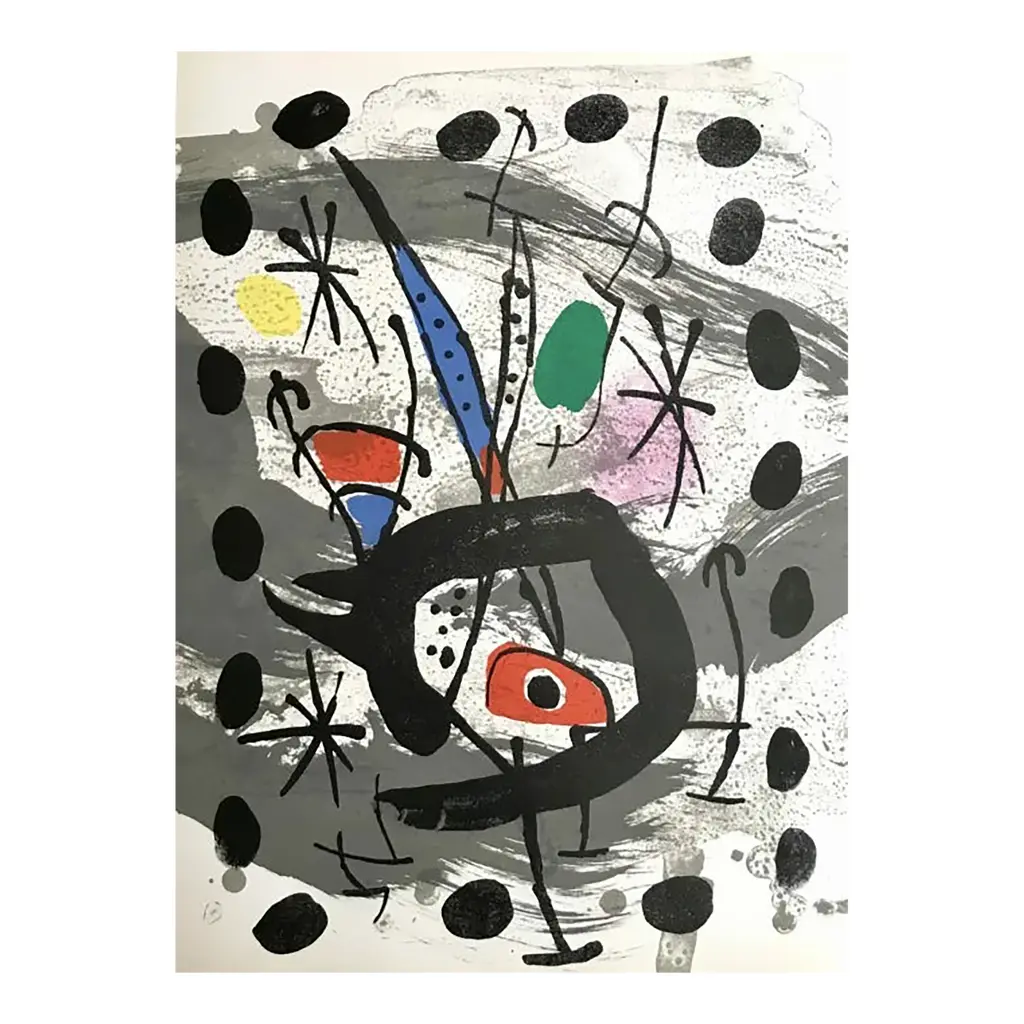
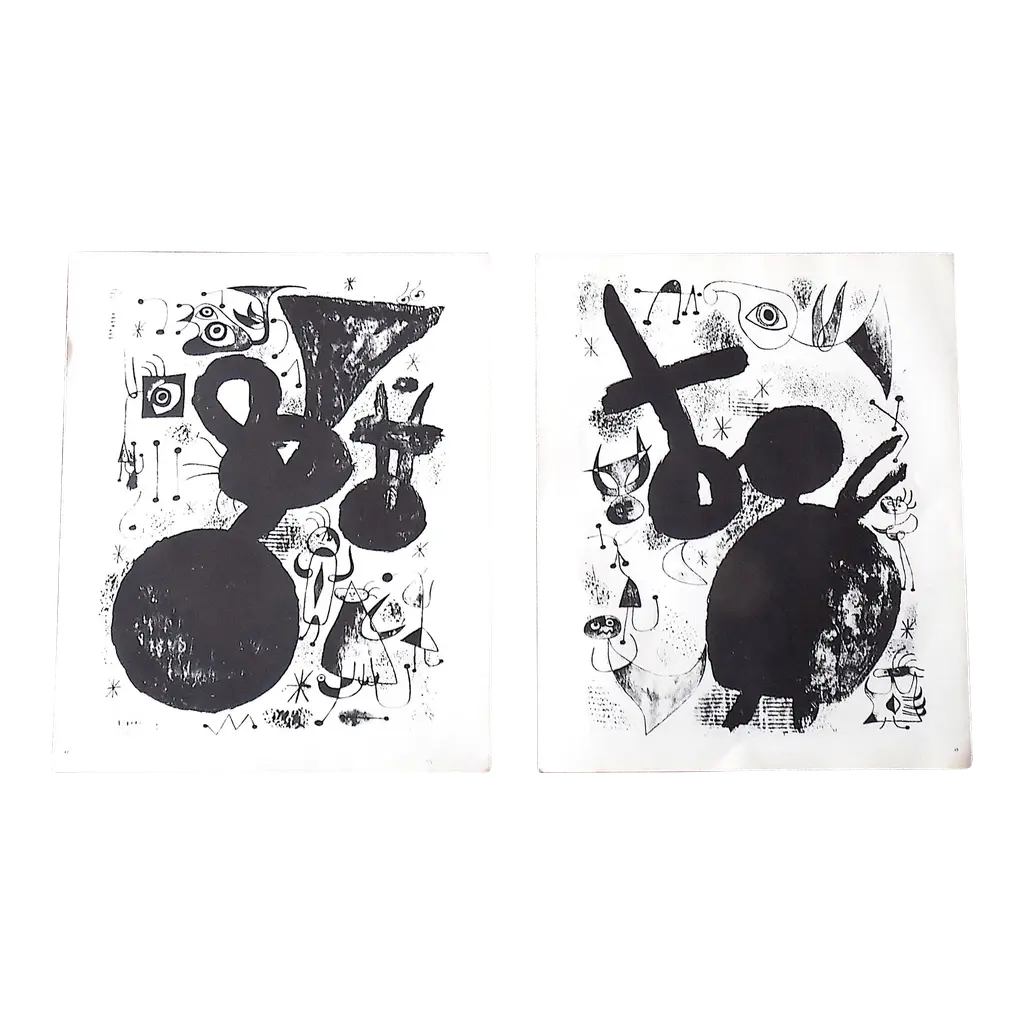
Exquisite pochoir after Joan Miró, from the album "L'Oiseau Solaire, L'Oiseau Lunaire, Etincelles" (The Sun Bird, The Moon Bird, Sparks), published by Pierre Matisse Gallery, New York, and printed by Daniel Jacomet et Cie, Paris, 1967. Sheet size: 12-1/4 x 9-1/4 inches, on Vélin d'Arches paper. Mint condition new old stock from our complete copy of "L'Oiseau Solaire, L'Oiseau Lunaire, Etincelles". Pochoir (French for “stencil”) is a print technique in which colors are applied by hand using stencils, often in layers. It was popular in the 1920s and 1930s, but due to its labor-intensive process, was largely replaced by lithography. Pochoirs are known for saturated colors, soft, slightly uneven edges, uses gouache or watercolor that appears to sit on top of the medium. Joan Miró (1893 – 1983) was a Spanish artist who worked in painting, printmaking, sculpture, ceramics and tapestry. He is one of the most important artists of the 20th century, and one of the most prolific. Initially, Miró was inspired by Spanish folk art and church frescoes, as well as prehistoric art. After moving to Paris in the early 1920, he became influenced by contemporary sources such as Surrealism, Dadaism, Fauvism and Cubism, but by 1930 developed his own unique style that is known for his use of organic forms, playful shapes, and bright colors that create childlike wonder in his images. Miró encouraged the use of "automatic drawing", letting the subconscious mind take over when drawing, to free art from conventional methods. His works are on permanent exhibition in most of the world's major museums, a museum in his hometown of Barcelona is dedicated to the artist and his legacy, the Fundació Joan Miró. In 1974, Joan Miró, working with Josep Royo, created a vast tapestry for the World Trade Center. Unfortunately, this 35-foot-wide tapestry was lost on September 11, 2001.
Similar products