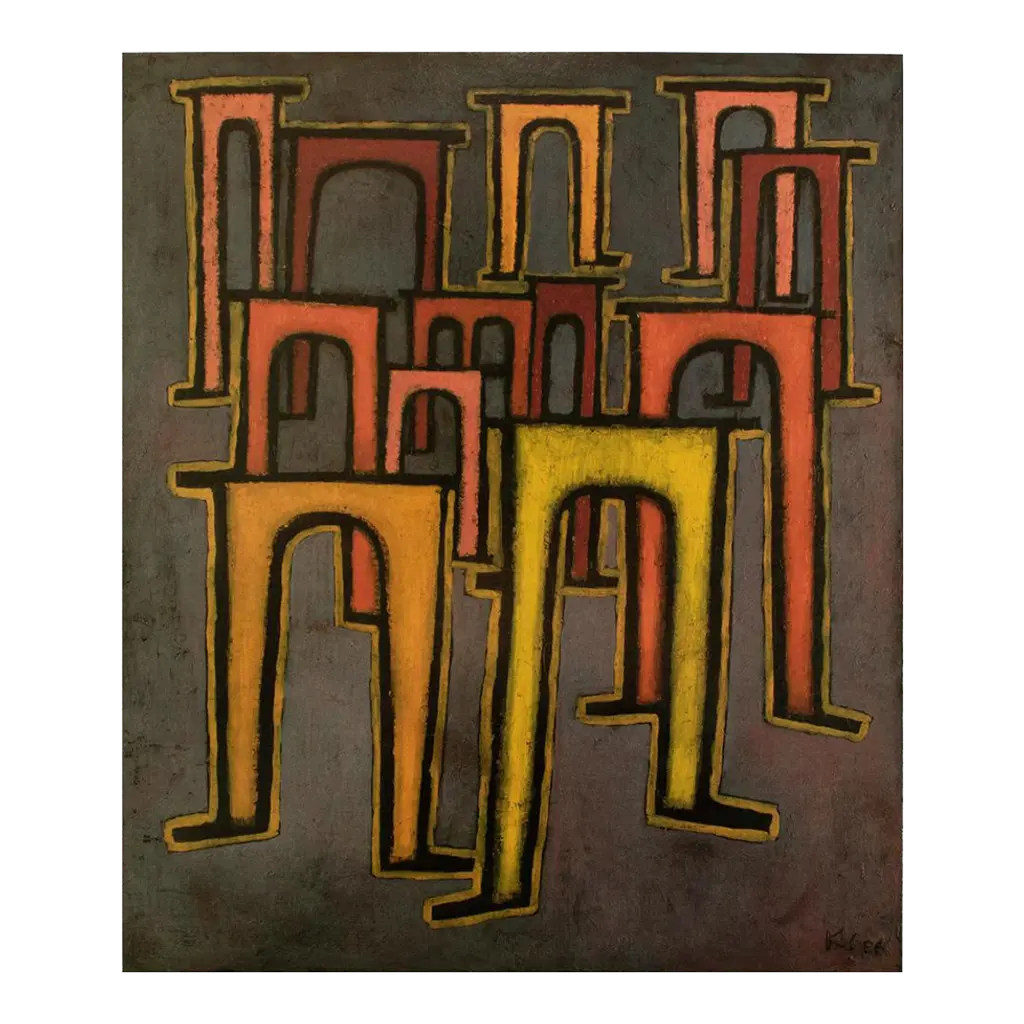
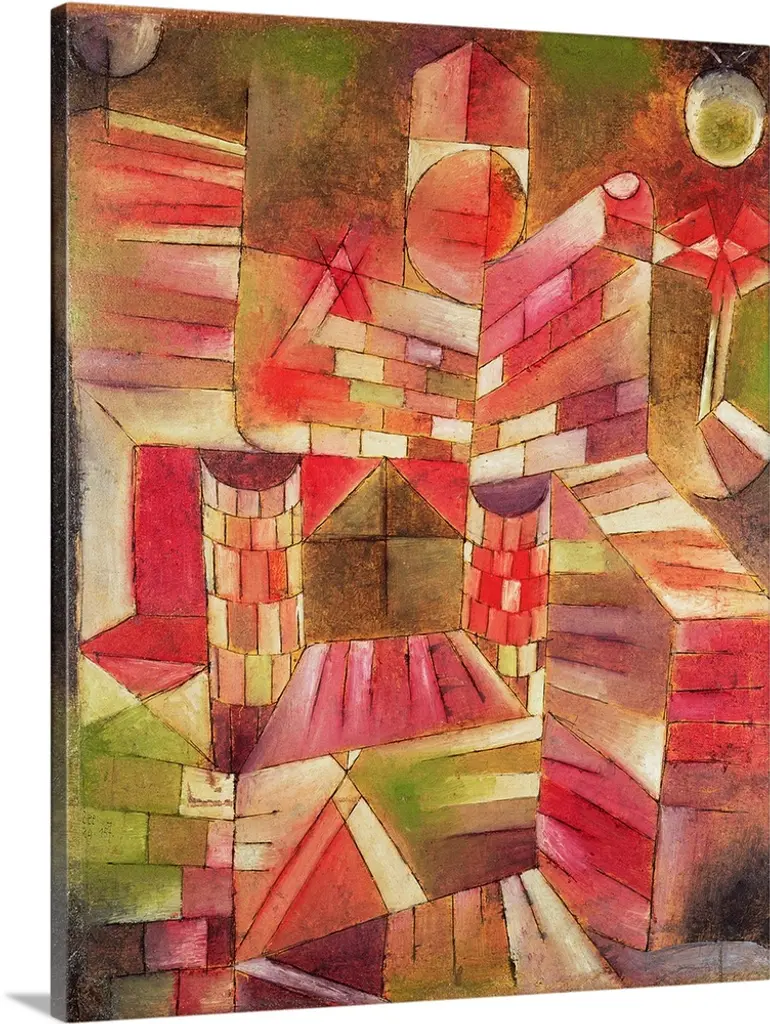
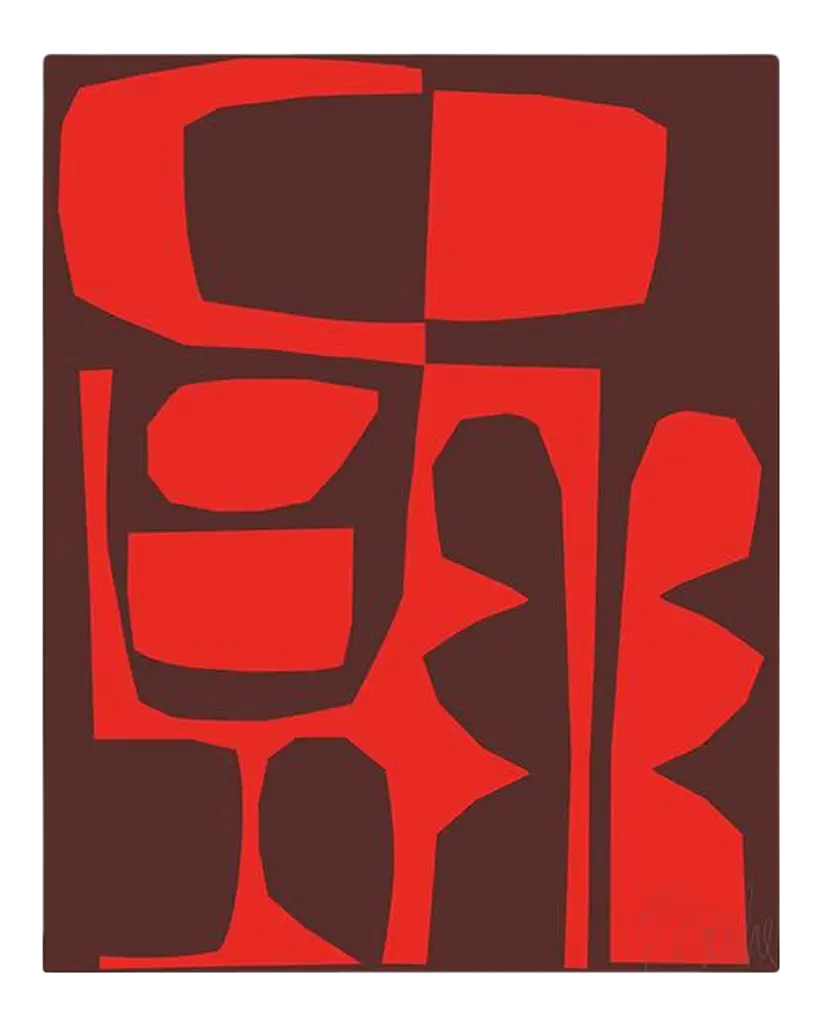
1969 Revolution Of The Viaduct By Paul Klee Vintage Fine Art Print Lithography Poster 60s
Chairish$450
1969 Revolution Of The Viaduct By Paul Klee Vintage Fine Art Print Lithography Poster 60s
Chairish$450
Vintage fine art offset lithography with bright colors on thick high-quality museum paper (250gr) Artist: PAUL KLEE (1879 - 1940) Artwork: Revolution of the Viaduct [en] / Revolution des Viadukts [german] Oil & Cotton, 1937 Printed in 1969, in Braunschweig, Germany On high-quality museum paper (250gr) Printer: Georg Westermann Written in german (C) 1969 SPADEM Paris & COSMOPRESS Genf MEASUREMENTS 25.9 inches x 18.1 inches 66cm x 46cm ARTWORK SIZE 17.12 x 13.66inches 43.5 x 34.7cm CONDITION: 53 years old print / Fine art quality Pre-loved / Good / Some faults Some visible marks from handling and storage Minor creases / Yellowing on paper due to age Nice colors / Ready to frame / RARE AS Color may look different from screen to screen, the original print was professionally scanned Sold without a frame About the artwork: Viaducts Break Ranks bring the Guggenheim Bridge alive, as a political symbol of struggle The Revolution of the Viaduct was produced in 1937 by the artist Paul Klee, at the beginning of his last works period. Klee's artwork dealt with political themes that mirrored his beliefs. This is an anti-fascist painting. Paul Klee depicts the arches of the notorious Guggenheim Bridge breaking away from the bank — as if refusing to remain part of the Nazi establishment. Picasso famously created another anti-fascist painting — Guernica. The arches resemble human legs poised in a straddle position with out-turned feet, ready to stand against their enemy. Painted in vivid yellow and red tones against a light grey background, the arches are outlined in black, creating an eye-catching image. The Guggenheim Bridge was an iconic structure that was hailed at the time by the Germans. Therefore, when the viaducts break ranks, it can be seen as Klee's disagreement with the state of Europe at that time, especially as he left Germany for his homeland, Switzerland at this time. Paul Klee was a prominent artist in art movements such as Surrealism, Expressionism, and Cubism. Klee was influenced by artists such as Robert Delaunay and Maurice de Vlaminck, who inspired him with their bold use of color. He was highly respected by many famous artists, for example, the German artist Franz Marc, and Klee’s colleague, the Russian painter Wassily Kandinsky, who taught alongside him at the Bauhaus School of Art, design, and Architecture in Germany. The painting is now situated in Hamburger Kunsthalle, Germany. The image is painted in the oil medium on oil grounding, on a cotton stretcher frame with dimensions 60 x 50 cm. About the artist: Paul Klee was a Swiss-born German artist. His highly individual style was influenced by movements in art that included expressionism, cubism, and surrealism. Klee was a natural draftsman who experimented with and eventually deeply explored color theory, writing about it extensively; his lectures Writings on Form and Design Theory (Schriften zur Form und Gestaltungslehre), published in English as the Paul Klee Notebooks, are held to be as important for modern art as Leonardo da Vinci's A Treatise on Painting was for the Renaissance. He and his colleague, Russian painter Wassily Kandinsky, taught at the Bauhaus School of Art, design, and architecture in Germany. His works reflect his dry humor, sometimes childlike perspective, personal moods and beliefs, and musicality. WORLDWIDE SHIPPING TRACKED Photos & Text (C) All rights reserved Hello There! Store Thank you for shopping small,
Similar products