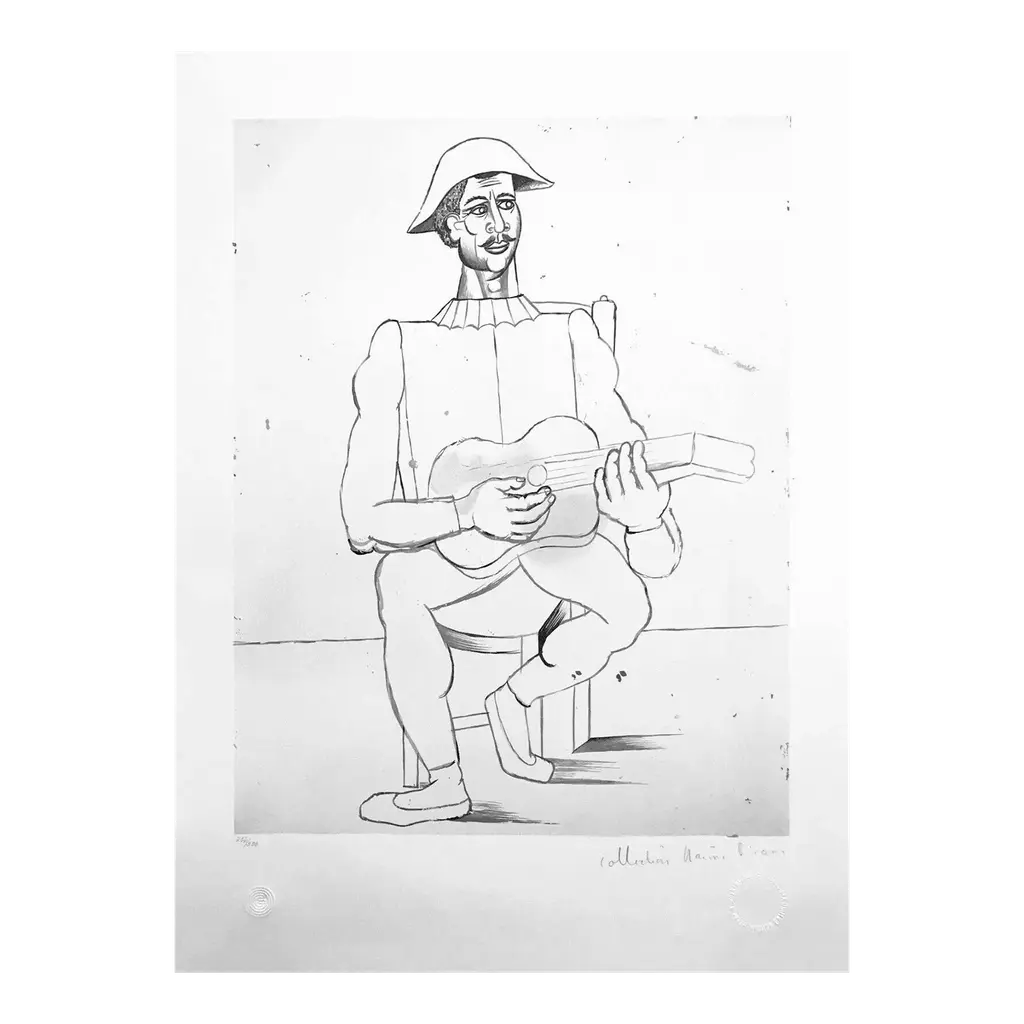
Original collotype print after the earlier Edouard Manet etching, from the limited edition portfolio "Twenty Four Masterpieces of Graphic Art". Printed and published by Triton Press, Inc., New York in 1974. Sheet size: 17 x 14 inches; print size: 11-1/2 x 10 inches on Brandywine Cover paper. Shown on a black background. Mint condition new old stock from our immaculate copy of "Twenty Four Masterpieces of Graphic Art". Collotype is a printing process invented in the mid-19th century famous for producing extremely fine detail and rich tonal gradation, using photograph negatives to create printing plates. Widely used for art books, postcards, and fine art reproductions in the late 19th and early 20th centuries, today collotype is commercially uncommon, but still practiced by a few master printers. Collotype prints are admired by photographers, printmakers, and collectors for its unmatched subtlety. The original etching by Manet was inspired by a painting he had submitted to the Salon, one which was praised by the critics at a time when most works by the "Impressionists" were harshly judged and considered as the works of "madmen" and incompetents. Manet used his original oil only as a point of departure, and, employing the medium of the etched plate, produced a masterpiece which recaptured within the limits of "black and white" the sterling qualities of the painting. It is noteworthy for the monumentality of the graceful posed figure, the three-dimensional plastic sense and the psychological insight evident in the rendering of the sensitive countenance of the musician.
Similar products