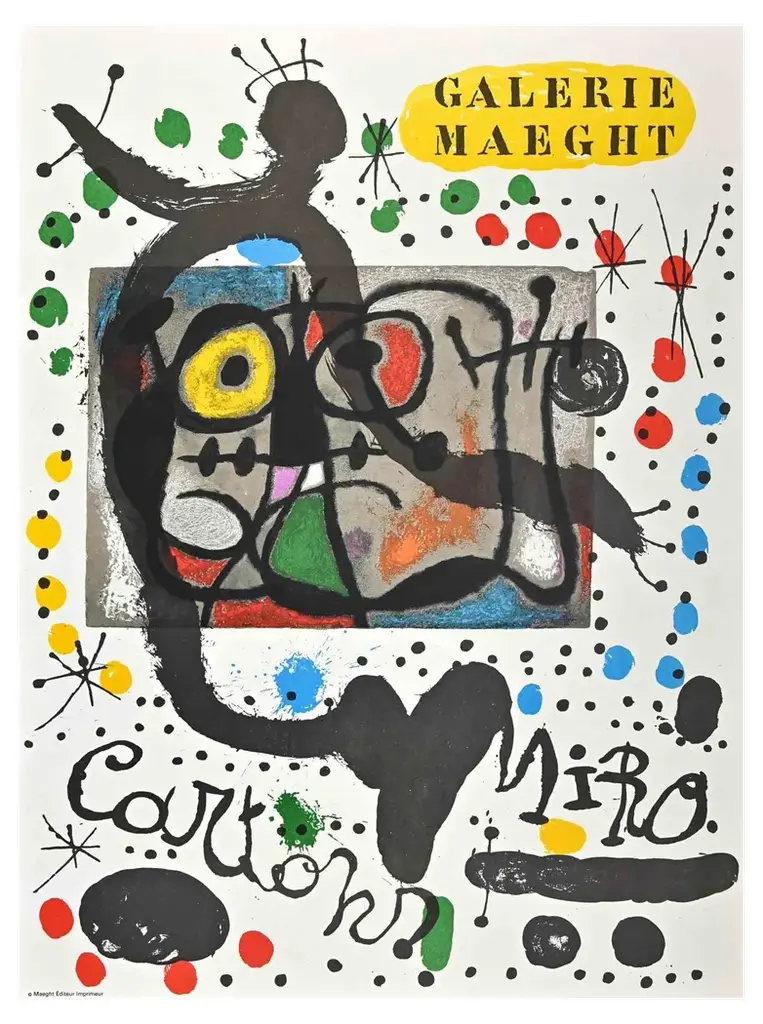
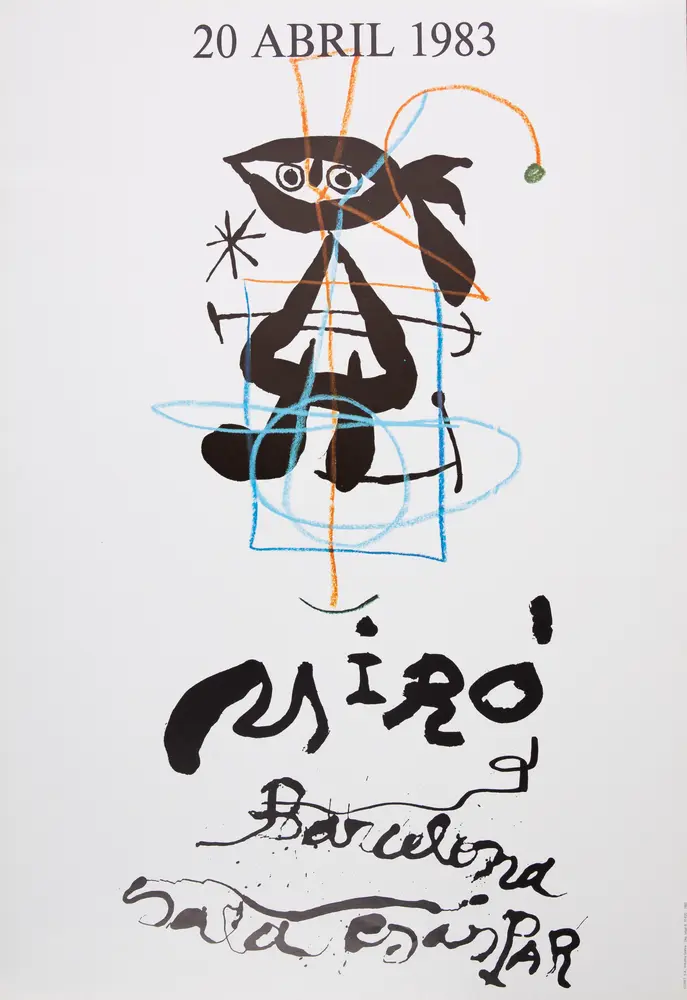
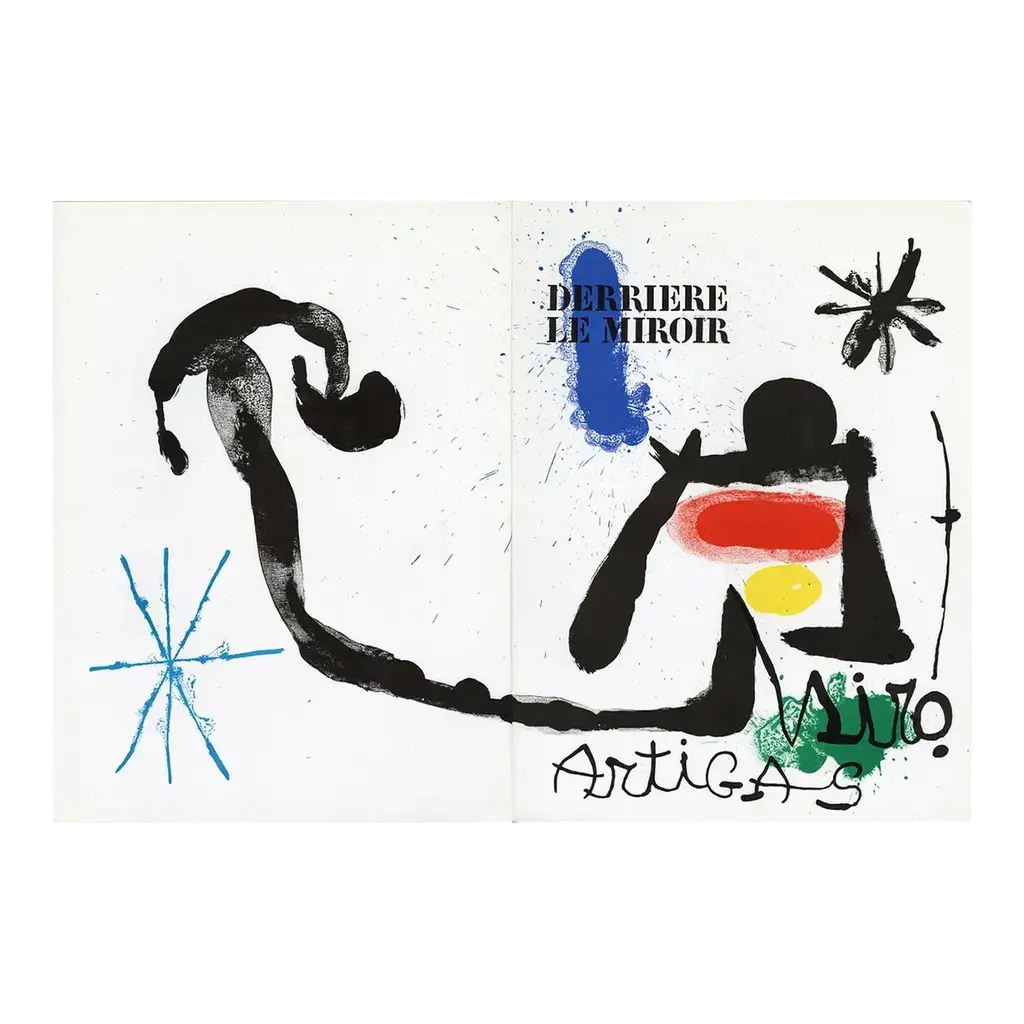
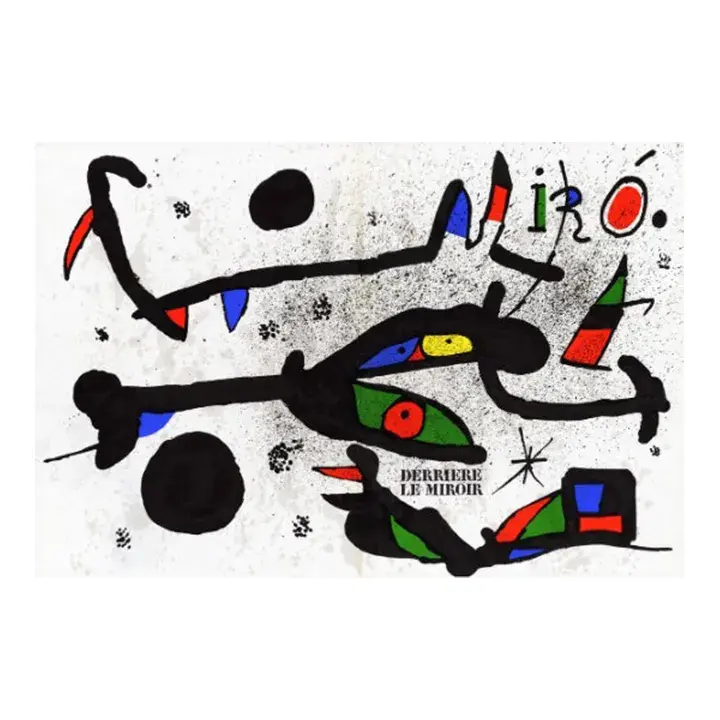
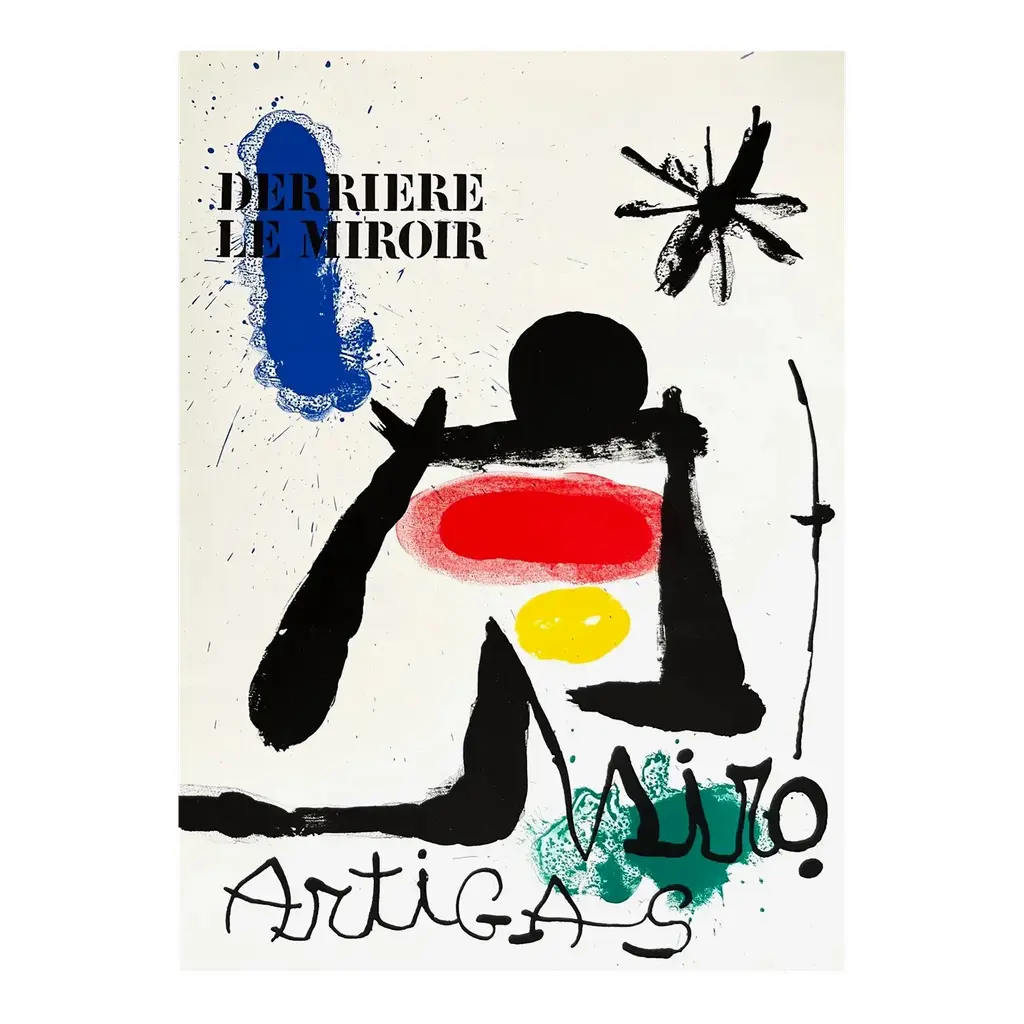
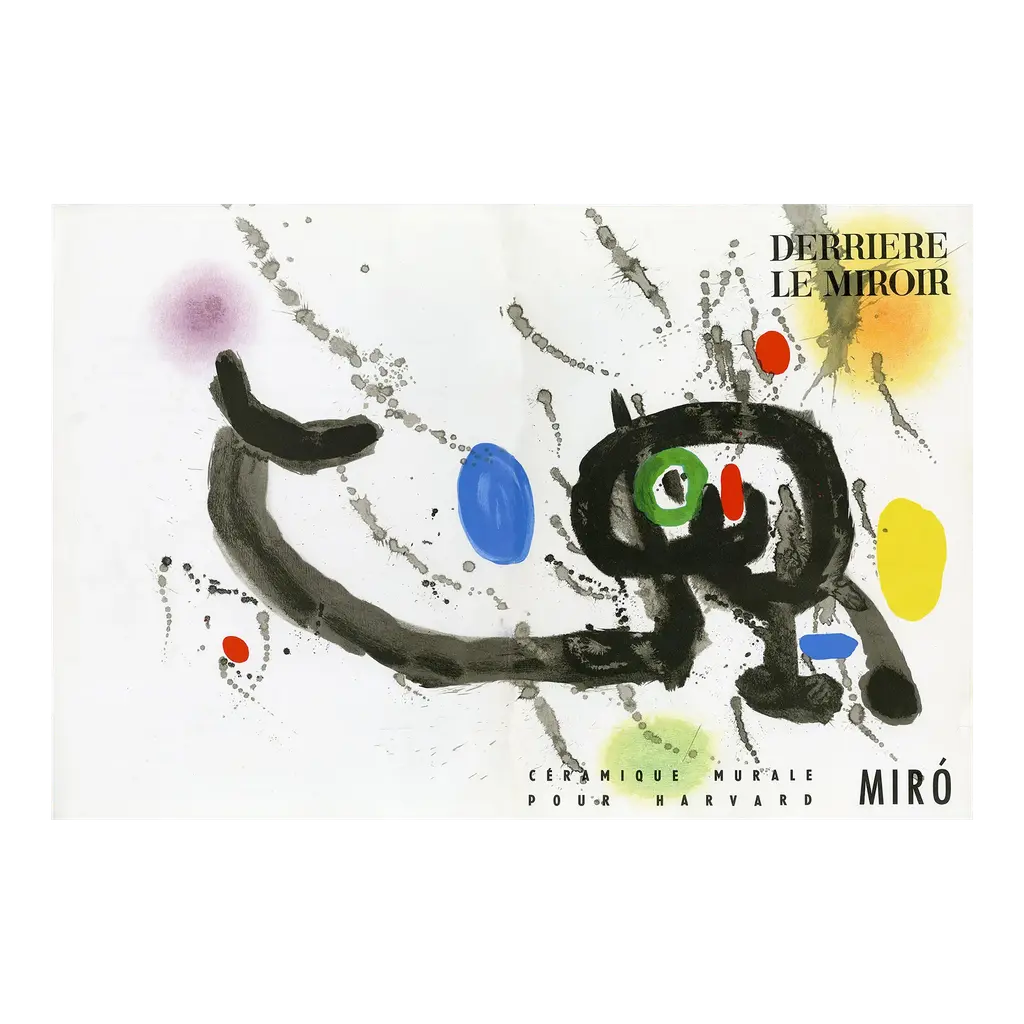
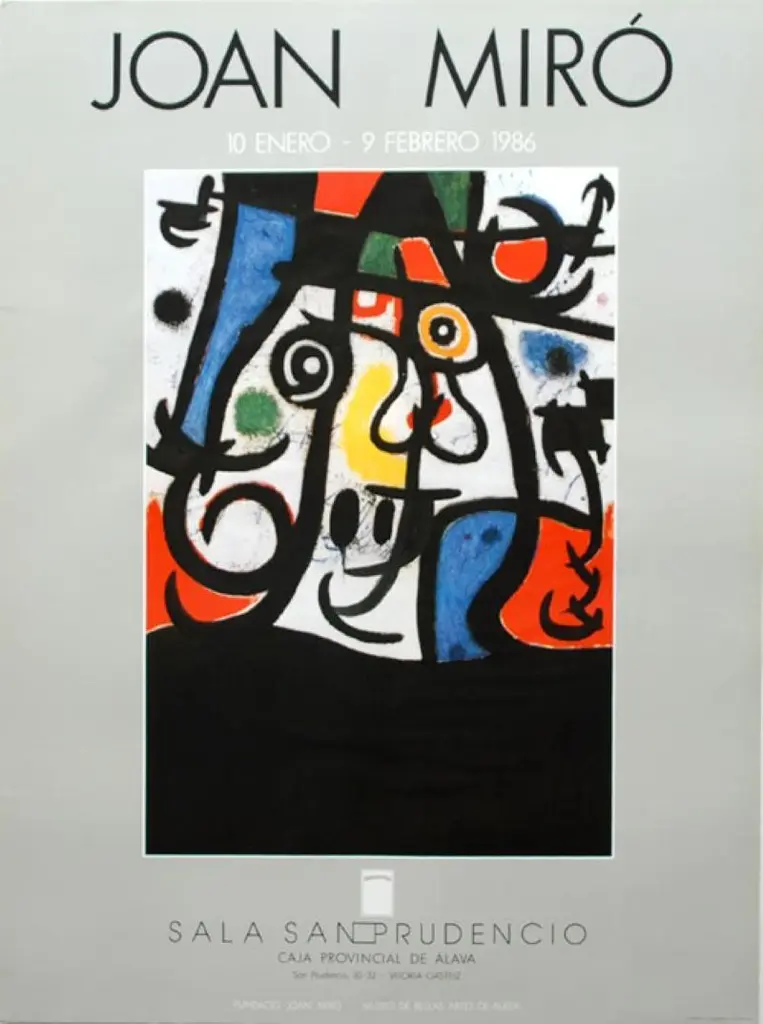
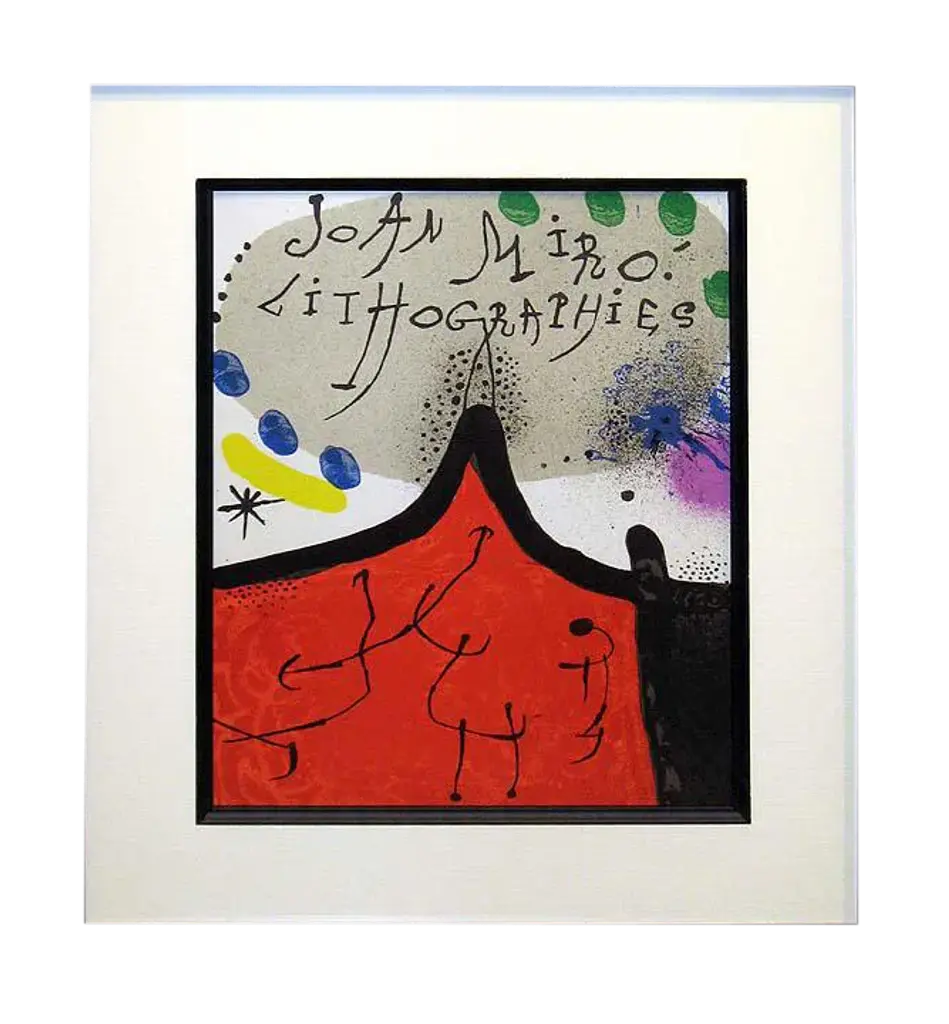
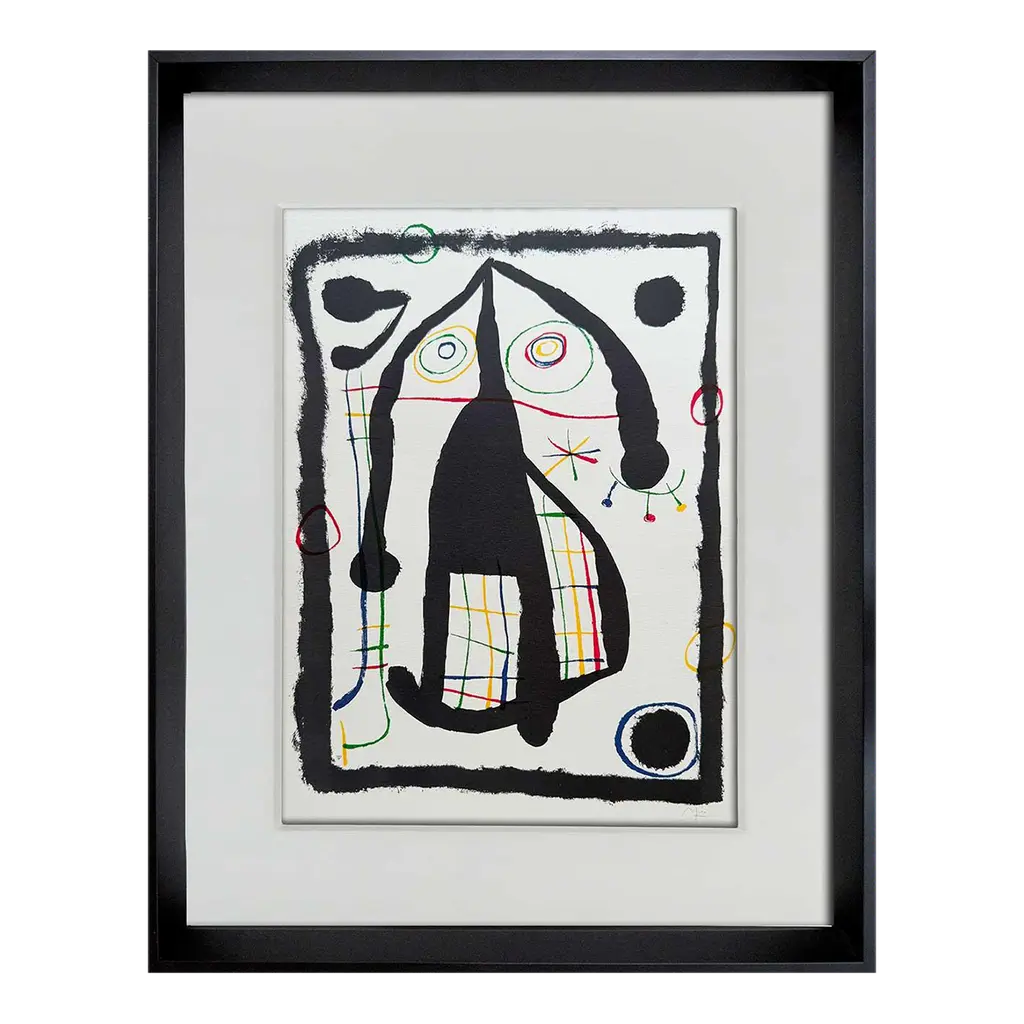
Original collotype print after the earlier Joan Miró lithograph, from the limited edition portfolio "Twenty Four Masterpieces of Graphic Art". Printed and published by Triton Press, Inc., New York in 1974. Sheet size: 17 x 14 inches; print size: 6 x 8 inches. Signed in stone lower right, on Brandywine Cover paper. Shown on a black background. Mint condition new old stock from our immaculate copy of "Twenty Four Masterpieces of Graphic Art". Collotype is a printing process invented in the mid-19th century famous for producing extremely fine detail and rich tonal gradation, using photograph negatives to create printing plates. Widely used for art books, postcards, and fine art reproductions in the late 19th and early 20th centuries, today collotype is commercially uncommon, but still practiced by a few master printers. Collotype prints are admired by photographers, printmakers, and collectors for its unmatched subtlety. Joan Miró said repeatedly in the course of his lifetime that he found it diffcult to speak of his paintings. Probably he has never tried to "explain" them. But he has stated often that they are all based on life, on things seen and heard. Of his earlier works, he said that they were "born in a state of hallucination, provoked by some shock or other... It is perhaps best to approach Miró's art with the feeling that there is much humor and gaiety in it and that it is more important to like than to understand him. In this print, his "personage" seems to stare inquisitively at the observer as though he, too, is looking for answers." Once seen, it is not readily put out of mind. This, perhaps, is part of the "magic" of Joan Miró.
Similar products