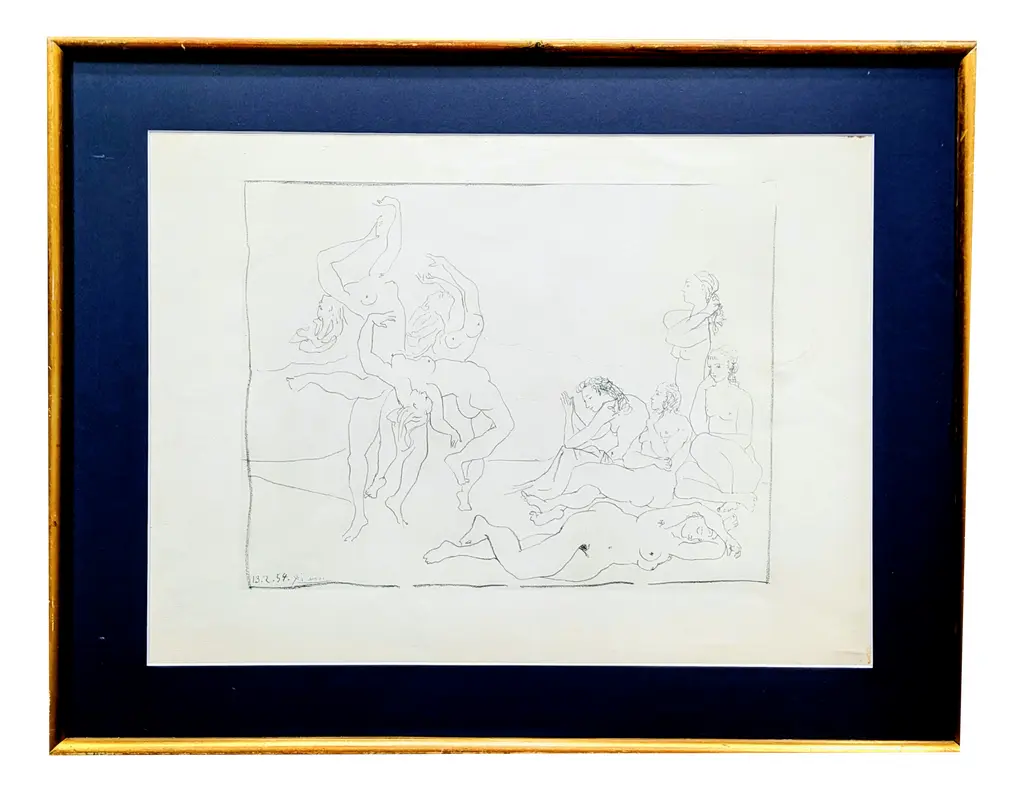
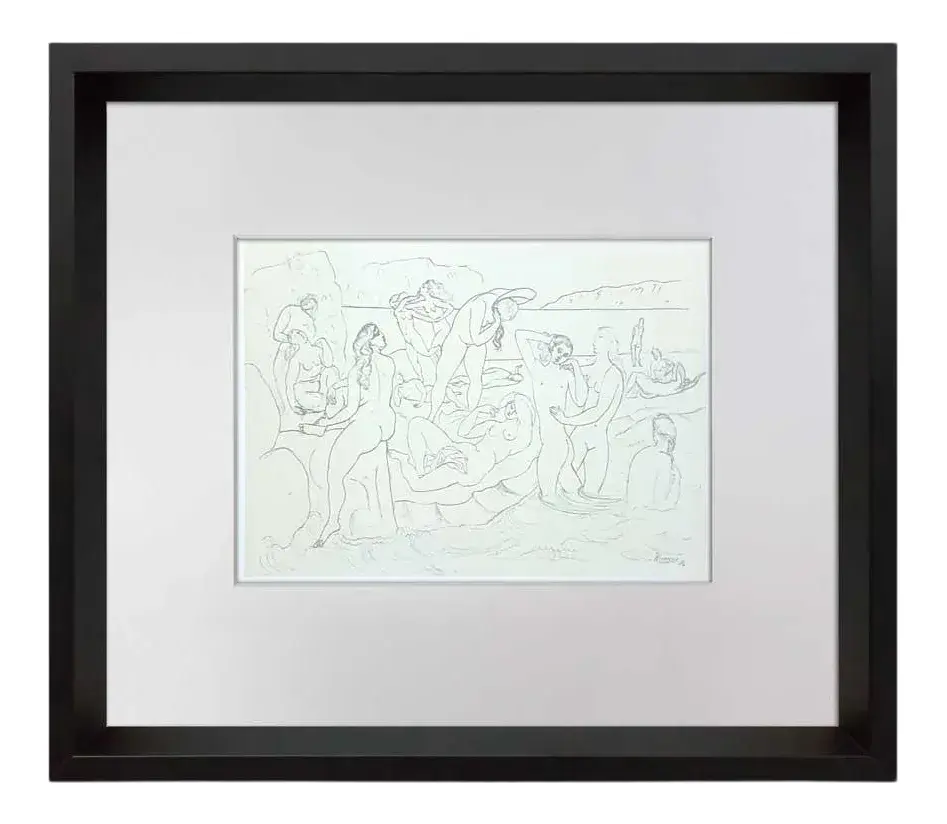
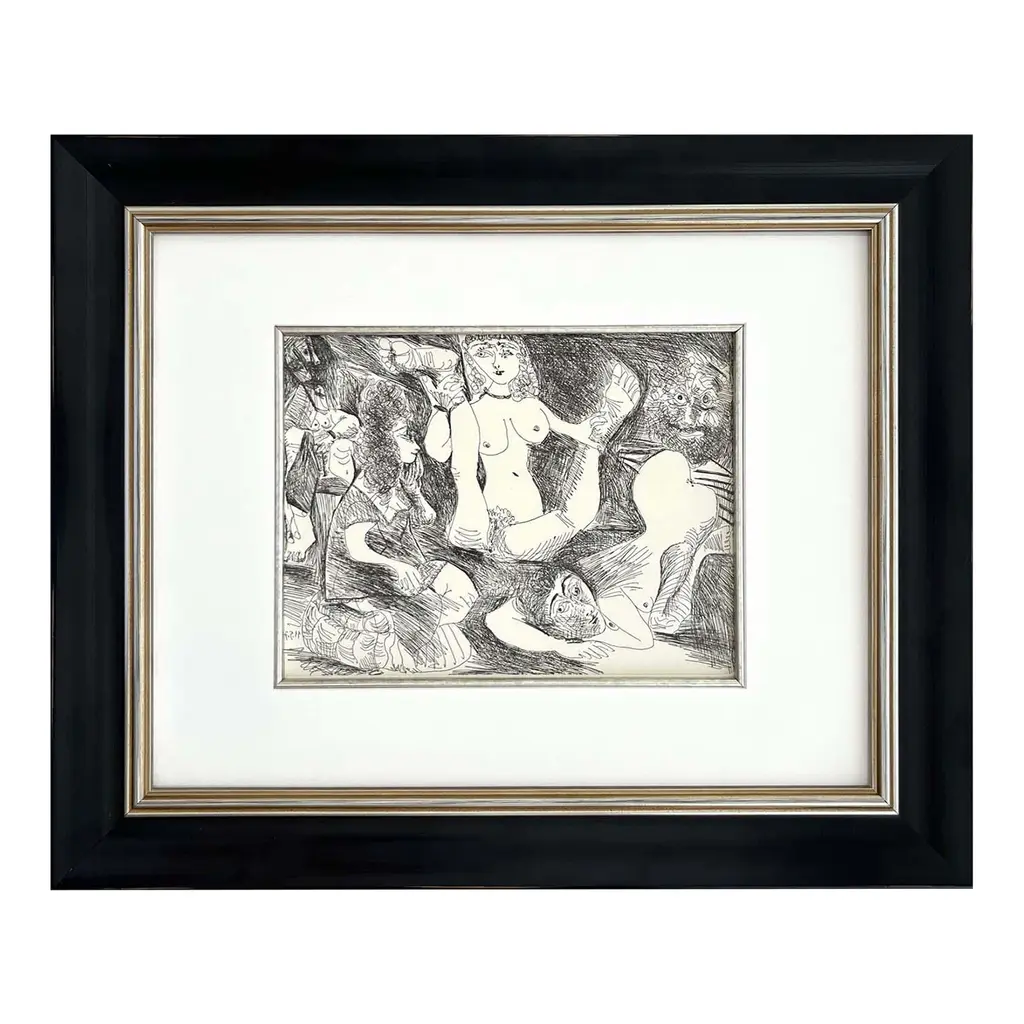
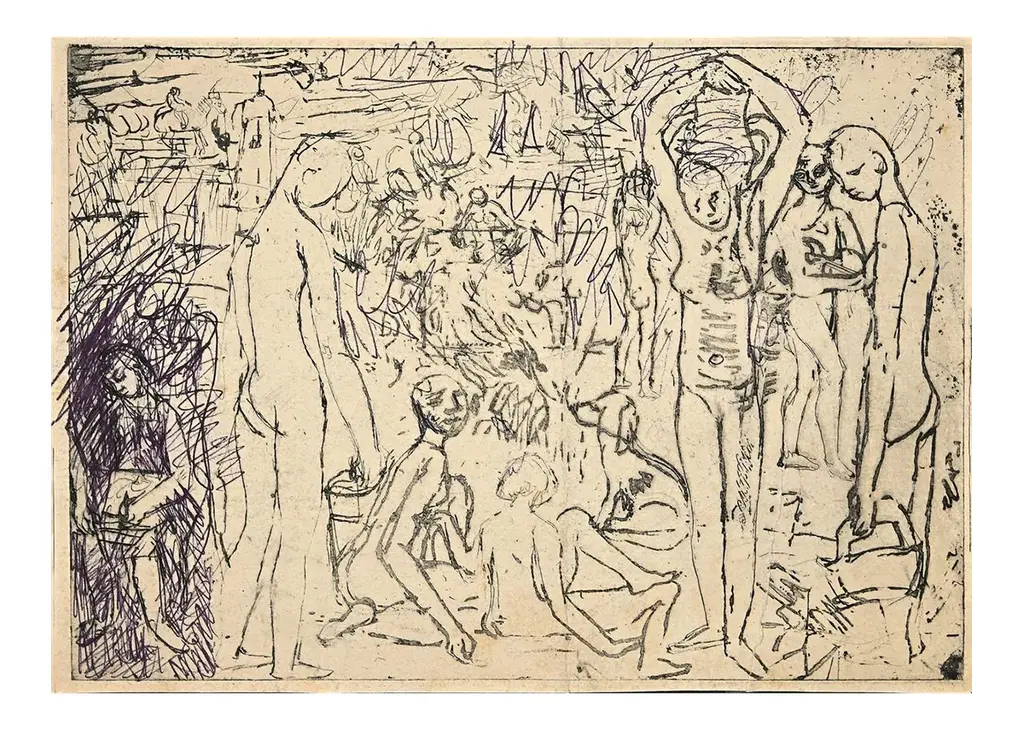
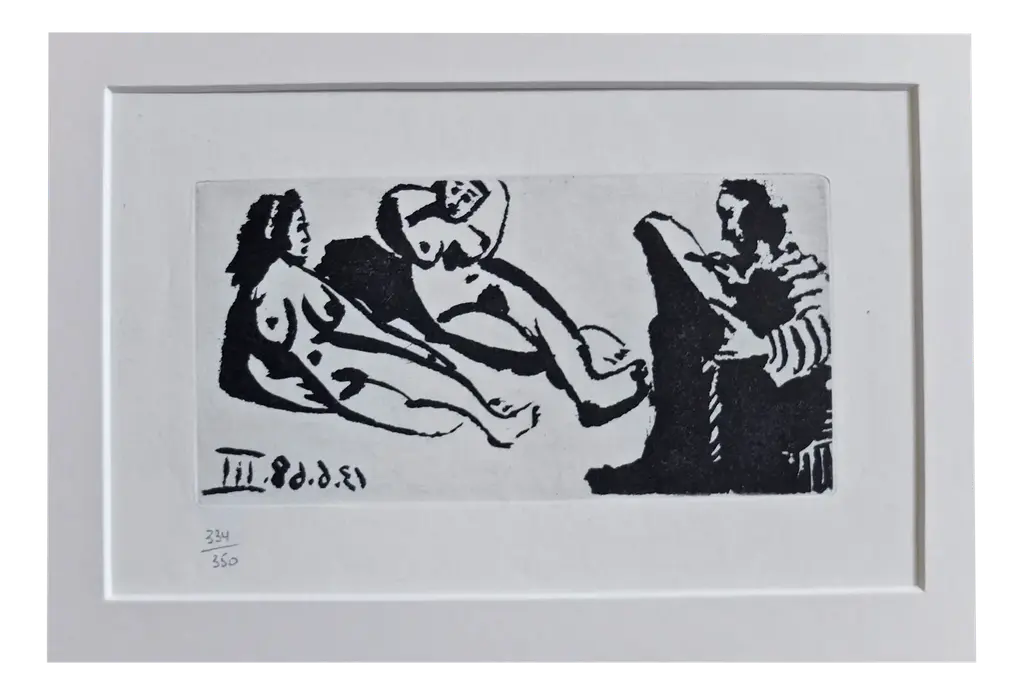
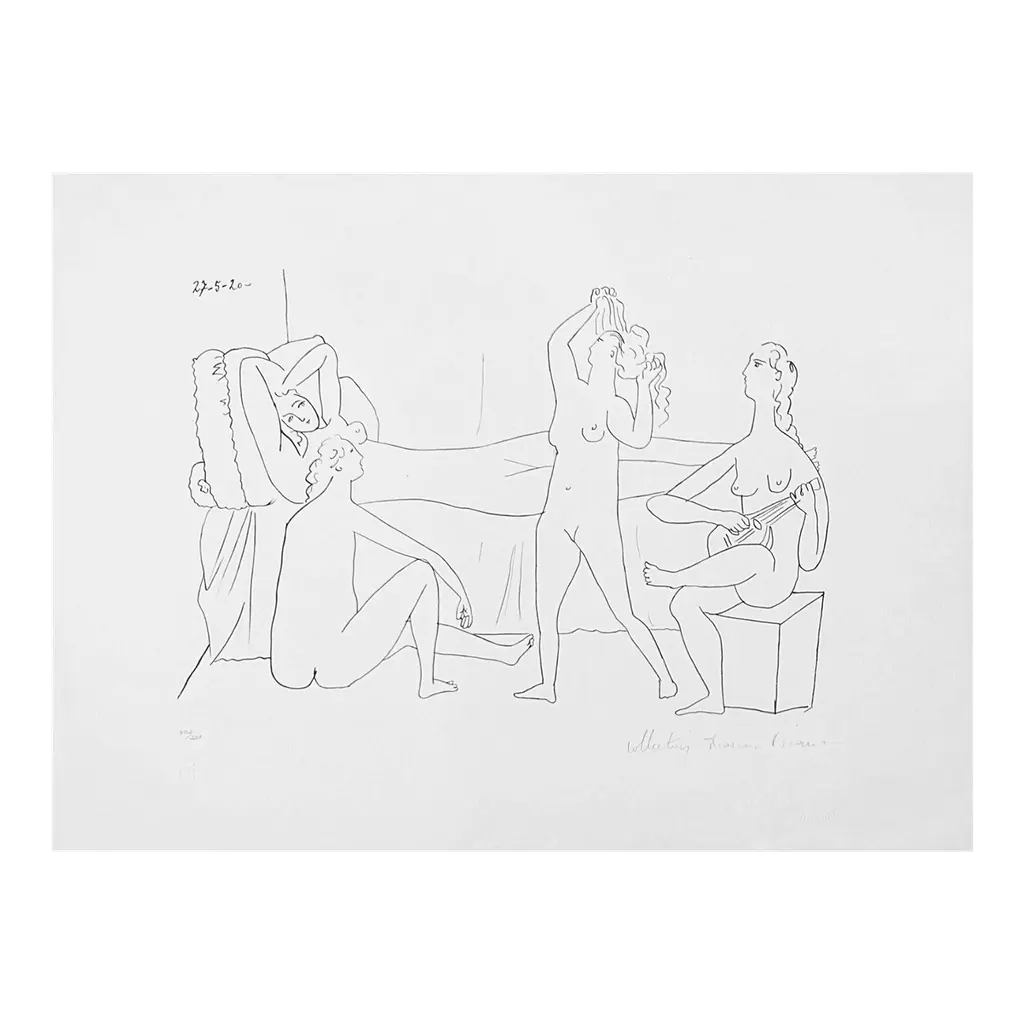
Original collotype print after the earlier Pablo Picasso drypoint engraving, from the limited edition portfolio "Twenty Four Masterpieces of Graphic Art". Printed and published by Triton Press, Inc., New York in 1974. Sheet size: 14 x 17 inches; print size: 11 x 12-1/2 inches. Signed in plate lower right, on Brandywine Cover paper. Shown on a black background. Mint condition new old stock from our immaculate copy of "Twenty Four Masterpieces of Graphic Art". Collotype is a printing process invented in the mid-19th century famous for producing extremely fine detail and rich tonal gradation, using photograph negatives to create printing plates. Widely used for art books, postcards, and fine art reproductions in the late 19th and early 20th centuries, today collotype is commercially uncommon, but still practiced by a few master printers. Collotype prints are admired by photographers, printmakers, and collectors for its unmatched subtlety. Picasso expressed himself through the medium of graphic art, demonstrating the same restlessness, invention and genius that is reflected in all that he has done in other media. The original drypoint dates back to his youth and was one of his first major efforts in printmaking, undertaken at the behest of Vollard. The subject matter is similar to that of his painting and sculpture in the Blue and Pink periods—the jugglers, mountebanks and impoverished families of the country fair and the circus. In his larger canvases, he has made no more complete or poignant statement.
Similar products