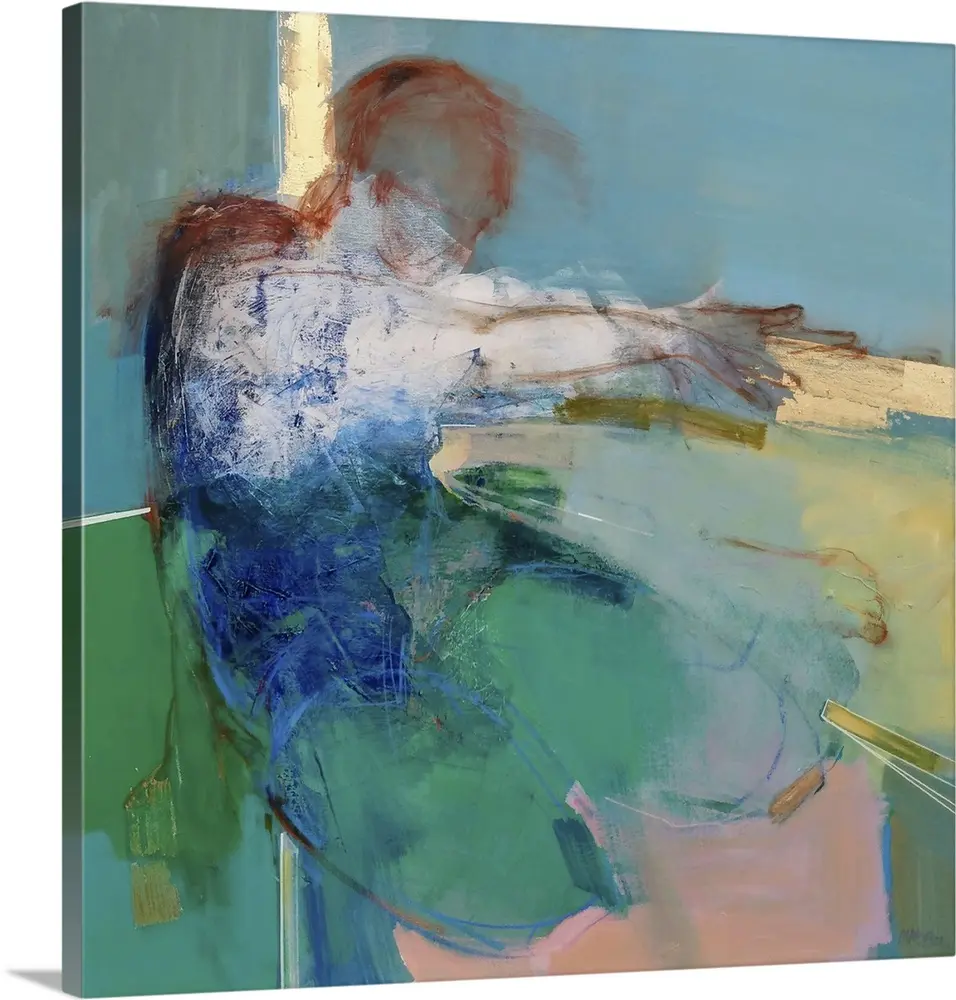
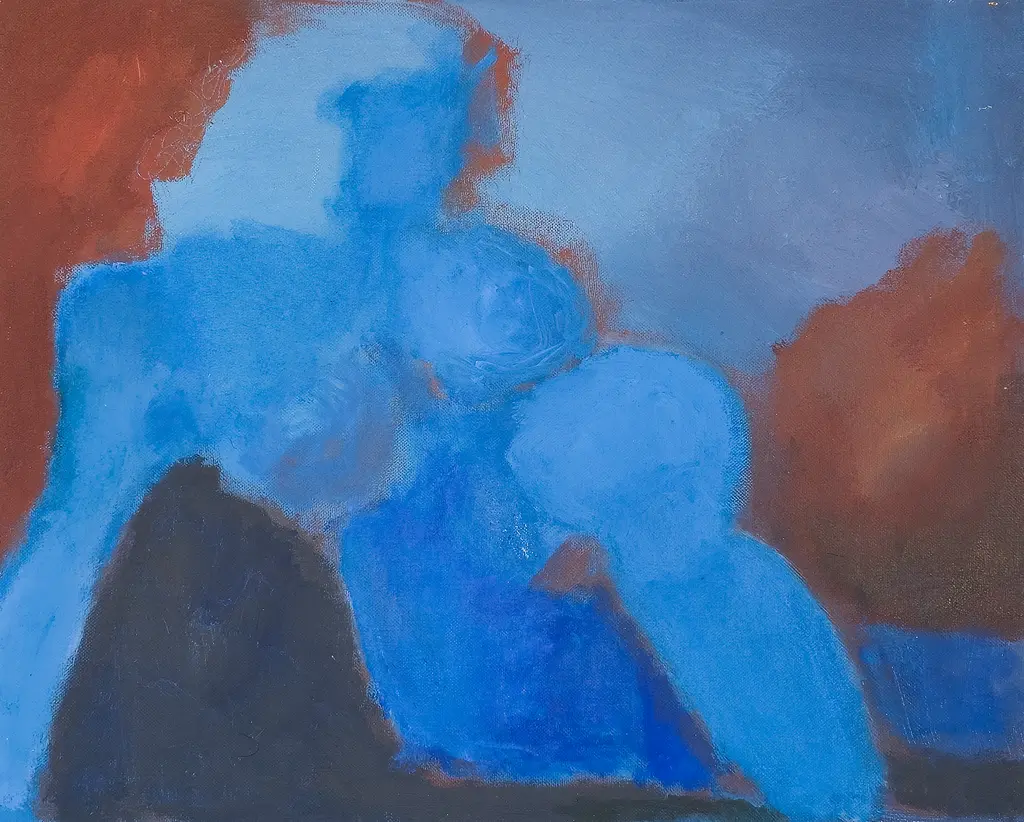
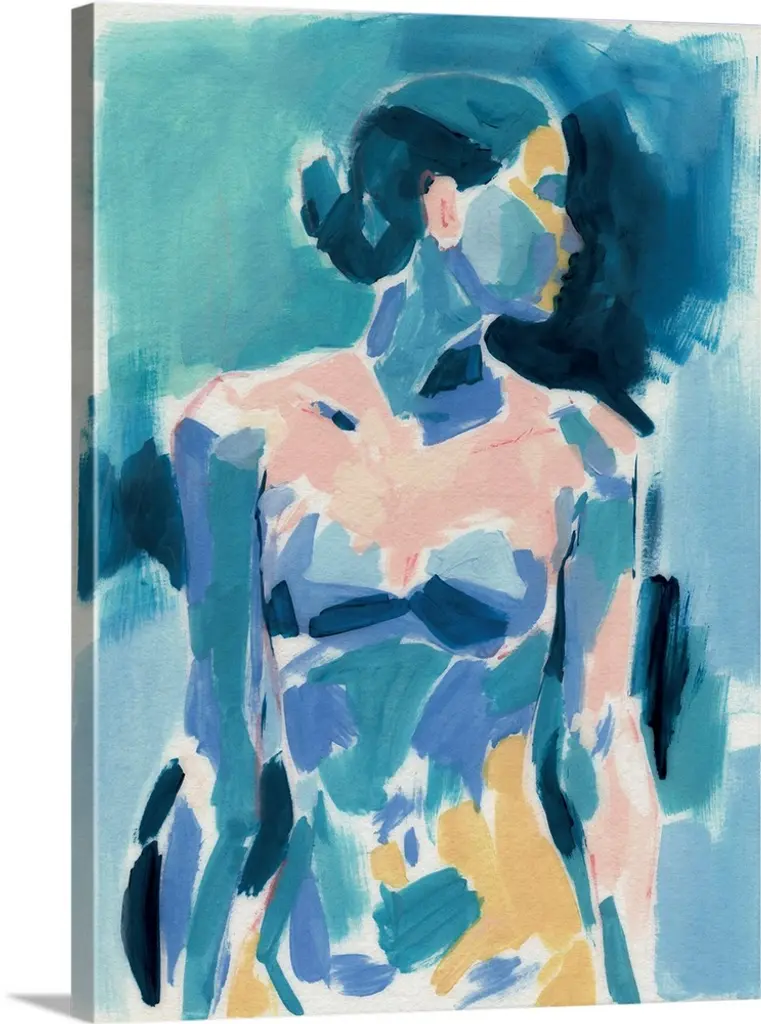
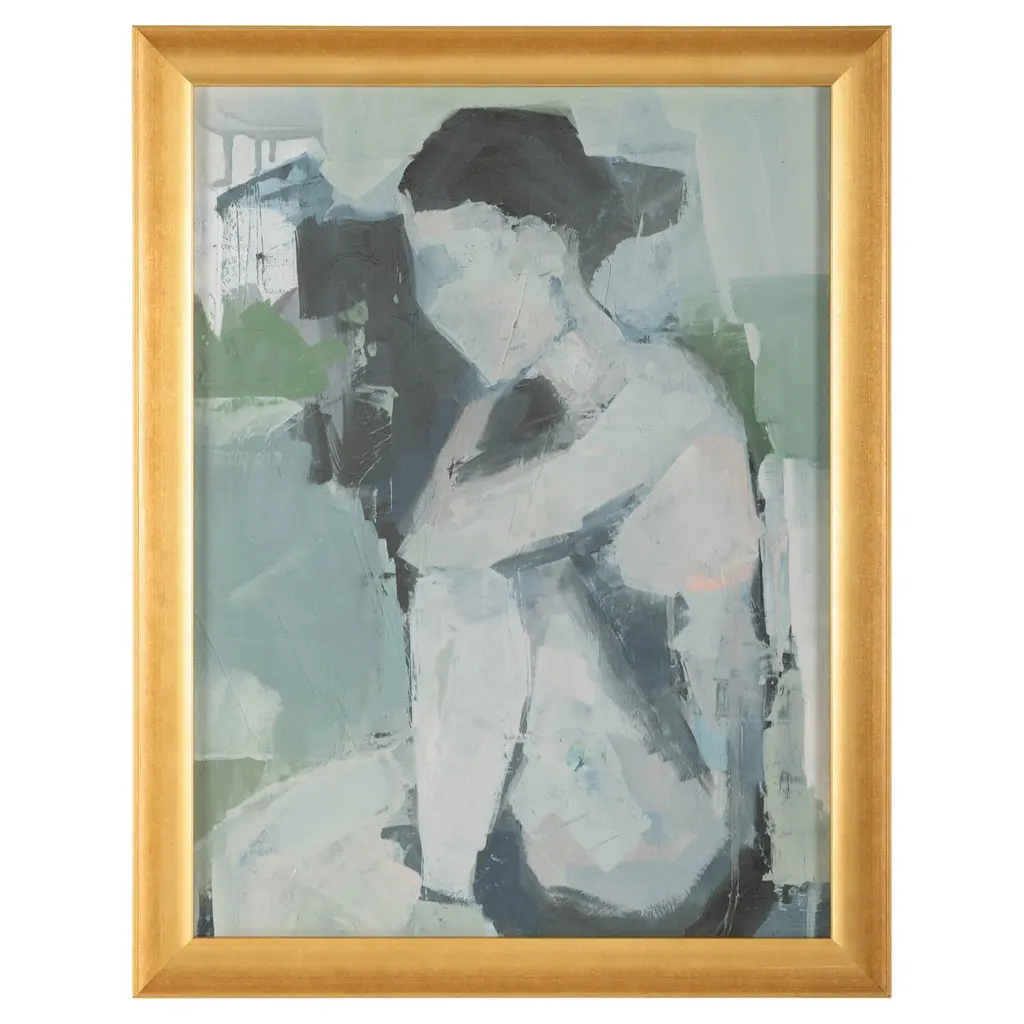
Who's the Fairest?* Virginia Cohn Parkum, c. Unknown In Who’s the Fairest, Virginia Cohn Parkum revisits the language of reflection and self-perception through a restrained palette and an intimate, inward posture. A seated female figure turns away from the viewer, her body rendered in layered blues and cool violets that soften anatomical clarity and shift attention toward mood rather than physical description. The back becomes the painting’s primary plane, broad and luminous, while the head tilts downward in a gesture that suggests contemplation rather than display. Instead of presenting herself to be seen, the figure withdraws into an interior space of evaluation. The face, turned inward and partially obscured, glows with a muted red warmth that contrasts with the cool expanse of the body. This subtle chromatic tension suggests an emotional core held within a protective shell of calm restraint. Parkum’s brushwork remains fluid and searching; edges dissolve, contours soften, and the figure seems to hover between formation and erasure. The paint does not fix identity but allows it to remain provisional. A second form, loosely suggested near the figure’s lap, evokes a reflective surface or secondary presence — perhaps a mirror, perhaps an internal double. The red linear accent tracing its contour introduces a visual echo of the warmth within the figure’s face, linking inner perception with outward reflection. Rather than a literal mirror, Parkum proposes reflection as a psychological process: self-worth measured against memory, expectation, and internalized gaze. The title invokes the familiar refrain from fairy-tale mythology — a question traditionally bound to vanity, competition, and external judgment. Parkum’s interpretation subverts this narrative. Here, fairness is not adjudicated by beauty or comparison but interrogated through solitude and self-regard. The figure’s turned posture rejects spectacle; the painting proposes that the most consequential judgments occur in private moments of introspection. Within Parkum’s broader body of work, which frequently examines identity, vulnerability, and resilience, Who’s the Fairest reads as a meditation on self-valuation. The cool tonal atmosphere conveys quietness rather than despair, while the inward gesture suggests a search for acceptance beyond the external gaze. Beauty, in this context, becomes inseparable from self-recognition and compassion. In its hushed palette and contemplative posture, Who’s the Fairest reframes a culturally loaded question into a deeply human one: not who is most beautiful, but how one learns to see oneself with honesty and grace. -Jonathan Flike *The title of this work was assigned by Visard Gallery.
Similar products