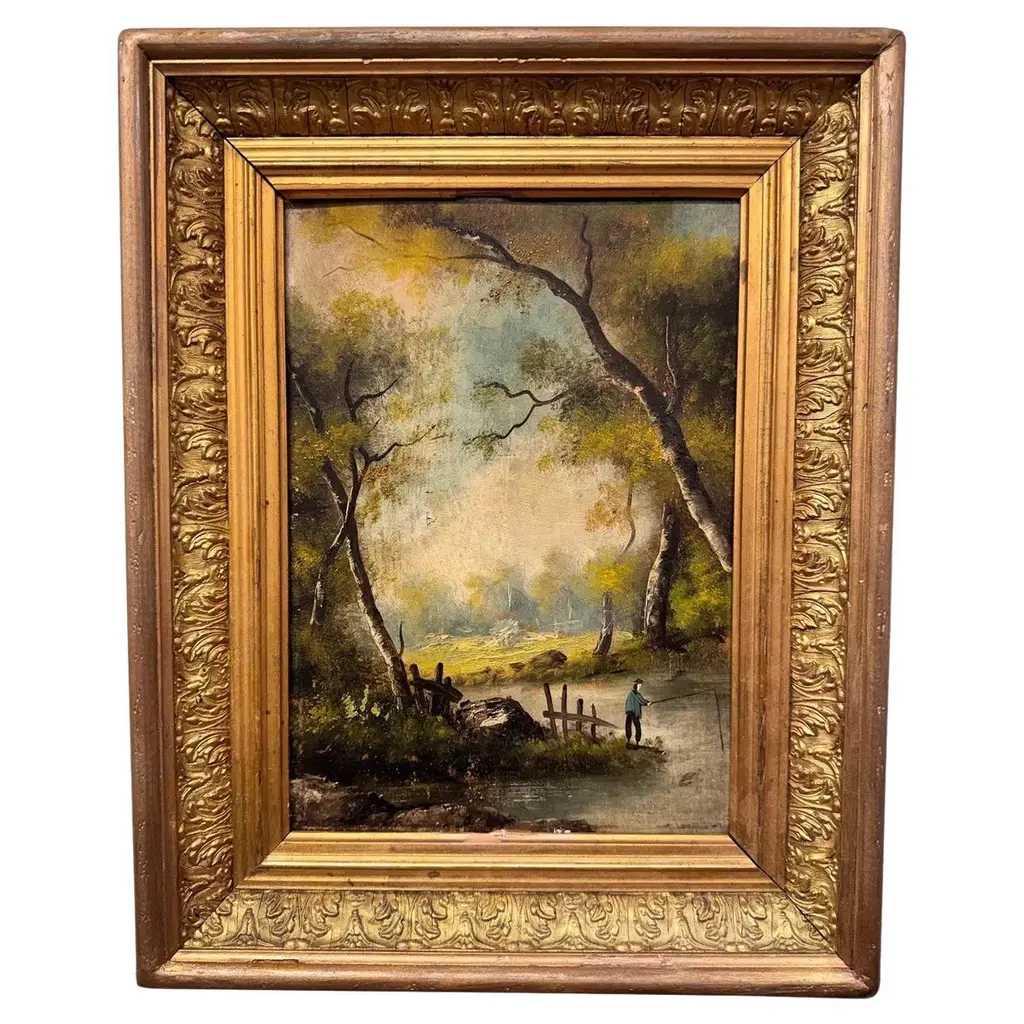
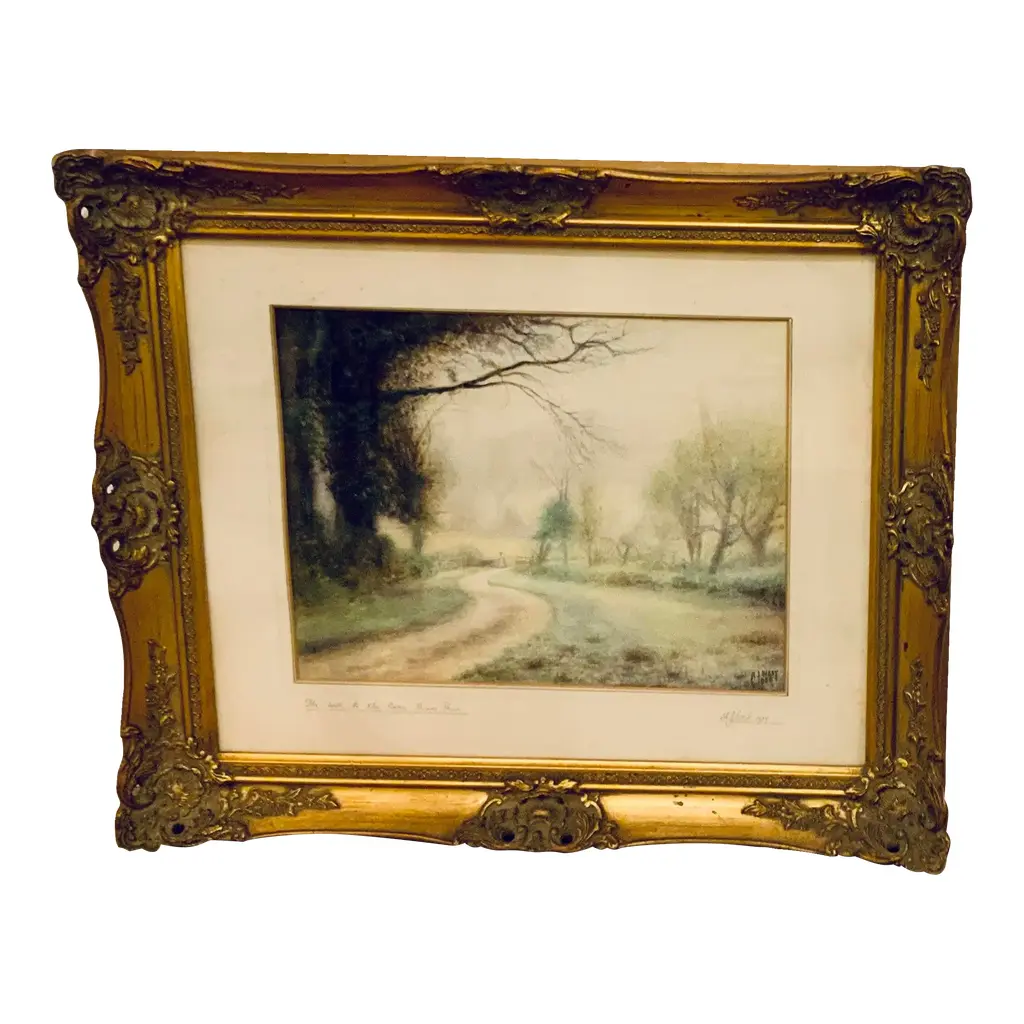
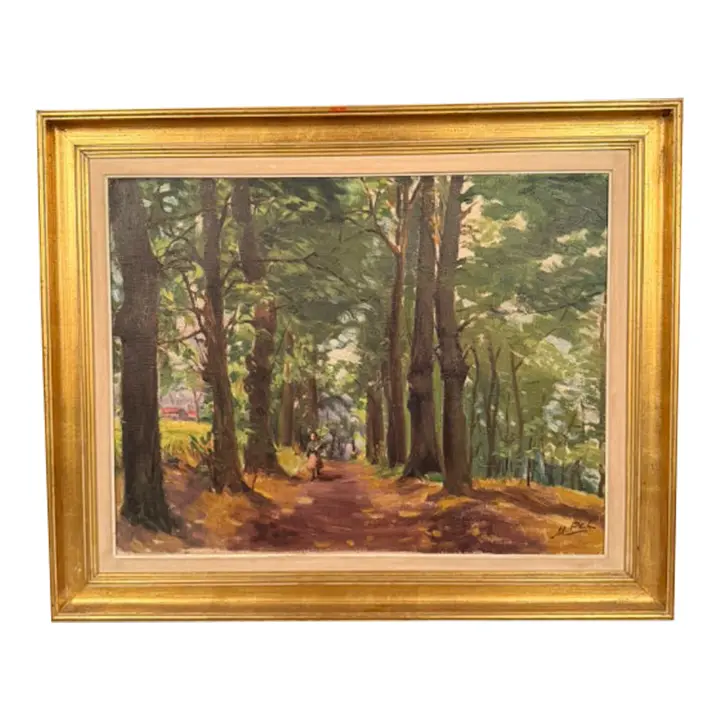
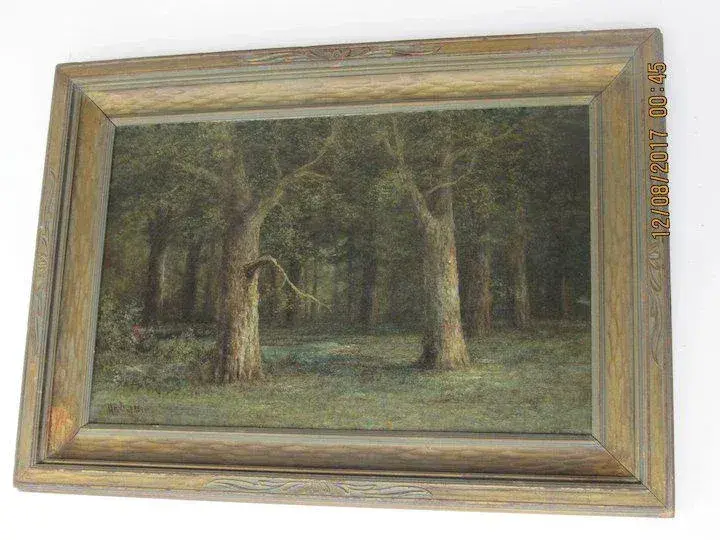
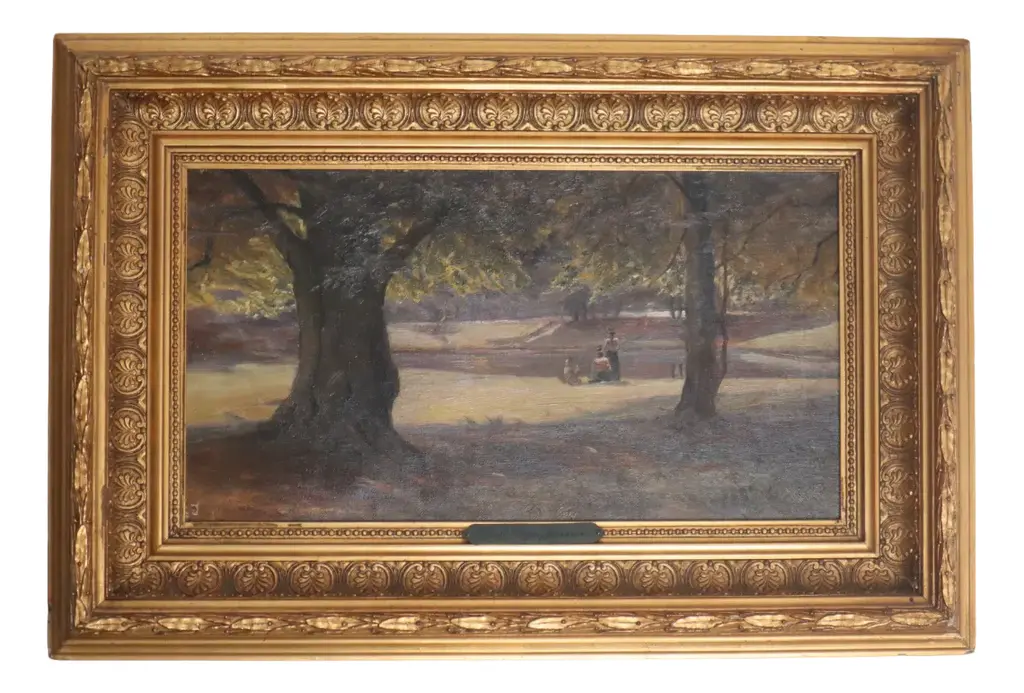
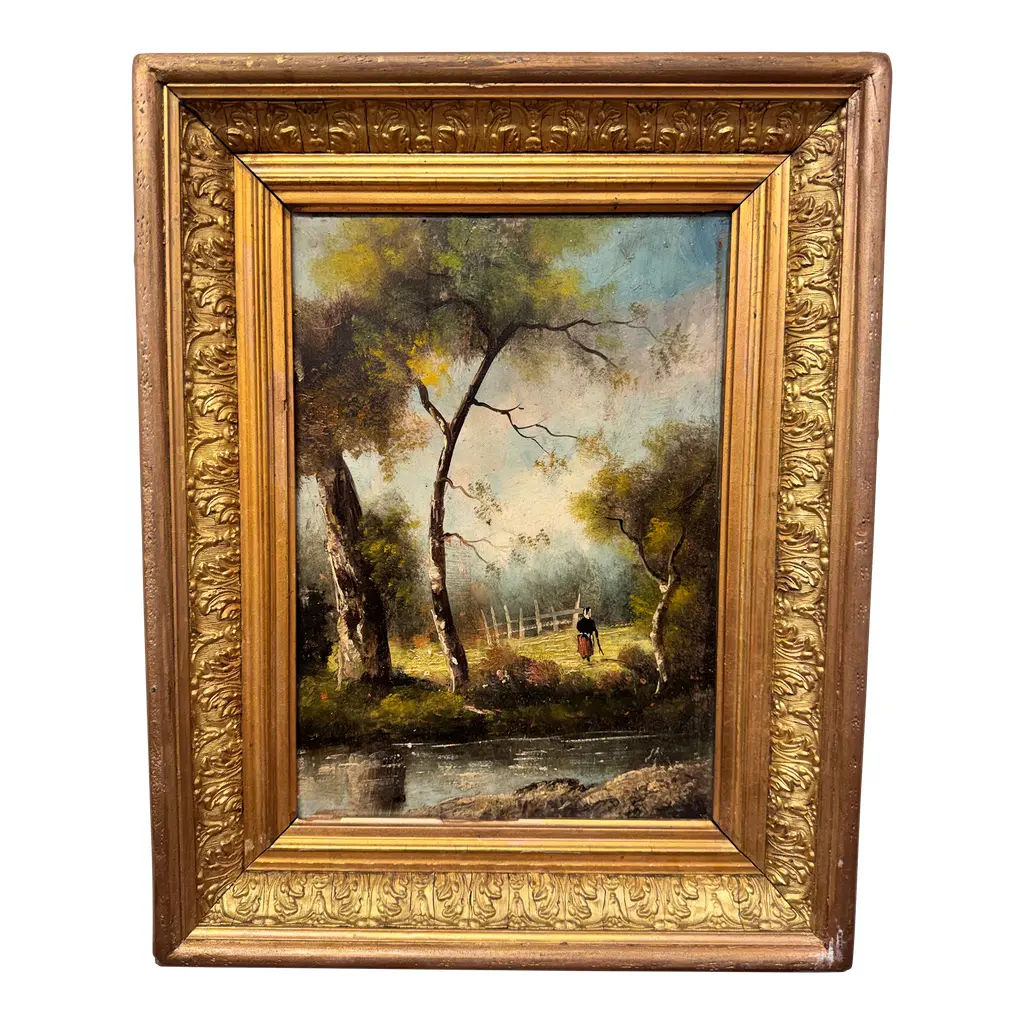
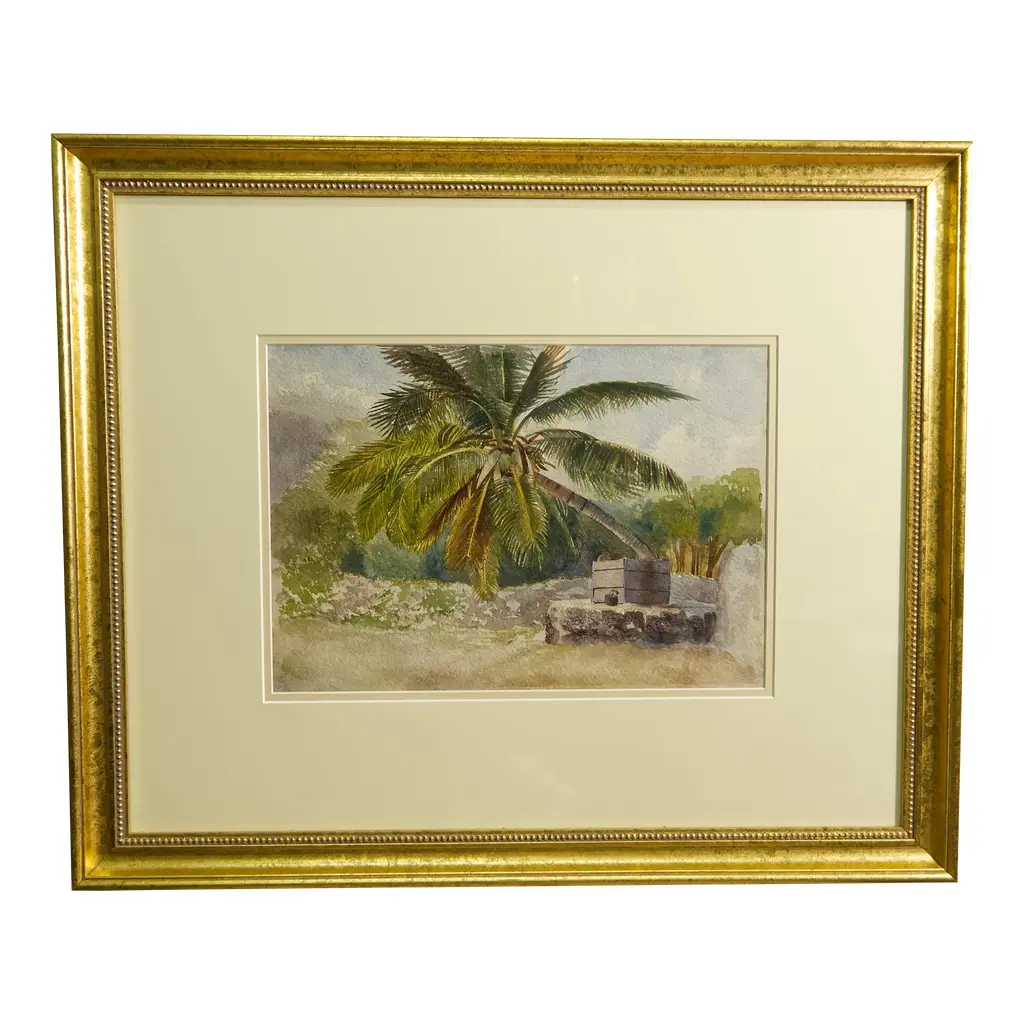
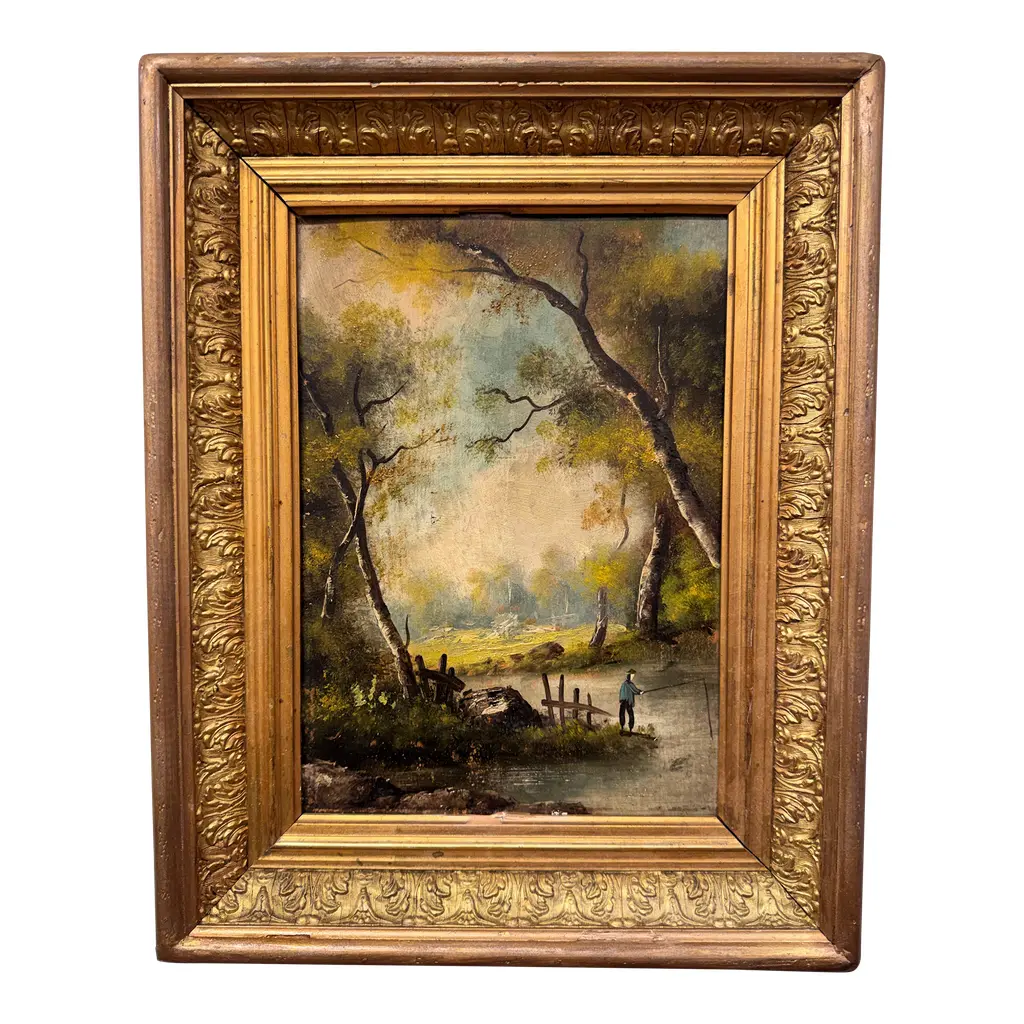
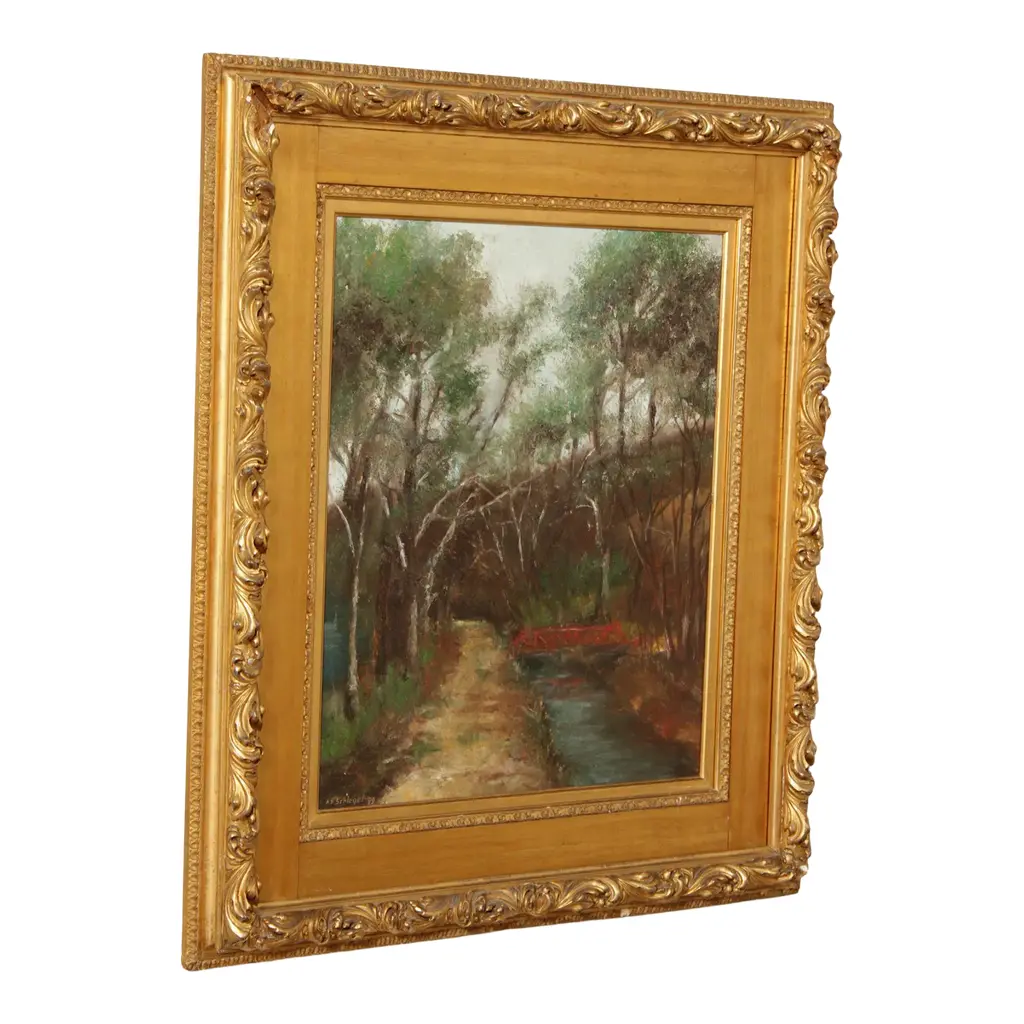
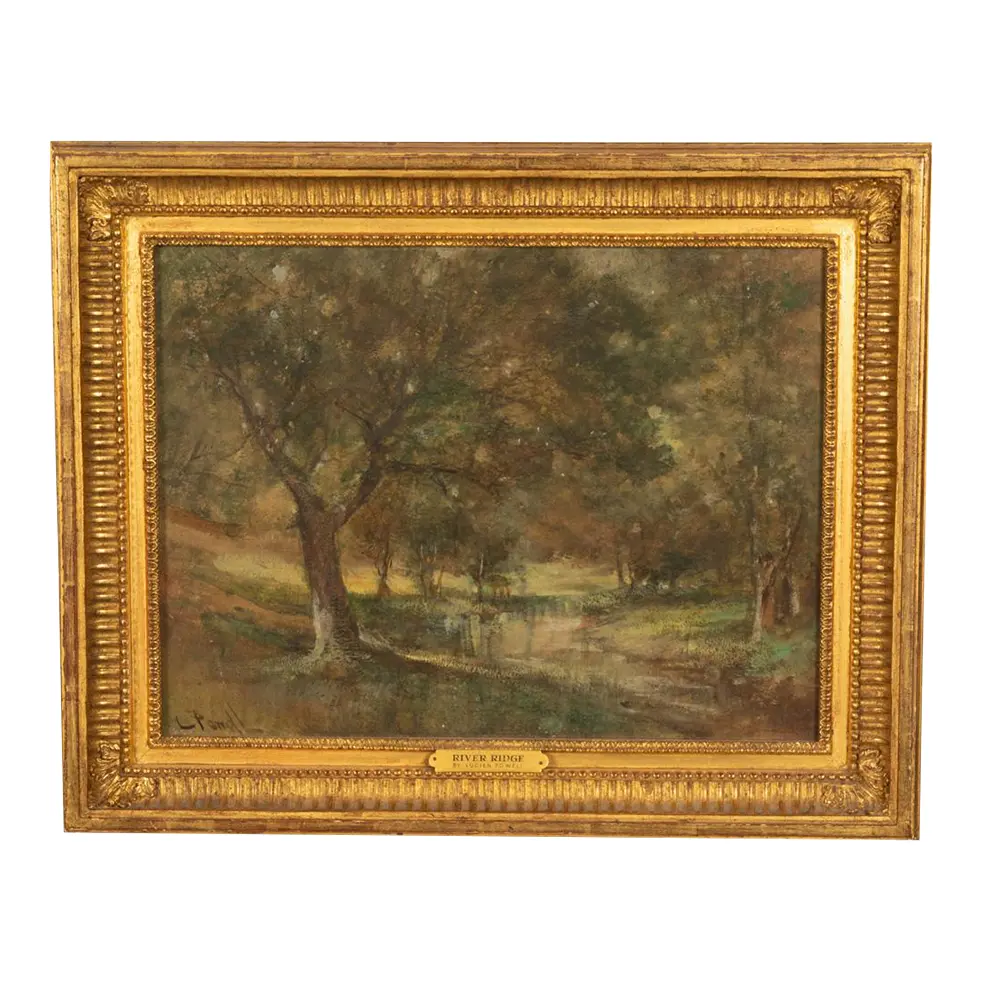
In a way, you are looking into a time capsule. On the face of it, this is a sunny day with two figures in a forest. But this Impressionist work done in 1874 transports us to a day in the year Impressionism was officially recognized in a landmark independent group exposition in Paris. And the artist of this work, noted 19th-century French watercolorist Paul Roux (1845–1918), had left the studio behind to paint it. Like Renoir, Sisley, Monet and Pissarro, he had gone outdoors to set up his easel, to work en plein air, to be inspired directly by the transient effects of light and color. Born in Paris, he was the son of painter Louis Roux and a pupil of the academic artist Alexandre Cabanel. Breaking away from these two strict traditionalists to paint outdoors would have been regarded as doubly defiant. But in seeking attractive locales, he was particularly drawn to the Forest of Fontainebleau, as well as locales in Normandy and Brittany. Inscribed by his signature, Roux has located this scene as being in Lantic, a commune in Brittany, specifically in the Côtes-d'Armor department in northwestern France. Roux’s watercolors are known for a "light and subtle touch," characterized by spontaneity, energy, and an uncharacteristically high level of detail for the medium. He exhibited regularly at the Paris Salon starting in 1870 and was a member of the Society of French Artists. Time travel can be fun.
Similar products