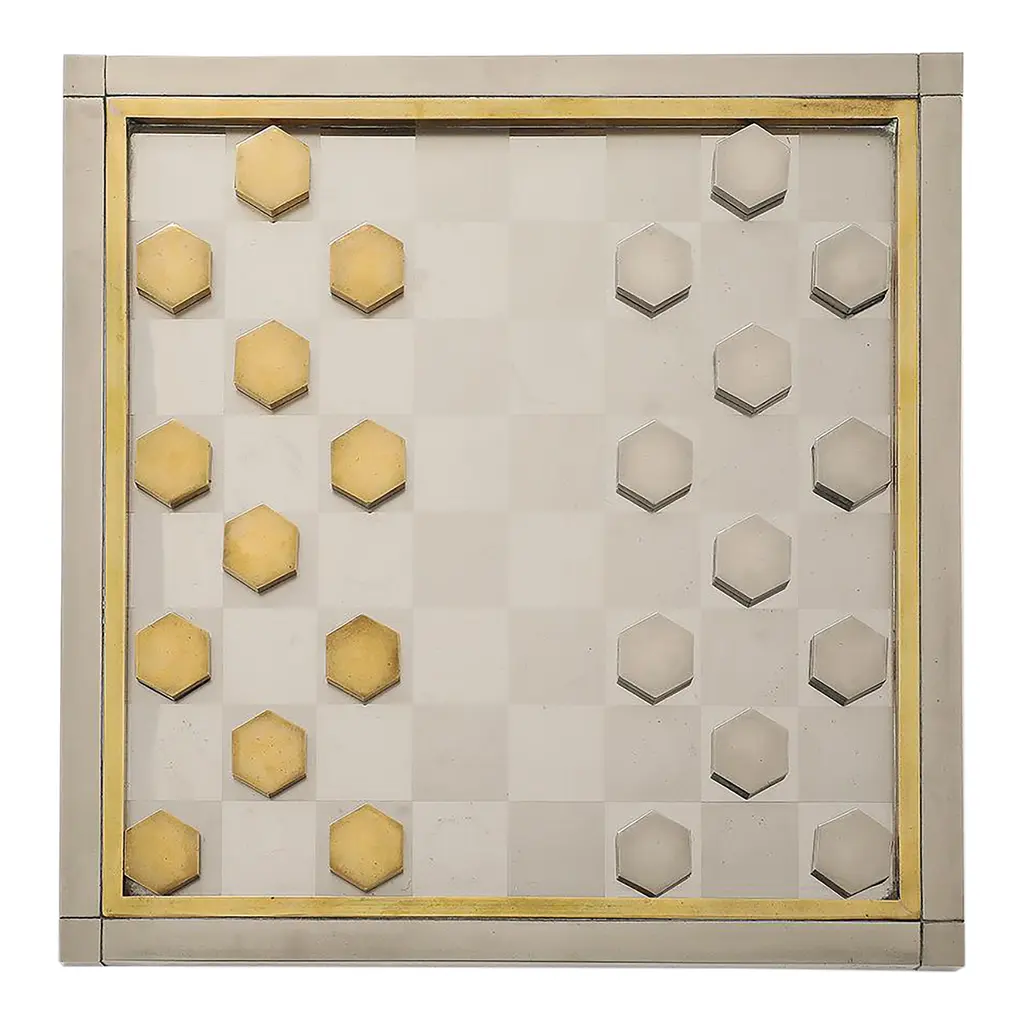
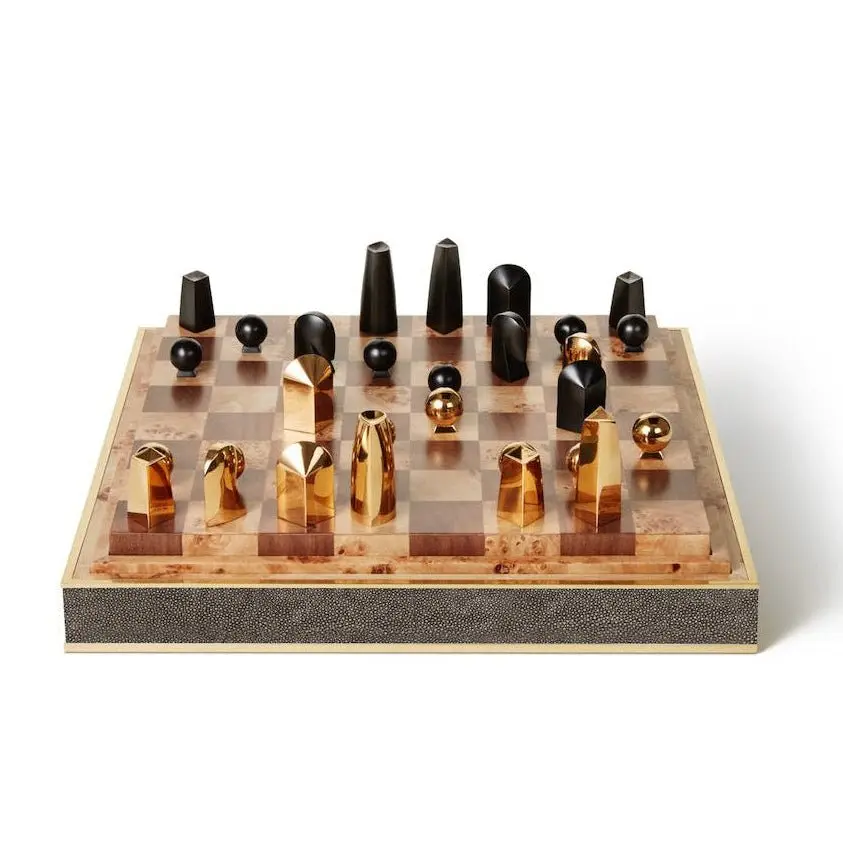
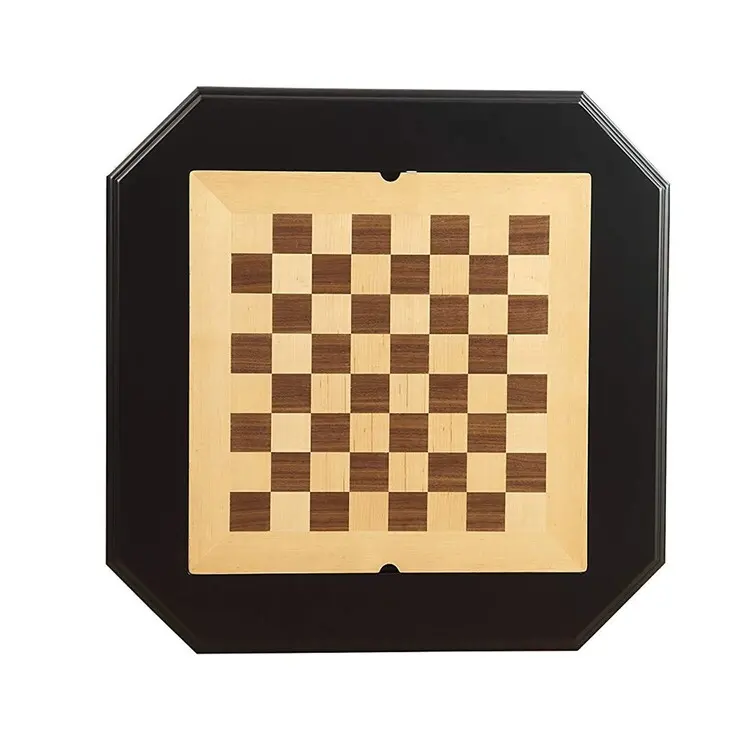
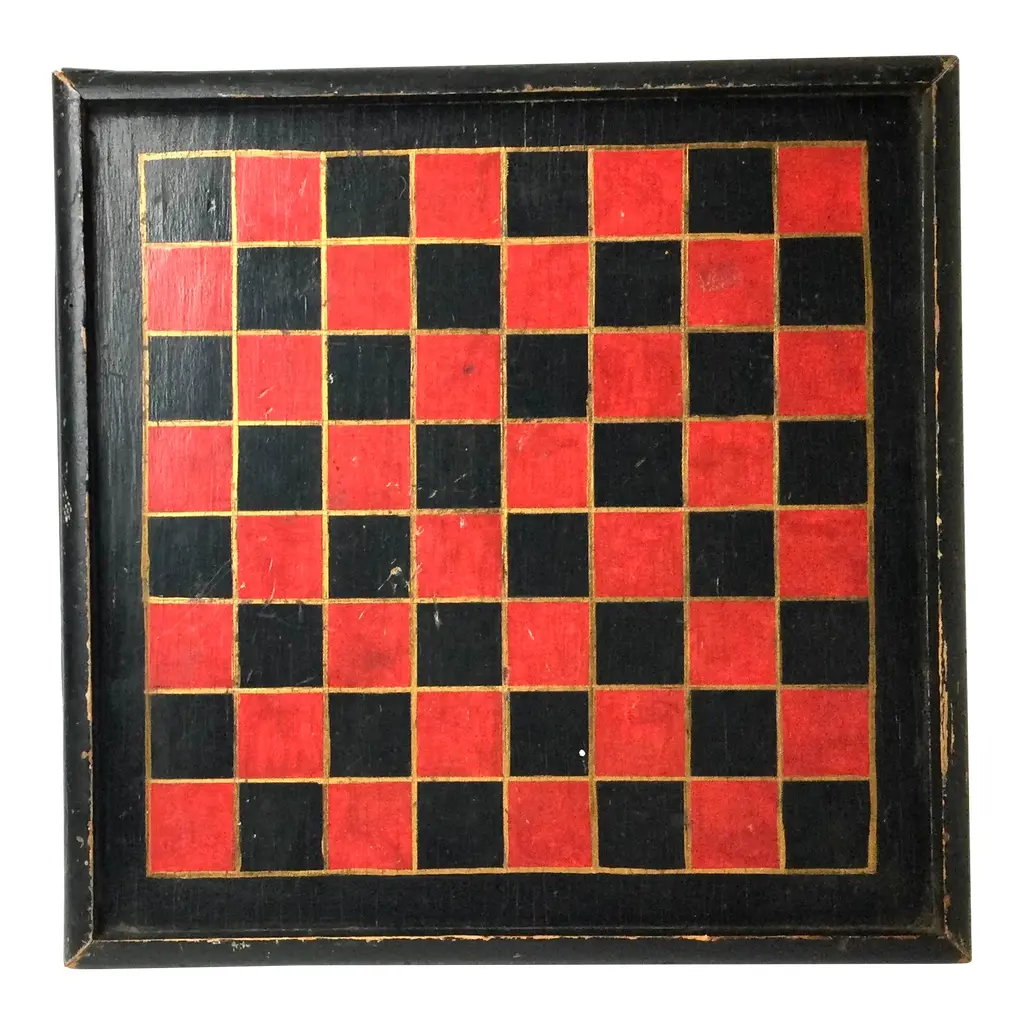
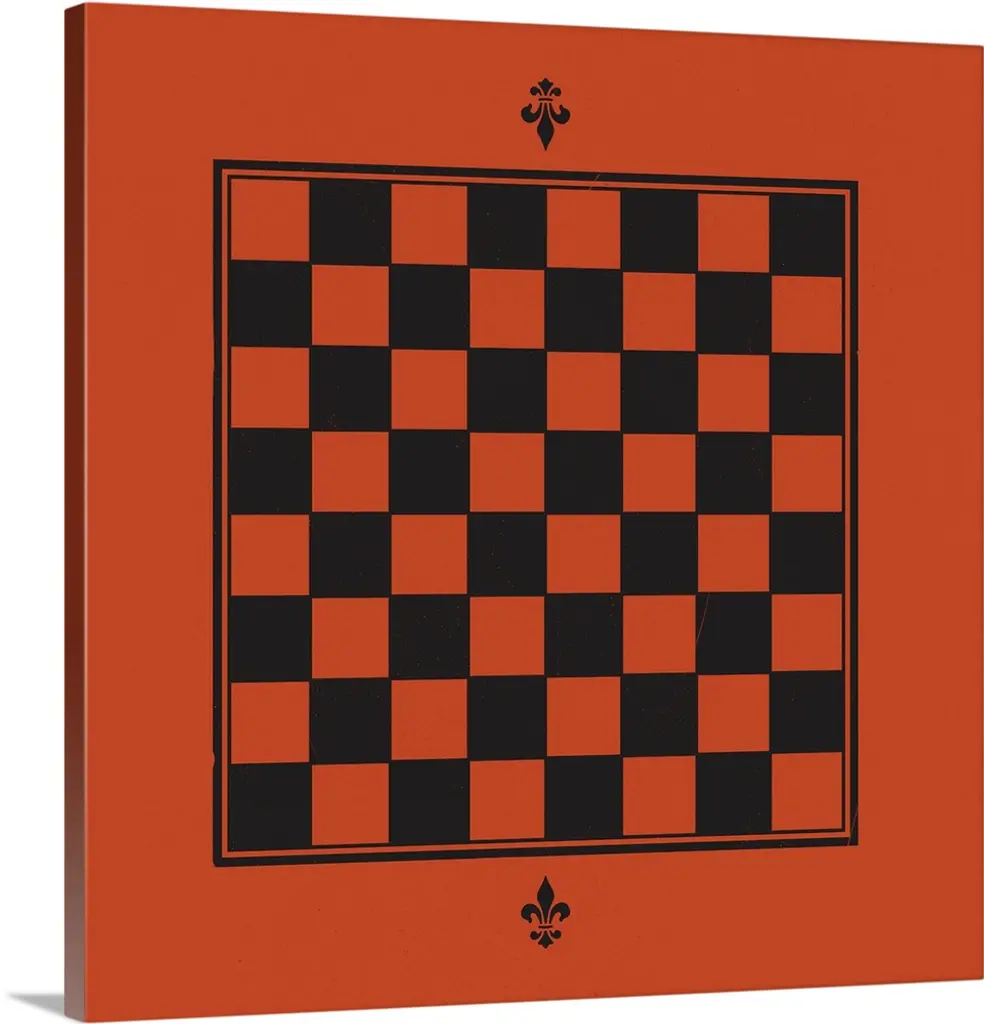
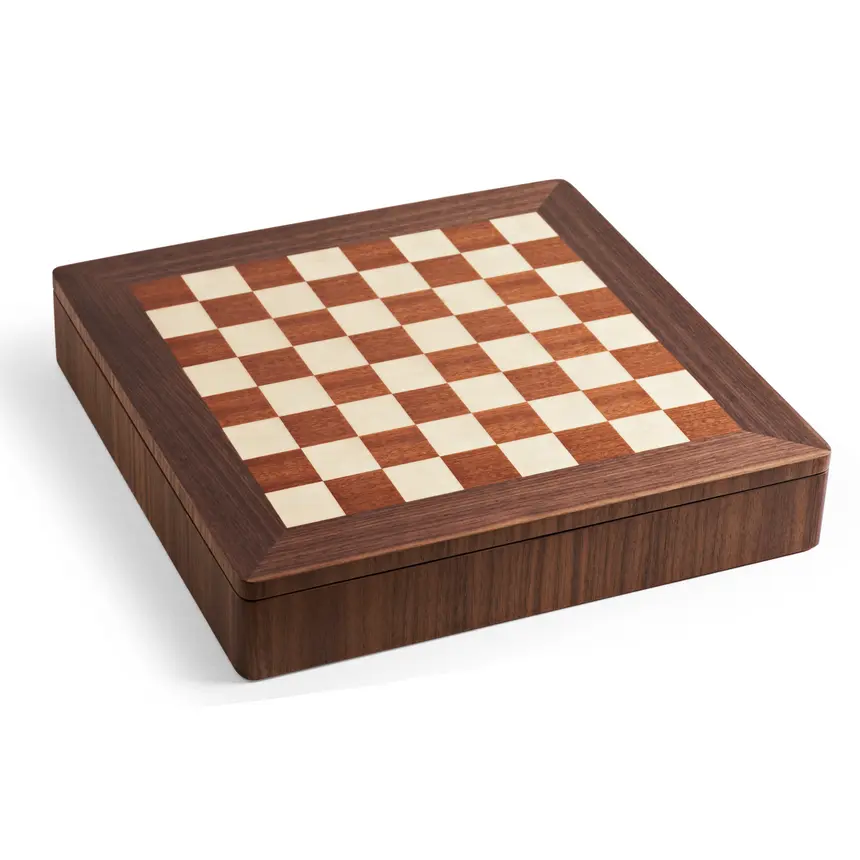
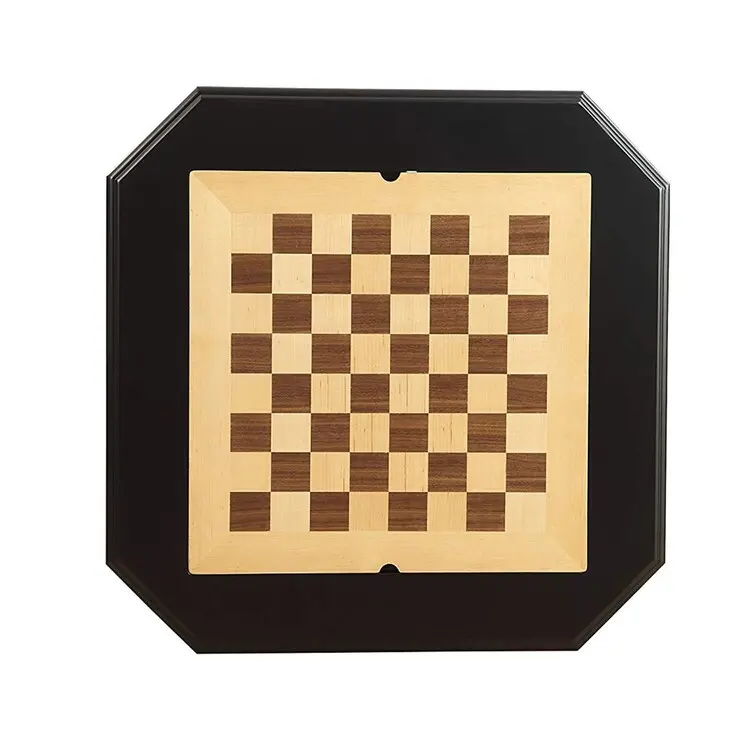
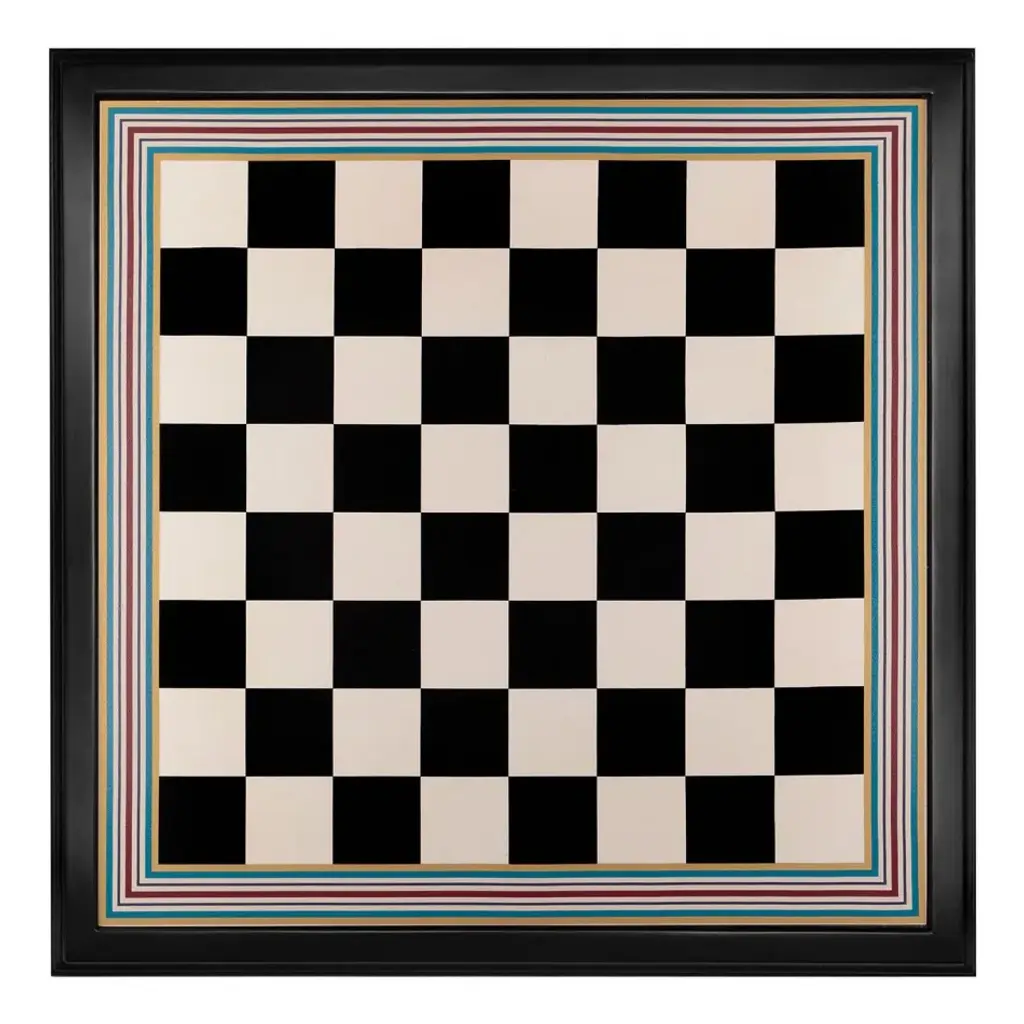
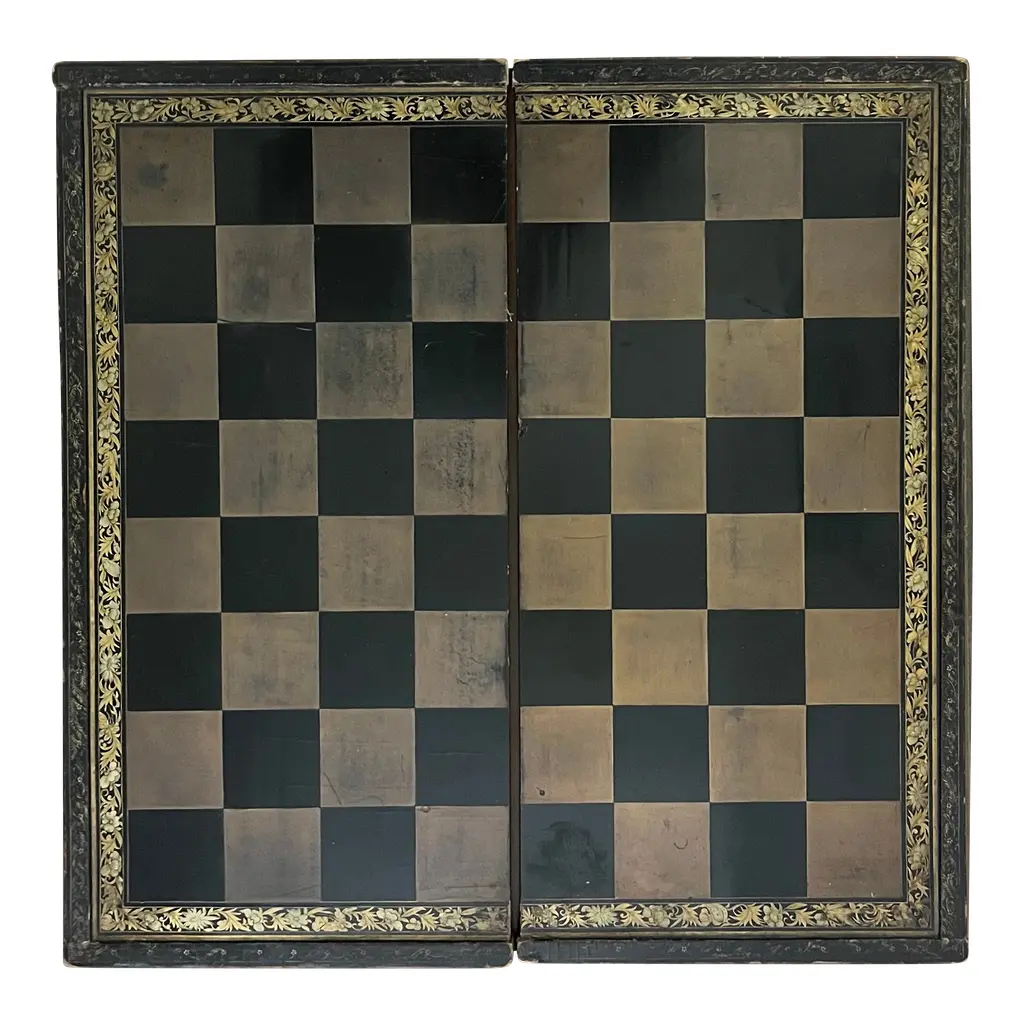
Folk art doesn’t ask permission. It doesn’t wait for training or titles. It just appears—fully formed, utterly certain. We found this 19th-century chessboard in the estate of a serious collector, tucked among rarities, and it had that quiet voltage the best pieces carry. The playing surface is reverse-painted glass: alternating squares of inky black and gold leaf, sealed beneath the surface so the light seems to rise from within. The gold doesn’t shout; it glows. The black feels bottomless. Framed in honest oak, the geometry is crisp, confident, and deeply satisfying. It was meant to elevate a game of strategy, to lend ceremony to pawns and queens. Now it reads as something more—minimal, graphic, almost modern in its restraint. Lean it against a wall and it becomes composition and reflection. Set it on a table and it dares you to make the first move. Some pieces decorate. It carries that rare quality collectors chase: anonymous hands, undeniable vision. You could hang it. You could play on it. Either way, you’ll wonder how you ever lived without it.
Similar products