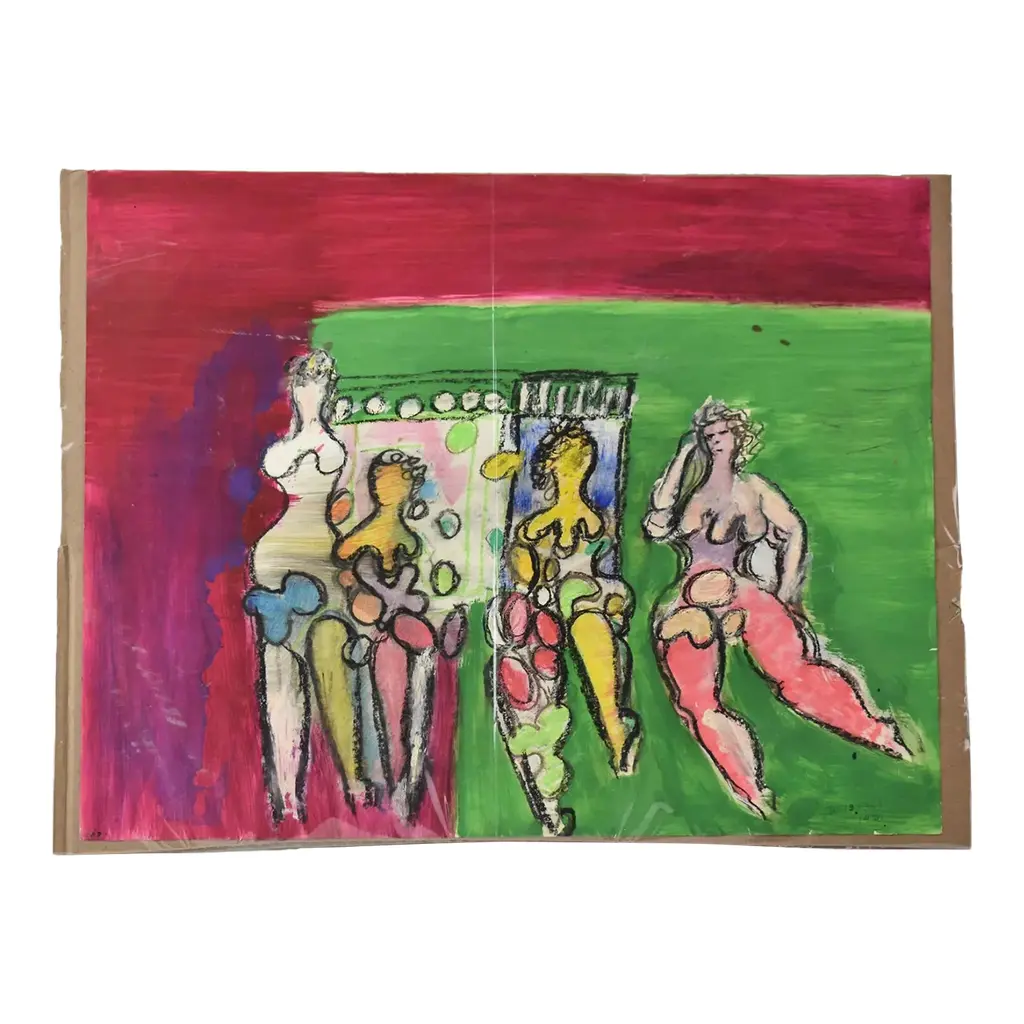
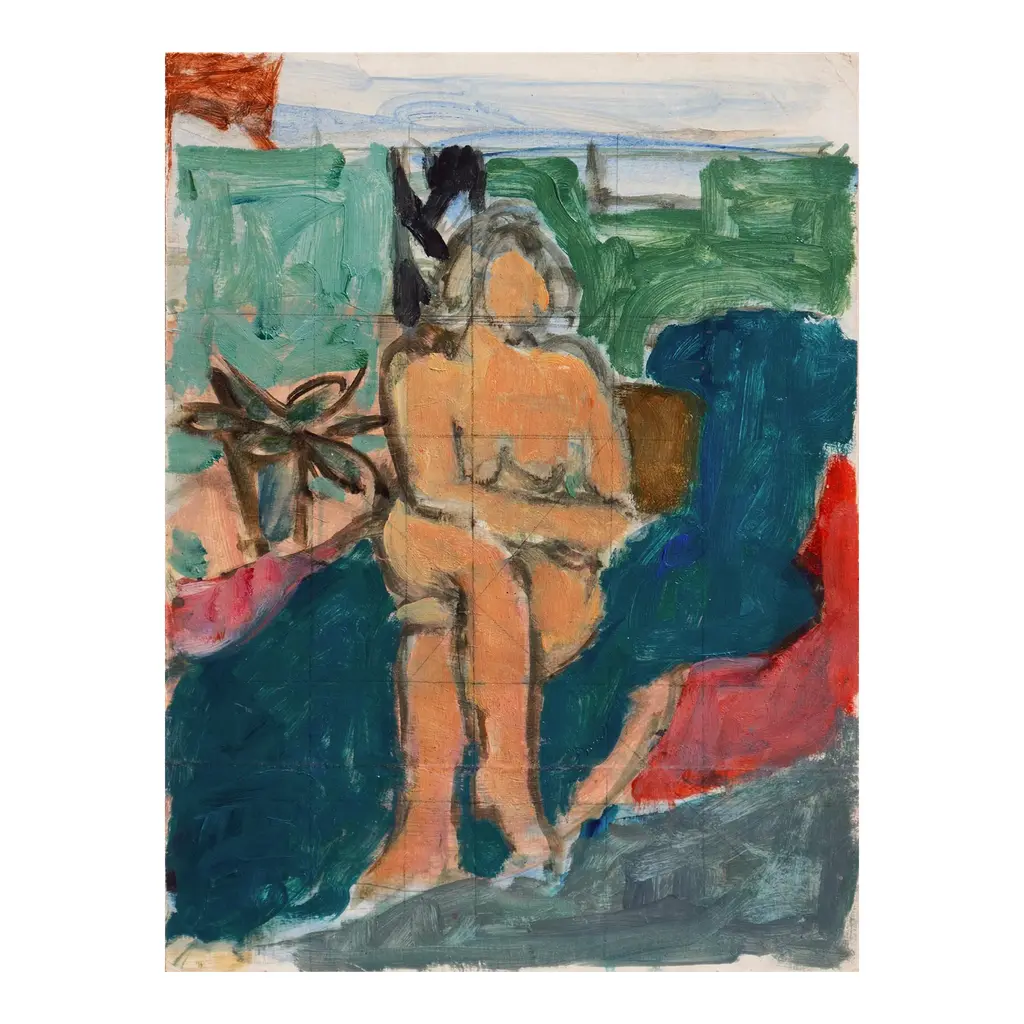
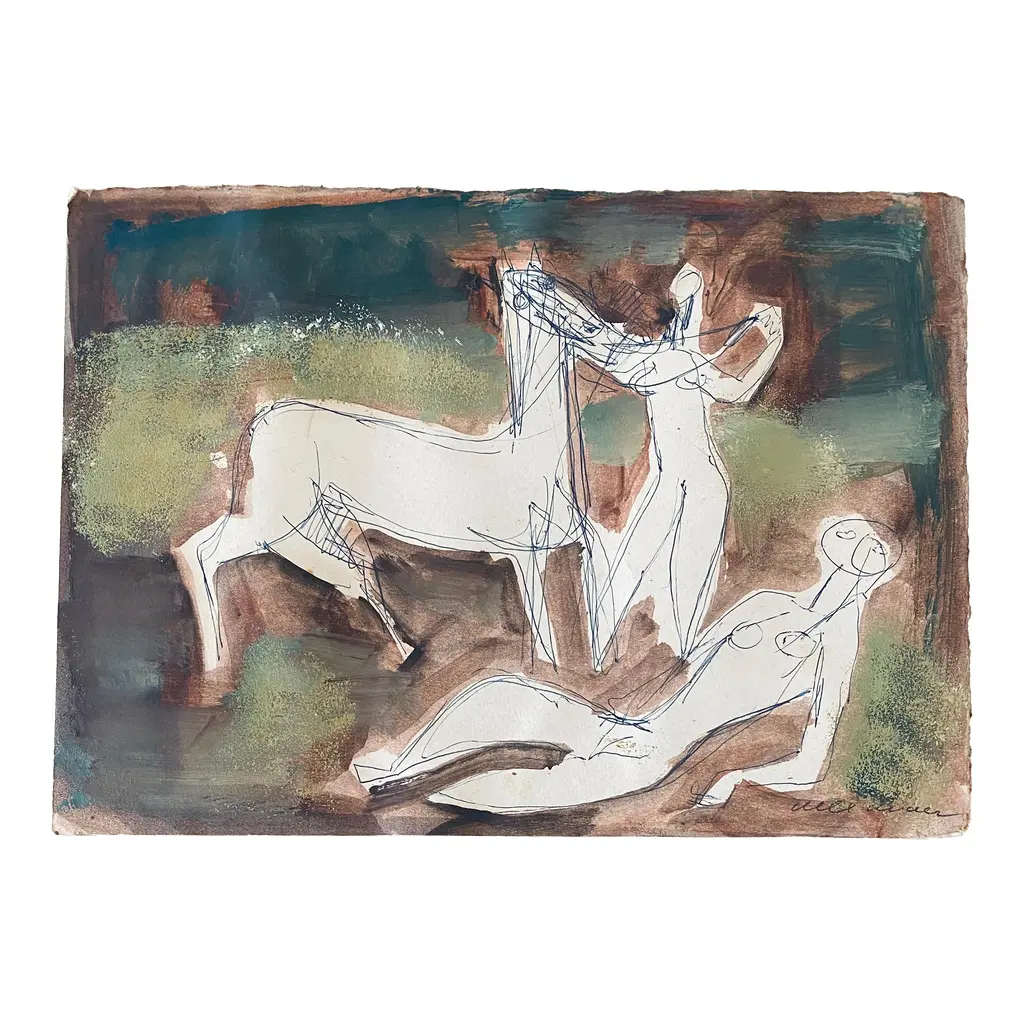
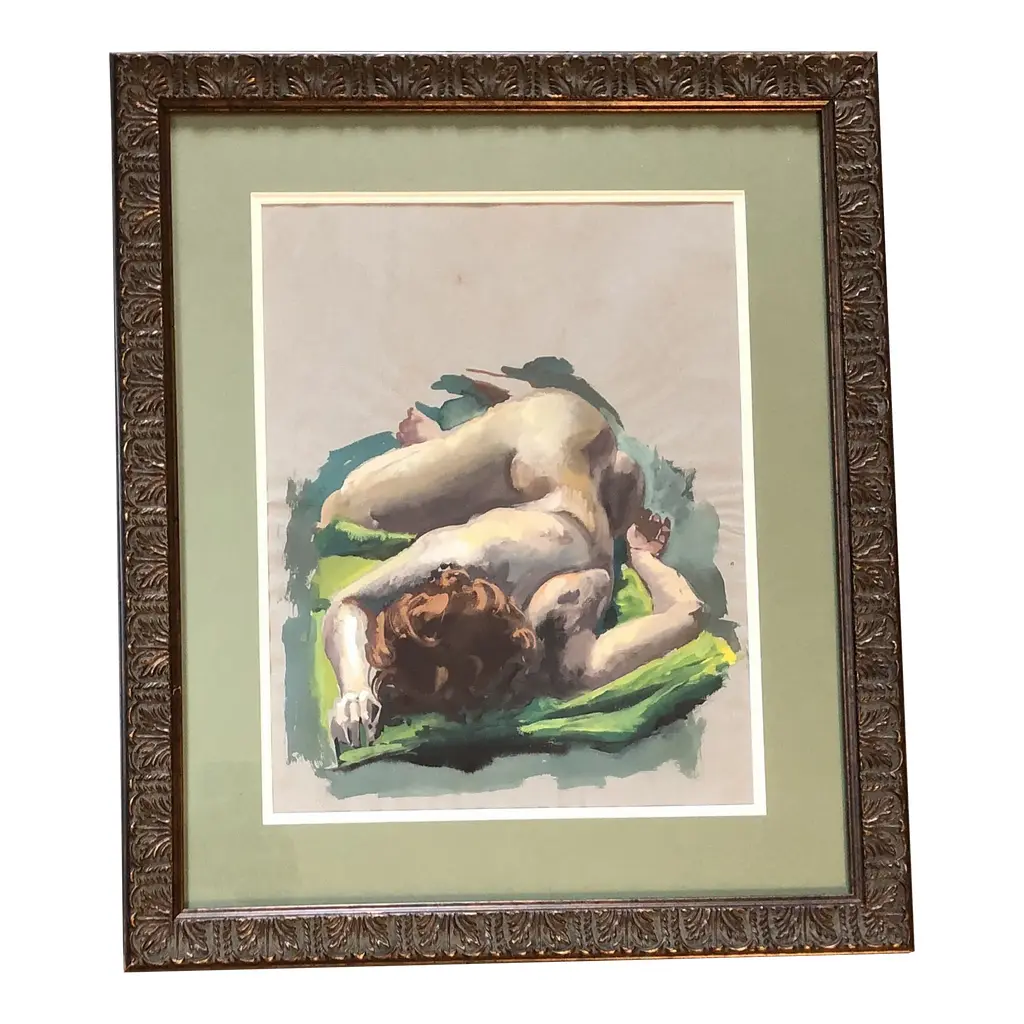
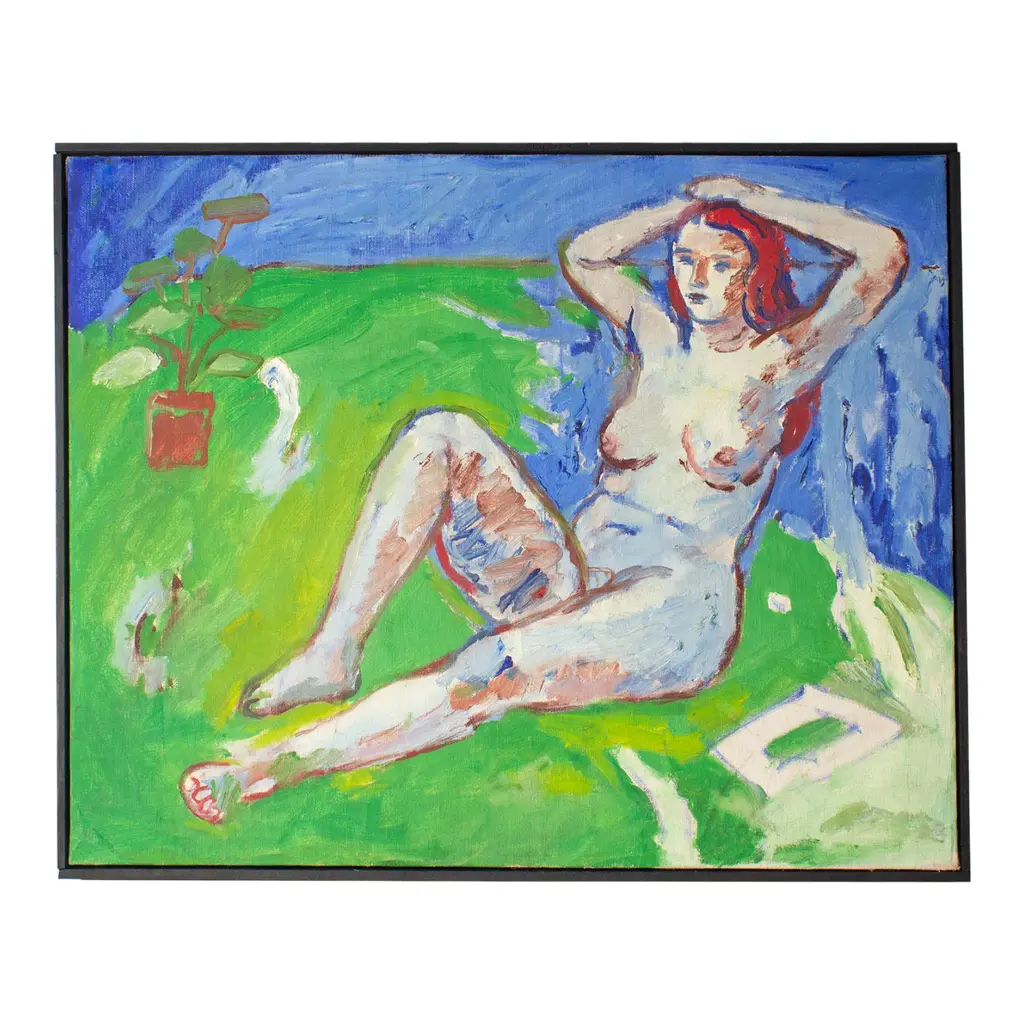
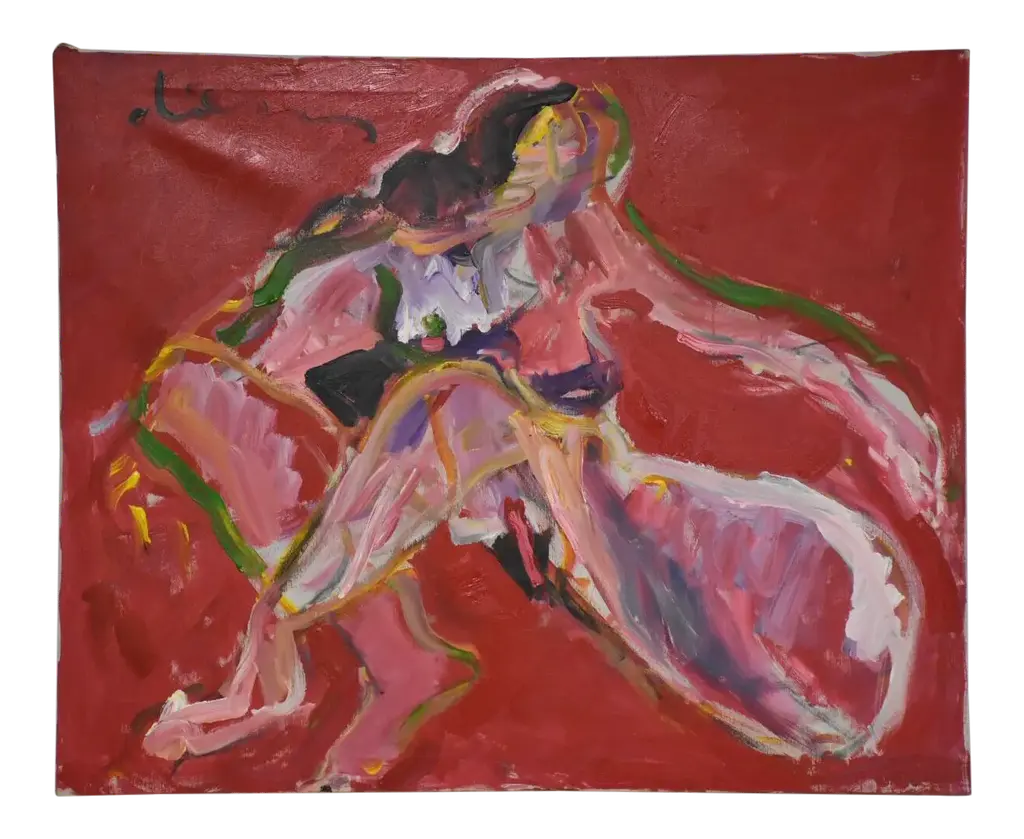
A Game for Two Serge Hollerbach, c. 1970 A Game for Two is emblematic of Serge Hollerbach’s figurative–expressionist approach, in which the human body becomes a site of psychological and emotional negotiation rather than a stable anatomical form. The vertically oriented composition is intentionally unstable: limbs twist, overlap, and fold inward, resisting a coherent sense of gravity or orientation. This distortion feels purposeful rather than chaotic, as though the figure has been caught mid-movement or mid-conflict. The title suggests relational tension, yet the absence of a clearly defined second figure implies that the “game” may be internal or asymmetrical, with the body itself absorbing the push and pull of opposing forces. Color plays a critical emotional role in this dynamic. The green ground, often associated with vitality or calm, is muddied and uneven, lending it a bruised, unsettled quality. Above, the red-orange field introduces heat and pressure, while the soft blue of the torso marks a vulnerable emotional center. Hollerbach’s flesh tones are deliberately imperfect—streaked with gray, pink, and white—rejecting idealization and reinforcing the body as a psychological surface rather than an aesthetic object. The figure feels exposed, not eroticized, and emotionally legible through posture rather than facial expression. Gesture and line further heighten this tension. Sweeping black arcs cut across the canvas, interrupting both space and body, suggesting boundaries or rules that shape the action without fully containing it. These lines echo the notion of a “game,” not as something playful, but as a system of constraints that must be navigated. The brushwork remains visible and assertive, emphasizing immediacy and struggle; the painting feels wrestled into existence rather than carefully resolved. The white pole-like form on the right side of the composition reinforces this sense of imposed structure. Rigid and vertical, it stands in stark contrast to the contorted, organic figure, functioning as a limit, axis, or silent opponent. Its ambiguity strips it of literal meaning and pushes it toward symbolism, suggesting rules, external pressure, or an unyielding presence against which the figure must contend. Limbs reaching across and around it imply resistance or negotiation rather than submission. In this way, Hollerbach collapses interpersonal dynamics into a single body confronting an abstract force, allowing physical gesture to replace dialogue. A Game for Two ultimately reads as a meditation on vulnerability, power, and constraint, where the body becomes both player and playing field in an emotionally charged exchange. -Jonathan Flike
Similar products