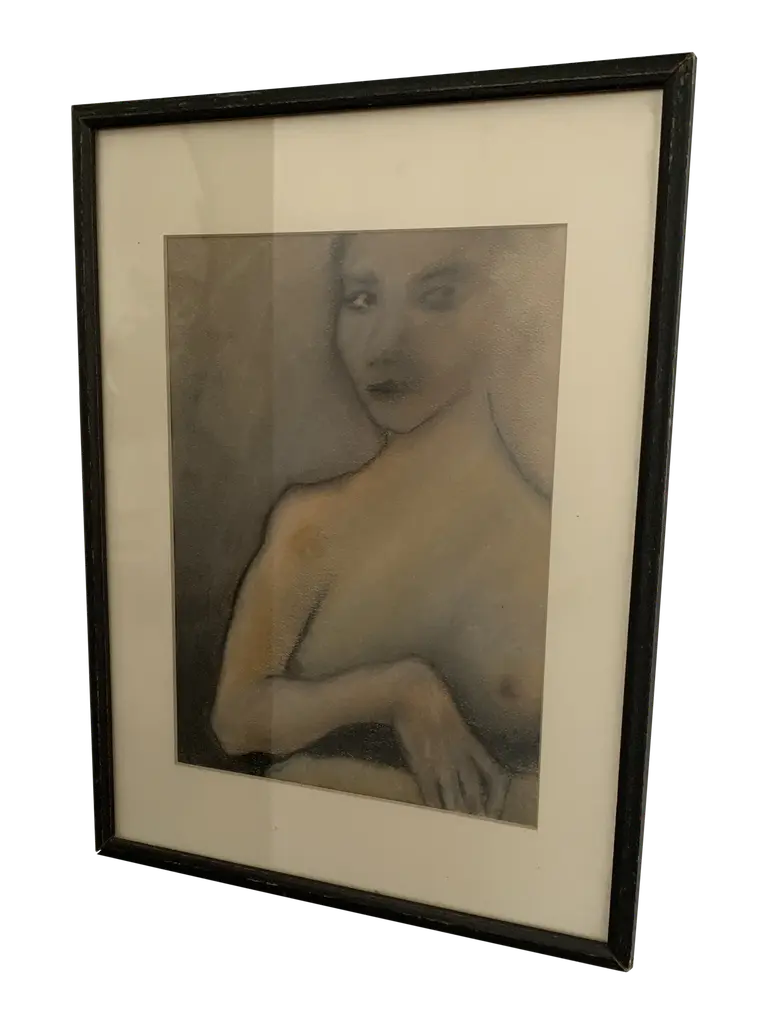
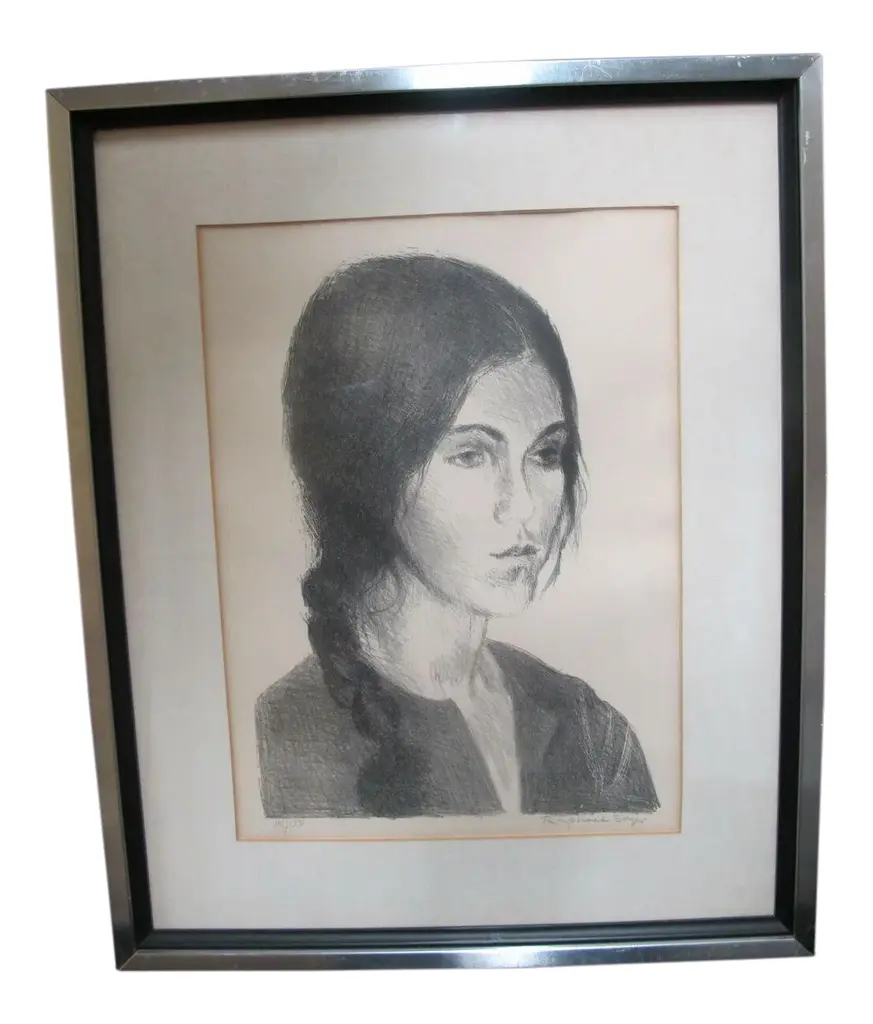
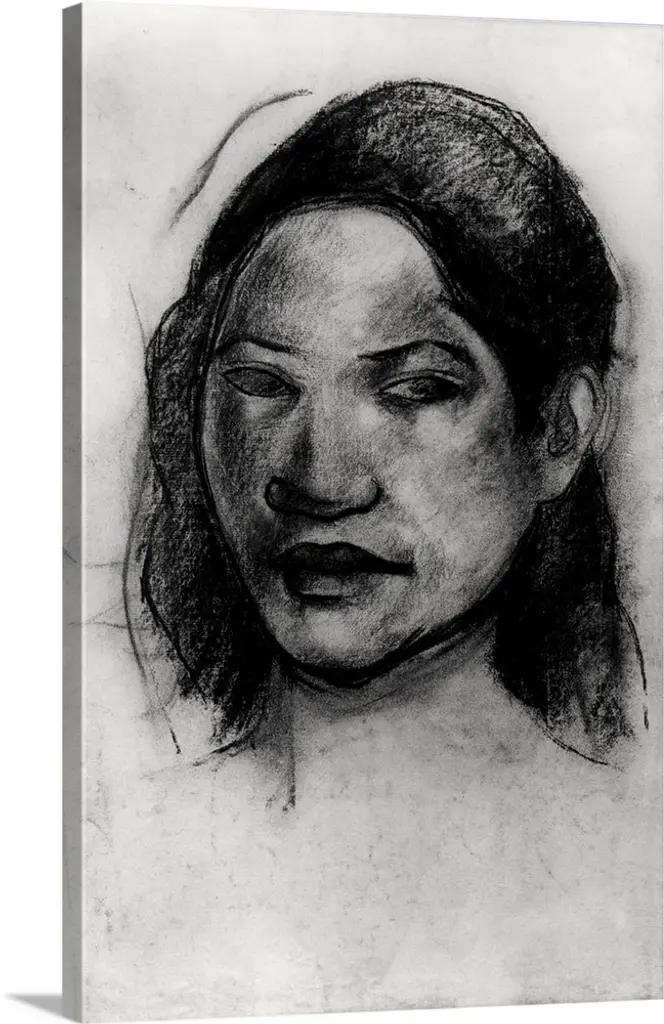
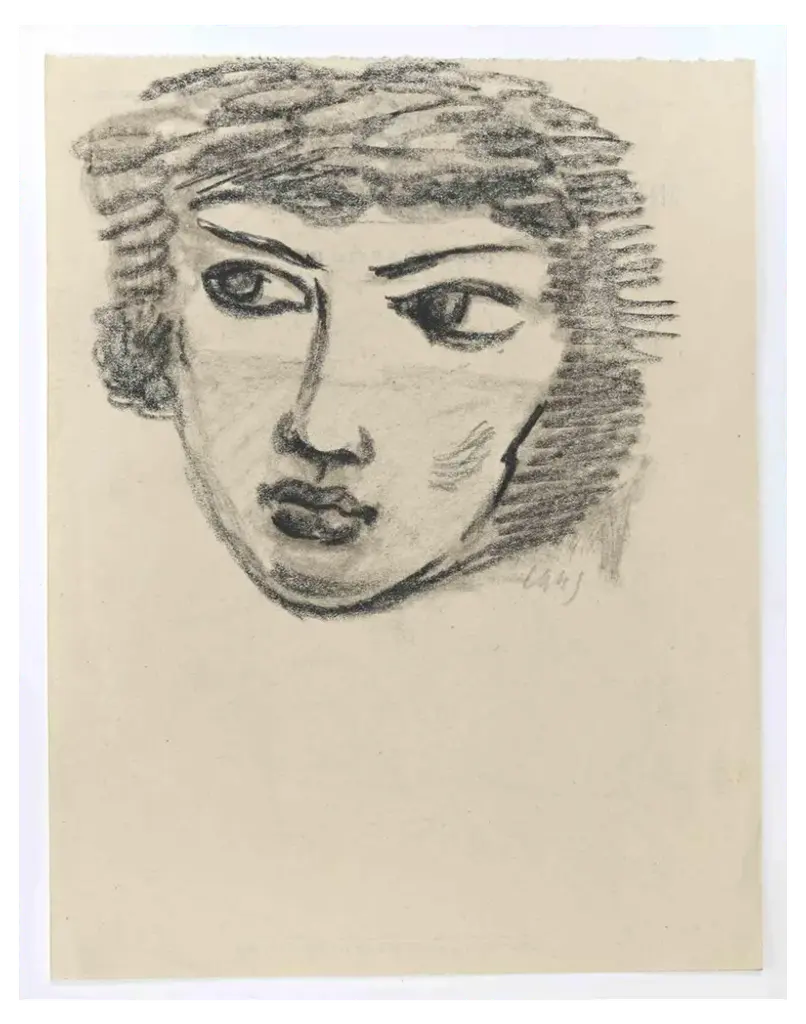
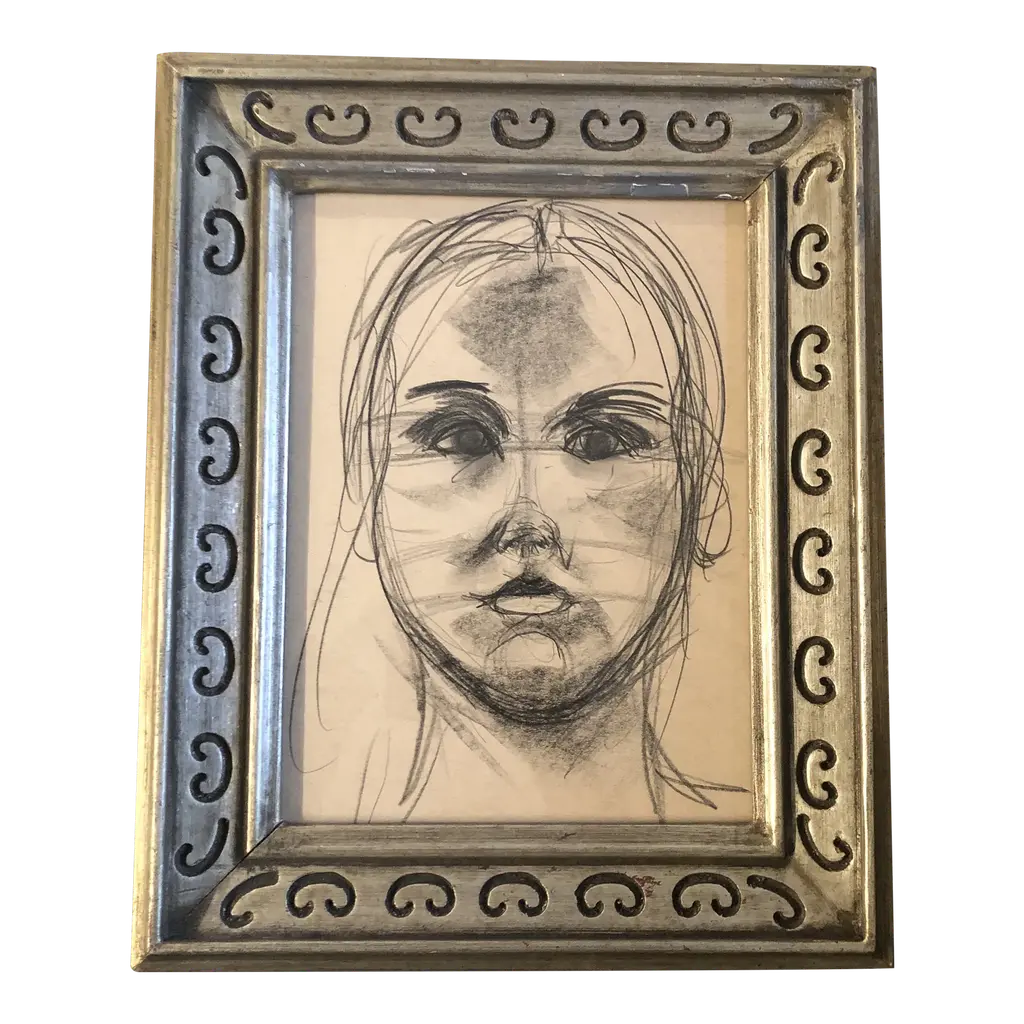
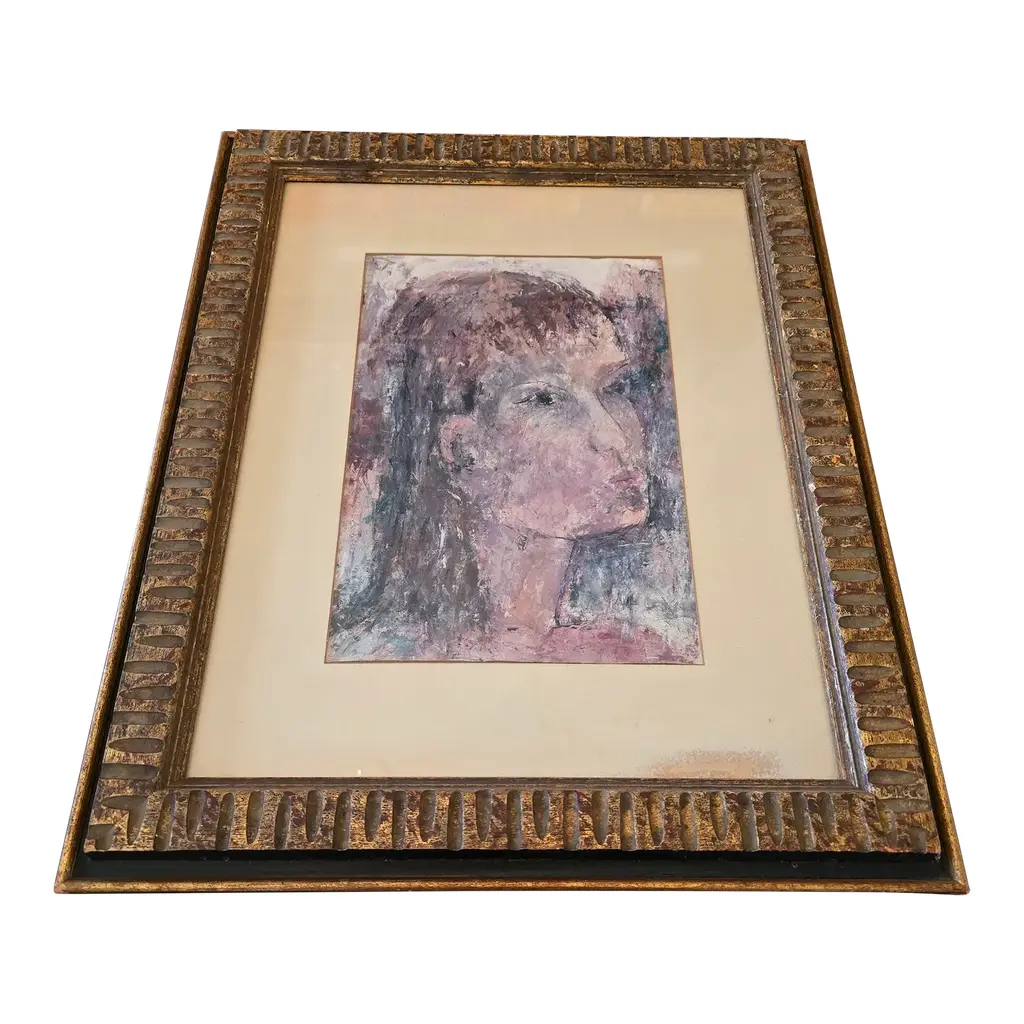
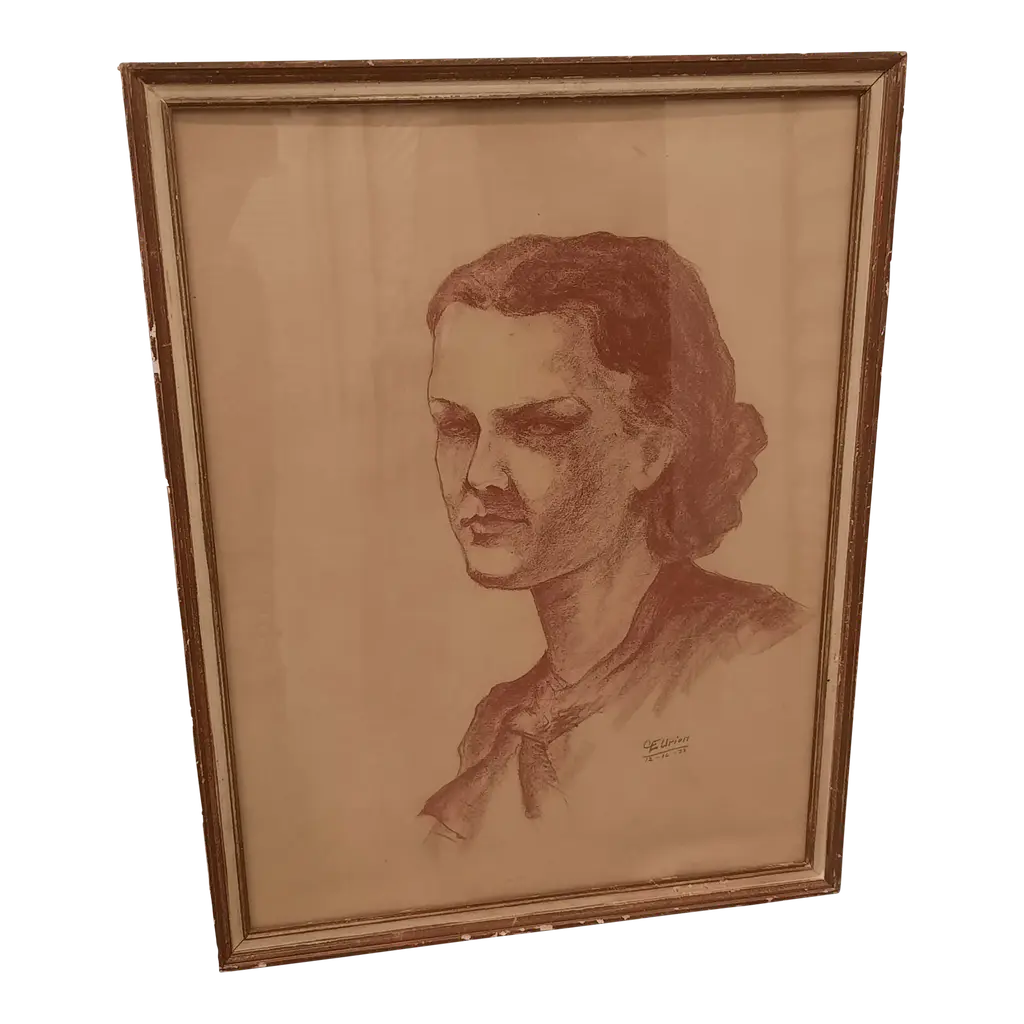
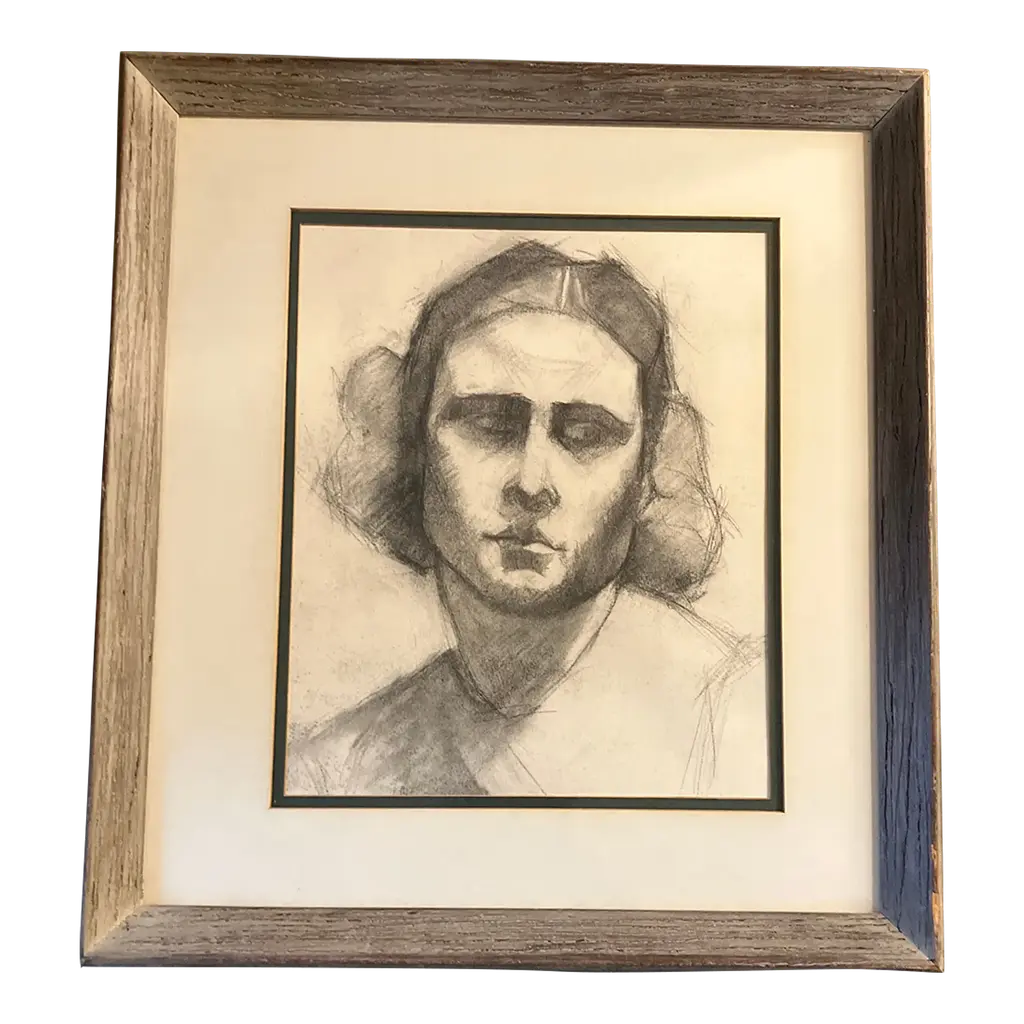
A Girl's Head Benjamin Glicker, c. 1973 In A Girl’s Head, Benjamin Glicker turns away from the theatrical intensity of his clown subjects and instead focuses on a quieter, more introspective mode of portraiture. The work is spare, restrained, and highly dependent on the expressive relationship between line, shadow, and highlight. Rather than constructing the figure through dense finish or elaborate detail, Glicker allows the head to emerge gradually from the toned ground, giving the portrait a feeling of apparition or inward presence. The composition is simple and close-cropped, centering the viewer’s attention entirely on the sitter’s face and elongated neck. This economy of means is one of the drawing’s strengths. Glicker uses only a few essential contours to establish the head, hair, and shoulders, while concentrating his effort on the modeling of the face. White passages create a soft illumination across the forehead, cheek, nose, and chin, while darker linear hatching defines the right side of the face and deepens the sense of structure. The result is a compelling tension between solidity and incompletion: the portrait feels both formed and still becoming. The asymmetry of the face is especially effective. One eye is more open and direct, while the other is heavier and more veiled, creating an emotional ambiguity that keeps the viewer engaged. The mouth is understated, almost withheld, and the overall expression is neither overtly sentimental nor decorative. Instead, Glicker achieves a mood of detachment, introspection, and quiet psychological complexity. What is most notable here is the artist’s sensitivity to restraint. The portrait does not depend on polish or realism to communicate presence. Its power comes from suggestion. Glicker understands that a face can be made emotionally vivid through omission as much as description. In A Girl’s Head, he creates a portrait that feels intimate without being overly revealing, and modern in the way it balances observation with expressive abstraction. -Jonathan Flike
Similar products