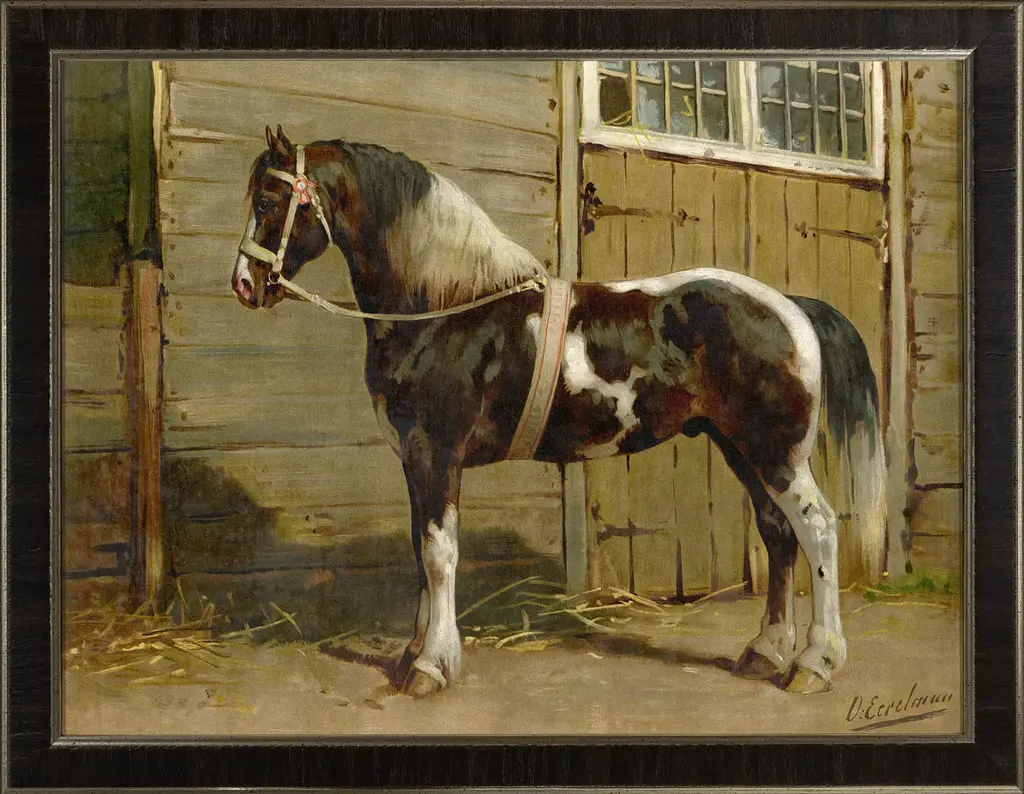
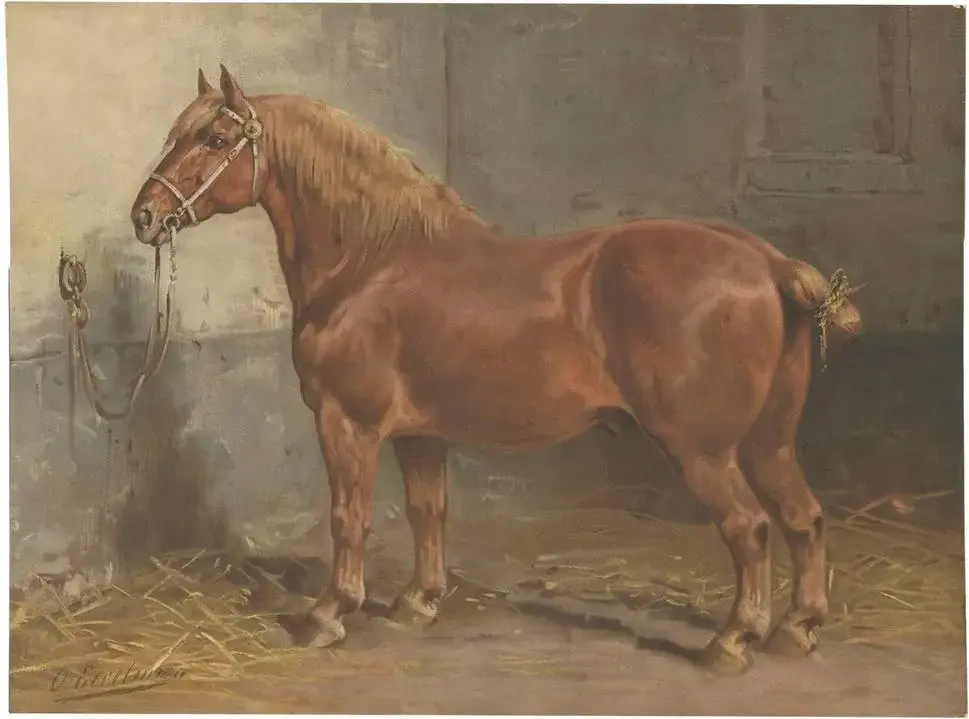
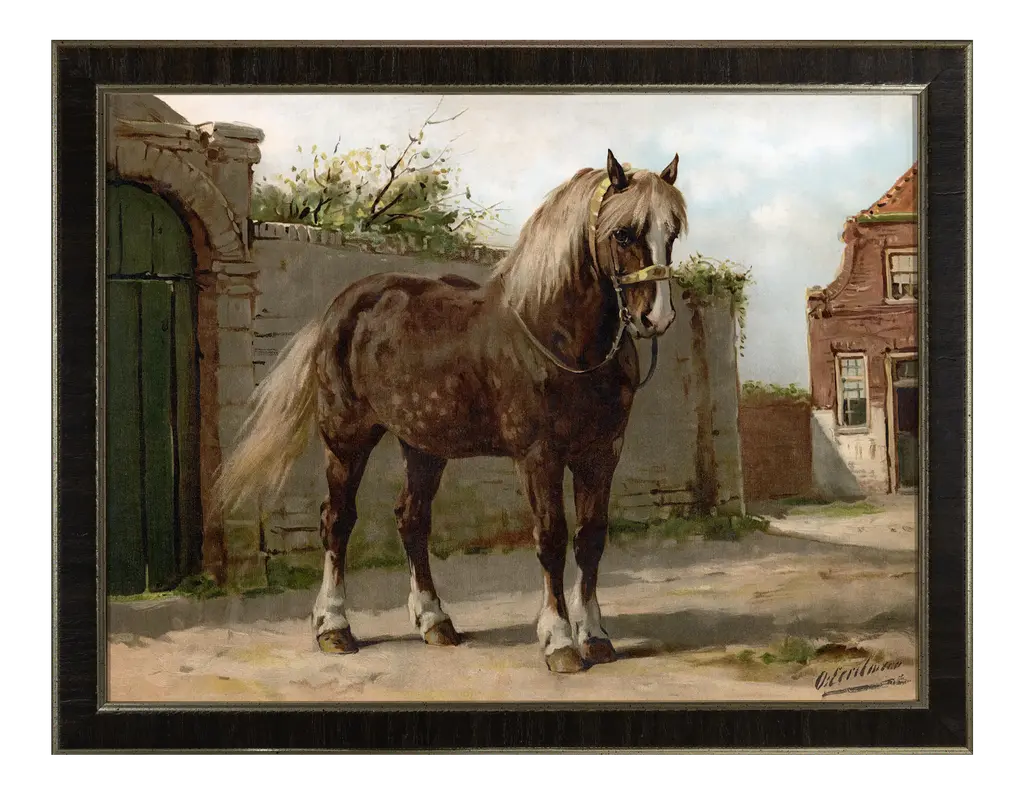
This original antique colour lithograph from 1898 depicts No. 36. Le Cheval Danois, the Danish horse, representing the solid and dependable horse types developed in Denmark during the nineteenth century. Known for strength, calm temperament, and sound conformation, Danish horses were widely used for agriculture, carriage work, and regional breeding. The horse is presented in a formal side-on portrait within a rustic stable setting, emphasizing balance, sturdiness, and practical elegance. This sheet forms part of the distinguished Belgian equestrian series L’Espèce Chevaline à Travers le Monde. The series was issued as a deluxe loose-leaf publication rather than a bound book and consisted of 40 colour plates in total. Only 150 complete sets were produced, intended for breeders, collectors, and official equestrian institutions, making individual plates scarce and increasingly sought after. The lithograph was executed after a painting by Otto Eerelman, one of the leading European horse painters of the late nineteenth century. On the reverse of the sheet is an original printed note reading: Espèce Chevaline. Ouvrage contenant 40 planches en couleurs. Édition de la Librairie Néerlandaise à Anvers. This verso inscription provides contemporary confirmation of the series title, the complete set of plates, and the Antwerp publisher. Issued as a finished loose sheet and intended for framing from the outset, this lithograph appeals both to collectors of equestrian and sporting art and to interior designers seeking refined yet characterful horse imagery. The rustic stable backdrop and warm, earthy palette make it particularly suitable for country houses, libraries, studies, or elegant modern interiors. This is an original nineteenth-century lithograph, not a reproduction or later print. Condition report: Good condition. Light, even age-related toning and scattered foxing consistent with age. Colours remain warm and well preserved. No folds or hard creases observed. Minor edge wear only. Technique: Colour lithograph Maker: After Otto Eerelman, Netherlands / Belgium, circa 1898
Similar products