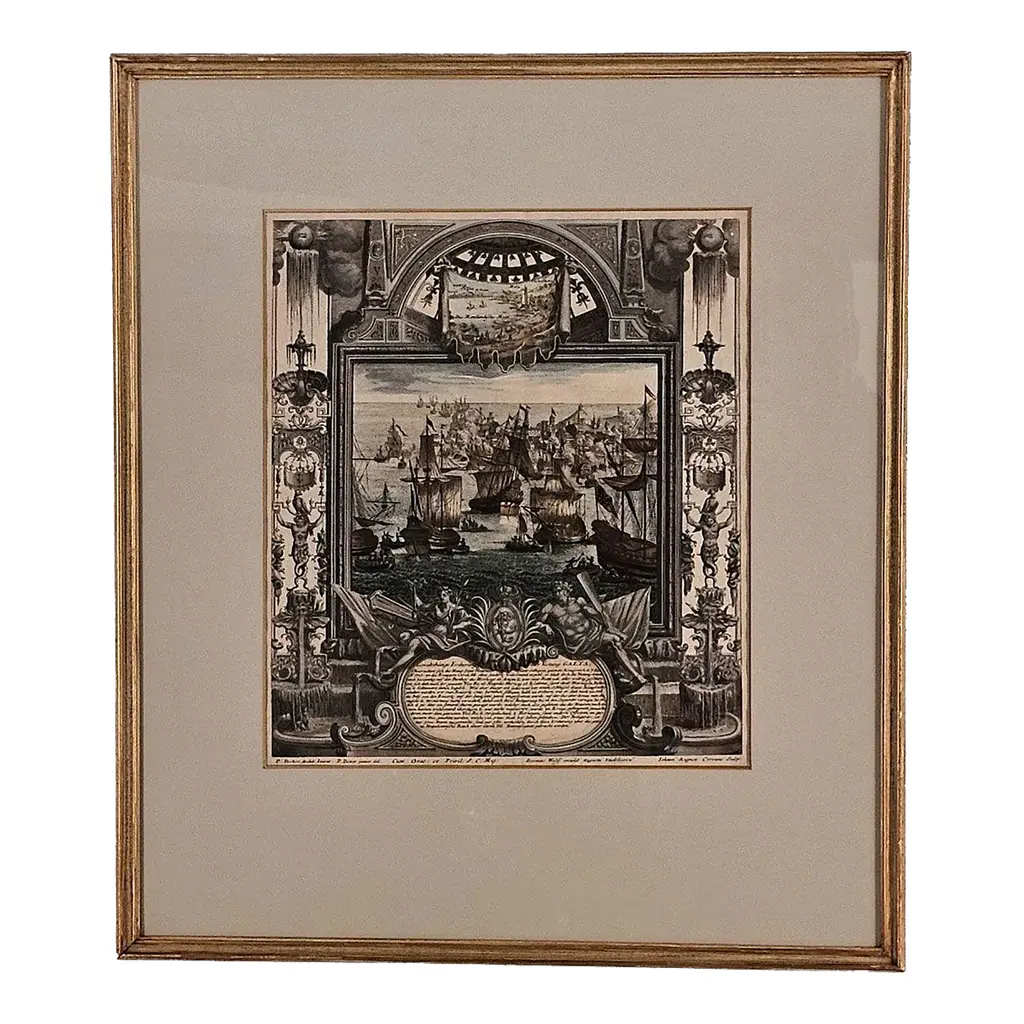
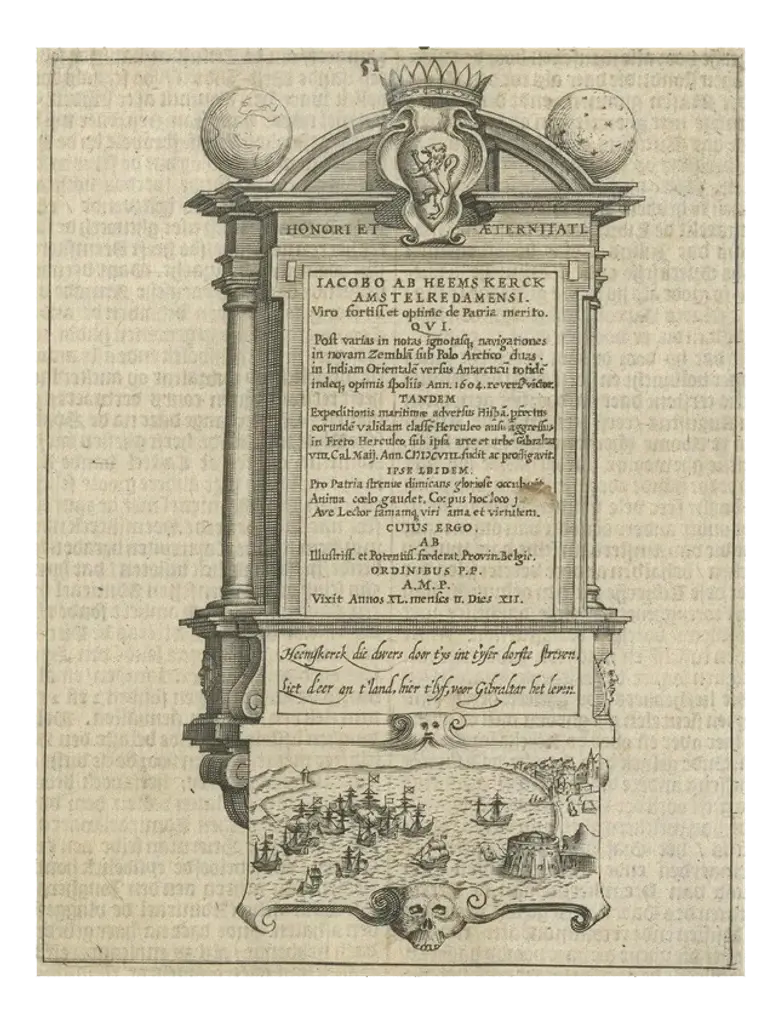
A rare and intriguing 18th-century German engraving combining a finely detailed allegorical scene of naval warfare with a poetic handwritten reflection on military life, ambition, and personal virtue. Likely created in the early 1700s, the piece was produced in the German-speaking world, possibly in the Holy Roman Empire, and is distinguished by its symbolic complexity and the use of Kurrentschrift (German cursive) script. The upper half of the recto features a powerful composition: a central cartouche frames a bustling port or fortress under siege, with ships, cannons, and fortifications. Surrounding the image are flags, drums, cannonballs, and sabres — iconography rich in military symbolism. Above the cartouche is a crested helmet, enhancing the martial theme. The visual suggests a celebration or commemoration of military strength, possibly linked to a graduation, honorific, or personal presentation within a regiment or academy. Beneath the illustration, a deeply personal poem reflects on the noble yet grim duties of a soldier. It praises those who serve with integrity and courage, while confronting the inevitability of death. The language suggests Enlightenment ideals — honor, reason, and moral reflection.
Similar products