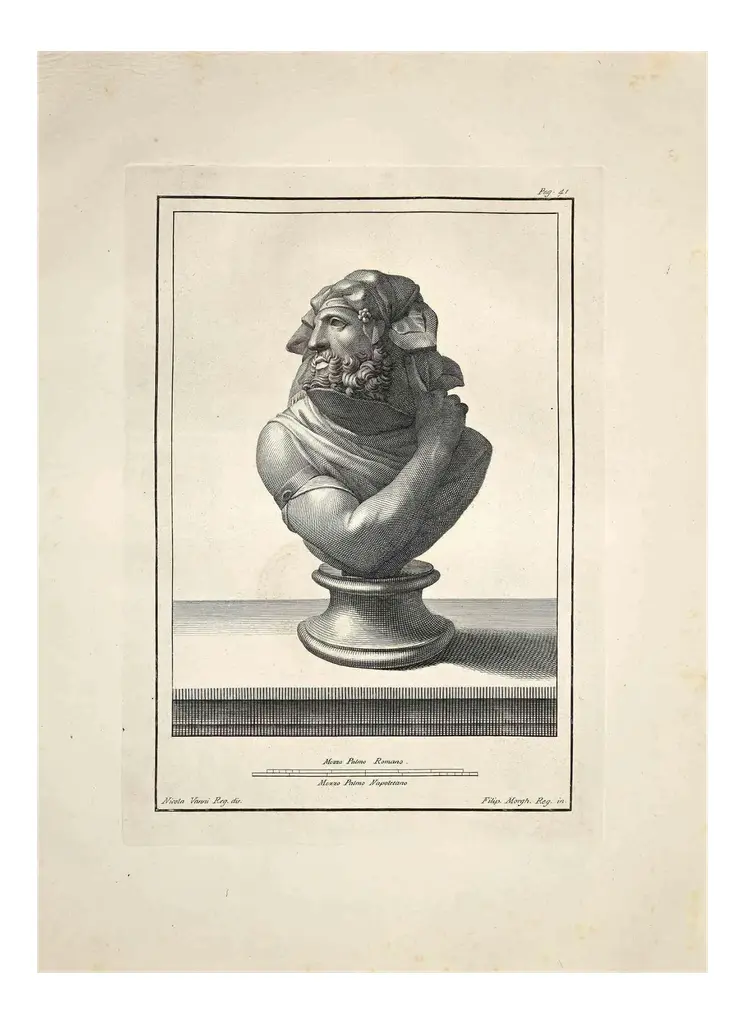
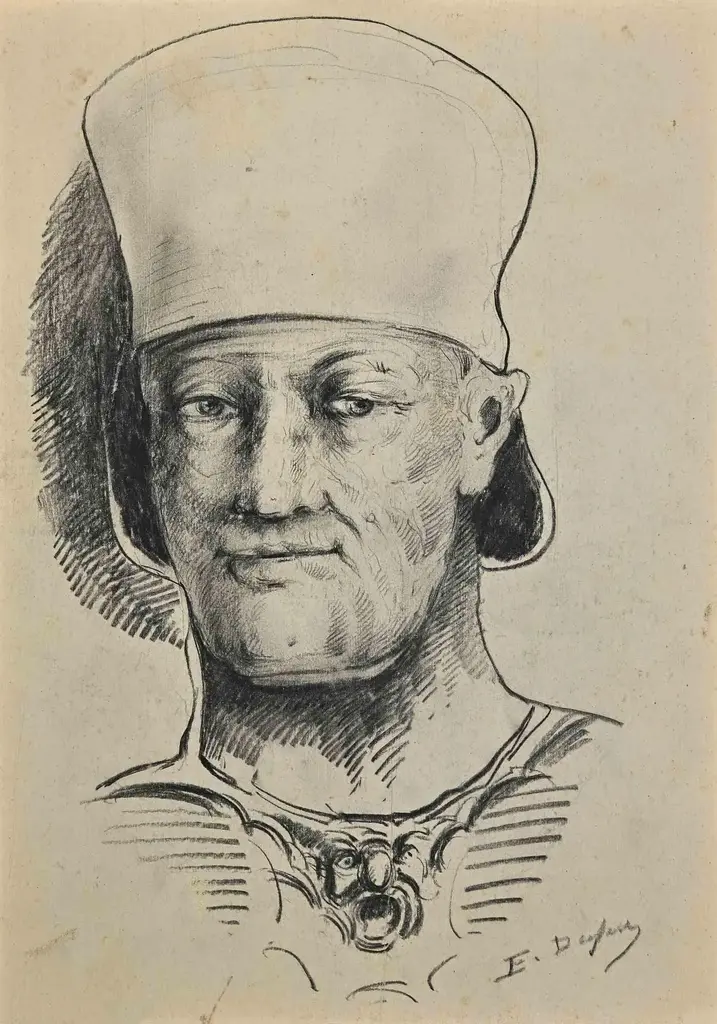
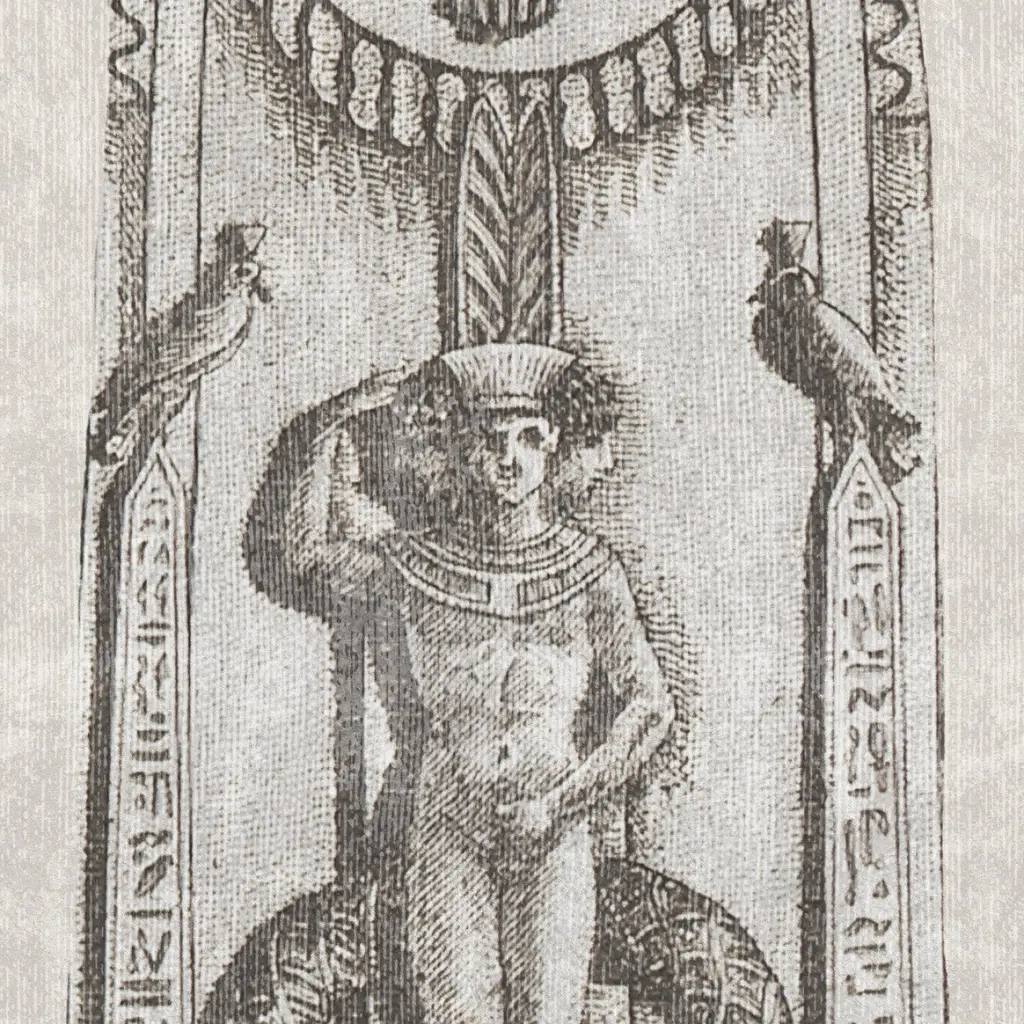
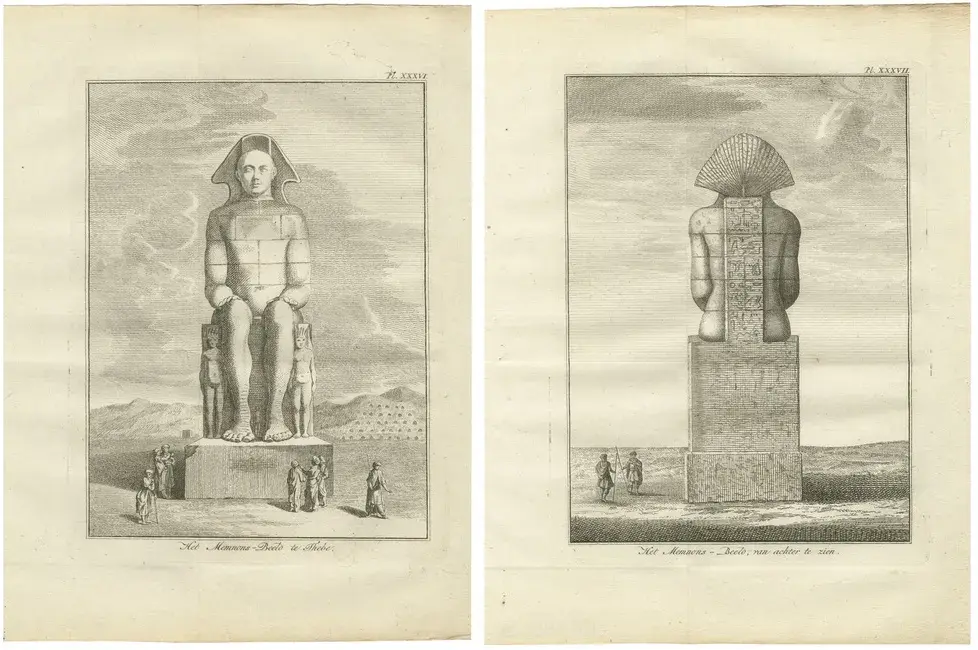
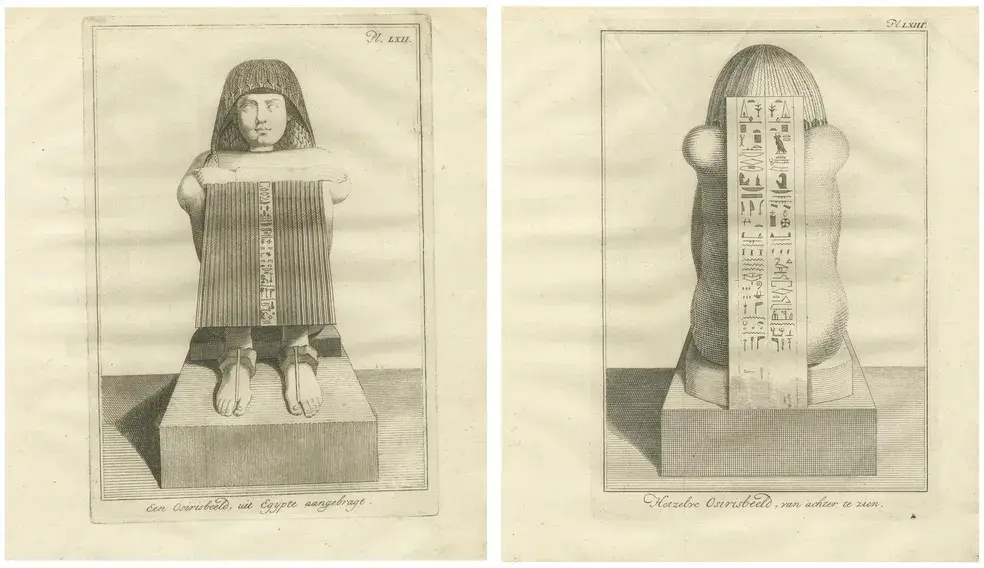
Bust of egyptian pharaoh osymandias, thebes – front and rear views, c.1776 : this antique engraving features the upper portion of a colossal statue identified as osymandias (a greek rendering of ramses ii), one of ancient egypt's most celebrated pharaohs. The image, based on 18th-century exploration of thebes (modern-day luxor), shows both the frontal and rear views of the pharaoh's head and upper torso, highlighting the grandeur and symbolism of egyptian royal portraiture. The upper image depicts the statue’s frontal view, presenting osymandias with the characteristic royal nemes headdress, flanked by the uraeus cobra and vulture, symbolizing protection and kingship. His serene yet commanding expression exemplifies the idealized features of pharaonic statuary. On each shoulder are hieroglyphic cartouches, further affirming his royal identity and divine authority. The lower image reveals the statue’s reverse side, with a richly detailed back pillar covered in hieroglyphic inscriptions. These inscriptions likely record the pharaoh’s names and titles, as well as praises or dedications to the gods. The craftsmanship on both sides reflects the high standard of monumental sculpture under the new kingdom, especially during the reign of ramses ii (1279–1213 bce), who commissioned numerous temples and statues across egypt. This print is plate xlii from a dutch antiquarian series dating to circa 1776, which visually documented ancient egyptian ruins and monuments for a european audience fascinated by the rediscovery of classical antiquity. Condition summary: very good condition with minimal signs of aging. Some light toning to the paper edges, slight waviness in the margin, and a faint vertical fold, as issued. No major defects. Framing tips: a vertical frame with ample white matting will complement the symmetry of the two views. A black or dark wood frame will enhance the fine linework of the engraving and suit traditional or academic interiors. Suitable for a study, library, or egypt-themed collection. Technique: engraving maker: unknown (netherlands, circa 1790)
Similar products