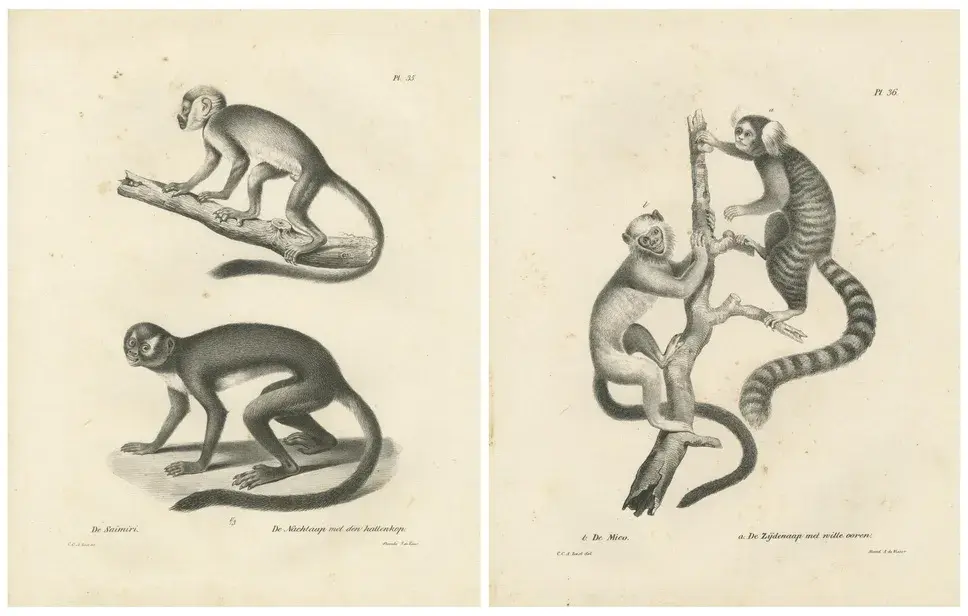
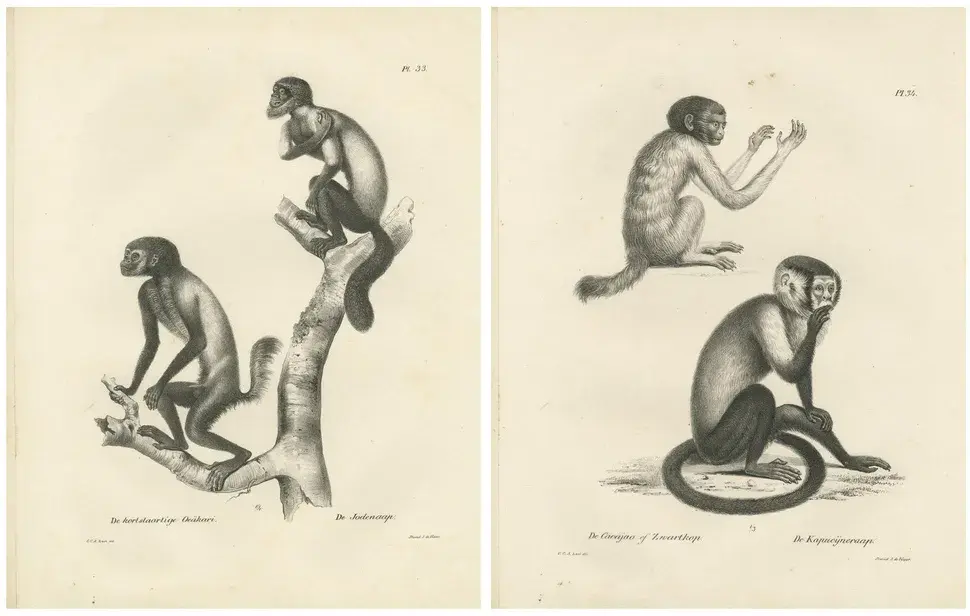
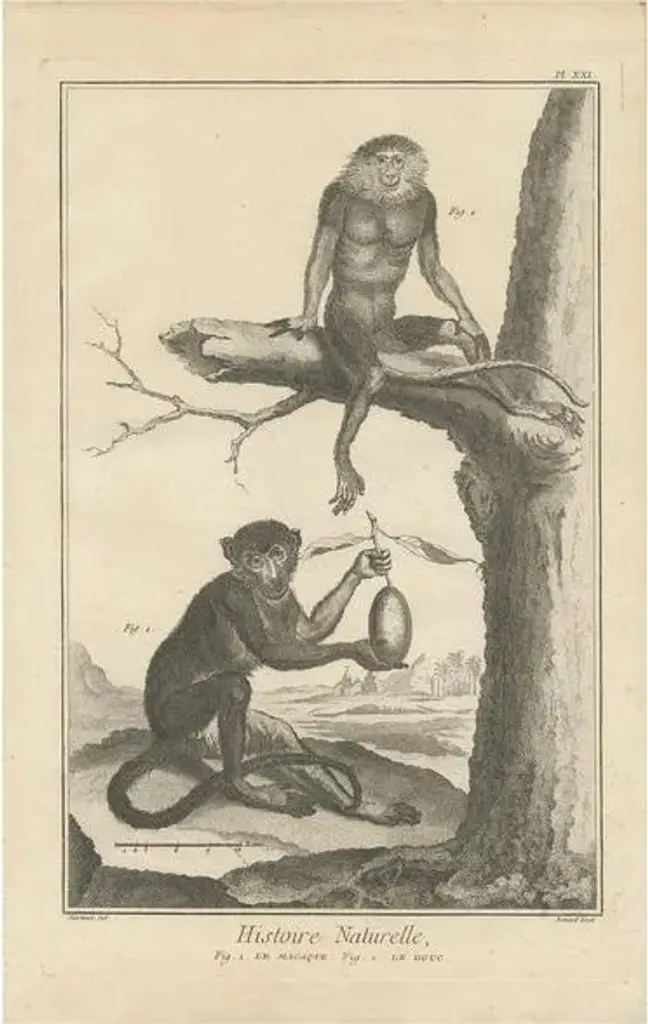
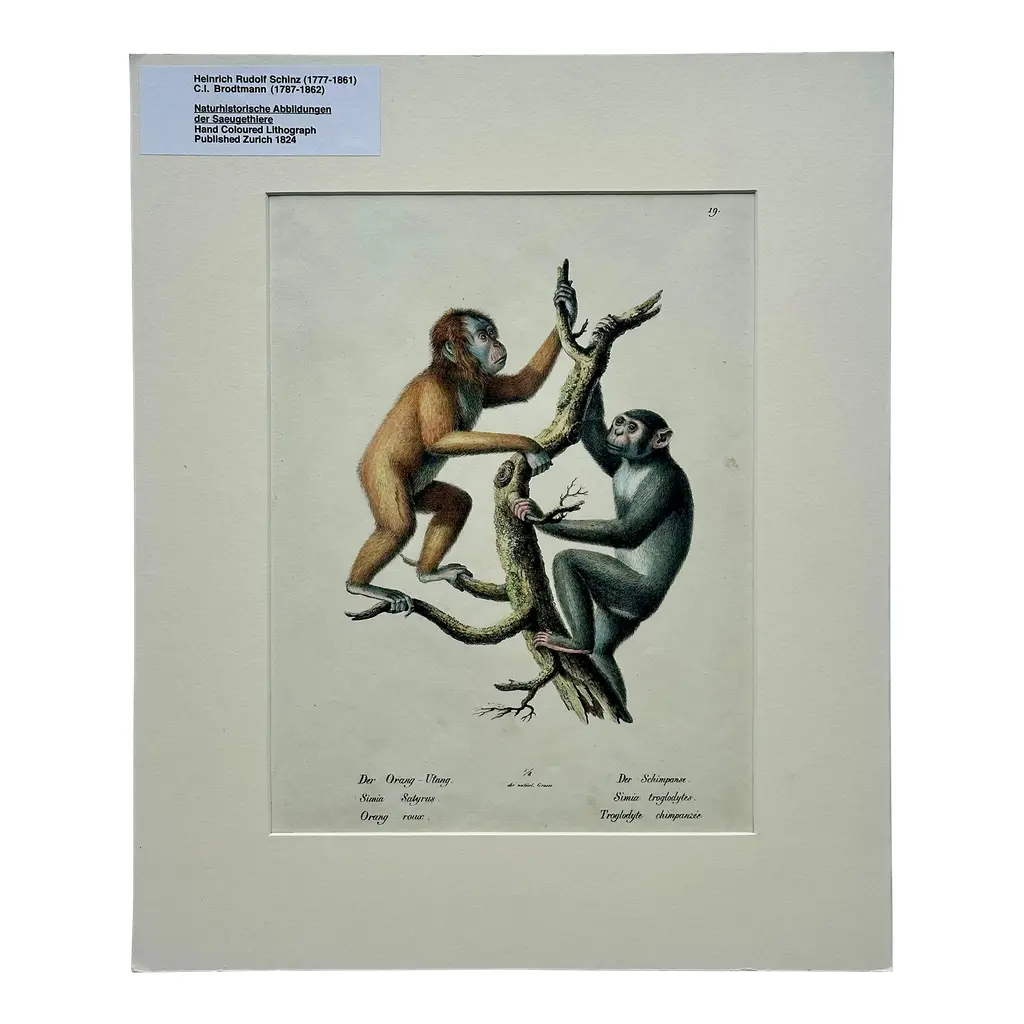
These two lithographs depict various species of tamarins and lemurs, drawn by Carel Christiaan Antony Last for Heinrich Rudolf Schinz's *Volledige Natuurlijke Historie der Zoogdieren* (1836). The prints, part of a broader collection, were published by S. de Visser en Zoon in The Hague, offering a scientific and artistic record of primate species for European audiences. The first lithograph (Pl. 37) features three distinct tamarin species: the *Goudgekuifde Tamarin* (Golden-crested Tamarin), the *Leeuwen Tamarin* (Lion Tamarin), and the *Marikina*. These small primates are shown in different naturalistic poses—two perched on a branch and the other depicted near corn vegetation. The detail in their fur and expressions highlights their individual characteristics, contributing to the scientific understanding of these animals. The second lithograph (Pl. 38) illustrates three lemur species: the *Mococo*, the *Maki met het Witte Voorhoofd* (Lemur with White Forehead), and the *Anjovaansche Maki* (Anjouan Lemur). These lemurs are depicted climbing tree branches, with their long tails and distinct features carefully rendered. The scene captures both the physical traits and behavioral nuances of these arboreal creatures, offering a glimpse into their natural habitat. These illustrations were part of a larger movement in 19th-century Europe to catalog and represent the diversity of the animal kingdom. Combining artistic skill with scientific accuracy, the prints served both educational and decorative purposes.
Similar products