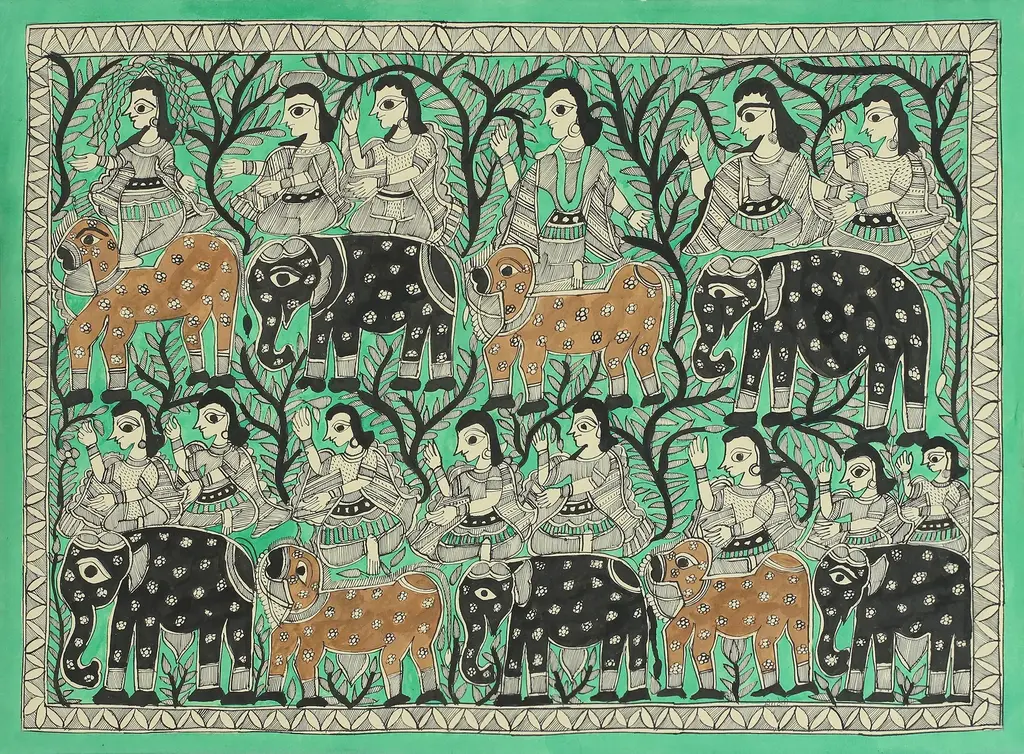
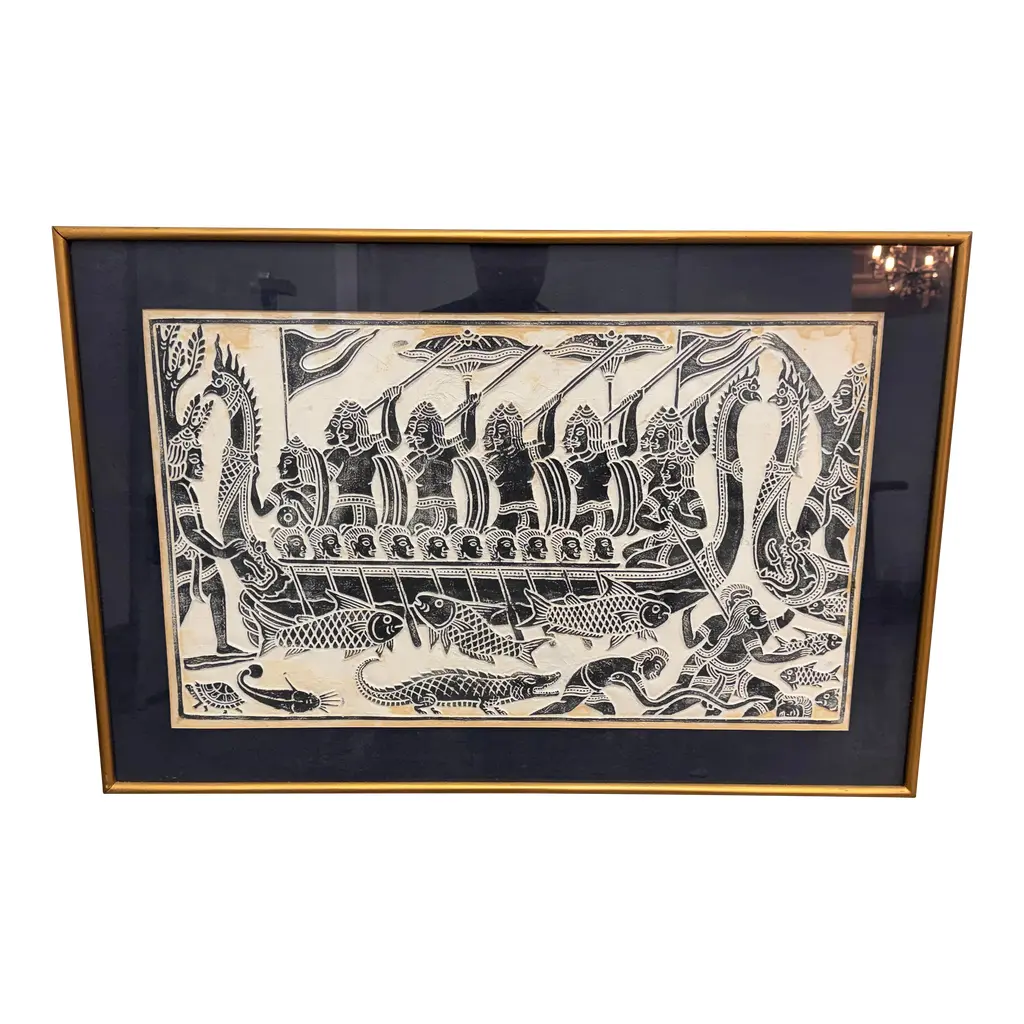
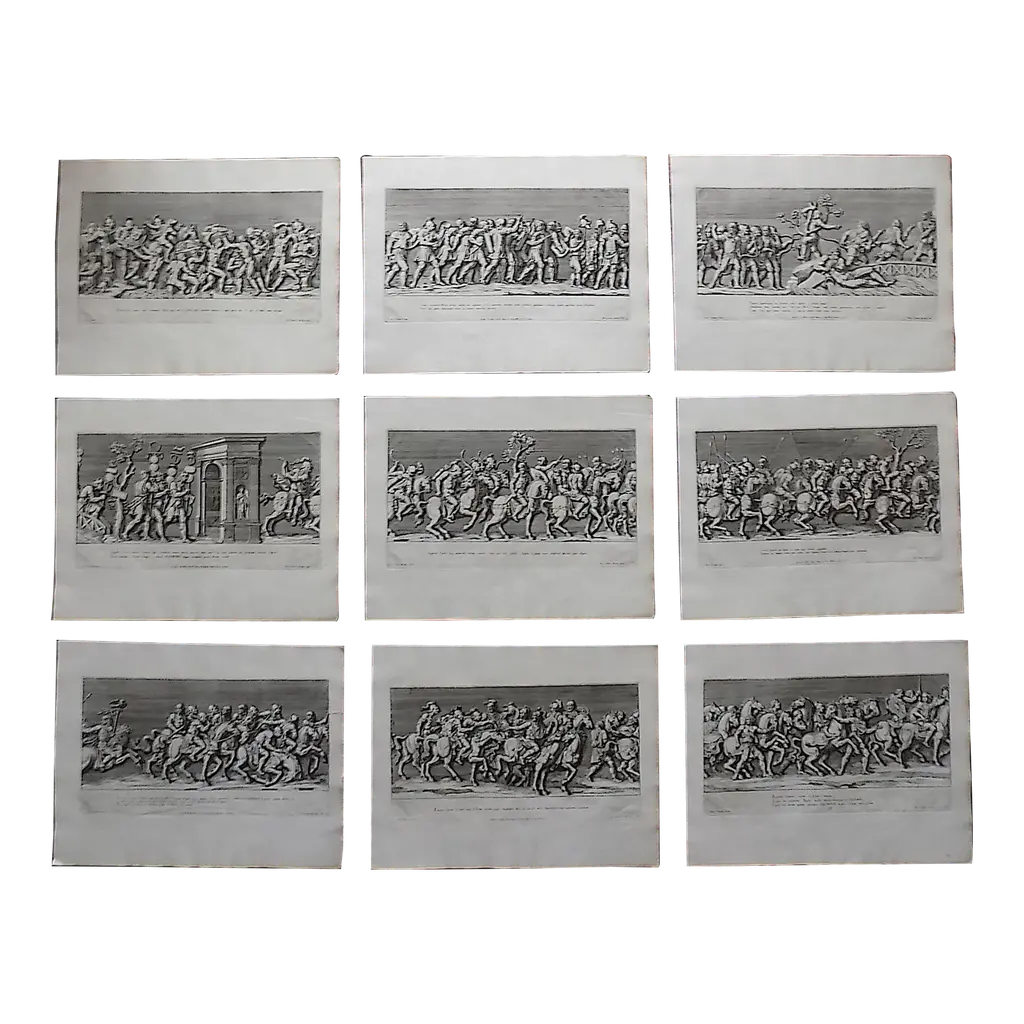
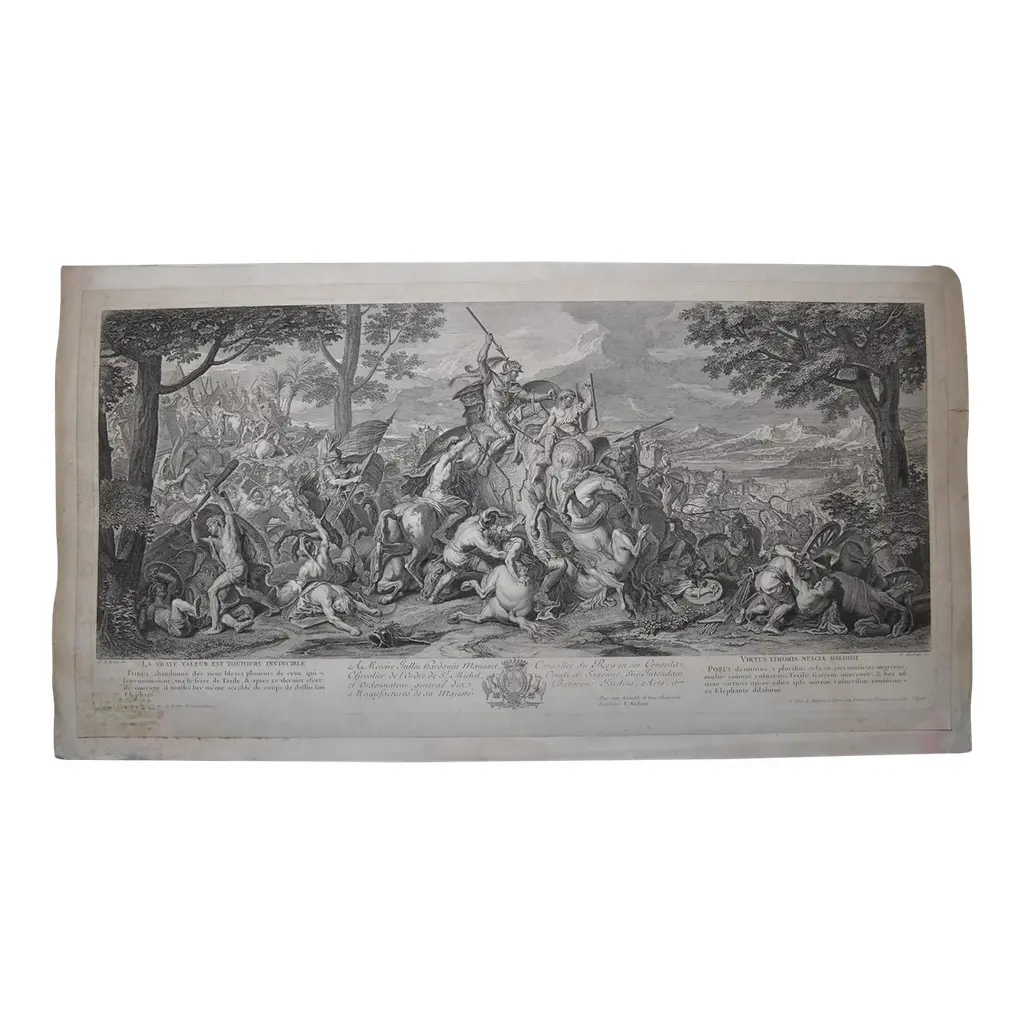
This piece is a striking graphite rubbing on rice paper depicting a royal procession from Angkor Wat, Cambodia’s 12th‑century temple complex. The composition captures the grandeur of Khmer civilization; a rhythmic parade of warriors, horsemen, and attendants surrounding a central elephant bearing noble figures beneath ceremonial parasols. The black‑and‑white palette emphasizes the sculptural origins of the image, translating the bas‑relief’s carved depth into a two‑dimensional graphic rhythm. Each figure is stylized yet dynamic, their gestures echoing the disciplined choreography of temple carvings. The trees, rendered with intricate leaf patterns, frame the scene like a sacred canopy, balancing the martial energy below. Such rubbings were traditionally made by pressing thin paper against temple reliefs and applying graphite or ink to reveal the carved contours; a technique that preserves ancient artistry while transforming it into a collectible work on paper. This example evokes both archaeological documentation and fine art, bridging history and modern appreciation.
Similar products