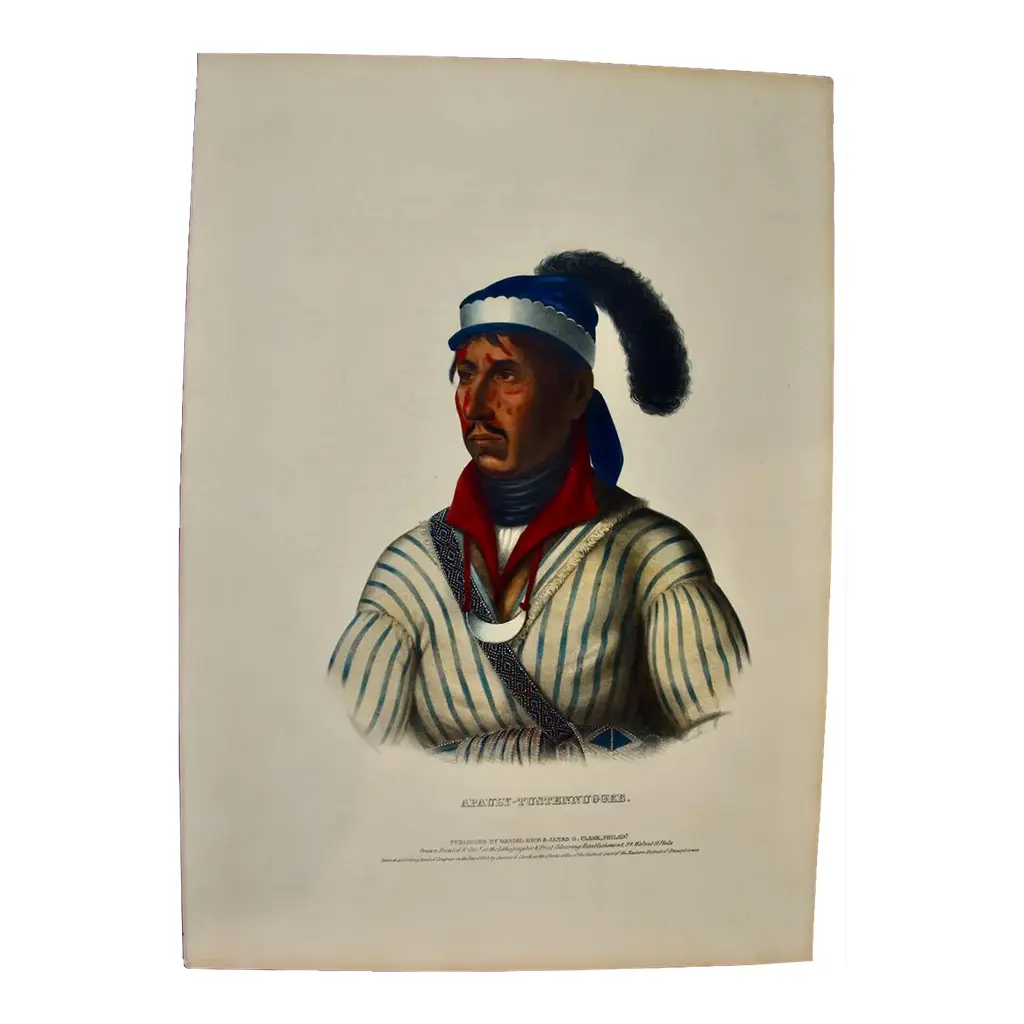
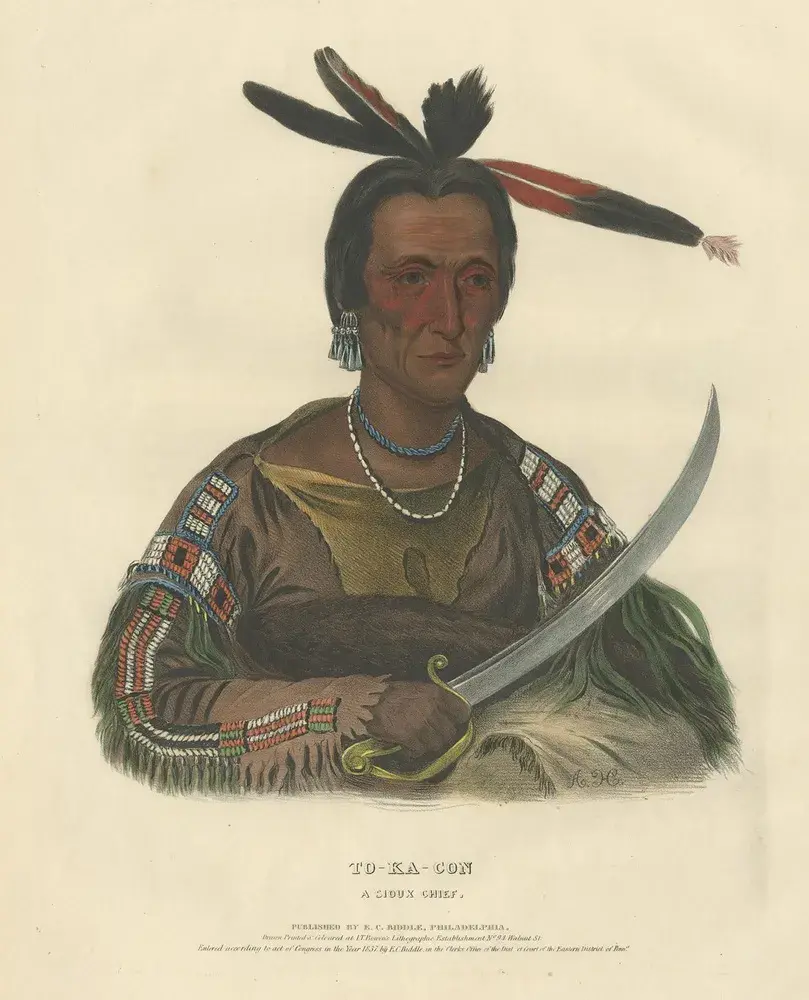
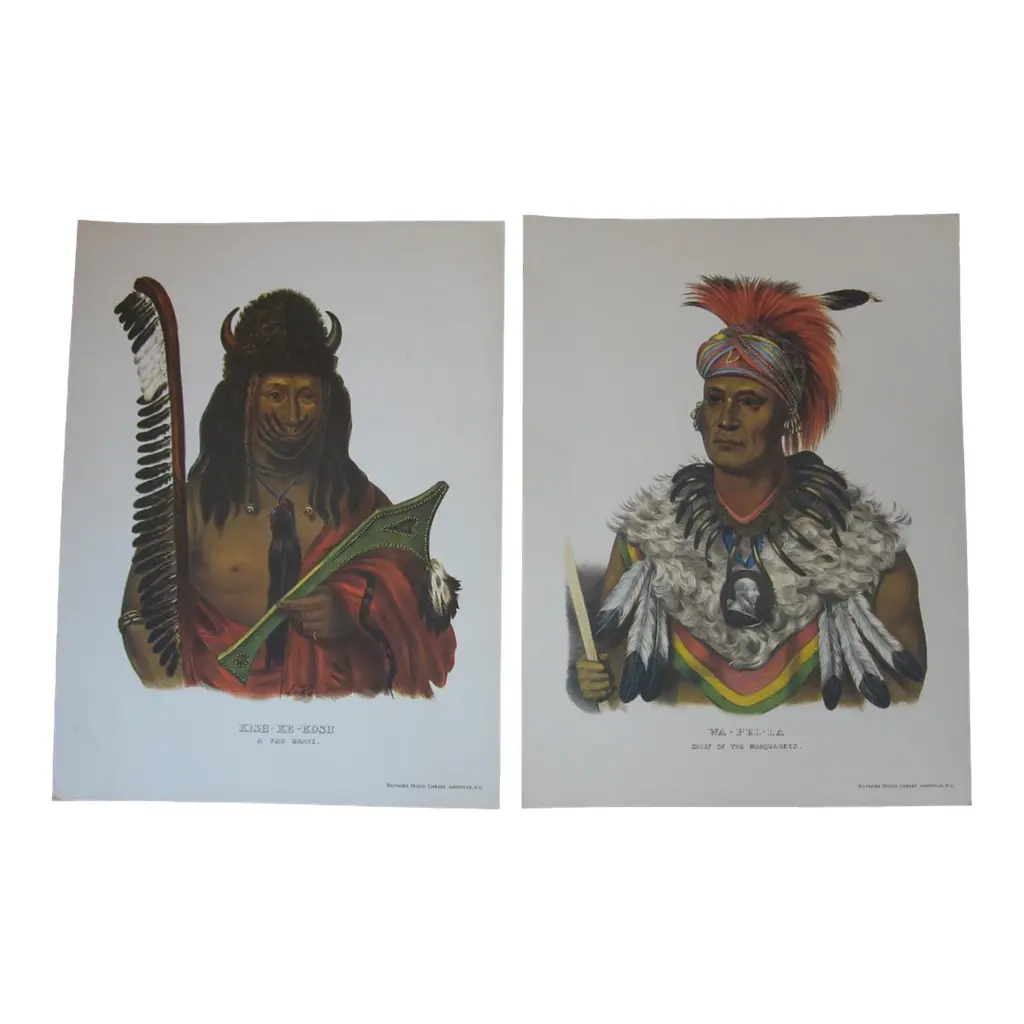
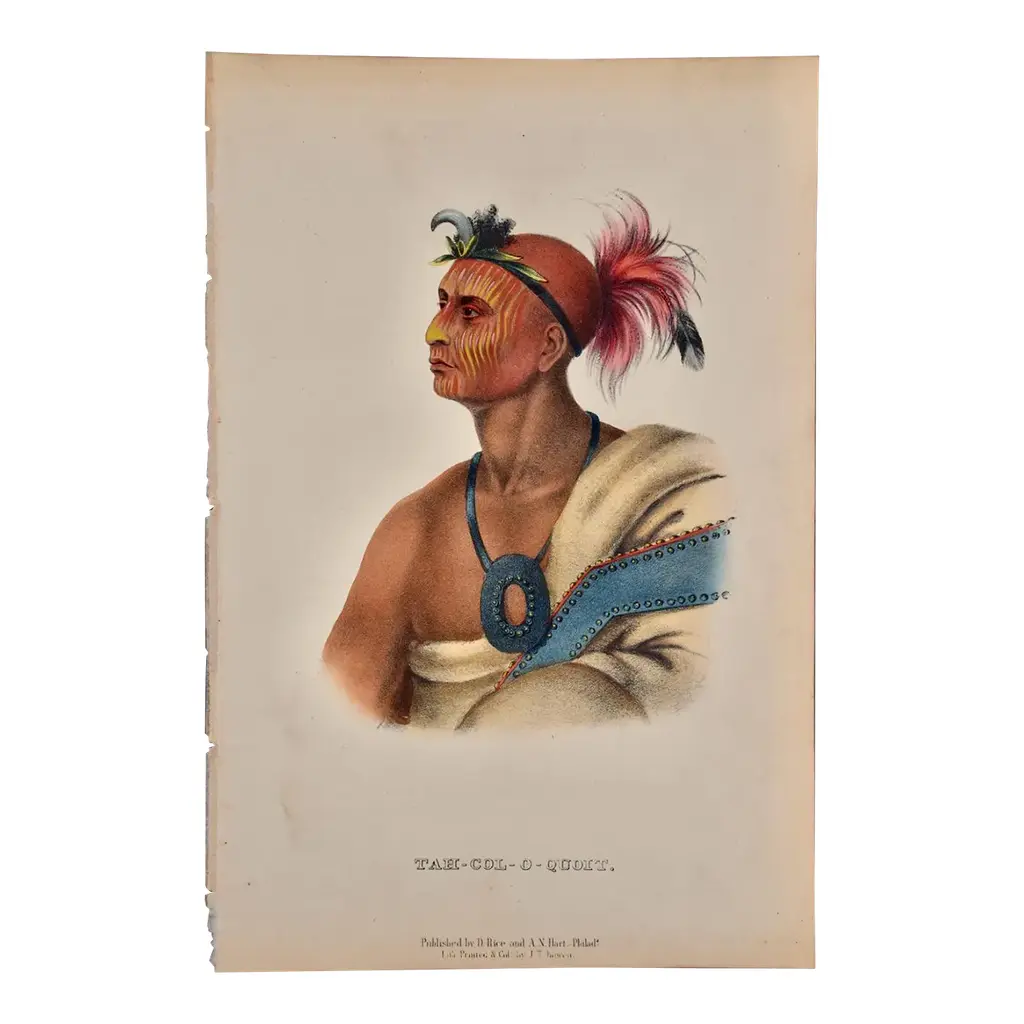
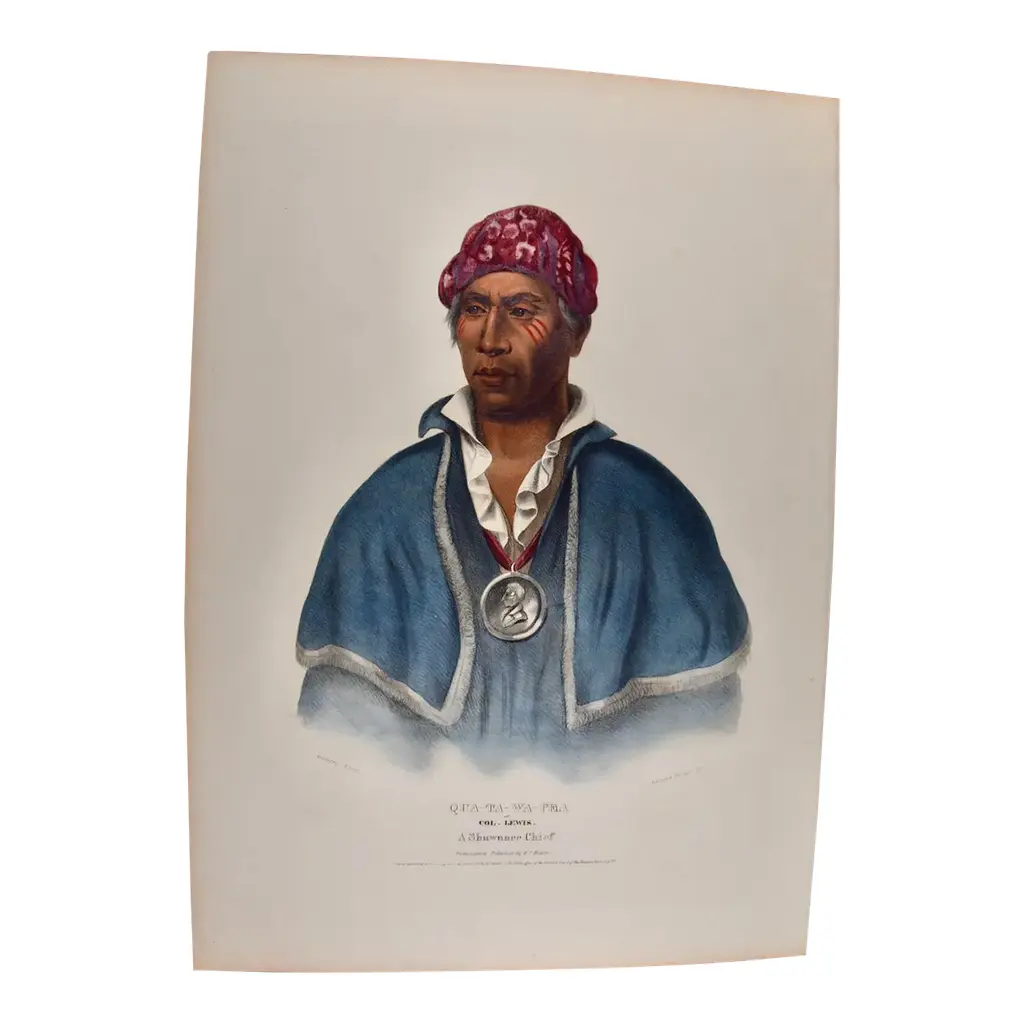
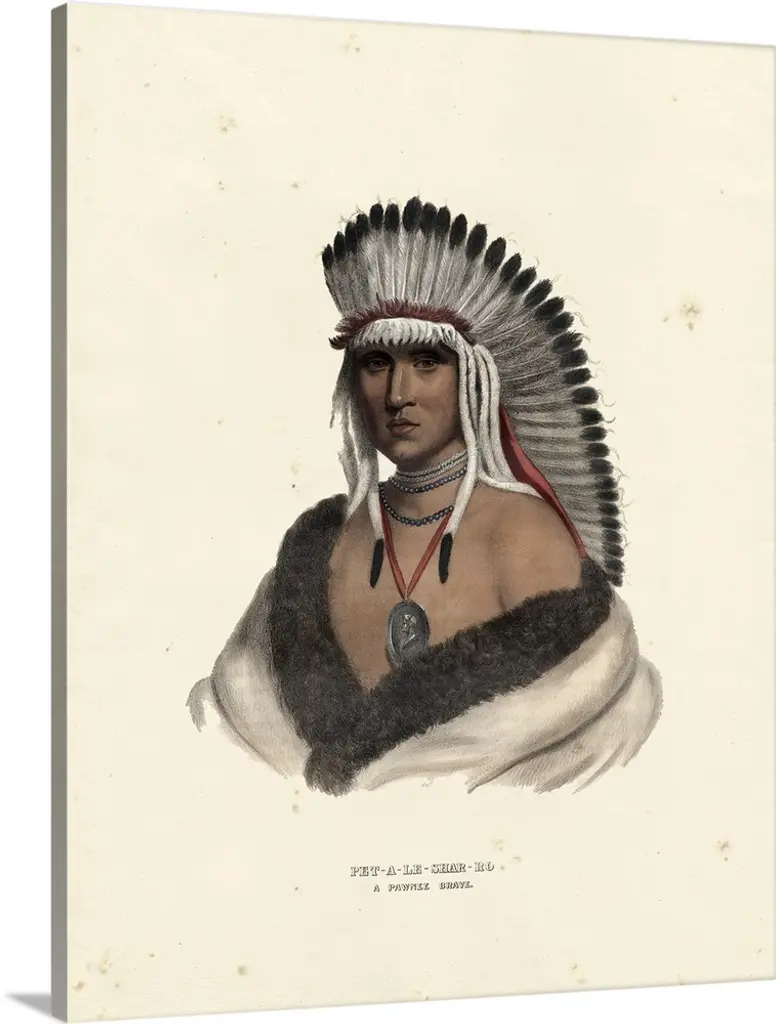
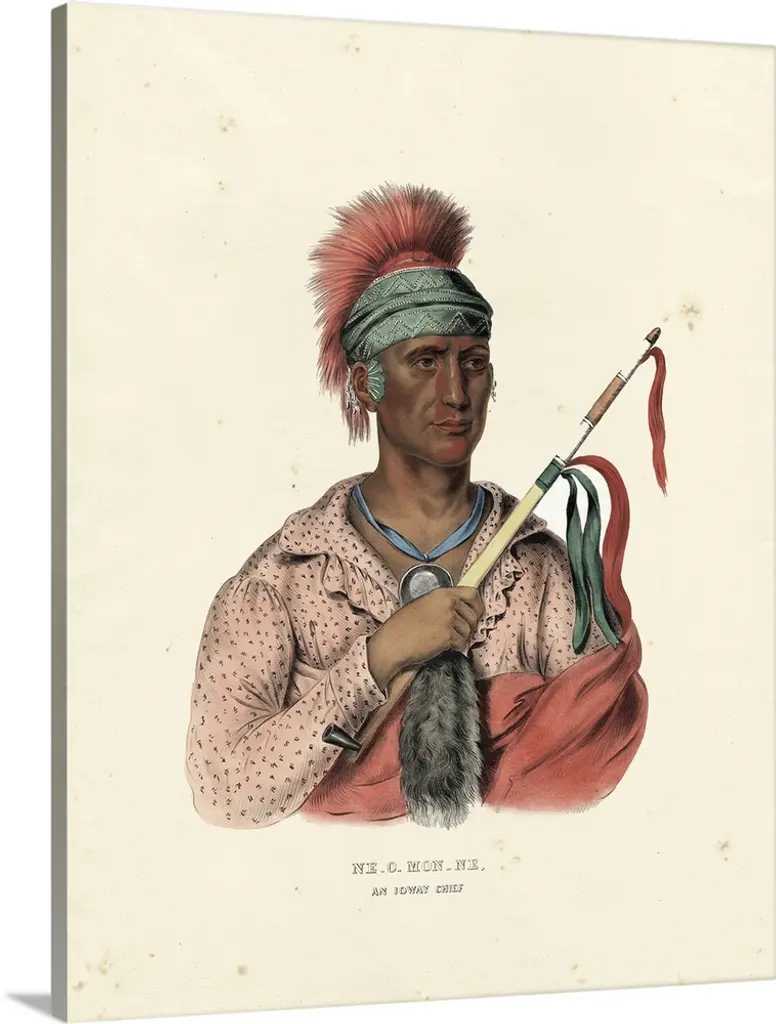
Chono Ca Pe, is the remarkably handsome man looking back at us across some 200 years, expressing a certain wariness of the white man painting him. Also known as Big Kansas, the sitter was an Ottoe chief who visited Washington D.C. in 1821 with a delegation of Upper Missouri tribal leaders. "Chono Ca Pe, An Ottoe Chief," is a significant piece from the renowned "History of the Indian Tribes of North America" a landmark work in American culture. It remains a crucial contemporary record of Native American leaders from that era published in three volumes between 1836 and 1844 by Thomas L. McKenney (1785-1859) and James Hall (1793-1868). McKenney had served as the Superintendent of Indian Trade from 1816 to 1830 and later became the first director of the Office of Indian Affairs. Witnessing the impact of westward expansion and policies like the Indian Removal Act, McKenney sought to preserve a record of Native American leaders and their cultures, believing them to be threatened. He commissioned artists, primarily Charles Bird King, to paint portraits of the Native American delegates during their Washington D.C. visit, forming the basis for the "Indian Gallery" at the War Department. The project’s author, James Hall, was responsible for writing the biographical sketches and anecdotes accompanying the portraits. He was a lawyer, judge, and writer known for his works on the American West. The original portraits, including that of Chono Ca Pe, were later copied by Henry Inman and then transformed into lithographs by firms like Lehman & Duval, as seen in this example. Tragically, only the hand-colored lithographs like this are said to remain. The original paintings were lost in an 1865 fire at the Smithsonian Institution, making the McKenney and Hall lithographs invaluable as they often represent the only surviving visual records of these significant historical figures.
Similar products