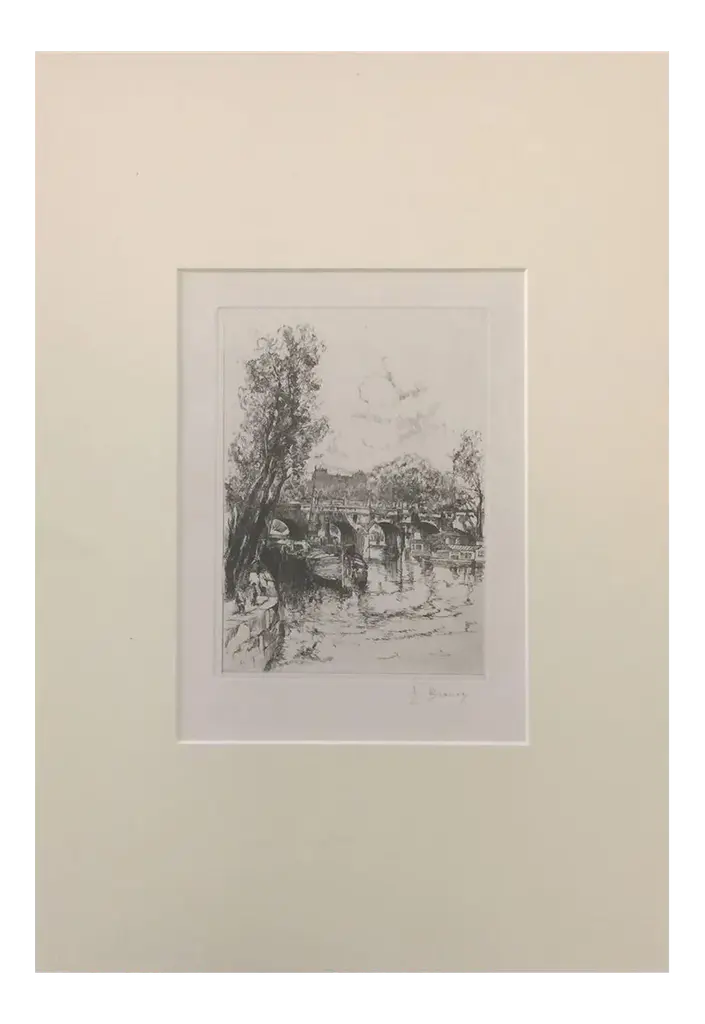
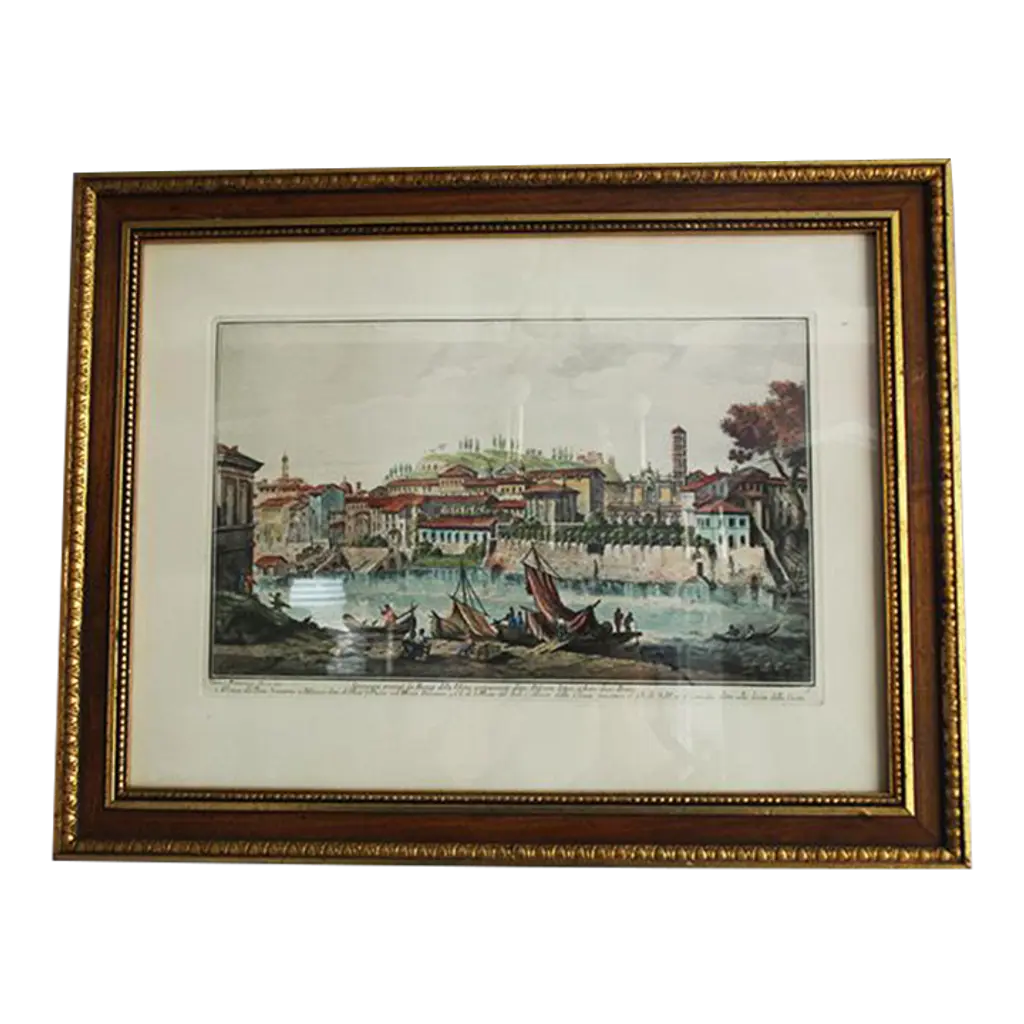
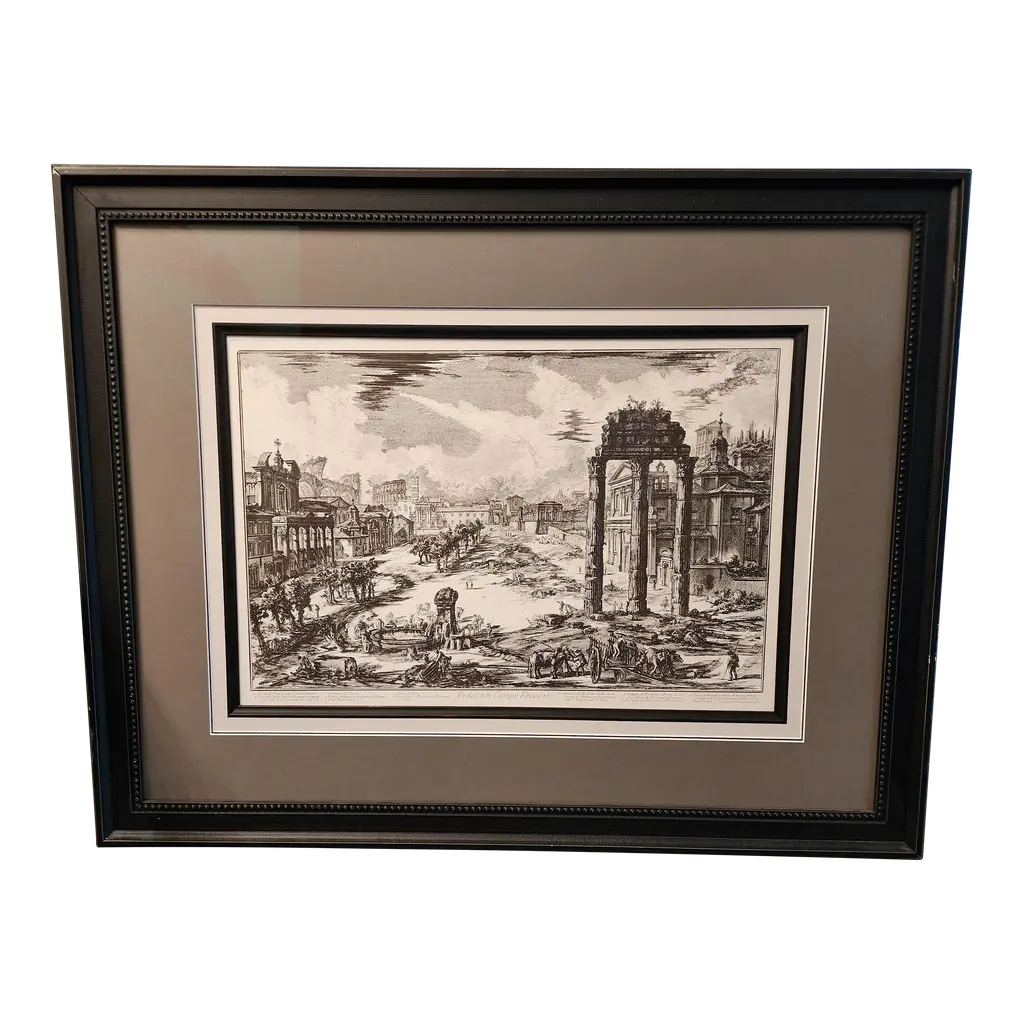
This finely executed circa 1800 Italian veduta etching depicts the Ponte alla Carraia in Florence and belongs to the celebrated tradition of late 18th–early 19th century topographical printmaking. The plate was engraved by Matteo Carboni, after an original composition by Giuseppe Zocchi, whose Vedute di Firenze series remains one of the most important visual records of Florence in the 18th century. Carboni was active in the late 18th and early 19th centuries and is known for translating Zocchi’s architectural drawings into crisply detailed engravings that retain both accuracy and atmosphere. This impression is from the Vedute di Firenze series, issued in editions by the Bardi family around circa 1790–1800, and later reissued by Molini in 1818. The composition presents the Ponte alla Carraia not as a grand monument, but as a working part of the city — framed by riverside architecture and animated by small figures that provide scale and quiet narrative life. The etching demonstrates the hallmarks of the veduta tradition: controlled linework, careful perspective, and a balanced interplay between architectural structure and daily activity. Captions appear in both Italian and French, reflecting the international market for Florentine views at the turn of the 19th century. Carboni’s credit is visible in the lower margin, consistent with period practice. Today, the print reads as both historical document and refined decorative work, appealing equally to collectors of European prints and designers seeking classical architectural imagery with restraint and authenticity. Details Artist (after): Giuseppe Zocchi (1711–1767) Engraver: Matteo Carboni Series: Vedute di Firenze Date: Circa 1790–1800 (later reissued 1818) Medium: Etching on paper Origin: Italy Subject: Ponte alla Carraia, Florence Language: Italian and French captions Plate size: Approx. 11" × 7" (28 × 18 cm) Framed size: Approx. 17.5" wide × 14.5" tall Condition: Good antique condition with age-appropriate toning and wear; plate mark visible. A strong example of Florentine veduta printmaking, valued for its architectural precision, historical provenance, and connection to the Zocchi tradition.
Similar products