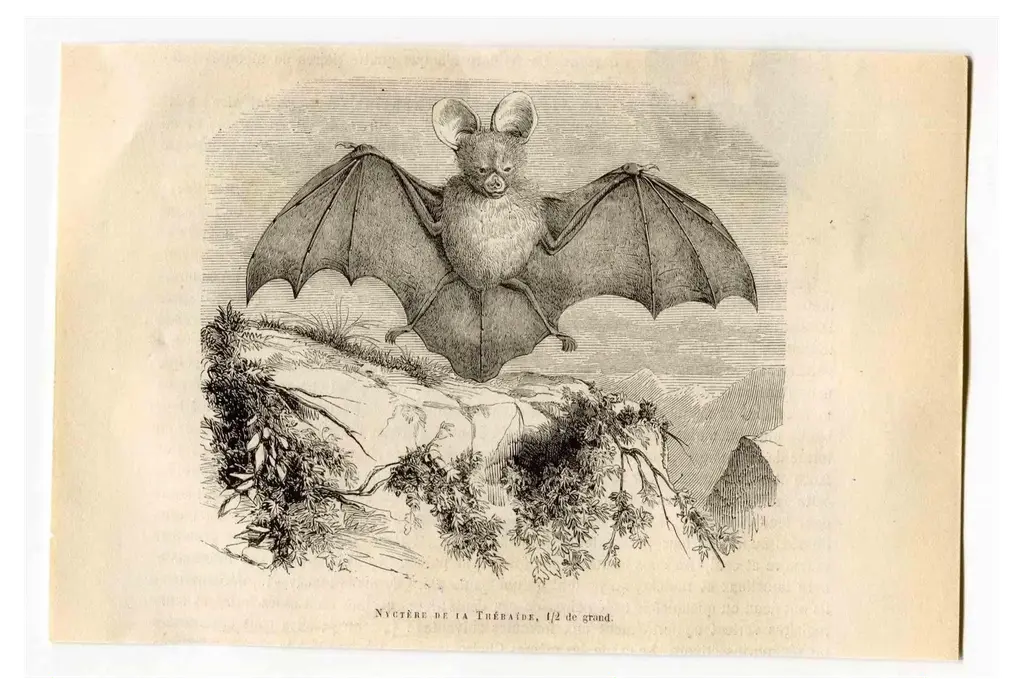
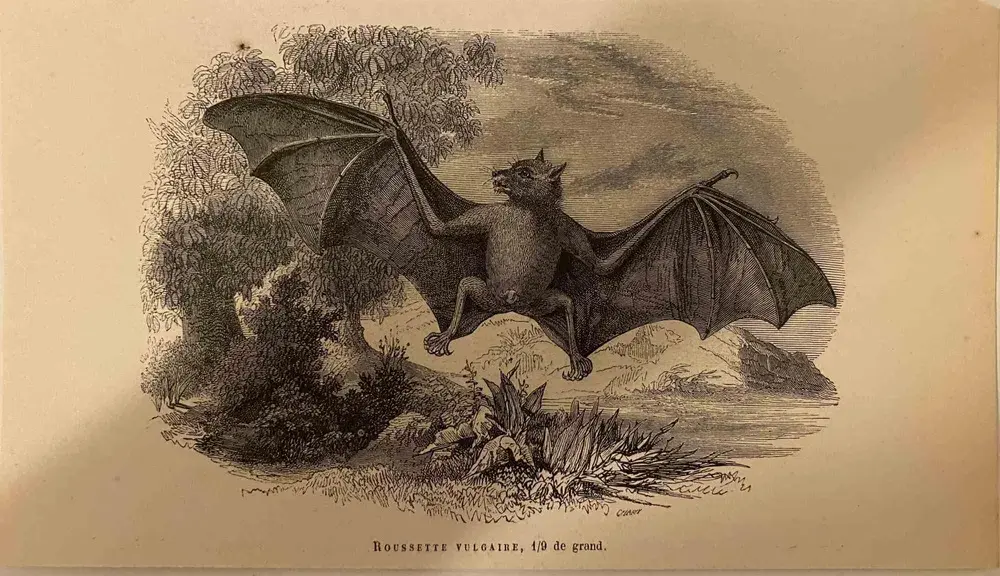
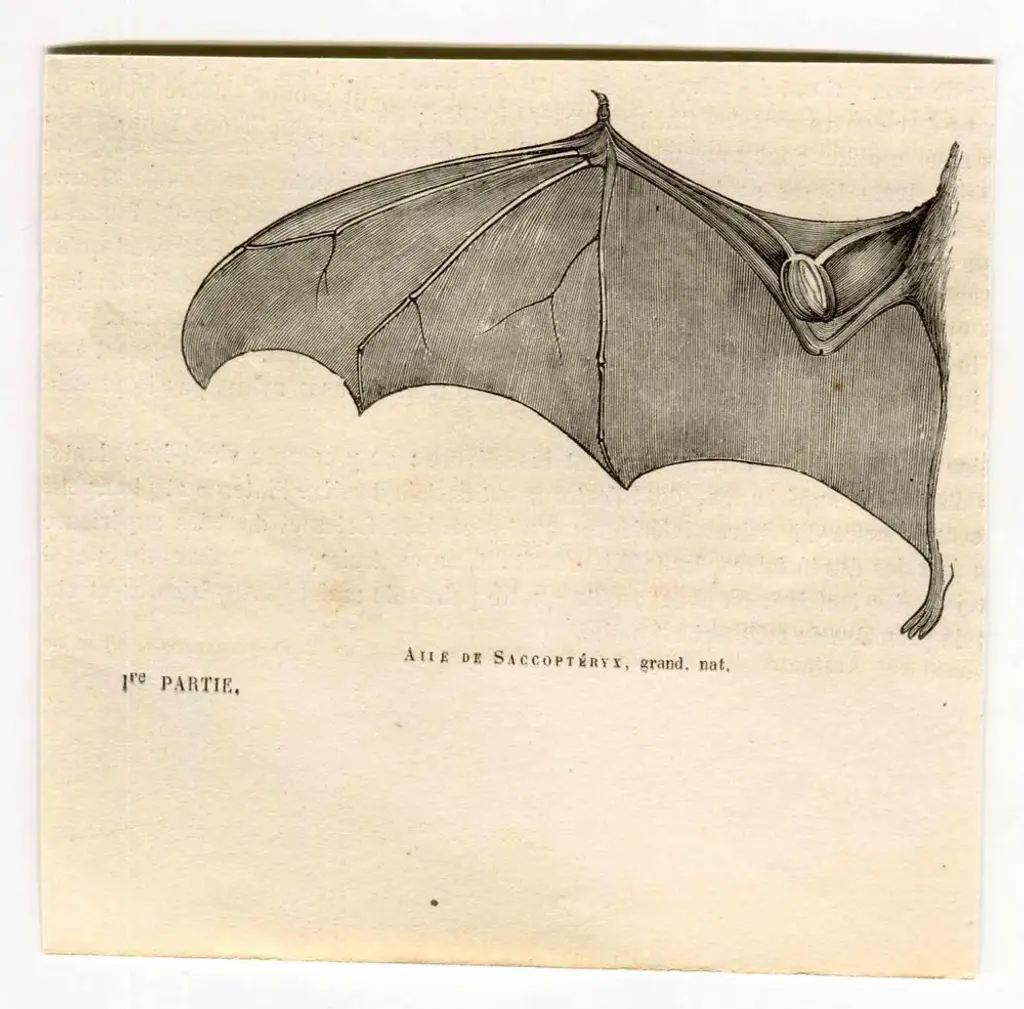
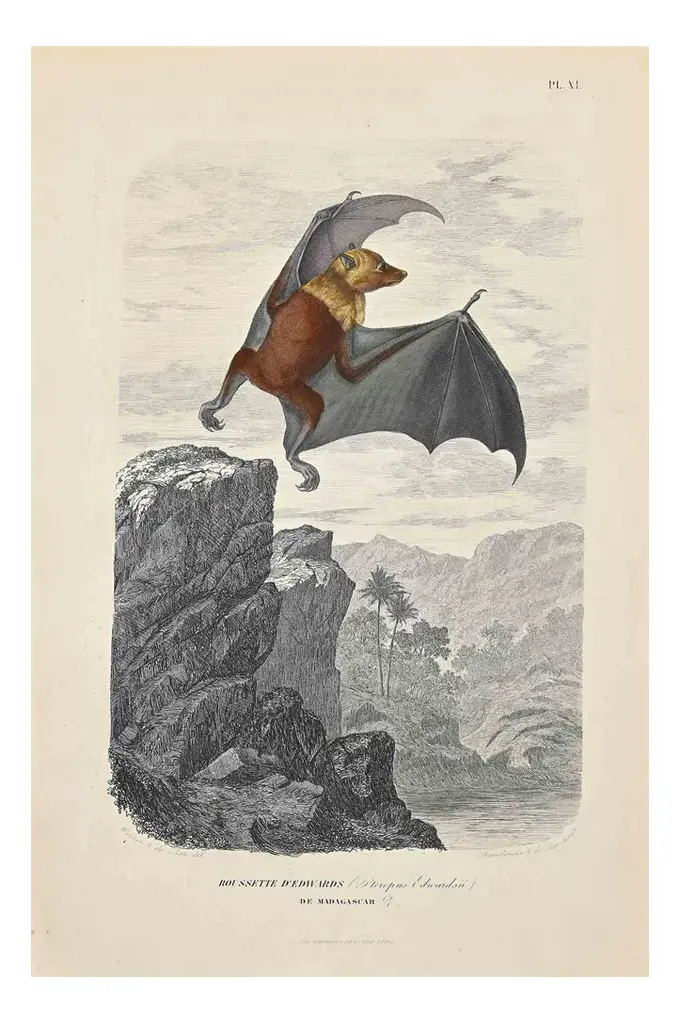
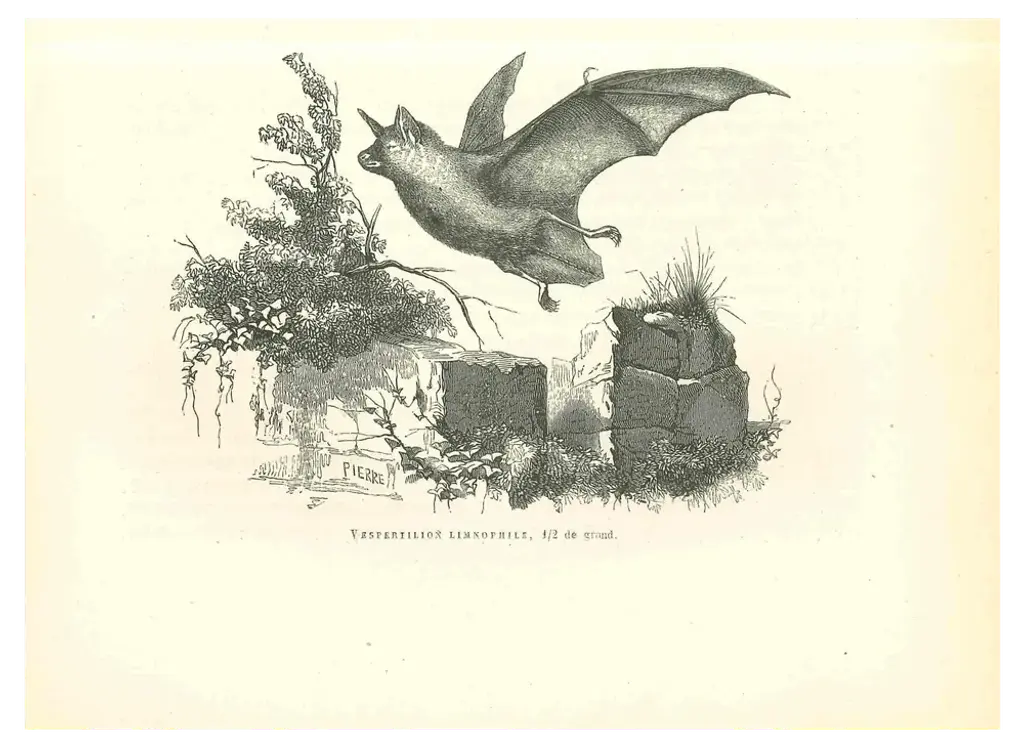
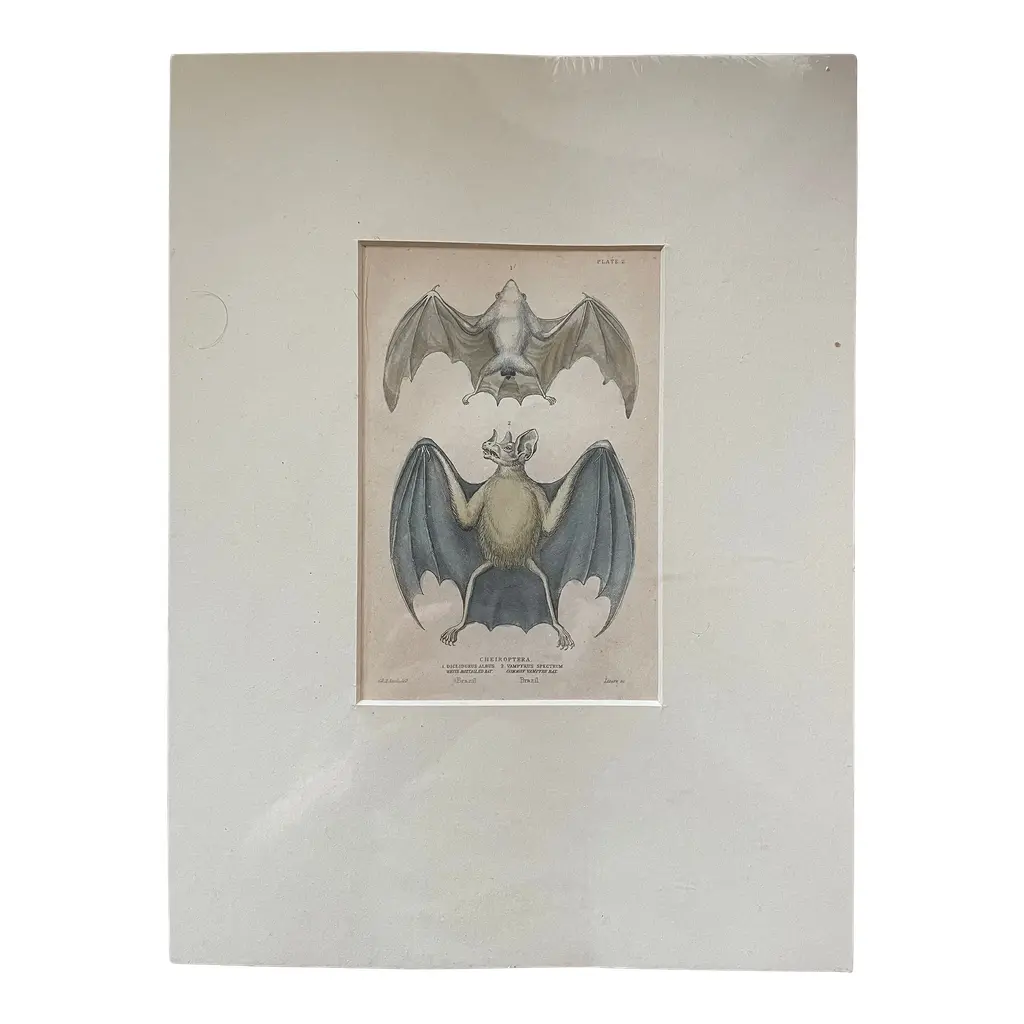
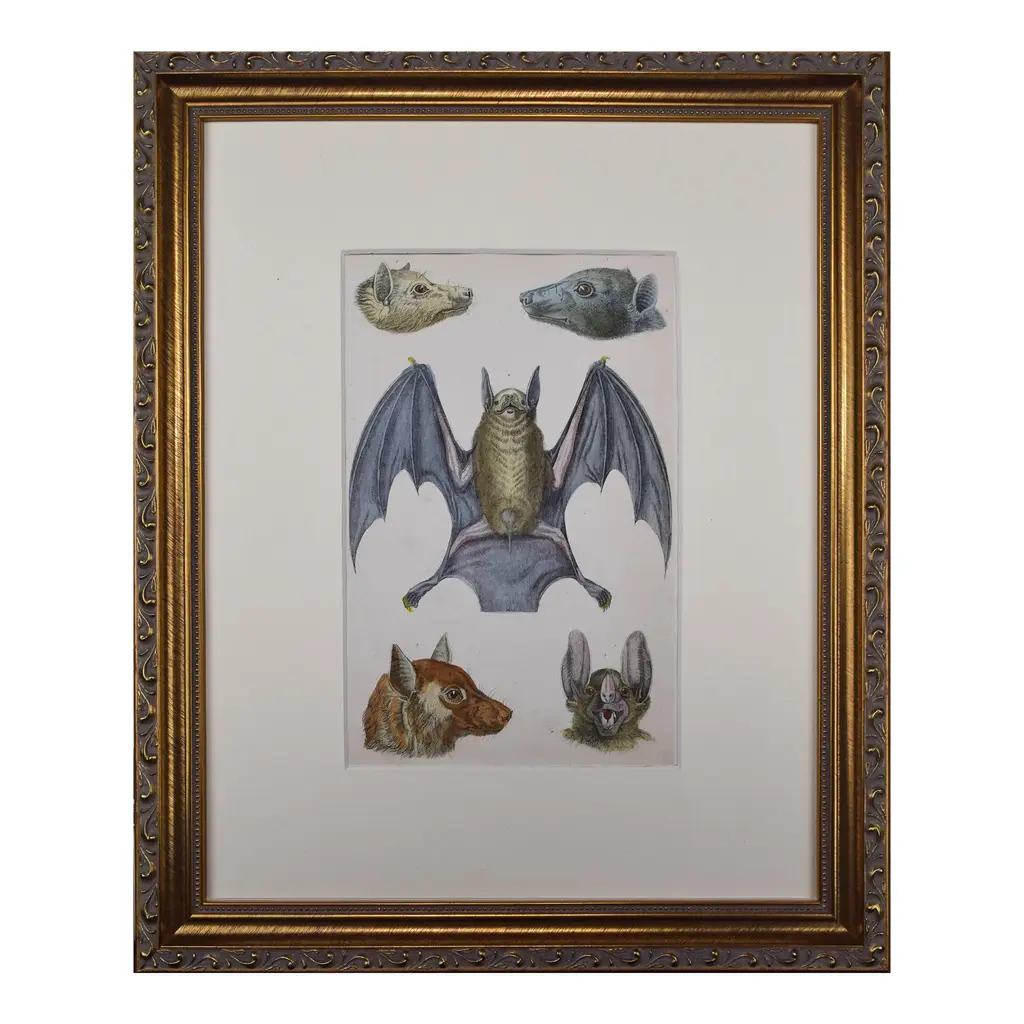
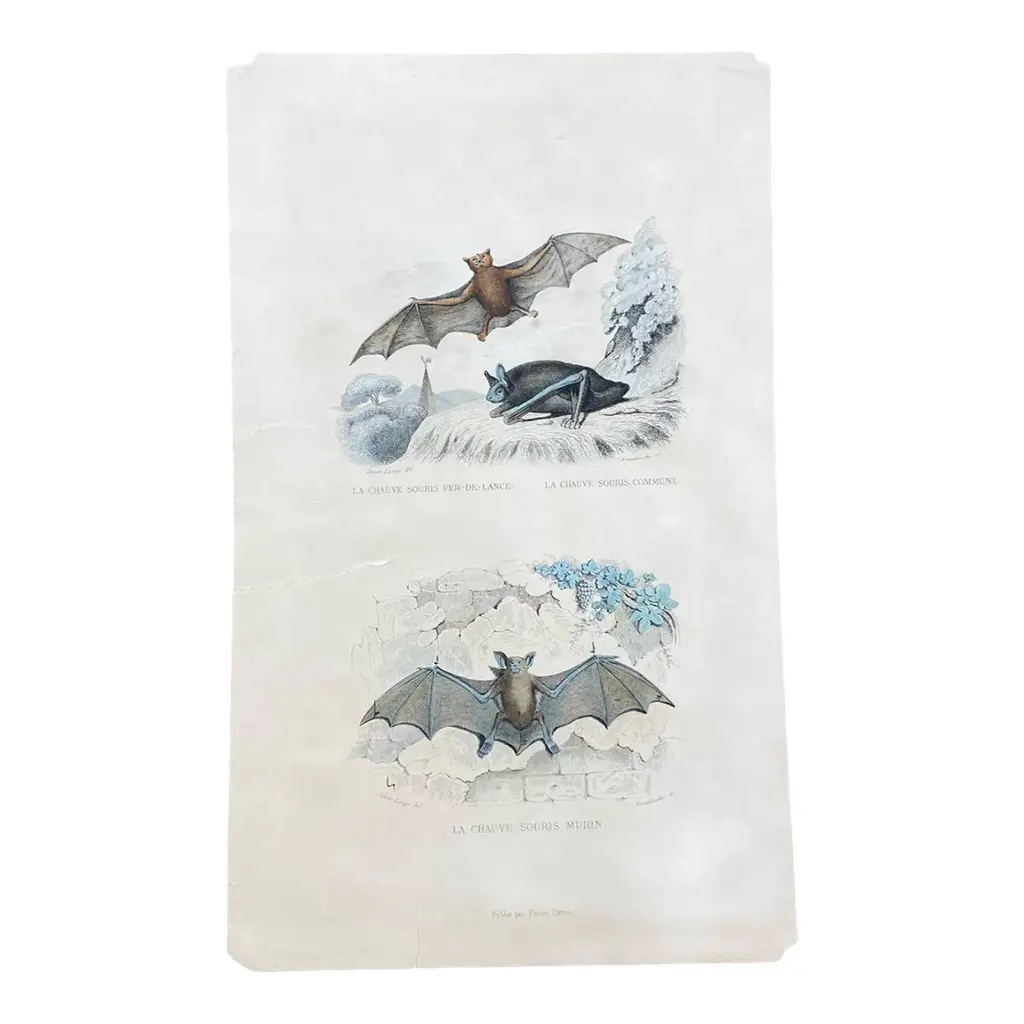
The series of lithographs depicting bats ("Vledermuizen") by Cornelis Christiaan Antonie Last were published as part of a larger zoological work titled "De Zoogdieren: afgebeeld en in hunne levenswijze geschetst" (Mammals: Illustrated and Described in Their Habits), published by S. de Visser in the mid-19th century. This work aimed to provide an illustrated account of mammals, combining detailed lithographic plates with s of the animals' behaviors and habitats. The publication reflects the 19th-century drive to document natural history comprehensively, making scientific knowledge more accessible through art. Last's precise lithographs complemented the textual content, giving readers both a visual and scholarly understanding of each species. The three prints you provided depict detailed lithographs of various bat species, labeled "Vledermuizen" (bats) in Dutch. These prints were created by the Dutch artist Cornelis Christiaan Antonie Last (1808–1876), a highly skilled draughtsman and lithographer known for his precise and scientifically valuable works. Each of the bats is rendered with remarkable attention to anatomical detail, showcasing the artist's ability to capture both the form and texture of these creatures with accuracy. The lithographs are examples of "steendruk," or lithography, a printing technique that was gaining popularity in the 19th century. Lithography allowed for highly detailed images to be reproduced more efficiently than previous methods like engraving. The publication of these prints by S. de Visser, a prominent publisher based in the Netherlands, signifies their importance within natural history publications of the time.
Similar products