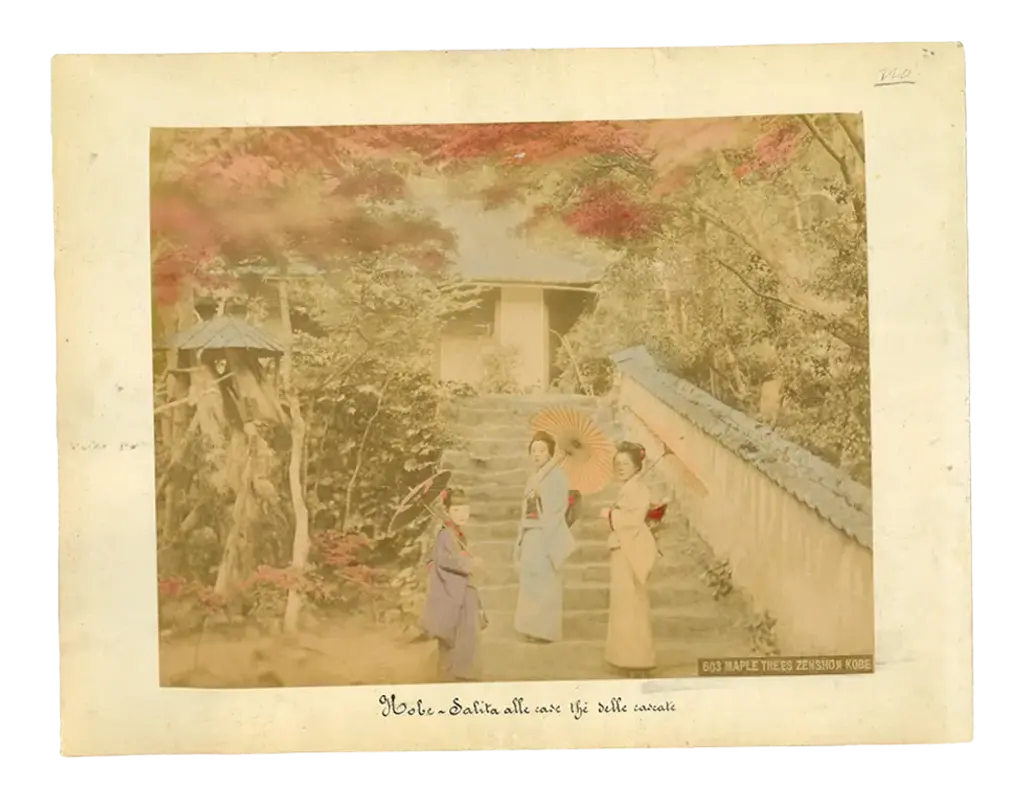
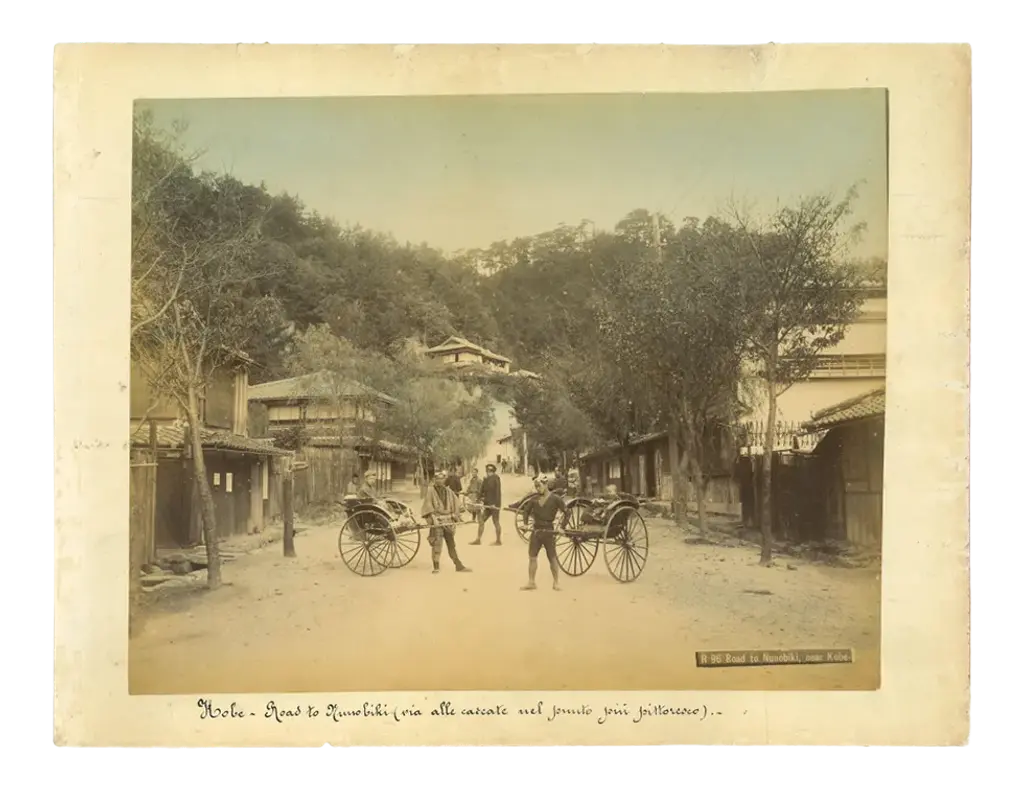
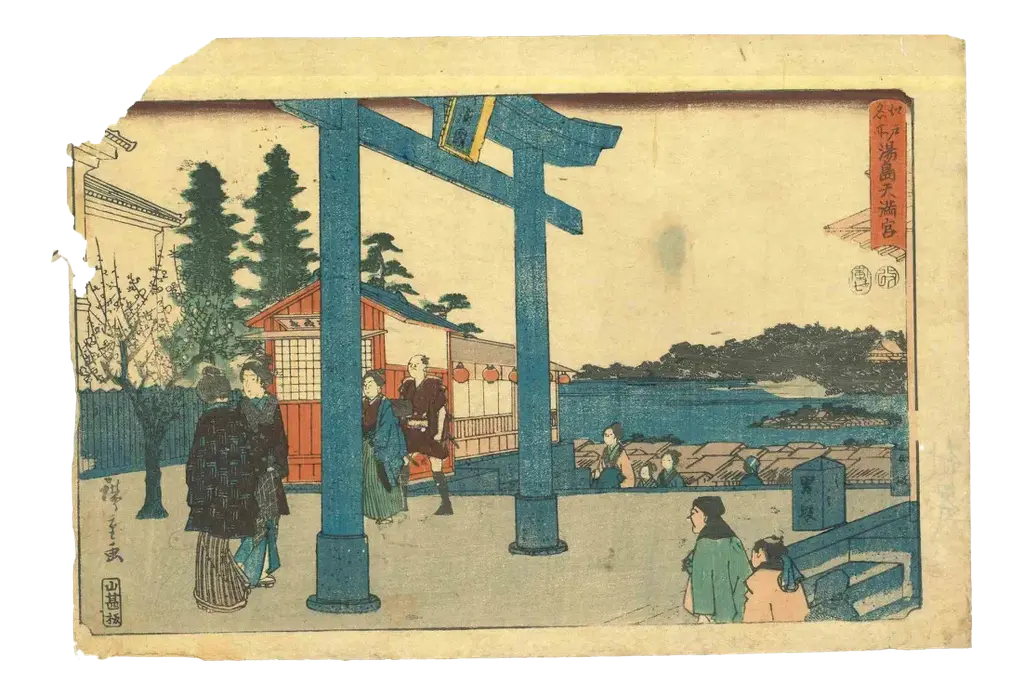
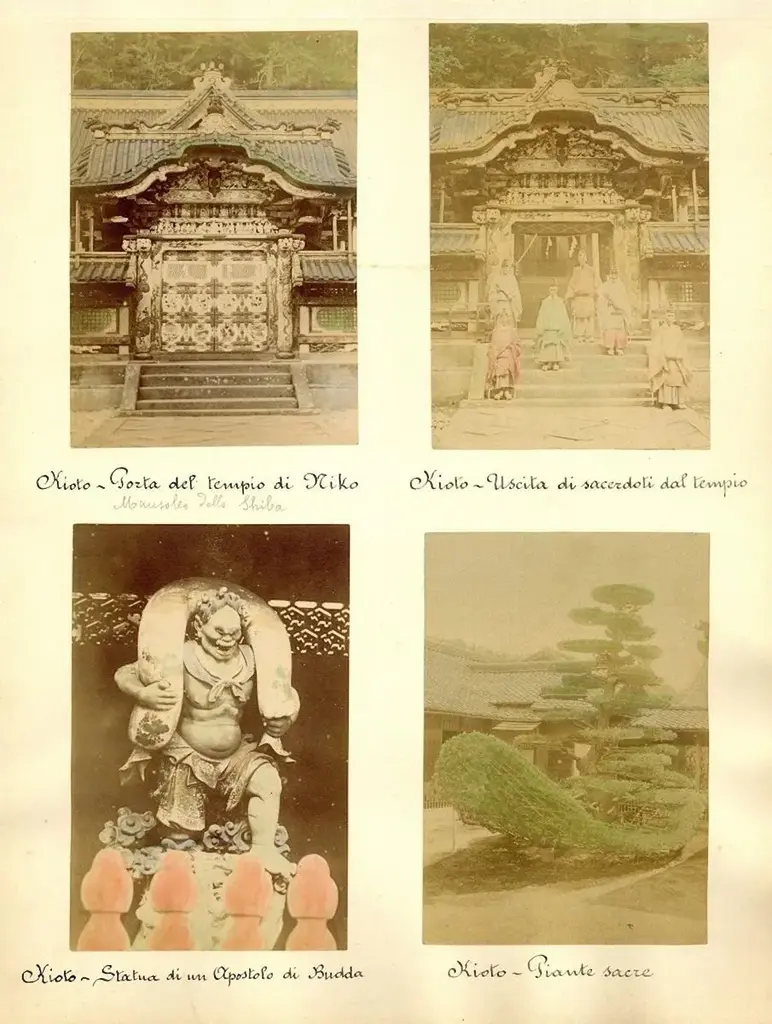
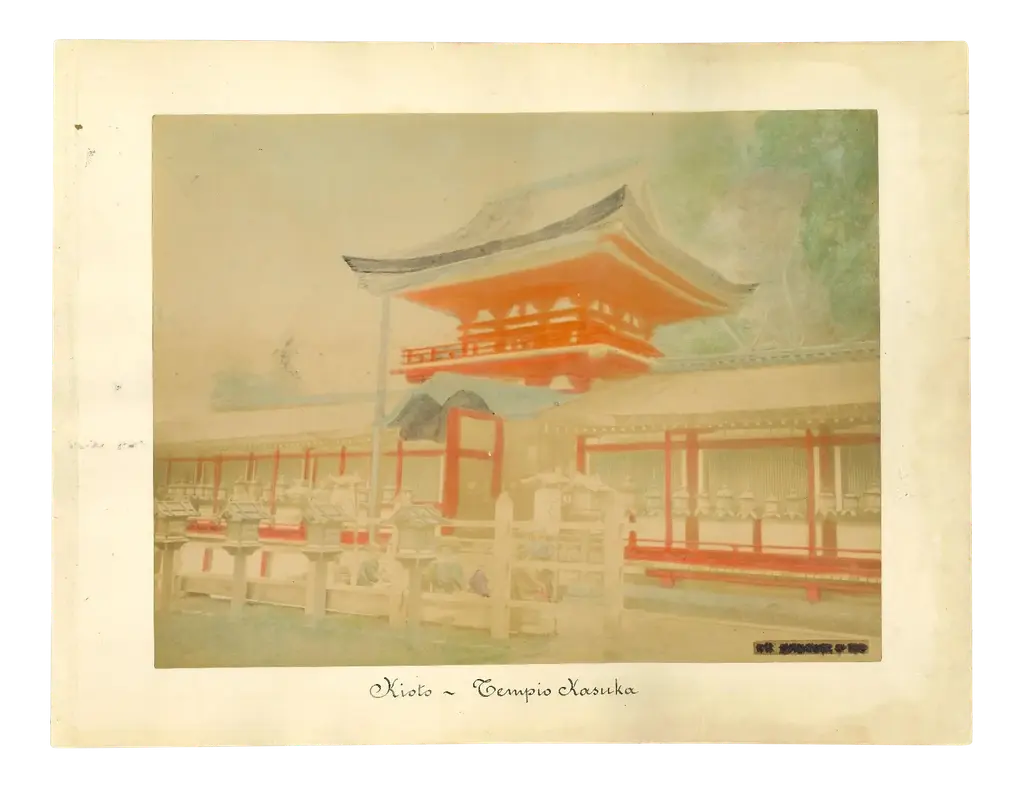
Daily Life in Seto Island is a lot of four hand-inked Albumen print with aniline applied on a single cardboard. Very good conditions. Cardboard cm 26 x 34; Print cm 9 x 13.5 Yokohama School print (Yokohama Shashin), realized during the Meiji dinasty (1868-1912). From a collection printed in the Shin-E-Do studio, as evidenced by the ink stamp on some copies. These prints does not show visible stamps on the front. On the lower margin of the prints some hand-written captions in black ink Italian on the cardboard. In the lot, four scenes of daily life of the Seto sea region. In the photographs, the view of a garden, two peasant women posing, a view along the sea and a glimpse of a tea house built on the water and reachable with a small rowing boat This particular typology of prints was born in Yokoama around 1860 by the Italian photographers Felice Beato and Raimund Von Stillfried , who, for the first time, experimented the production of hand-colored albumen by means of aniline colors in Japan. During the Meiji period, the Yokohama school produced prints for foreign customers, who, at the same time, sought both an image linked to an ''exotic'' aesthetic of uses, customs and landscapes, and a high quality product, the result by the famous Japanese craftsmanship. These photographs, made with a sublime technique for both printing and coloring, achieved enormous success so that the production, as a typology, remained unchanged for almost forty years, in which some ateliers acquired the reproduction rights of others, thus making very difficult the exact attribution. The extreme documentary value prints concerning the Japanese culture still today hand down us the last true images of the feudal culture which ended during the Meiji dynasty.
More options
For up-to-date info on options, pricing, and availability, please visit the retailer.
Visit siteSimilar products