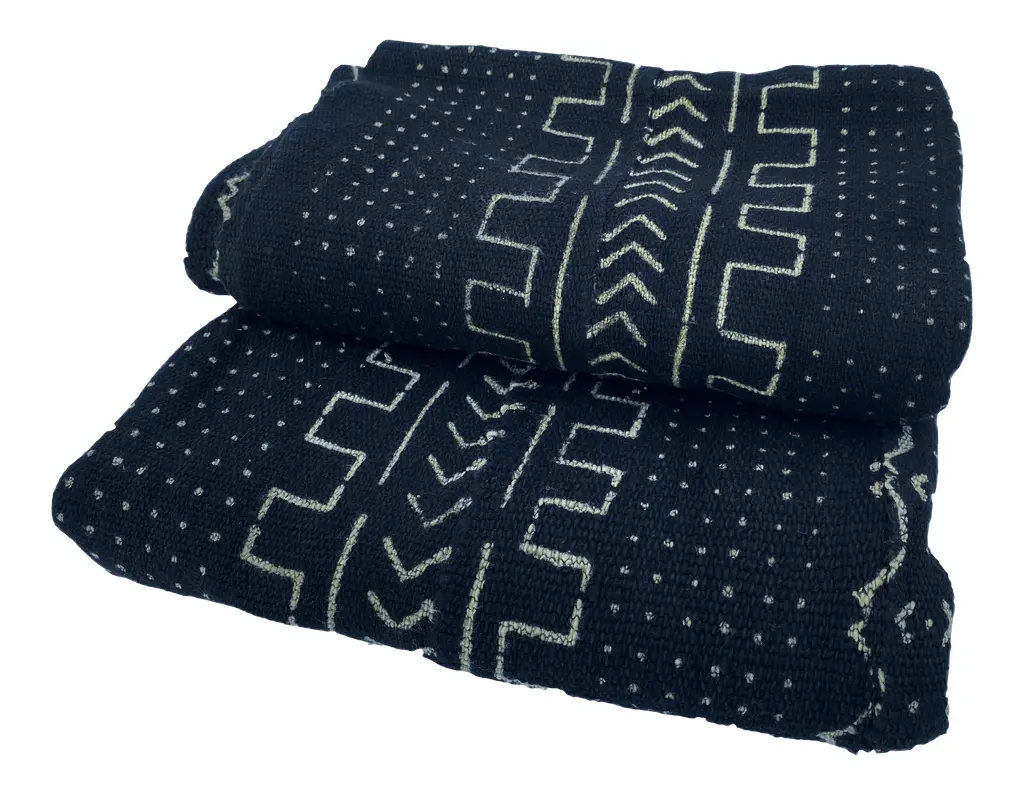
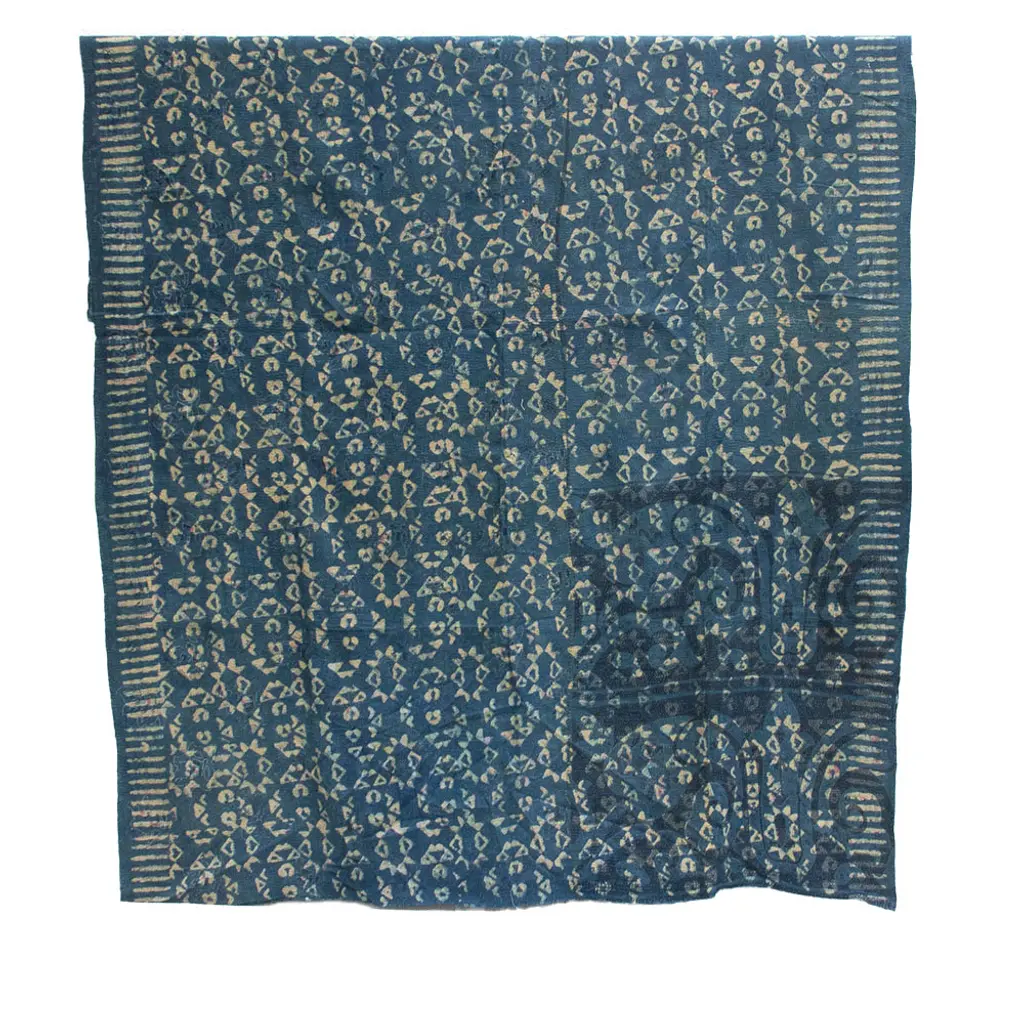
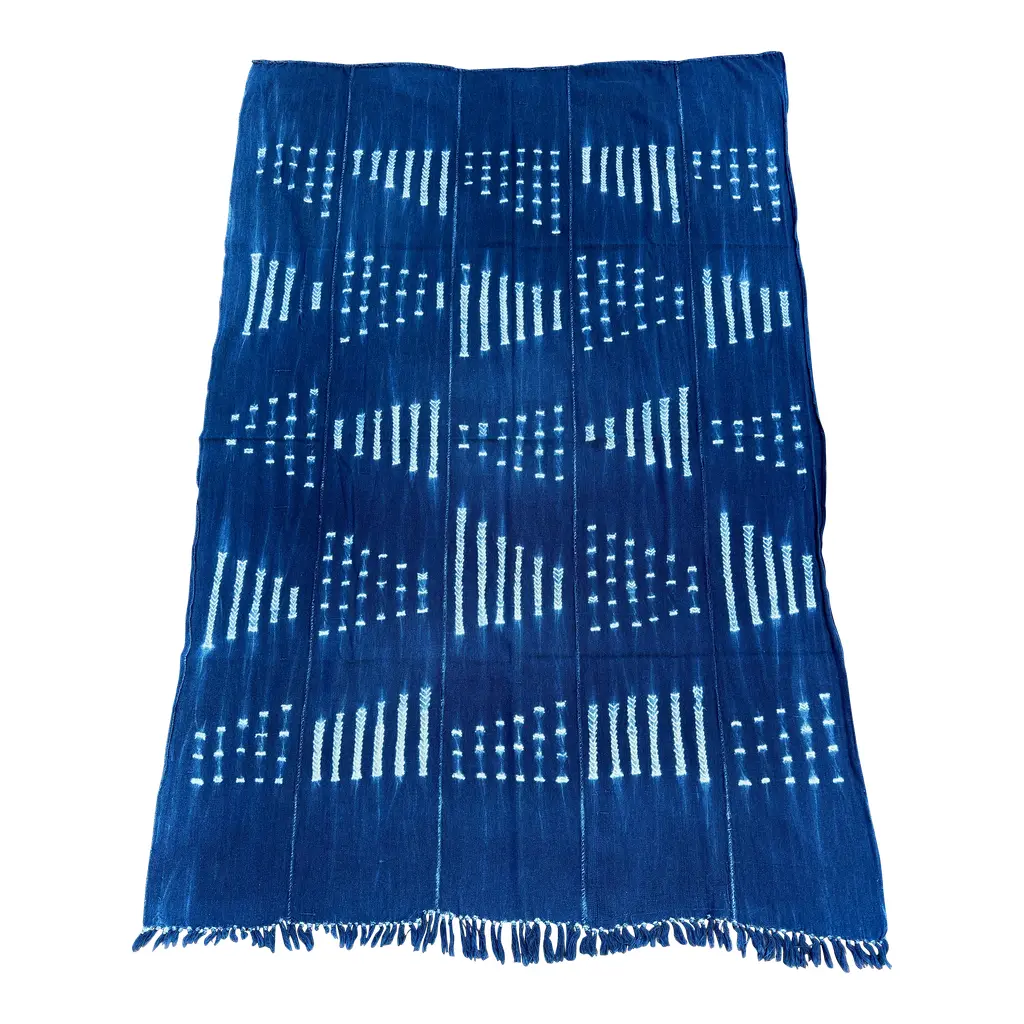
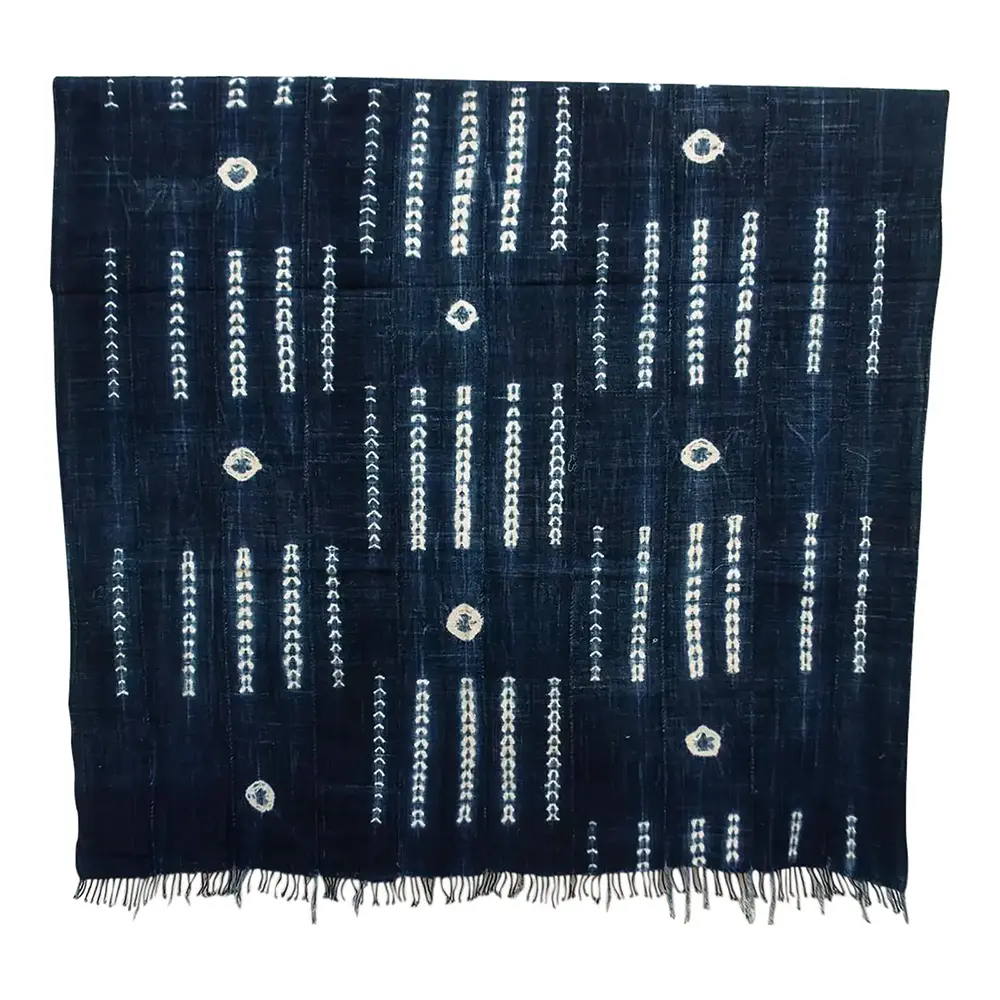
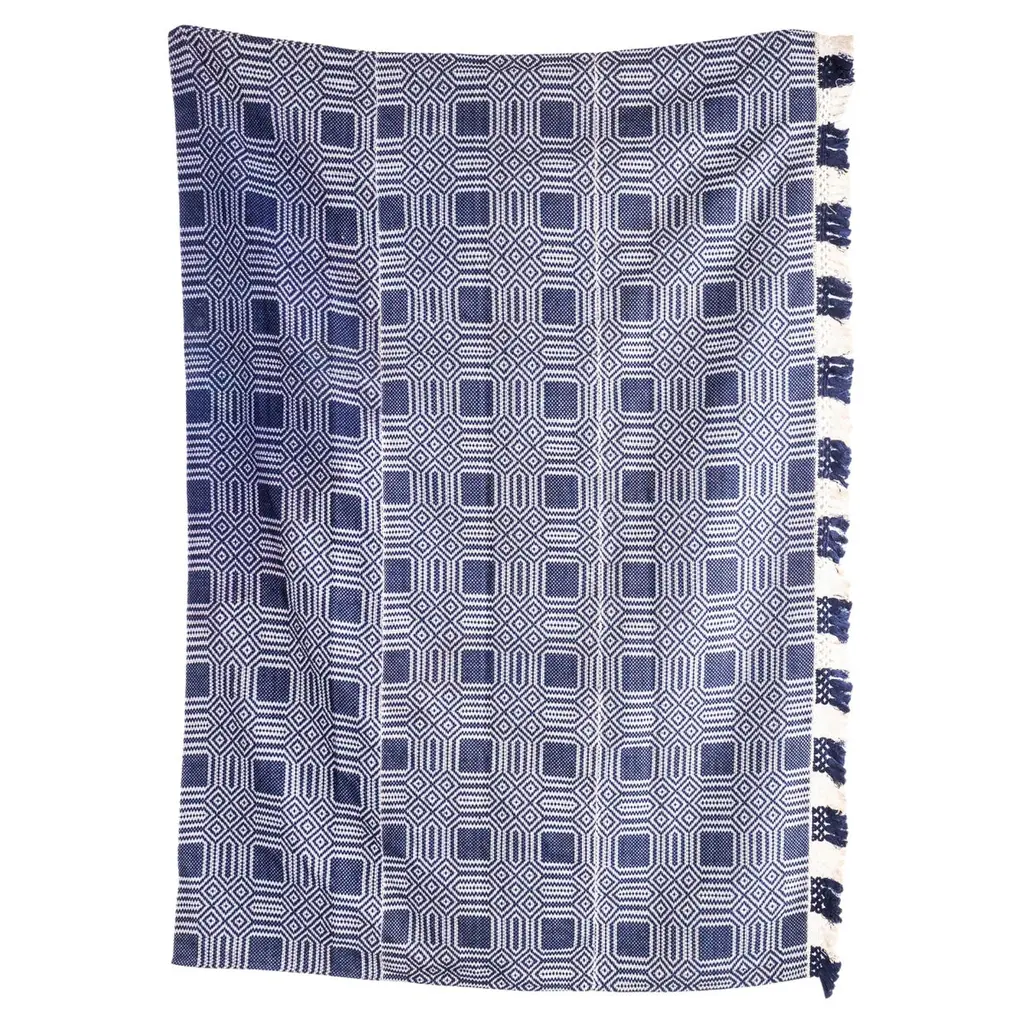
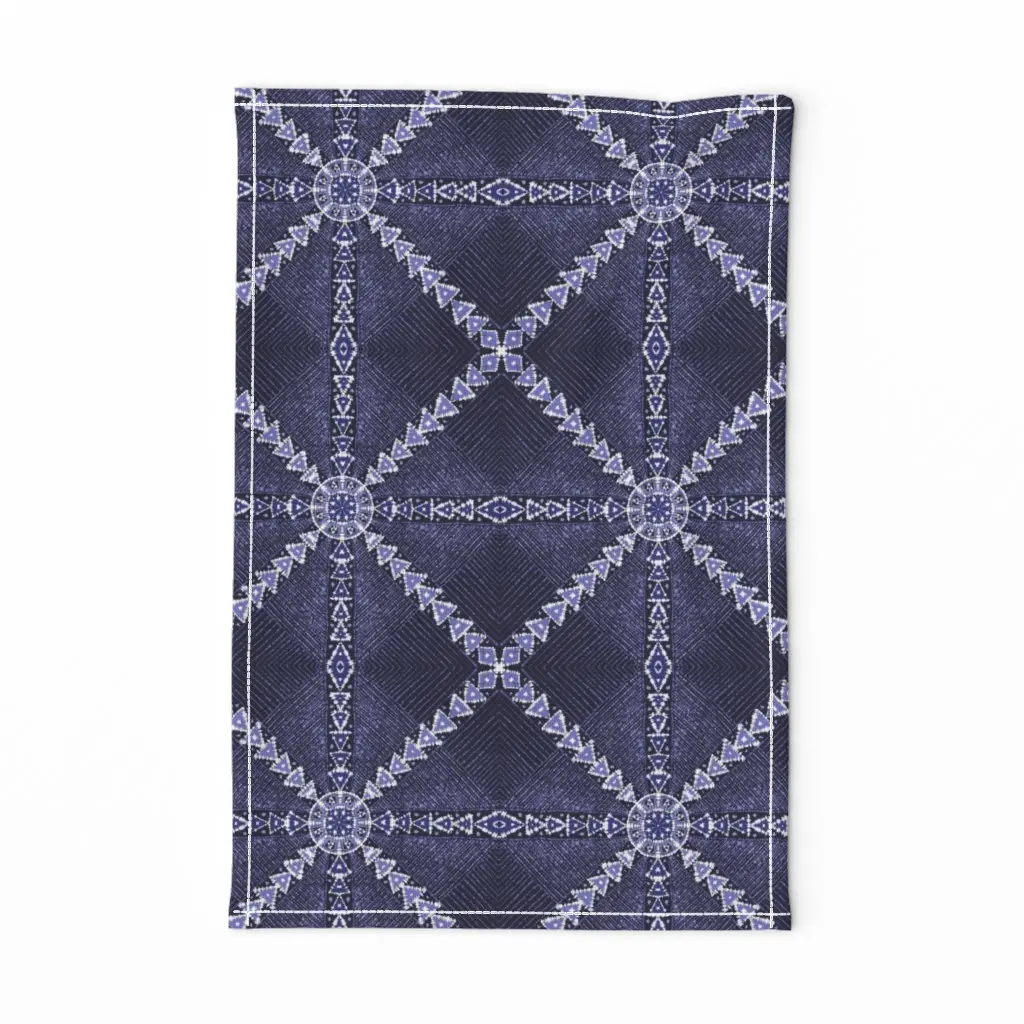
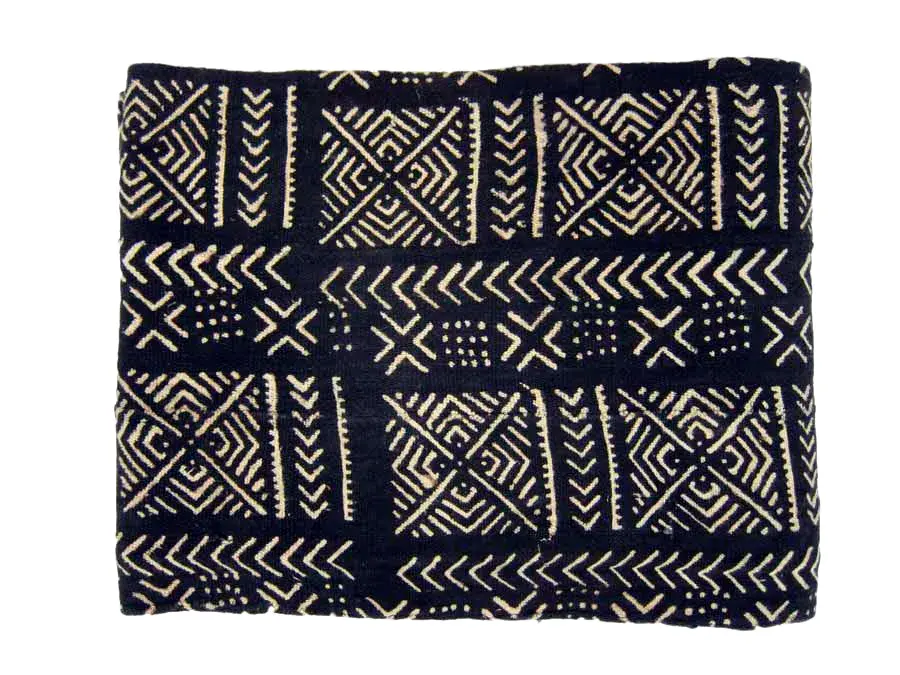
A Japanese woven cotton textile panel with white pattern on indigo background circa 1900-20s (end of Meiji to Tasho period). The panel was joined by four vertical stripes and was traditionally used to make the Futonji (futon coverlet). The weaving technique is called e-Kasuri, in this case a double ikat (Tate-Yoko Kasuri; both wefts and warps were pre-dyed to create a perfect pictorial pattern on the loom). The precision of the resistant dye was the key for such textile. On the deep indigo background, the panel is covered with two repetitive geometrical patterns, alternating between two overlapping white squares and a large, latticed diamond shape called "well-crib". The width of the stripe was often restricted by the width of the loom used for such weaving, therefore the futonji was almost always joined by four stripes. The panel, albeit nearly a century old, appears strikingly modern and will make a great wall hanging. For two similar Kasuri futonji, see "Textile of Japan" Prestel, page 306 and 308, illustration 105 and 106. Ikat weaving was originated in Southeast Asia and spread to Japan Mainland in the 17th century via Okinawa (14th century). The cotton production accelerated the development of the textile industry on a much larger scale by then in the Edo period when Kasuri became very popular among the general population.
Similar products