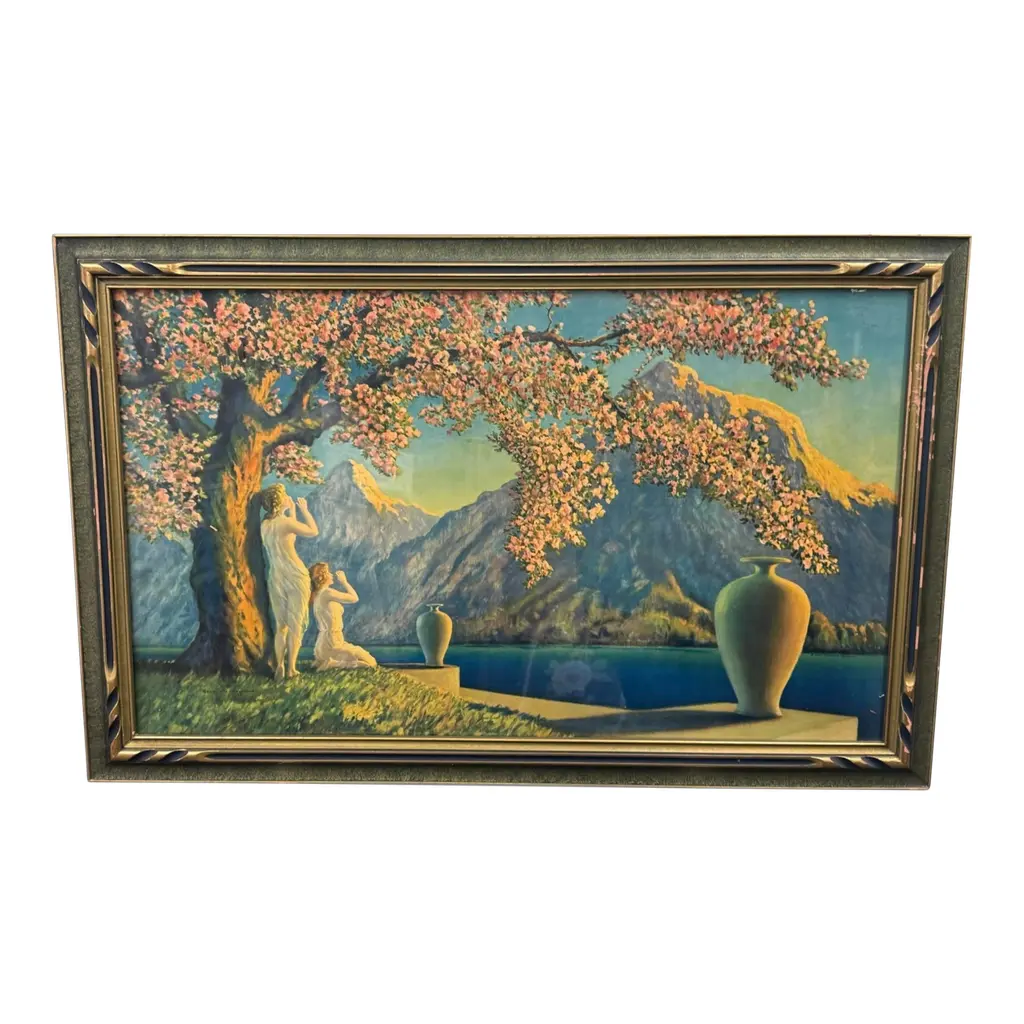
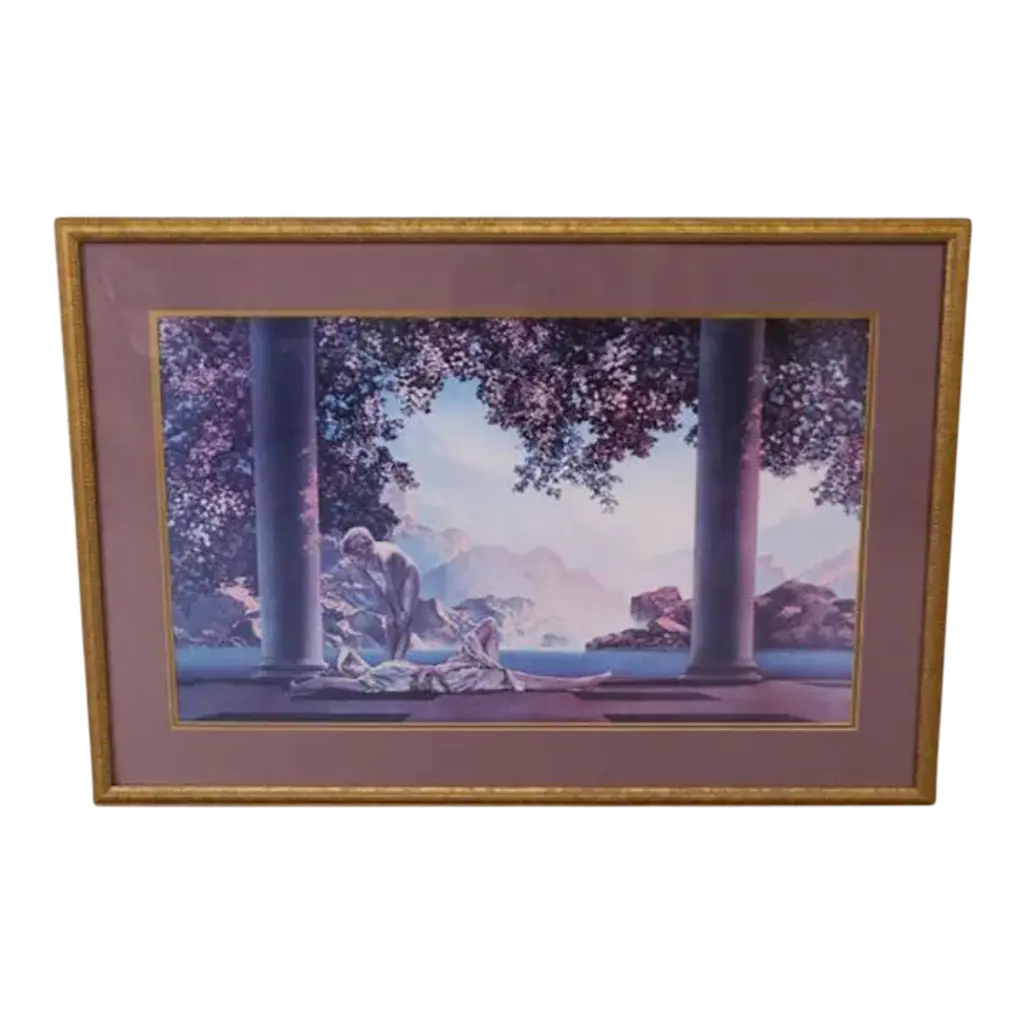
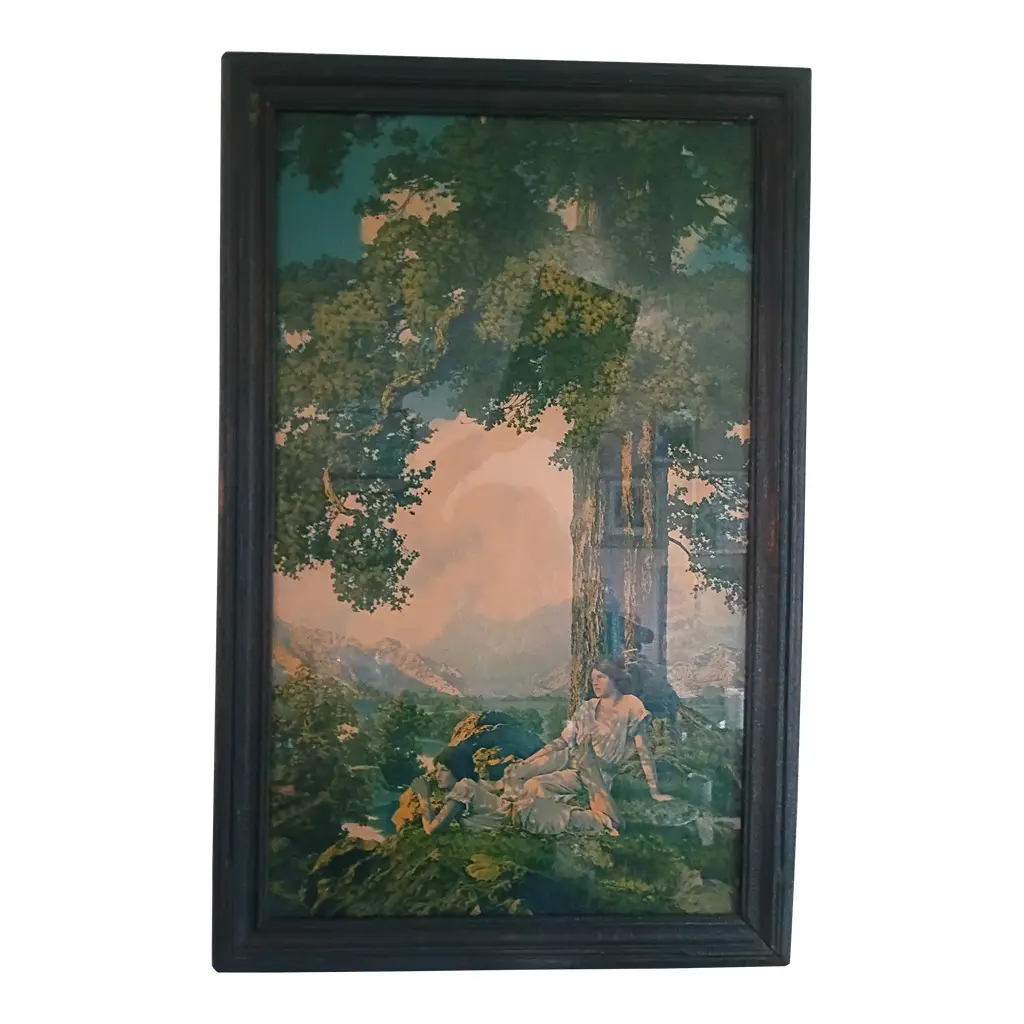
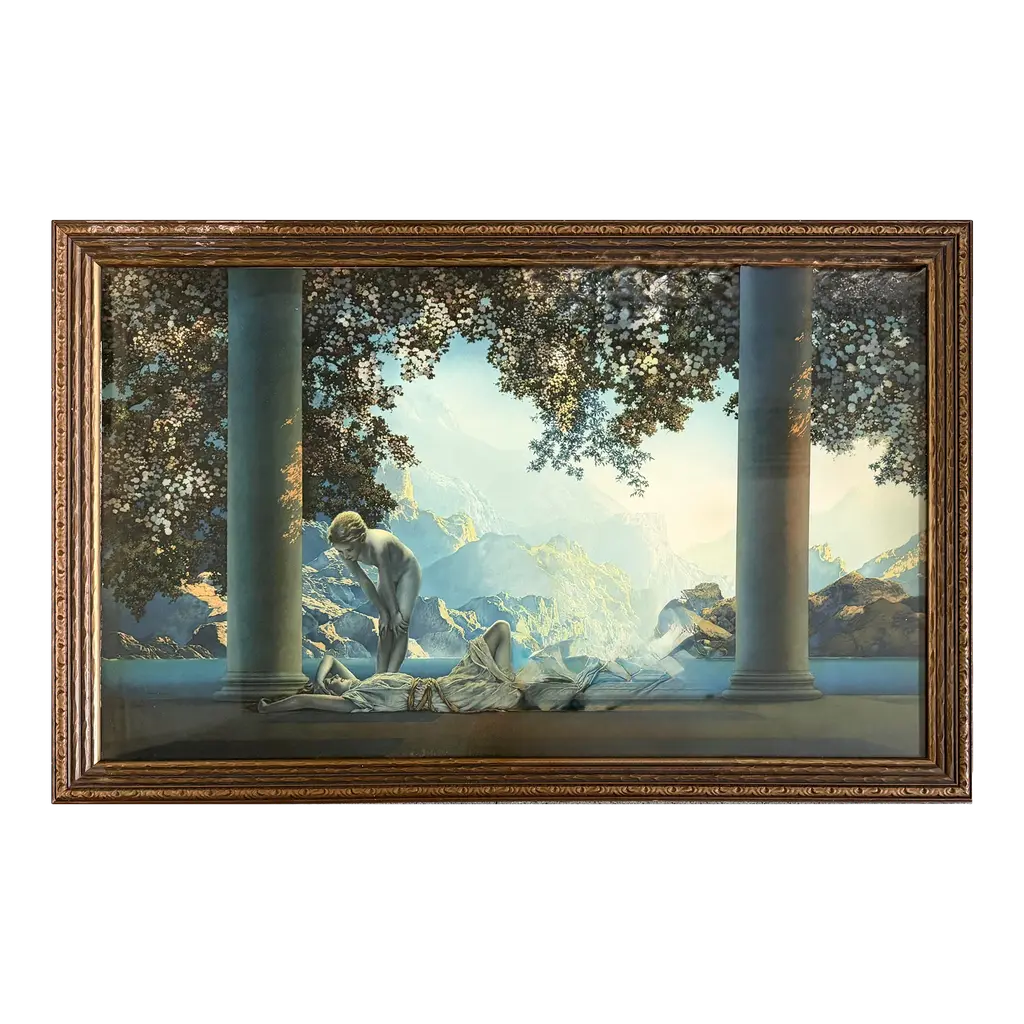
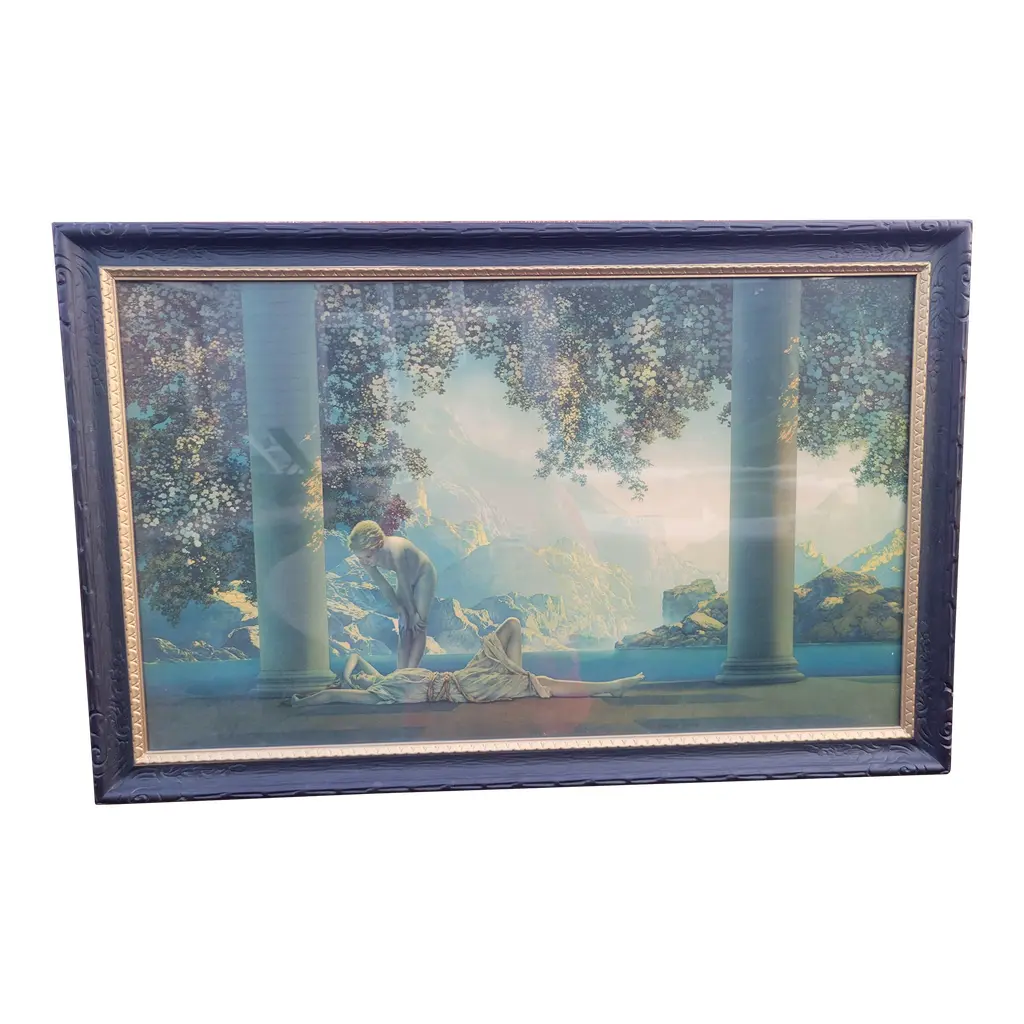
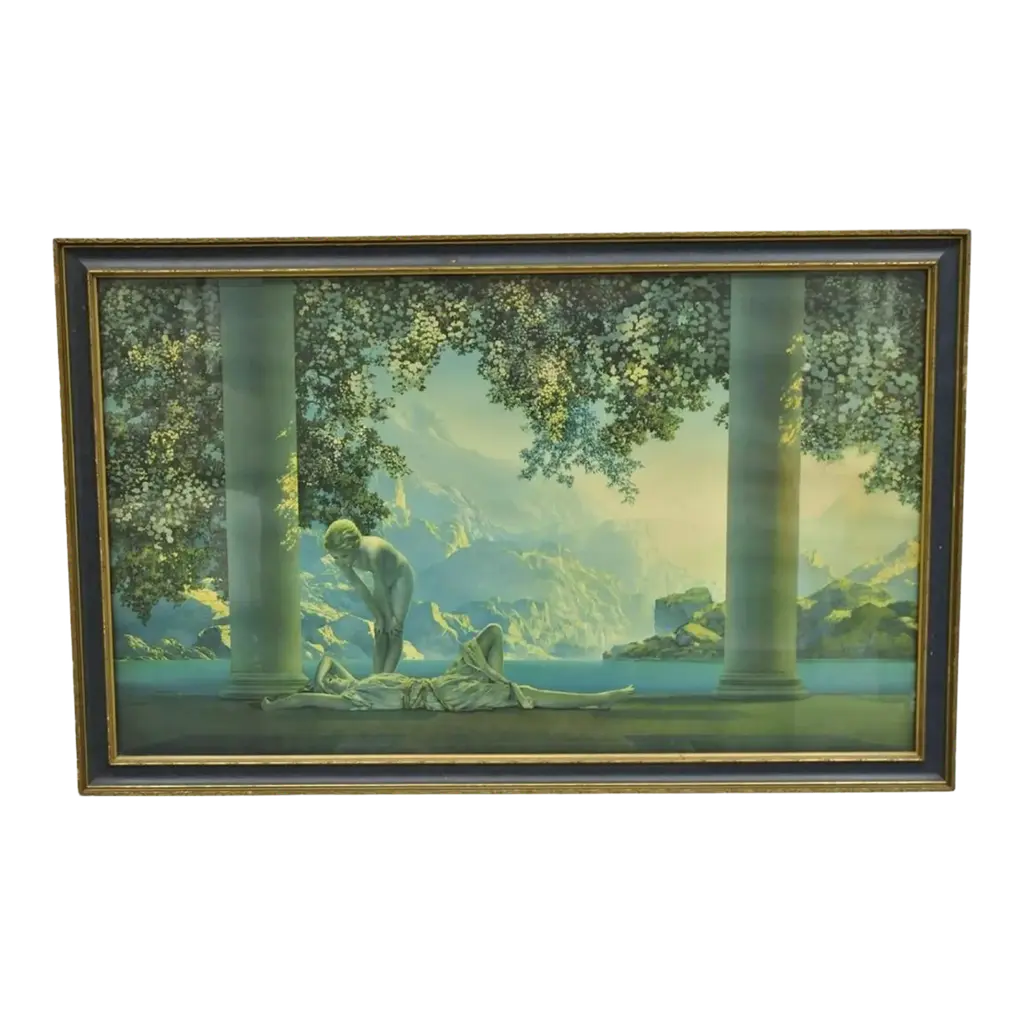
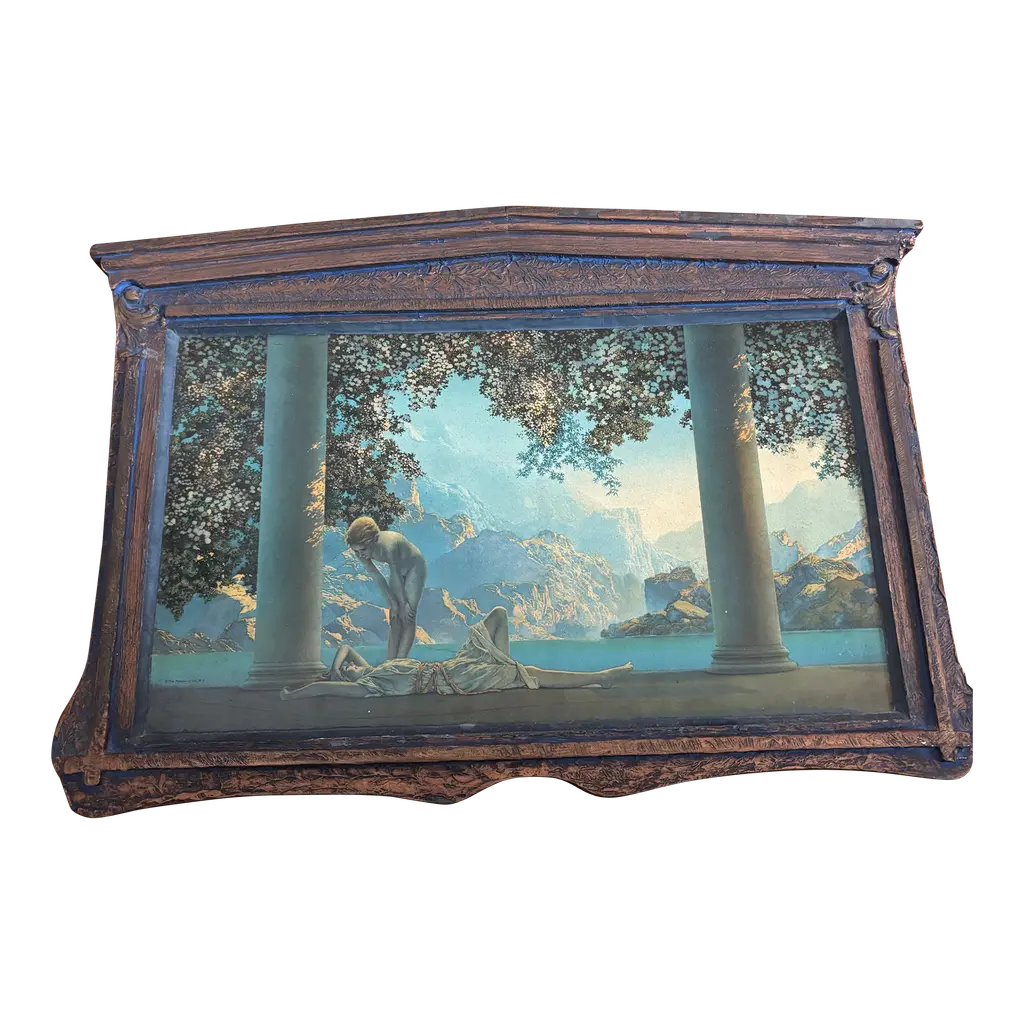
Limited Editions From Maxfeild Parrish Collection - Rare Collotype Print, original circa late 1920's. This print from 1980's. Lithograph examined out of frame and newly framed. Dimensions: 20" High x 33" wide (inches) Very Rare! A Continuous Tone ( No Dots) Lithographic Print, with an embossed blind-stamp, with printed info on the back of the print. This print radiates off the page, our photography cannot do the print justice. It is amazing, stored since the 1980's., In perfect condition, paper is not thin like a poster, but thicker fine print. Newly framed in a beautiful black wood frame behind glass. 1922 Original sold at auction for over 5 million. About Daybreak by Maxfield Parrish In 1922, Maxfield Parrish produced DAYBREAK, which he referred to as ‘the great painting’. Distributed as an art print through the House of Art, DAYBREAK became the most successful art print of the last century and secured Parrish’s position as the most popular illustrator after the First World War. In composition it resembles a stage set, which is appropriate, since Parrish loved the theatre and had designed a number of sets for masques in Cornish, New Hampshire as well as for a New York performance of Shakespeare’s The Tempest. It was laid out according to dynamic symmetry using photographs of Kitty Owen, his daughter Jean and Susan Lewin as models, posed amidst a backdrop of architectural elements, columns, urns, and fantastical landscape. The print was the sensation of the decade and was displayed in one of every four American homes. It is said to be the most reproduced art image in history, surpassing THE LAST SUPPER and Andy Warhol’s soup cans. About the Continuous Tone Printing Process: Screenless lithography, by eliminating the use of halftone screens and halftone dots achieves extraordinary fidelity, fullness of tone, color and detail, impressive color saturation and clear line resolution. Museums, fine artists and publishers with exacting standards use this remarkable process to re-create their finest works of art. Continuous tone lithography (as in a photograph with no dots) evolved from collotype printing. When Black Box Collotype ultimately closed its doors in 2004, it was one of just a few printers left in the world that had mastered the collotype process. While it was a highly desirable reproduction process for the fine art world, it was a laborious, time consuming (read “expensive”) process. Since there was no screen involved, a collotype print could be 27 colors without fear of a moiré. But in the old days, on Black Box’s one-unit press, those 27 colors had to be laid down one color at a time. So the most complex jobs could take months to complete.
Similar products