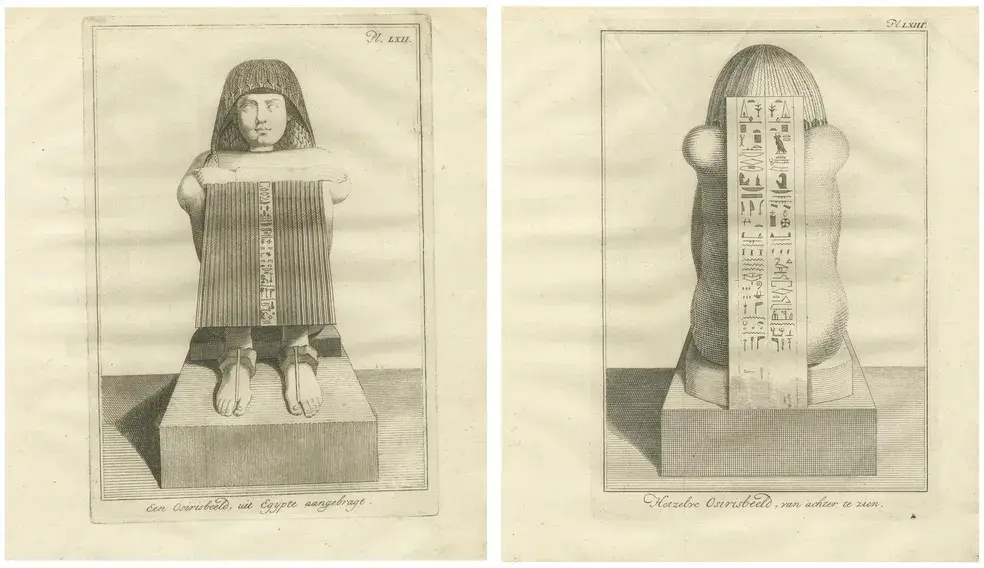
Egyptian Shabti Figurine Depicted from Three Angles, c.1776 This antique engraving, Plate LXXVI, presents a detailed study of an ancient Egyptian shabti (or ushabti) figurine shown from three perspectives: front, left profile, and right profile. These funerary statuettes were placed in tombs among the grave goods and were intended to serve as servants for the deceased in the afterlife, performing any manual labor required. The figure is shown in traditional mummiform posture, arms crossed over the chest, and wearing a tripartite wig. The face is delicately modeled, with serene features typical of shabtis from the New Kingdom period onward. The engraving shows remarkable attention to detail, especially in the inscription bands around the lower half of the statue. These bands feature hieroglyphic texts that would often include spells from the Book of the Dead or identification of the deceased and their titles. The accompanying Dutch caption at the bottom translates to: “An Egyptian statue seen from three sides, from the collection of the Duke of Richmond.” This provenance adds historical significance, as the Duke of Richmond was known in the 18th century for his antiquities collection, which was one of the earliest attempts in Britain to create a public museum of classical and Egyptian antiquities. This print likely originates from an Enlightenment-era publication on ancient art, printed circa 1776, during a time of great European fascination with Egyptology, following Napoleon's Egyptian Campaign (1798–1801). Condition report: Very good condition with full plate border. Slight age toning and a vertical centerfold as issued. Minimal edge wear and light creases in the corners. Paper is strong and clean. Framing tips: A dark wood or black frame with a light ivory or sand-colored mat would complement the engraving’s tones and highlight the linear precision of the drawing. For museum-style presentation, consider using a double mat to subtly emphasize the hieroglyphic detail. Technique: Engraving Maker: Anonymous, Dutch or German school, circa 1776
Similar products