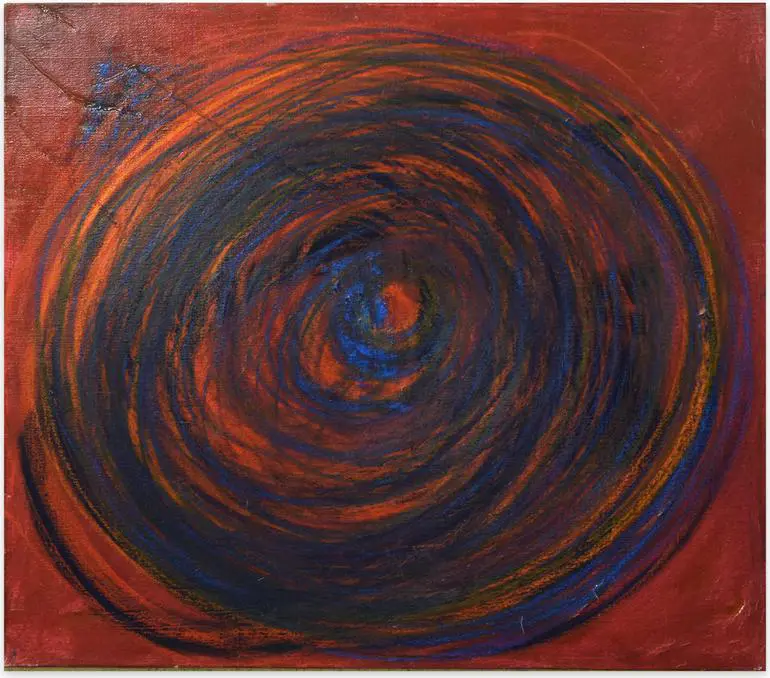
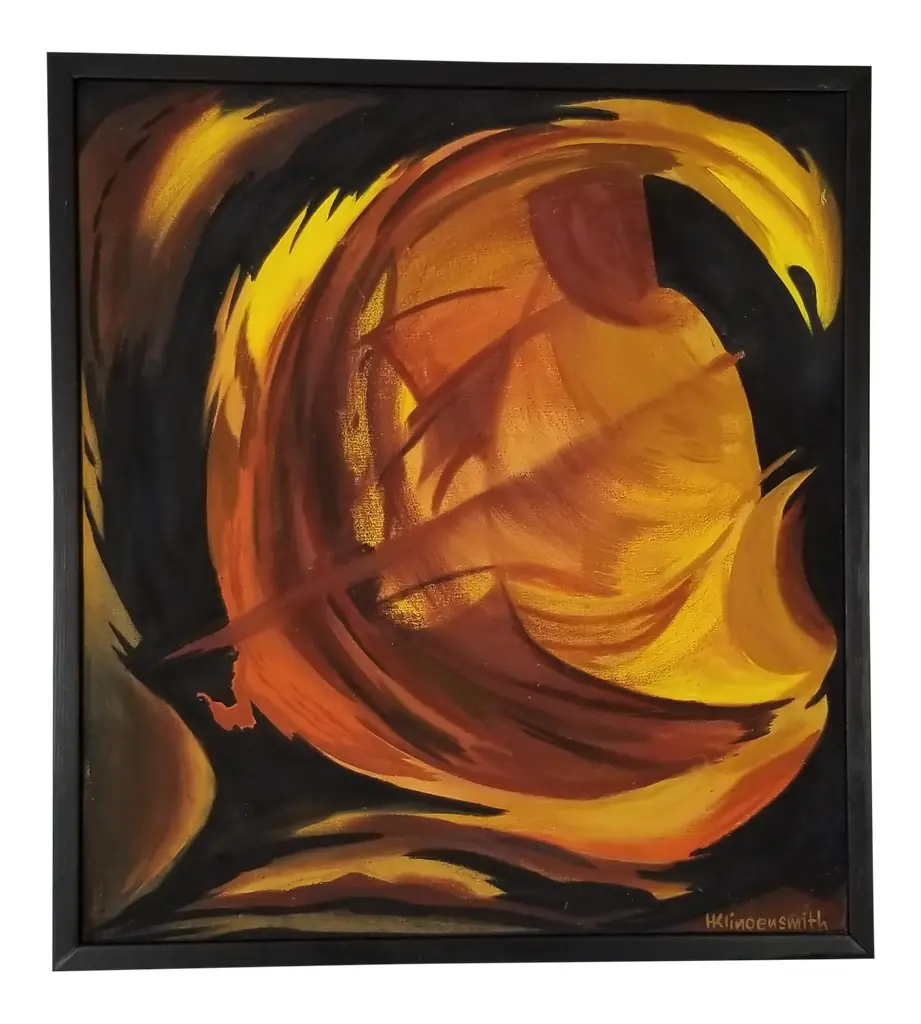
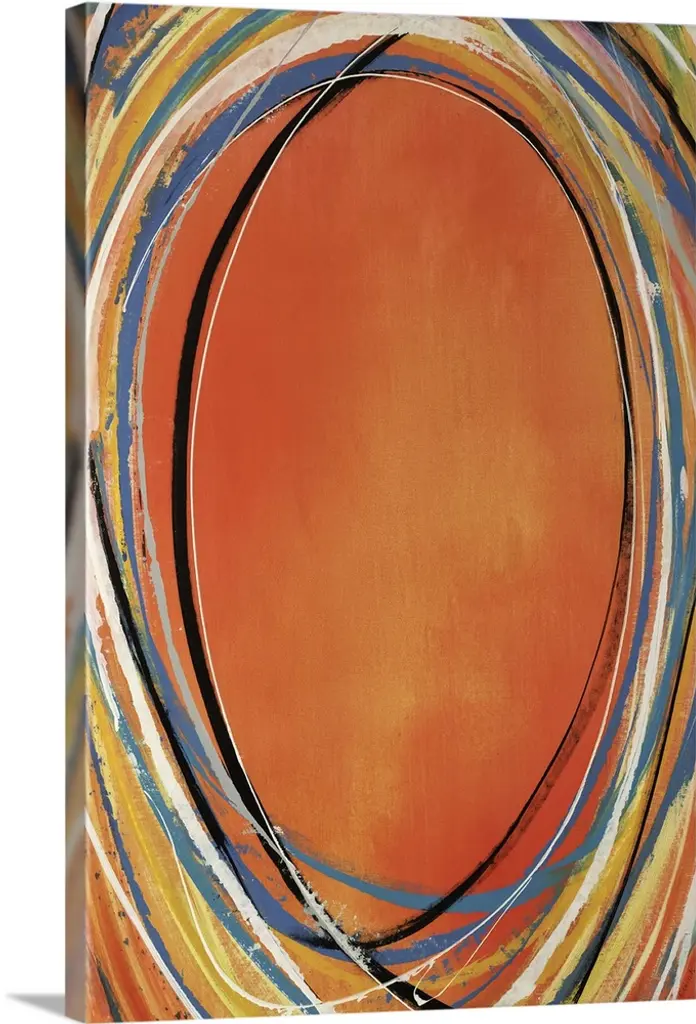
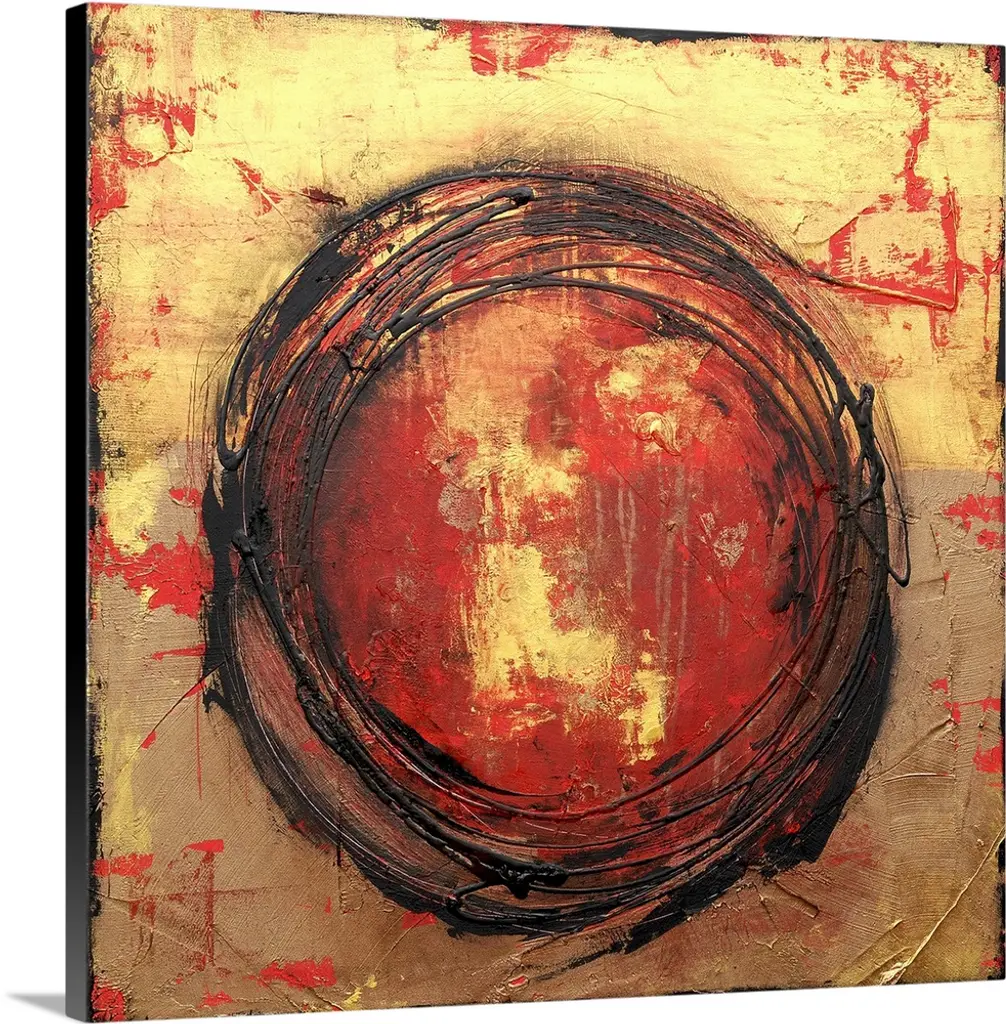
Enso: Pele Virginia Cohn Parkum, c. Unknown In Enso: Pele, Virginia Cohn Parkum fuses the Zen symbol of the enso with the volcanic force of the Hawaiian fire goddess, transforming a traditionally contemplative form into an image of elemental power. The circular composition, typically associated with emptiness, wholeness, and meditative completion, becomes here a vessel of heat, eruption, and living fire. The painting radiates outward from a molten center. At its core, dense layers of orange and gold churn in thick, tactile swirls. The paint is worked heavily, almost sculpturally, creating a surface that feels geological rather than merely pictorial. The circular motion of the brush suggests not calm breath, but rotation — magma turning within the earth. Encircling this blazing center is a dark, muscular ring. Unlike the clean, single-stroke enso of classical Zen calligraphy, Parkum’s circle appears embodied, even corporeal. The ring reads like a figure wrapped around the fire, its upper curve swelling into a shoulder-like form. A subtle red contour outlines this mass, evoking both lava’s glow and the aura of divine presence. The enso here is not emptiness — it is containment, protection, and tension. The surrounding field intensifies the sensation of heat. Concentric bands of orange and ochre radiate outward, reinforcing the sense of expansion and vibration. The entire canvas feels as though it is pulsing, each circular mark amplifying the energy at the center. A small dark sphere near the top hovers like a celestial body — perhaps a moon, perhaps a fragment of cooled lava — introducing a quiet counterpoint to the blaze. By invoking Pele, Parkum reframes the enso as a symbol of creation through destruction. Fire consumes, but it also forges land, reshapes terrain, and generates new ground. The thick impasto and swirling motion embody this paradox: beauty emerging from turbulence, wholeness formed through rupture. Enso: Pele is both meditative and ferocious. It invites contemplation, yet its surface insists on movement and heat. In this work, Parkum bridges spiritual symbol and mythic force, suggesting that enlightenment is not always serene — sometimes it burns. -Jonathan Flike
Similar products