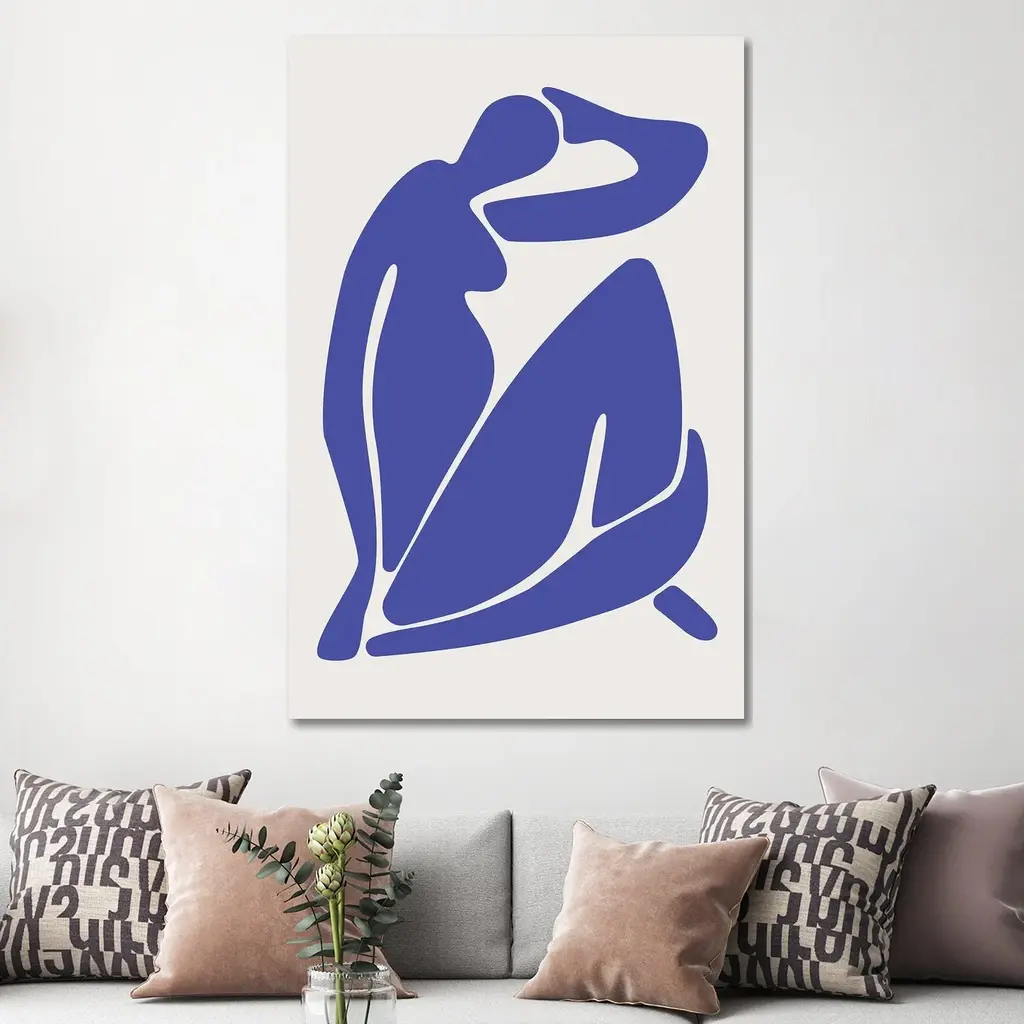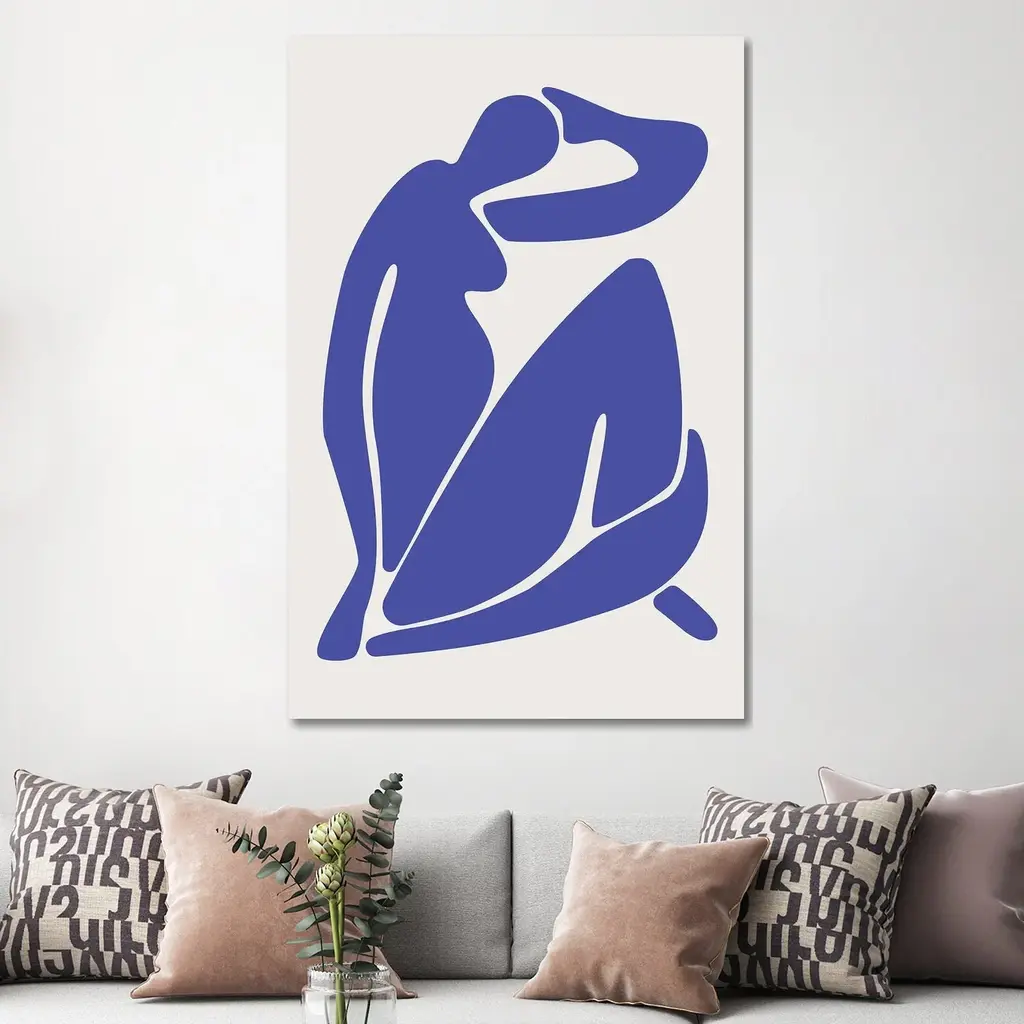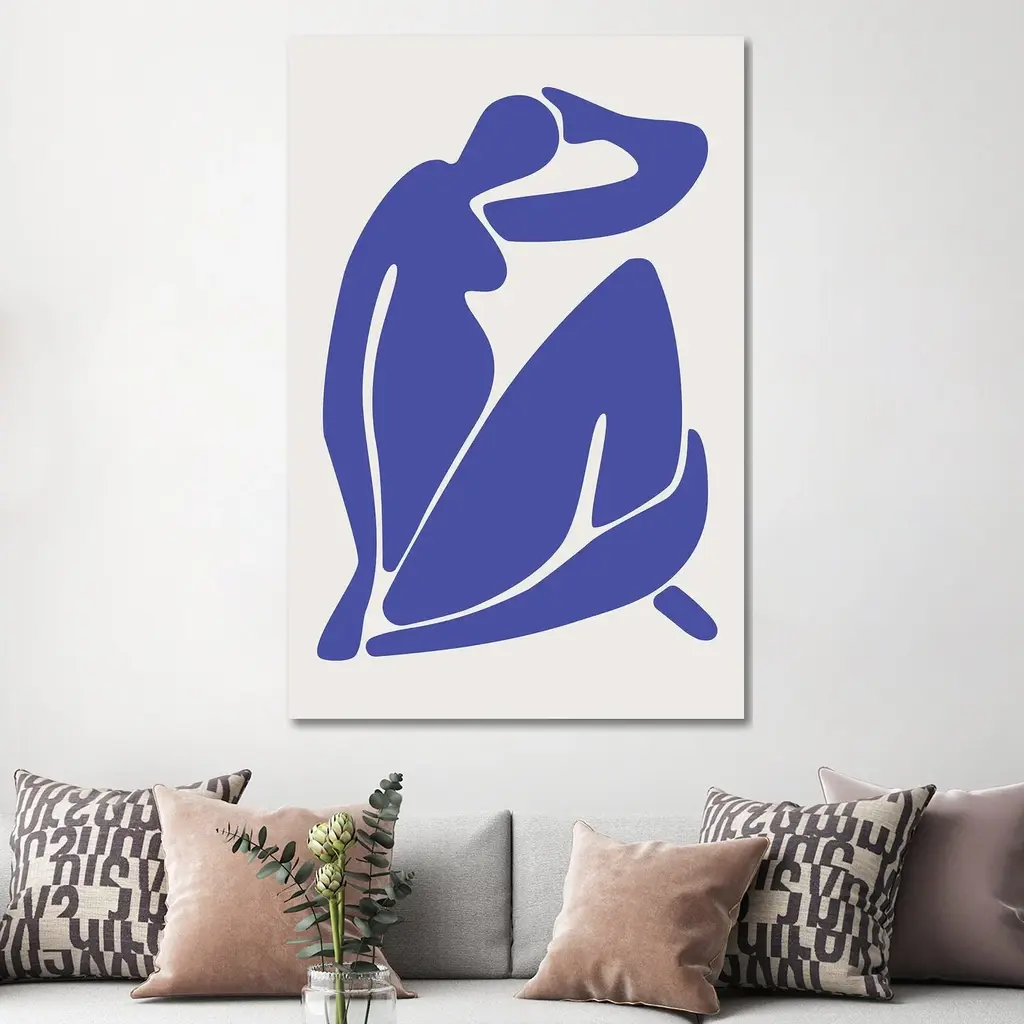
"Femmes Et Singes" (Women And Monkeys) Lithograph By Henri Matisse
$950
1st Dibs
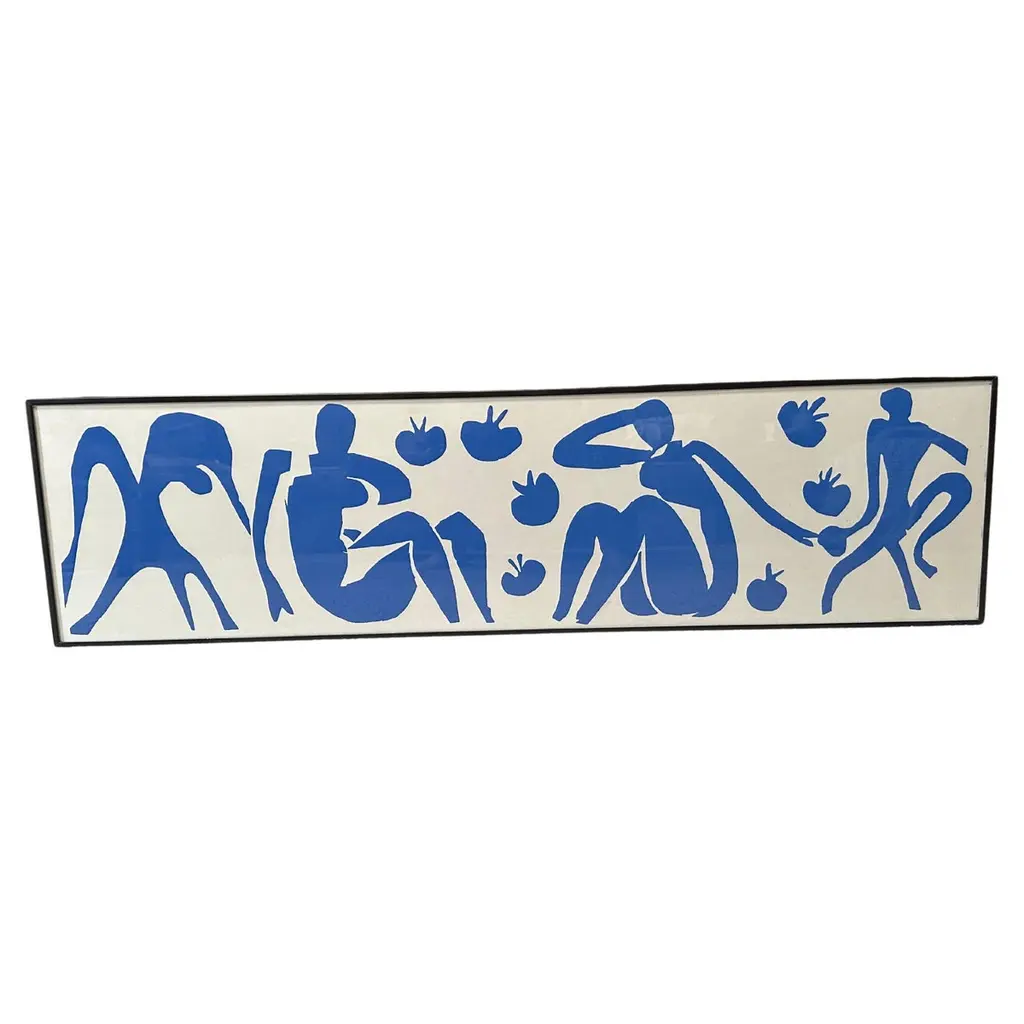
Vibrant "Femmes et Singes" (Women and Monkeys), a lithograph by the renowned French artist Henri Matisse, circa 1970s. Excellent fresh impression originally created toward the end of Matisse's life, from 1950 to 1954, and is part of a series of brightly colored gouache paper cut-outs. Matisse personally directed and supervised the first prints of this work in collaboration with Mourlot Freres of Paris. The lithographs were later published posthumously in 1958 in the French art review Verve, celebrating Matisse's final works. "Femmes et Singes" exemplifies Matisse's late-career focus on simplified human figures and bold, flat fields of color, reflecting his mastery of expressive color and form. The framed piece is 12" x 44". Artist: Henri Matisse (1869 - 1954)Title: "Femmes et Singes" (Women and Monkeys)Medium: Lithograph Framed size: 43.88" x 12" Condition: Excellent. #4461RMThe original artwork was created in 1952 as a gouache on cut paper. The original piece was reportedly hung above the door to Matisse's dining room in his apartment in Nice. Several editions of prints were made, including lithographs and serigraphs. Some were printed posthumously in 1958 for the art magazine "Verve", celebrating Matisse's last works. Matisse used the "cut-out" technique after arthritis made it difficult for him to paint, cutting shapes from painted pater and arranging them to create compositions. "Femmes et Singes" reflects Matisse's vibrant color palettes, expressive forms, and simplified figures, which were characteristic of his style and influenced the development of Fauvism and modernism.Henri Matisse was born on December 31, 1869, in Le Cateau-Cambrésis, France. At 22, he had given up studying law in Paris to pursue painting. He had briefly studied art at the Académie Julian and Ecole des Beaux-Arts with Gustave Moreau. At 32, Matisse exhibited at the Salon des Indépendants in Paris, where he met Maurice de Vlaminck, who with Matisse would eventually lead the Fauve art movement.Matisse's work was included in the 1913 Armory Show in New York, and throughout the 1910s and into the 1920s, his work began to find collectors around the world. Throughout the 1920s and 1930s, he divided his time between Paris and southern France, producing paintings, sculpture, lithographs, and etchings.Like many avant-garde artists in Paris, Matisse was receptive to a broad range of influences, particularly 'primitive' art, Near Eastern decorative art, African masks and sculpture, impressionist color, cubism, and the paintings of Paul Cezanne. The artist's images of the human face and figure -rendered in fluid lines and flat fields of color- typify these influences. Matisse argued for the prominence of instinct in art production, believing that an artist should not have complete control over color and form.He died on November 3, 1954, in Nice.
Similar Items