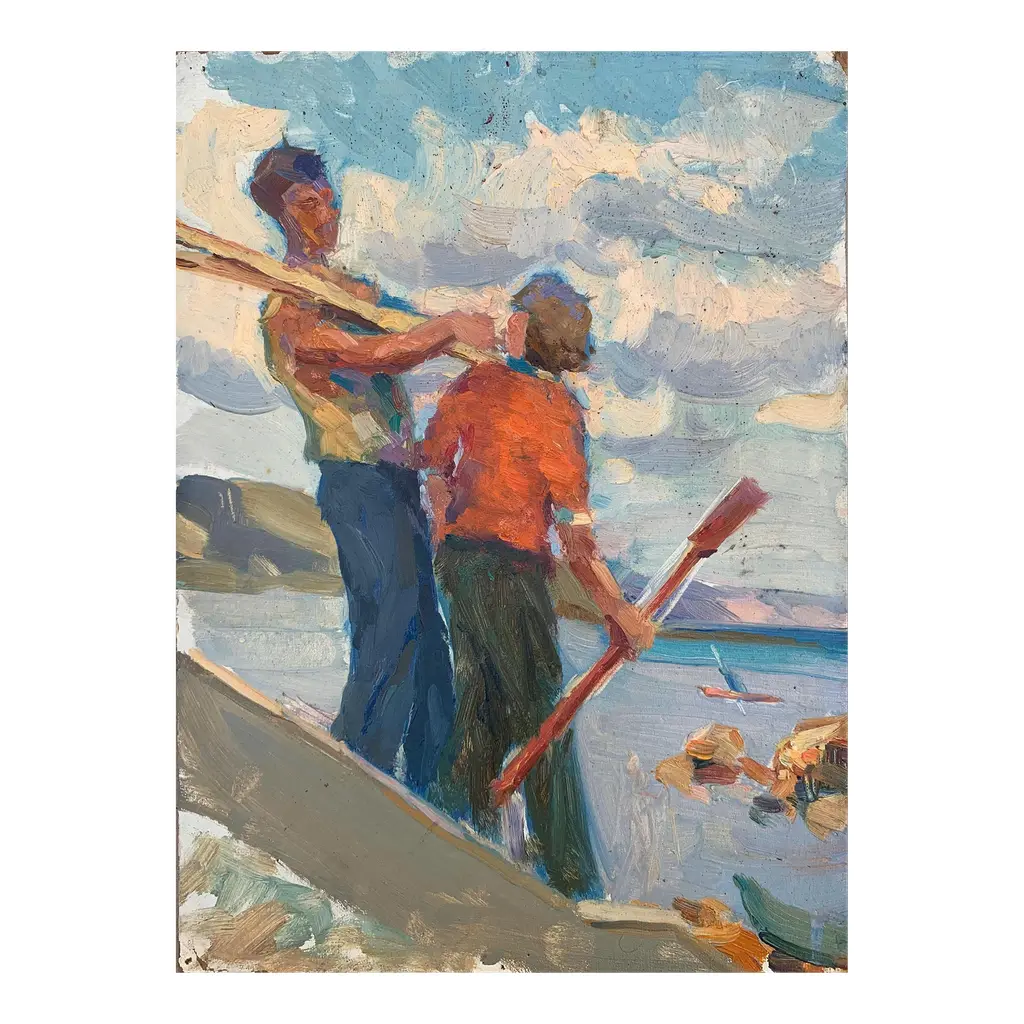
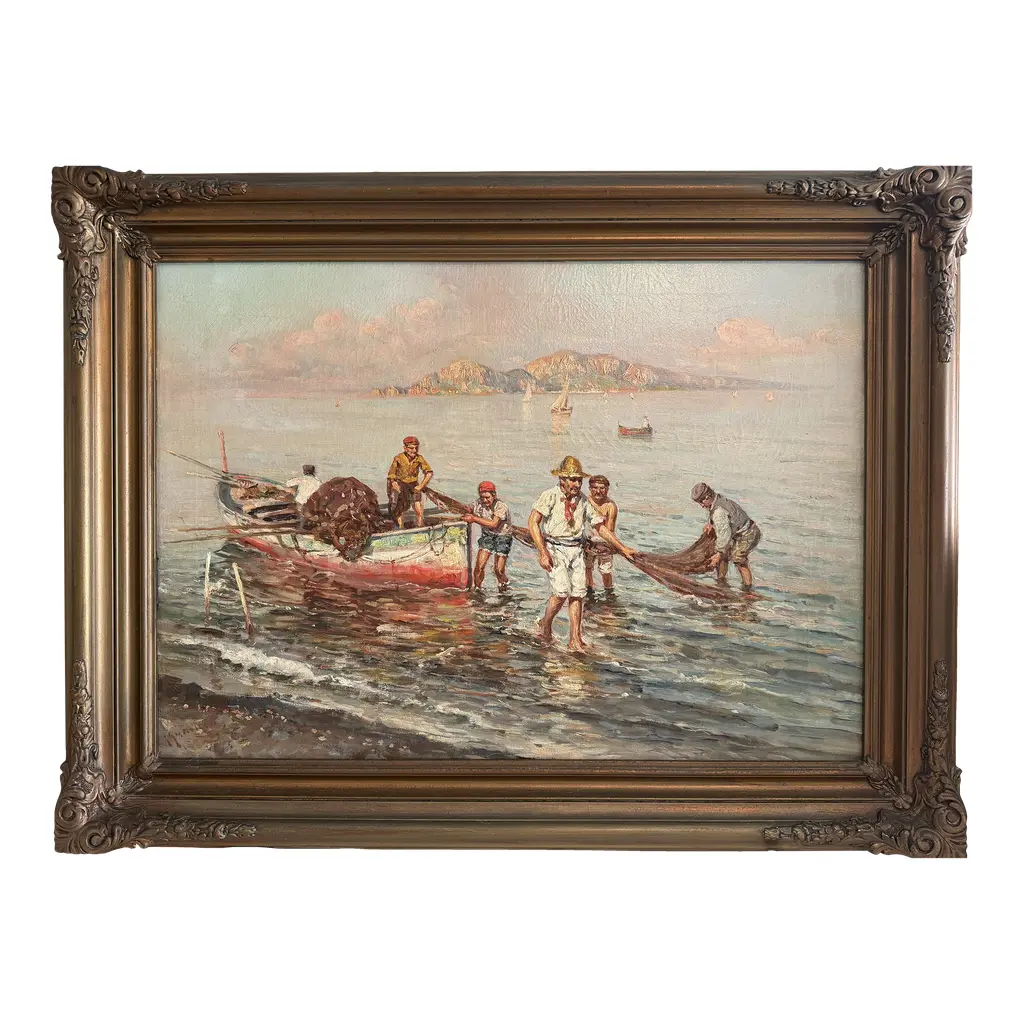
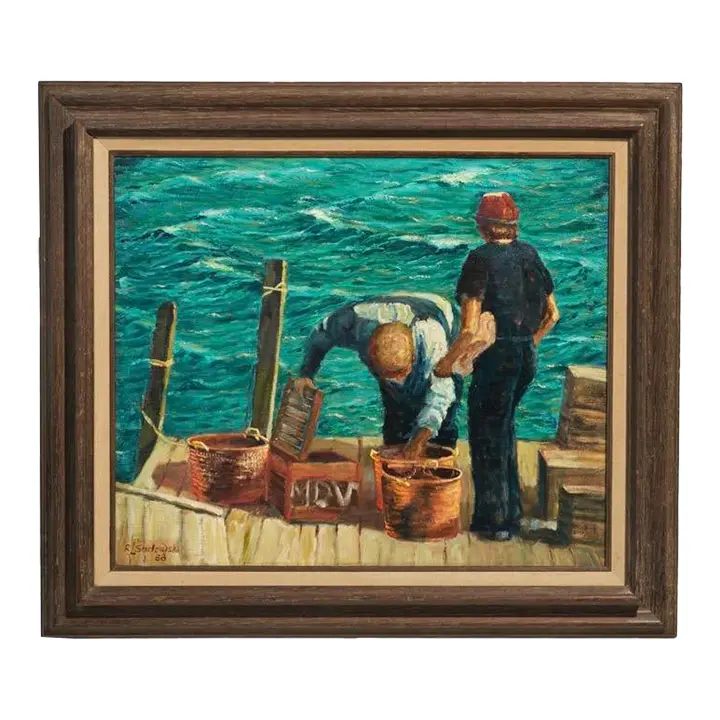
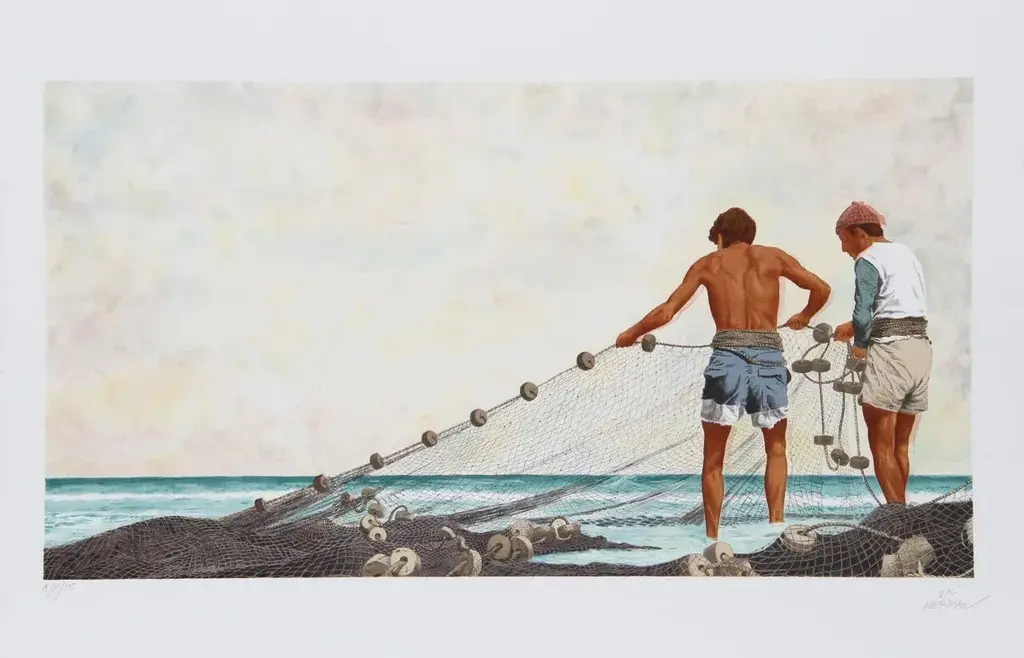
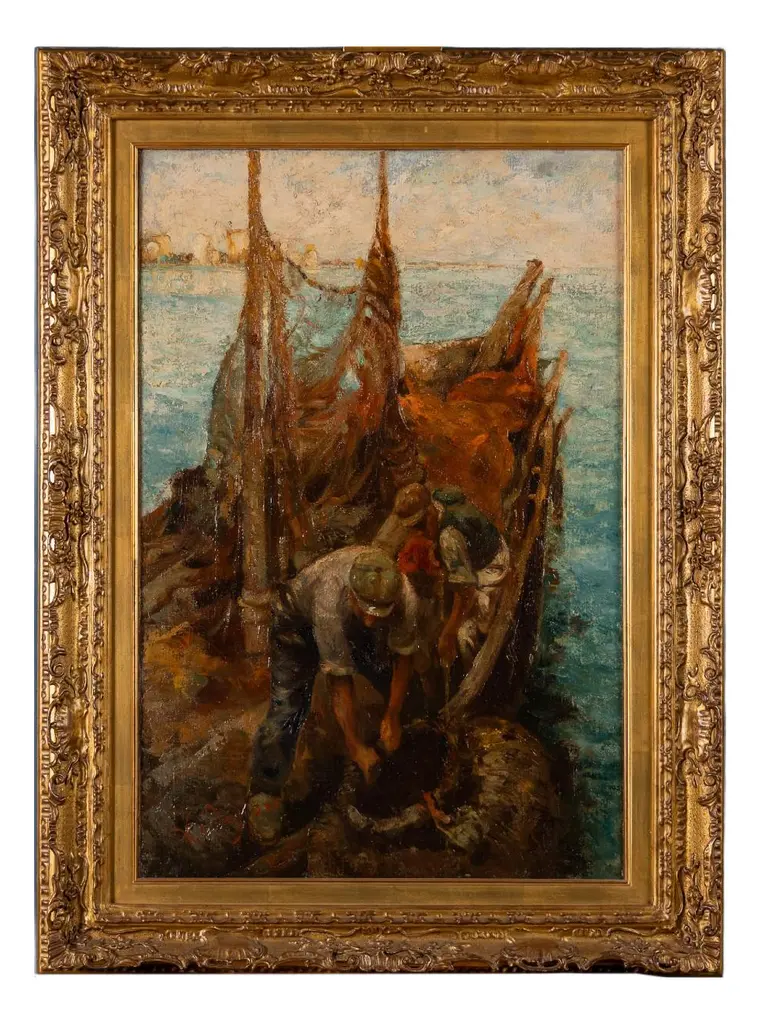
Fishermen* Benjamin Glicker, c. 1930s - 1940s In Fishermen, Benjamin Glicker turns to physical labor as a subject of both formal dynamism and human gravity. The composition is organized around three male figures straining together at the shoreline, their bodies angled diagonally across the picture plane as they haul in a net from the surf. Rather than presenting the fishermen as static types or picturesque laborers, Glicker emphasizes exertion, rhythm, and interdependence. The scene is less about descriptive detail than about the collective force required to work against the pull of water and weight. The painting’s energy comes largely from its structure. The central foreground figure, seen from the back in vivid red trousers, anchors the composition with a wide, braced stance that conveys resistance and torque. His body becomes the hinge of the painting, directing the eye outward to the other two figures, whose forms lean in concert toward the right side of the canvas. This repetition of angled bodies creates a visual cadence of shared effort. The net itself extends this motion, unraveling across the lower right portion of the composition in looping, linear strands that both describe the task and activate the surrounding space. Color plays an equally important role. Glicker sets warm flesh tones and saturated reds against cool blues, sea-greens, and sandy neutrals, creating a vivid contrast between the human body and the coastal environment. The water is handled in animated strokes of blue and white that suggest both movement and resistance, while the distant boats and pale sky situate the action within a working maritime world without distracting from the immediate drama of the figures. The brushwork remains loose and painterly throughout, allowing the forms to feel urgent and alive rather than overly fixed. What gives the work its depth is the way Glicker treats labor as something bodily and relational. The figures are not individualized portrait subjects; they are bound together by task, posture, and momentum. In Fishermen, work becomes choreography: a sequence of pulling, bracing, and balancing that transforms ordinary labor into a compelling study of strength, cooperation, and human presence in relation to the sea. -Jonathan Flike *The title of this work was assigned by Visard Gallery.
Similar products