Giacomo Balla Paravento Balla Fondo Bianco, Motivo Verde E Blu For Cassina
$23,858
1st Dibs
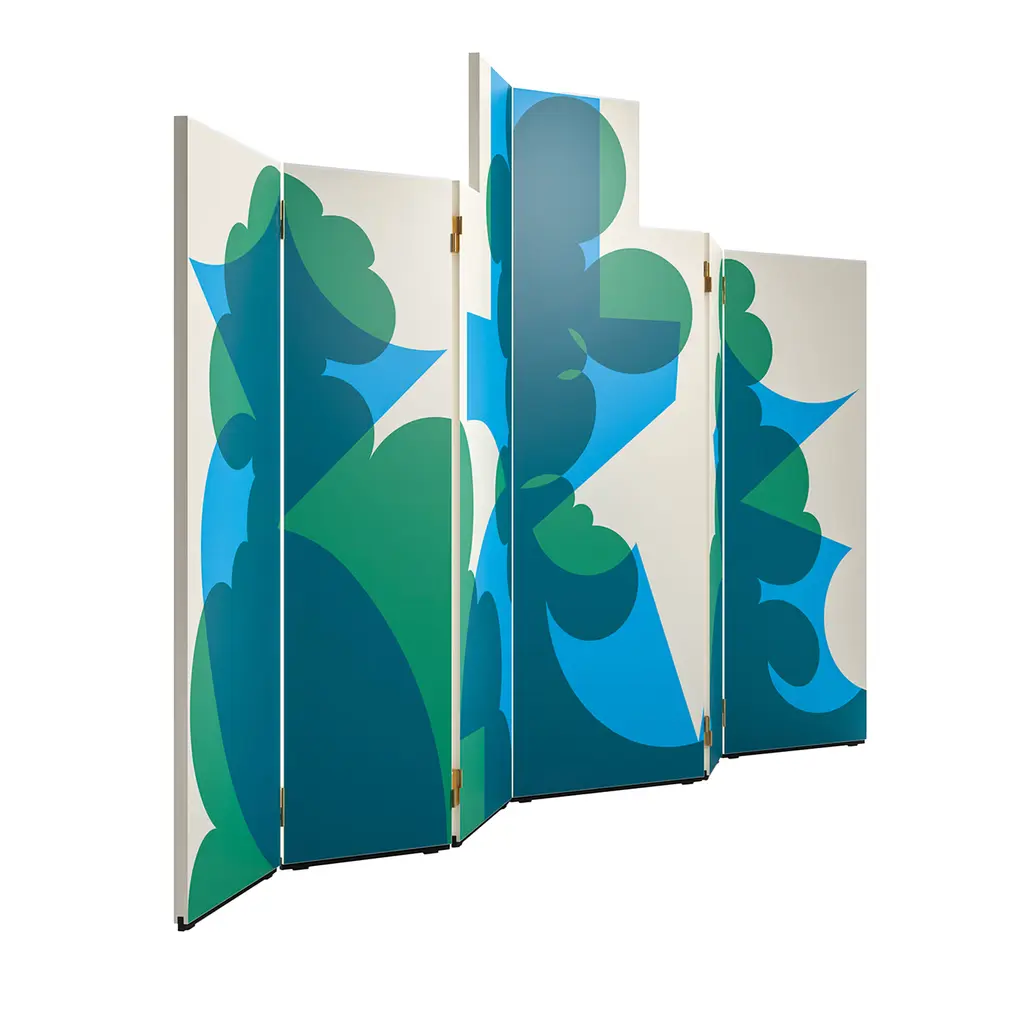
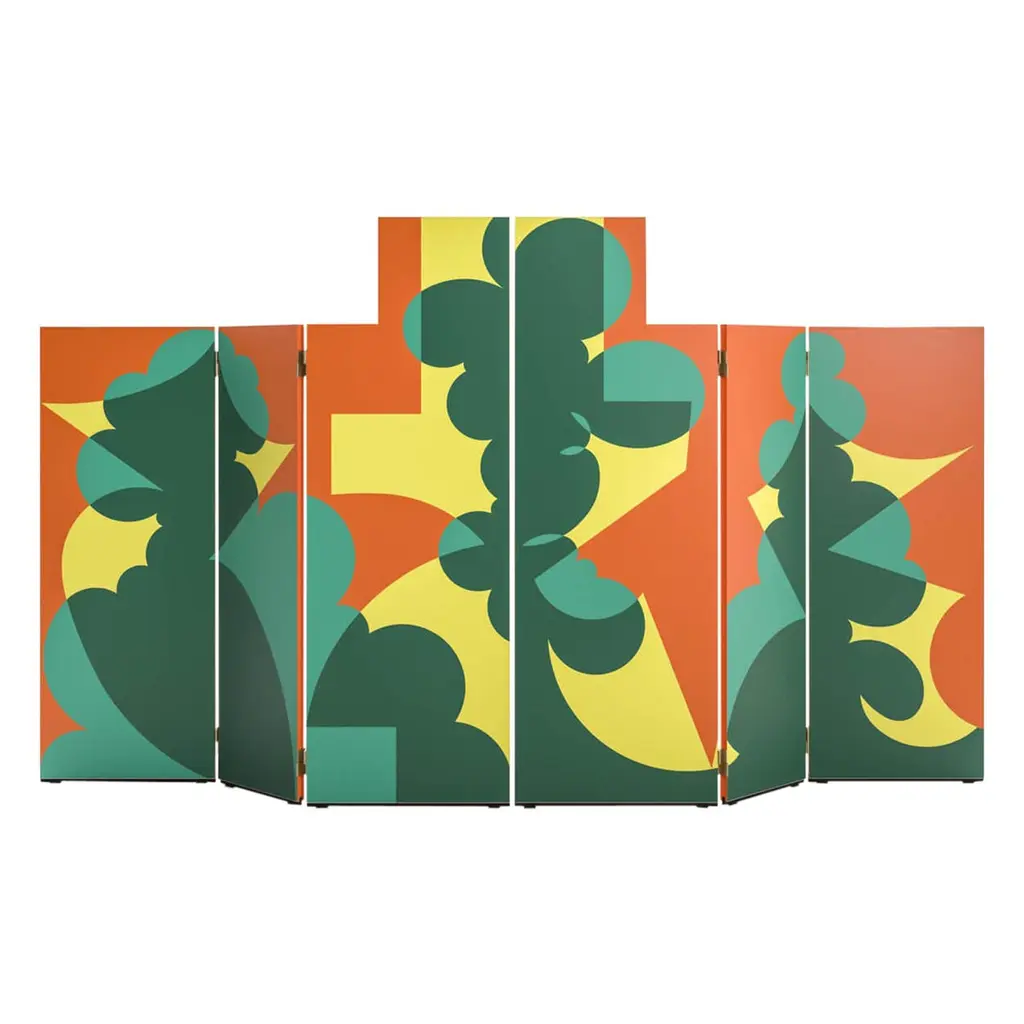
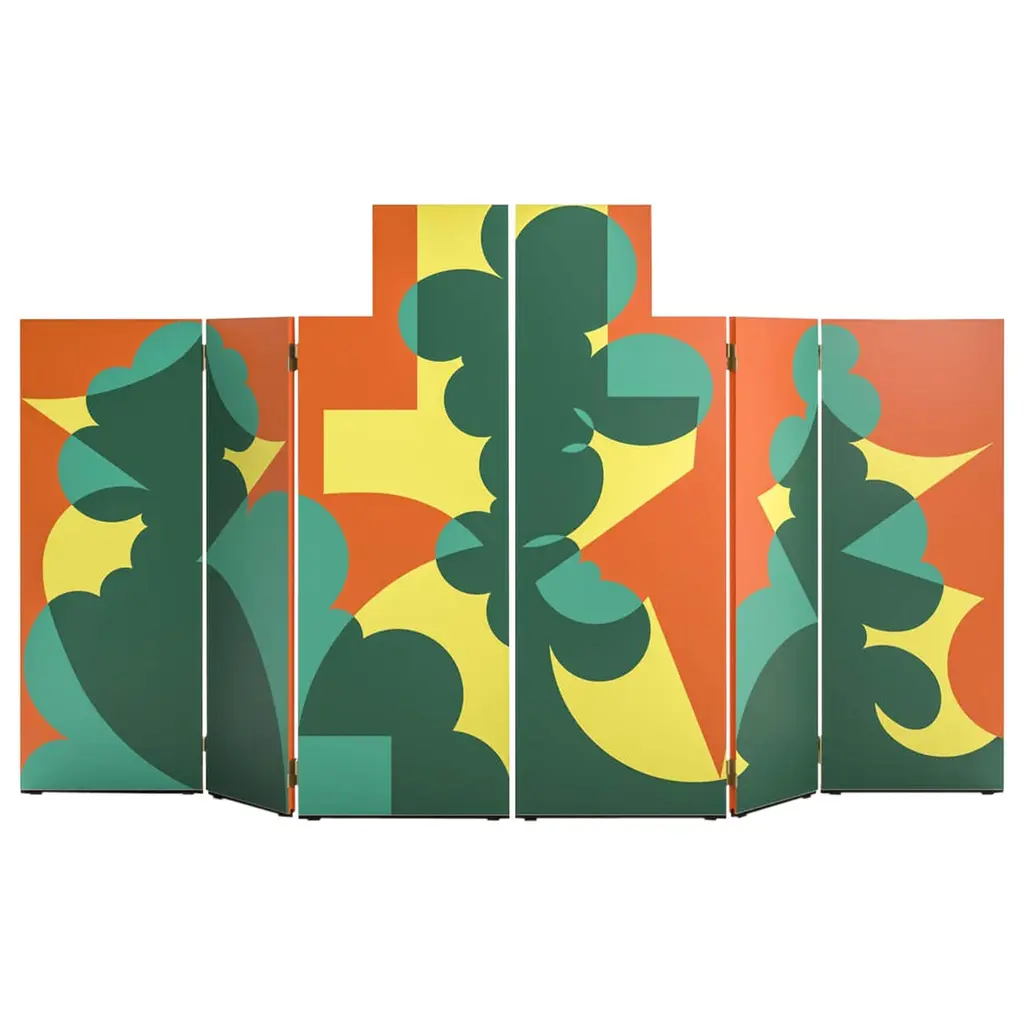
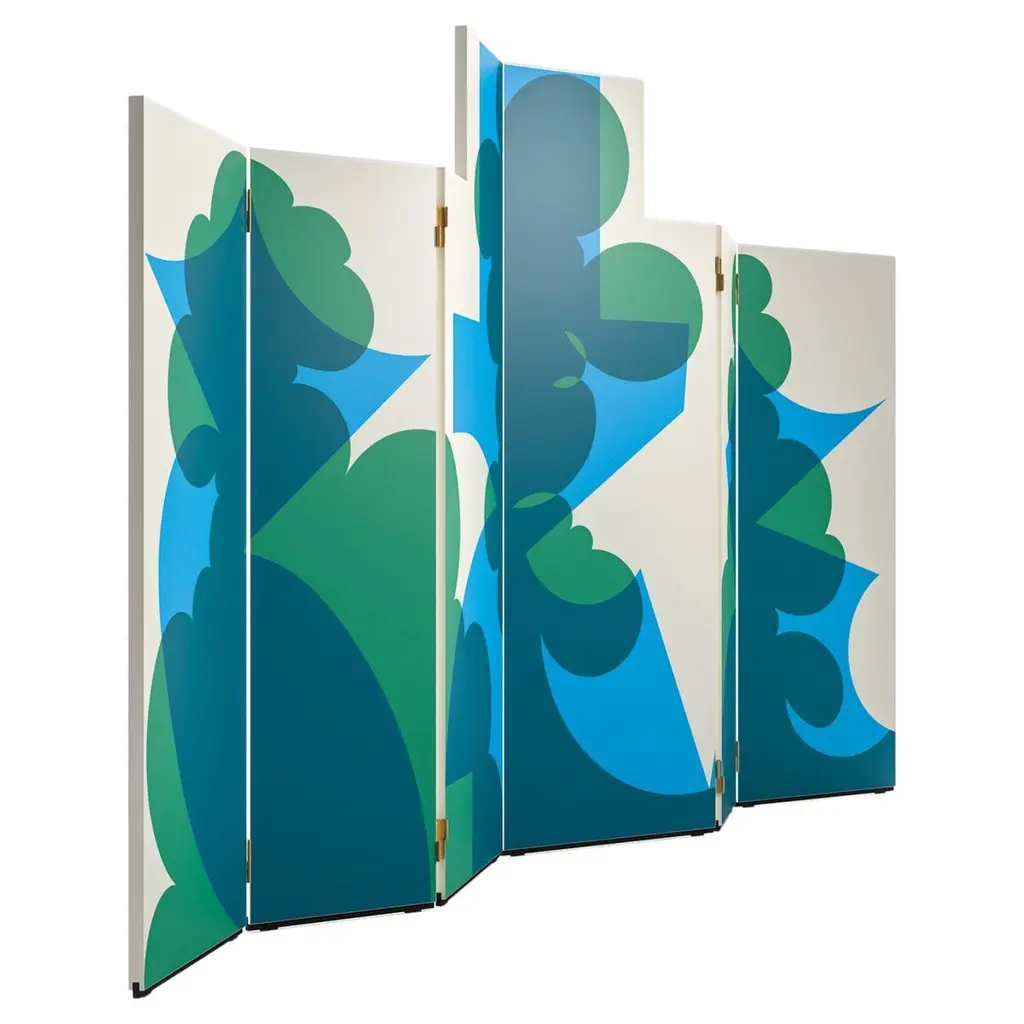
Giacomo Balla Paravento Balla Fondo Bianco, Motivo Verde e Blu For Cassina With its brilliant colors and artistic vibe, Cassina brings back the wood screen designed by Giacomo Balla to divide and complement the various areas of the home with a bold artistic look.The screen design is based on an original tempera and pencil sketch on paper by artist Giacomo Balla, a prominent figure in the Futurist movement.The Paravento Balla is a designer privacy screen made up of three wood panels of different height and width joined by brass hinges with satin finish that allow the panels to be positioned as desired.This wooden screen is based on an original tempera and pencil sketchon paper by artist Giacomo Balla. Today, Cassina revives this brightlycoloured accessory to divide and complete the various areas of thehouse with a real artistic touch.The Paravento Balla consists of three honeycomb panels of differentheights and widths joined together by brushed brass double-actionhinges specially designed by Cassina, carefully interpreting theoriginal design. The silk-screen printed decoration, on both sides,is available in two versions, with orange background in the coloursyellow and green, respecting the shades in the Balla sketch, and withwhite background in the colours blue and green.The Paravento Balla, part of the Cassina iMaestri Collection, bears thesignature of the designer and a serial number which guarantees theauthenticity of the product.Structure· Fir frame with MDF panel,honeycomb paper. Screen-printeddecoration on both side.· Brass brushed hinges.Feet· Black plastic material.Fondo arancio, motivo verde e giallo/Orange background, green andyellow motif/Orange Hintergrund,grünes und gelbes Motiv/Fondorange, motif vert et jaune.Fondo bianco, motivo verde e blu/White background, green and bluemotif/Weißer Hintergrund, grünesund blaues Motiv/Fond blanc, motifvert et bleu.Important information regarding images of products:Please note that some of the images show other colors and variations of the model, these images are only to present interior design proposals. The item that is selling is on the first image.Important information regarding color(s) of products:Actual colors may vary. This is due to the fact that every computer monitor, laptop, tablet and phone screen has a different capability to display colors and that everyone sees these colors differently. We try to edit our photos to show all of our products as life-like as possible, but please understand the actual color may vary slightly from your monitorAbout the Designer:Giacomo Balla (born in Turin on the 18th of July 1871 - died in Rome on the 1st of March 1958) was an Italian painter, sculptor, set designer and "freeword" author. He was a prominent exponent of Futurism and signed the manifestos sanctioning its theoretical aspects along with the other Italian Futurists.He was the only son of Giovanni and Lucia Giannotti; as an adolescent he showed interest in art and attended a three-year course at the Royal Academy of Fine Arts in Turin. In 1895 he left Turin to settle in Rome, where he remained for the rest of his life. He met Umberto Boccioni and Gino Severini in Rome in 1901 and painted some of his masterpieces, such as La Pazza. In 1904 he married Elisa Marcucci and his first daughter Lucia was born. After he joined the Futurist movement, he called his daughter Luce. Following Marinetti's publication of the manifesto Le Futurism in Le Figaro in 1909, in 1910 Balla signed the manifesto Futurist Painters and Futurist Painting. During this period, he painted some of his masterpieces, for example Girl Running on a Balcony and studies for Compenetrazioni iridescenti. His daughter Elica was born in 1914, whose name represents a tribute to Marinetti's motto. In 1915 he signed the manifesto Futurist Reconstruction of the Universe with Depero. In 1918 he published the Manifesto of Colour and in January 1920 he joined the editorial staff of the magazine Roma Futurista. In the same year he also decorated the Bal Tic Tac Cabaret, a Roman cabaret venue that was popular throughout the 1920s. In 1929 he moved to Via Oslavia 39b in Rome. In 1937 he wrote a letter to the newspaper Perseo in which he proclaimed his estrangement from "every Futurist event... in the belief that art is absolute realism". From that moment on he was side-lined by the official culture until the post-war revaluation of his works and Futurist works in general.About The Manufacturer: Established in 1927 by Cesare and Umberto Cassina in Meda, Italy, Cassina launched industrial design in Italy in the 1950s, based on a totally innovative approach that marked the transition from artisan production to mass production. With a mindset focused on research and innovation, Cassina combines technology and long-standing artisan craftsmanship. Memory, research, innovation. Cassina blends traditional skills and superior productivity, meticulous attention to detail and passion, uniqueness and experimentation, wellbeing and sustainability. Today, the company continues to address new lifestyles with the creation of complete, harmonious interior decor solutions that embody the best contemporary design for all areas of the home.
Similar Items