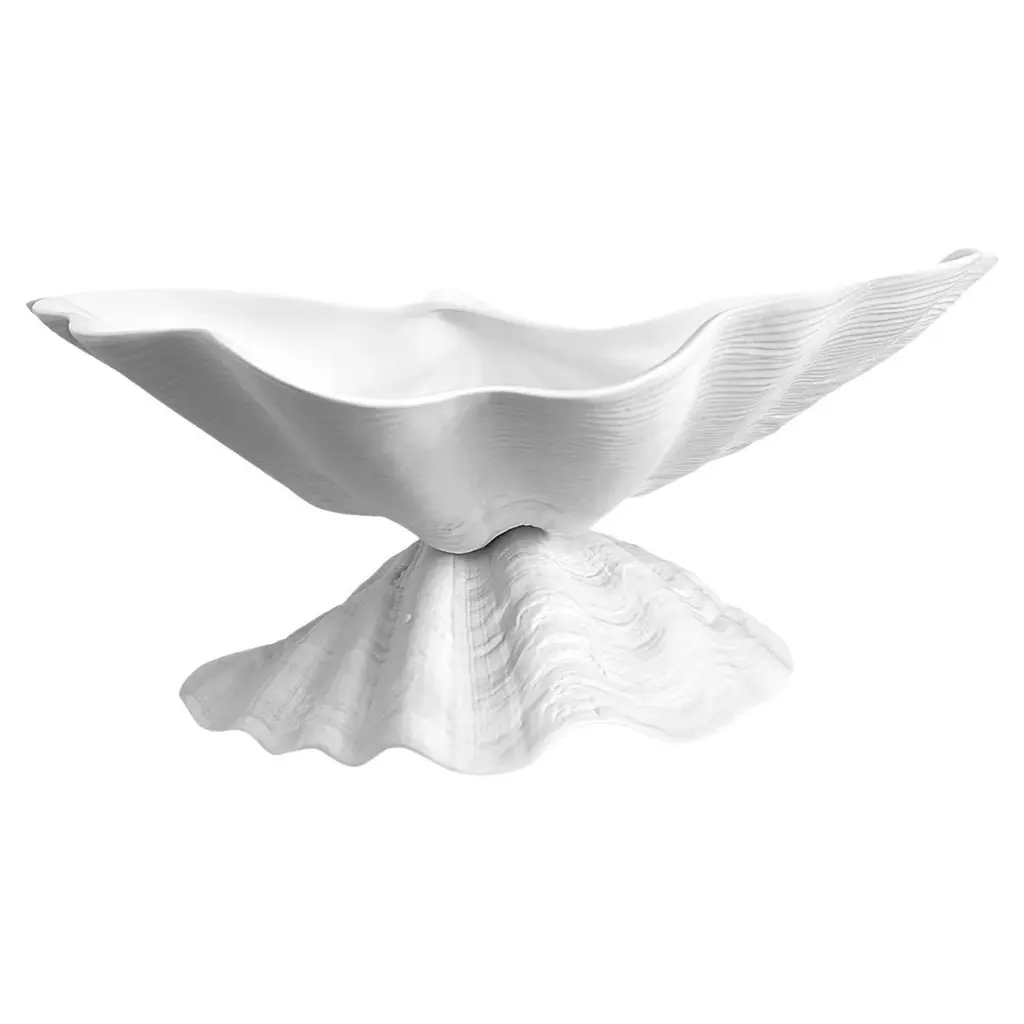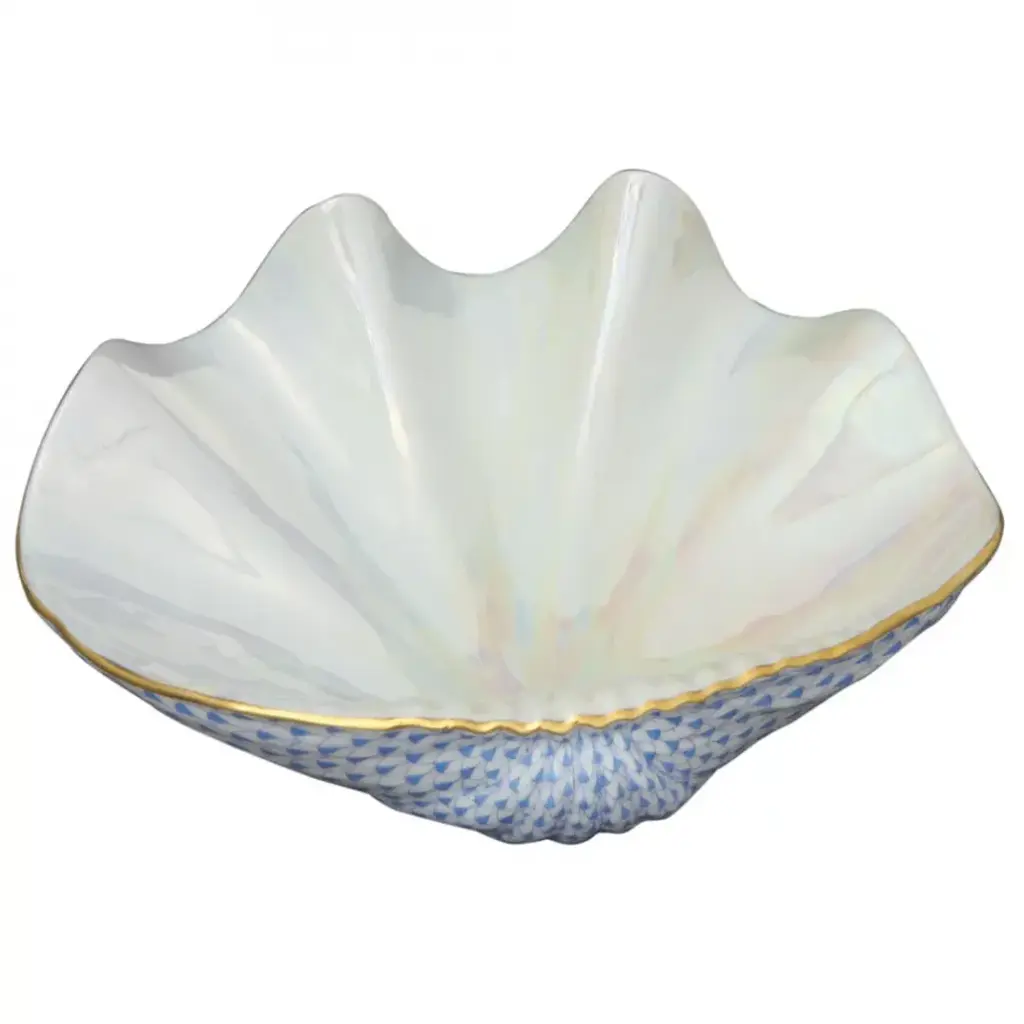
Giant Clam Blue 8 In L X 10.25 In W
$2,235
Gracious Style
If not for a shell, the beauty of porcelain would be known by a completely different name. In fact, it was Marco Polo who forever linked the two together. In his book Il Milione, also known as The Travels of Marco Polo, the famous Venetian trader compared the fascinating lustrous sheen of the Chinese ceramic he discovered in the Far East to that of the mother-of-pearl surface of a cowrie shell. At the time, the cowrie shell was well-known since it was used as currency in many parts of Asia, Africa and India and in the old Italian language it went by the term “porcellana”. Marco Polo’s book was a huge best seller by 14th century standards and was widely distributed in Europe and, as result, the word porcellana became synonymous with this intriguing new discovery from China. How fitting, therefore, that seven centuries later, the Herend manufactory is paying homage to the link between shells and porcelain by immortalizing the world’s largest bivalve mollusk. A native of the south pacific and Indian Ocean, the giant clam can grow to be 4 feet long and over 500lbs. Their size is attributed to a steady diet of the sugars and proteins produced by the millions of algae living in the clam’s tissue. While Herend’s interpretation is not quite that healthy, it does highlight the pearlized surface that first drove Marco Polo’s comparison. Below the shiny core is a base of blue fishnet with 24K gold highlights. Endearing animals meek and bold, large and small, demure and majestic eagerly await the chance to melt your heart and warm your home. Each is brought to life by the skilled hands of artisans crafting and painting these charming porcelain creatures. The famous fishnet décor adorning many of the animals took form in 1858 when a Herend painter became inspired by a fishscale design he saw on a Chinese porcelain plate and painted a similar pattern onto a rooster figurine to imitate feathers. The rest is history, with the fishnet design now a Herend signature prized worldwide. Now the biggest porcelain manufactory in Europe, Herend was founded in 1826 to produce earthenware in the small Hungarian village for which it was named. At the time, Hungary was flooded with low-cost pottery, but in 1839, Mor Fischer became the Manufactory’s new owner and he decided to focus on producing dinnerware replacement pieces for Europe’s royal families to complement their valuable porcelain patterns from Germany and the Far East. As his client base grew, Fischer commissioned his artists to begin designing dinnerware patterns of their own. Queen Victoria’s 1851 purchase of a large set for Windsor Castle was a milestone, setting the stage for aristocrats throughout Europe to clamor for Herend in their estates. In the 1850s, Herend added meticulously-crafted figurines to its creations. Herend’s trademark fishnet pattern, which is widely recognized and prized as Herend’s signature design, started in 1858 when an artist who was intrigued with a Chinese plate’s fish scale design painted it onto a rooster figurine to imitate feathers.
Similar Items