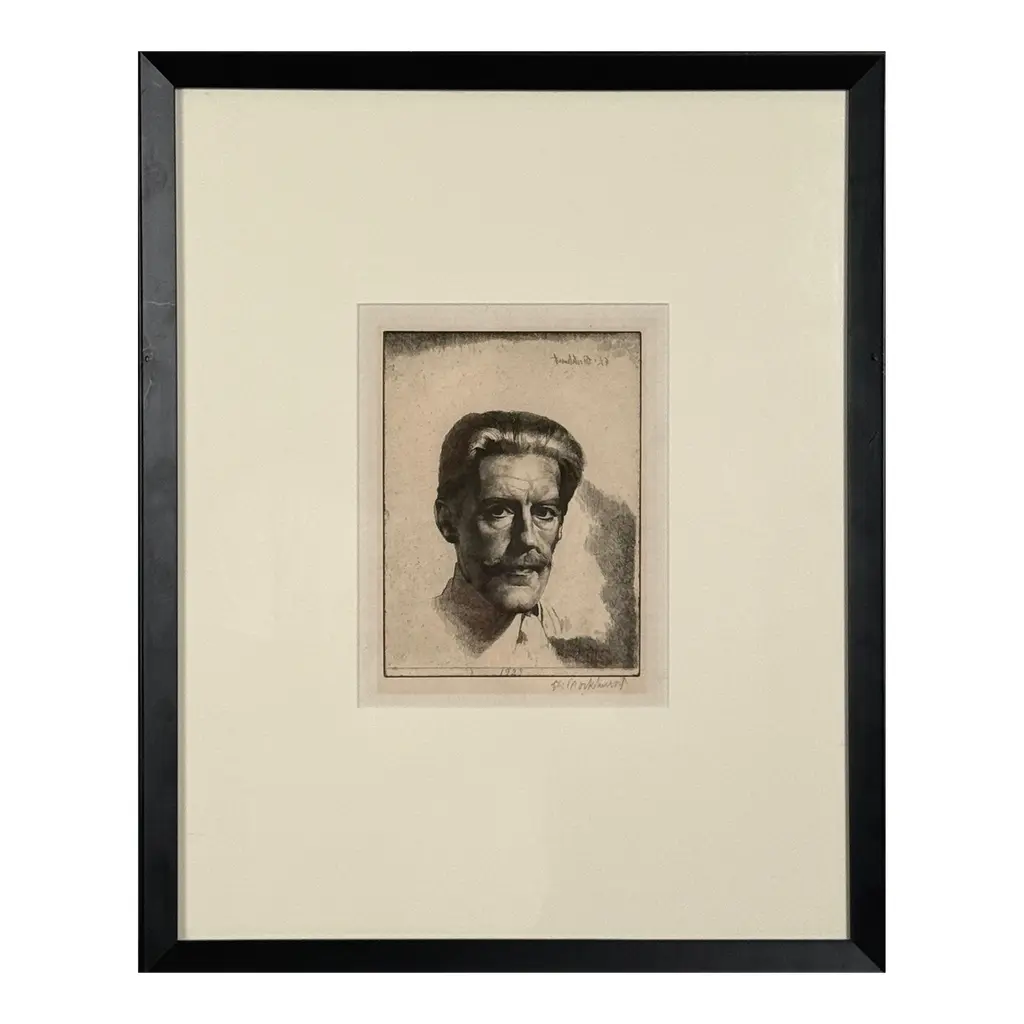
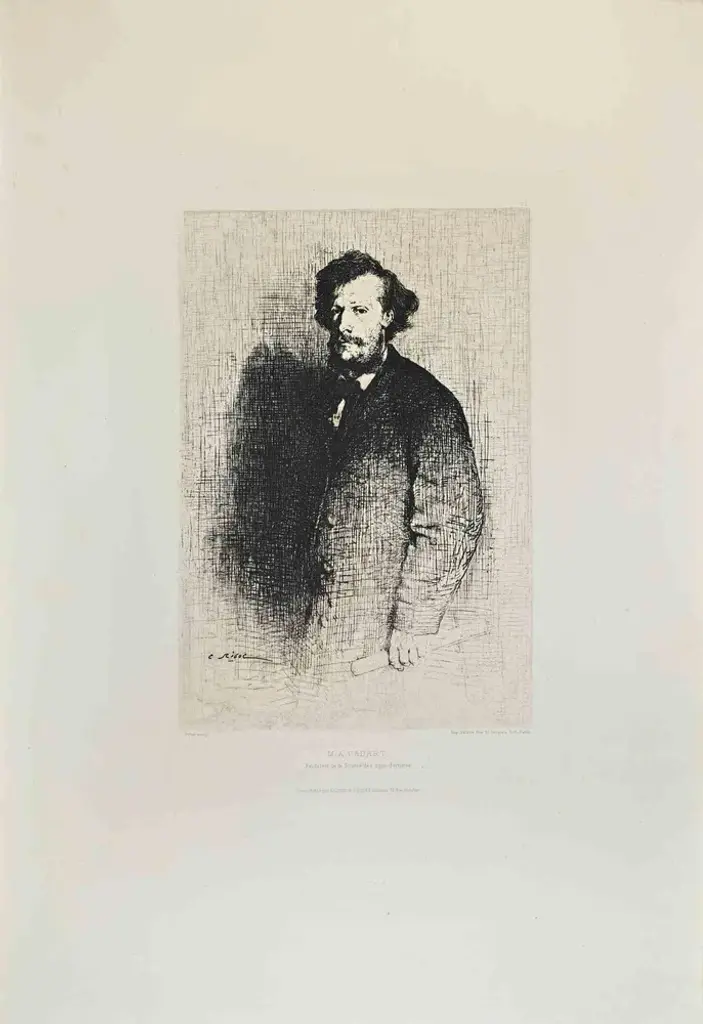
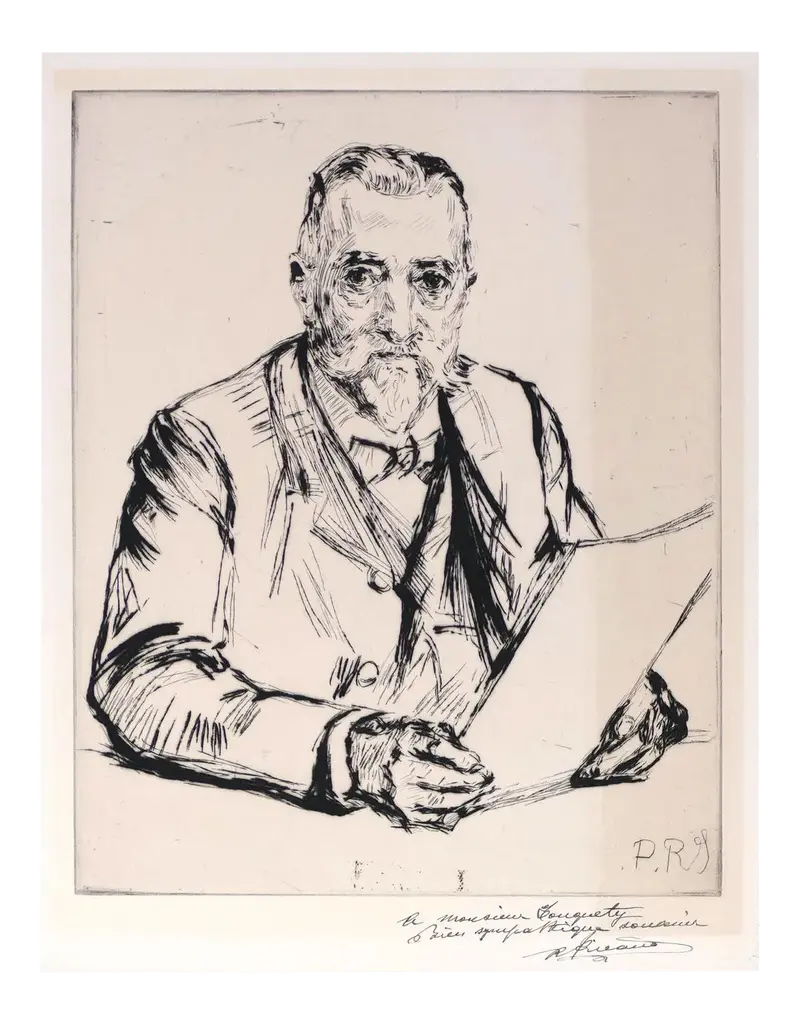
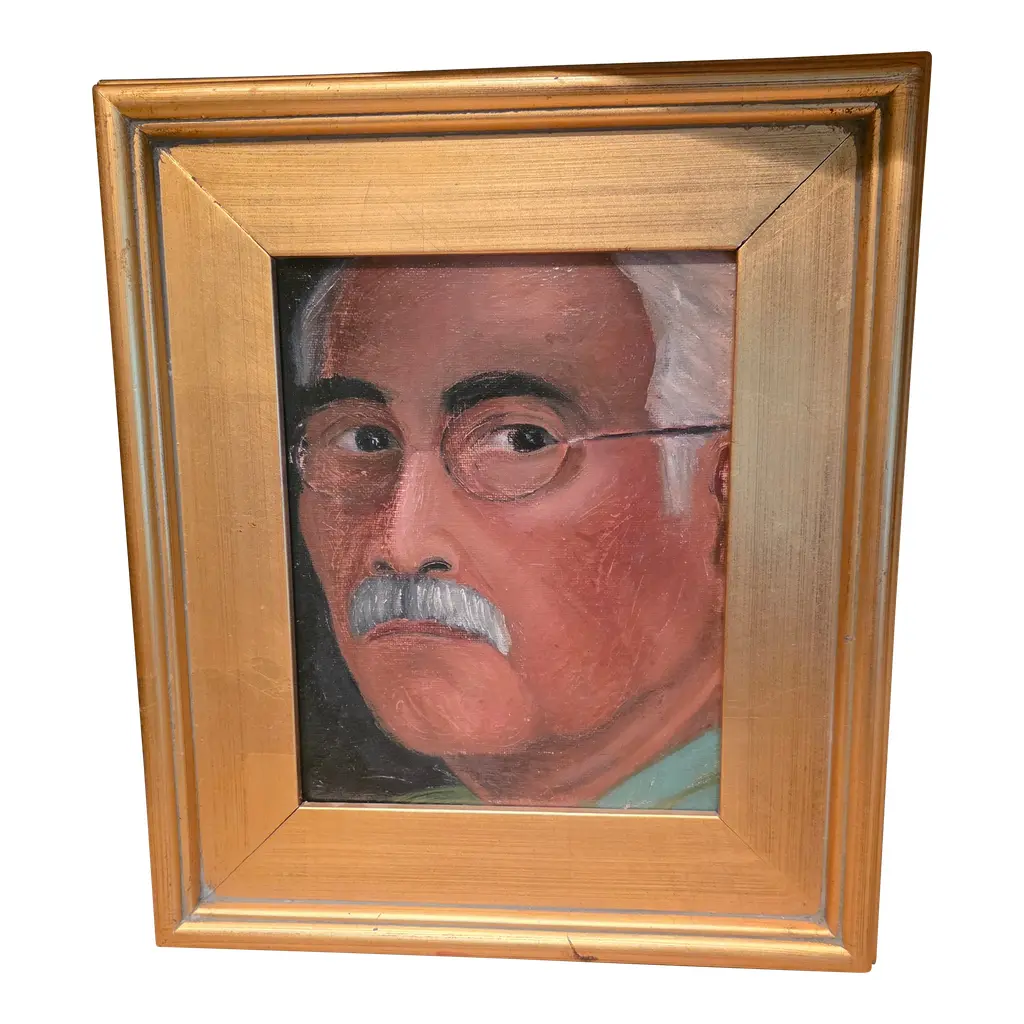
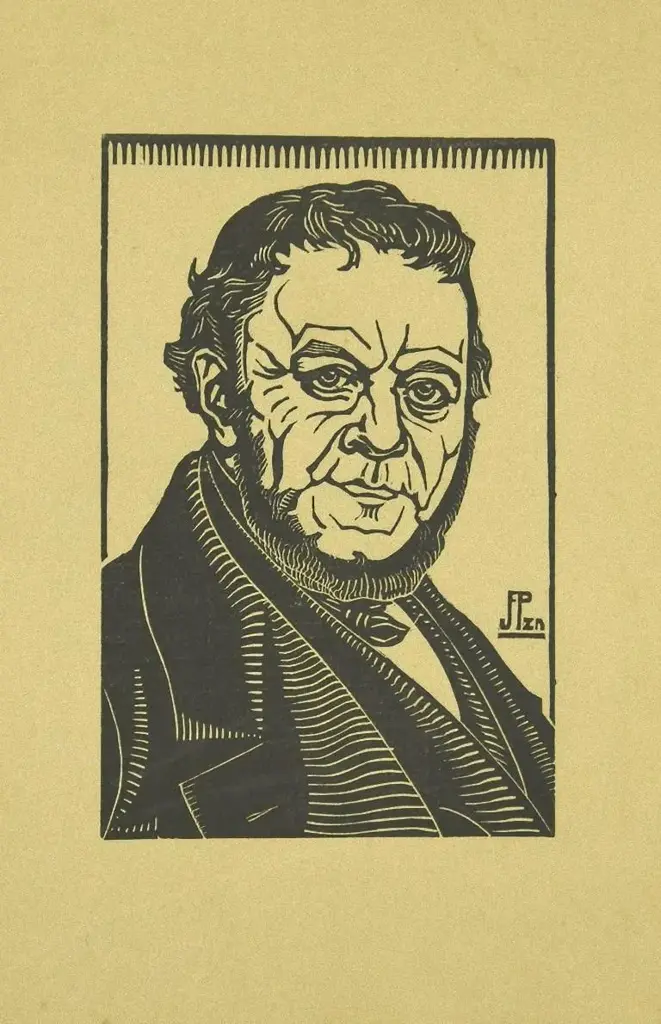
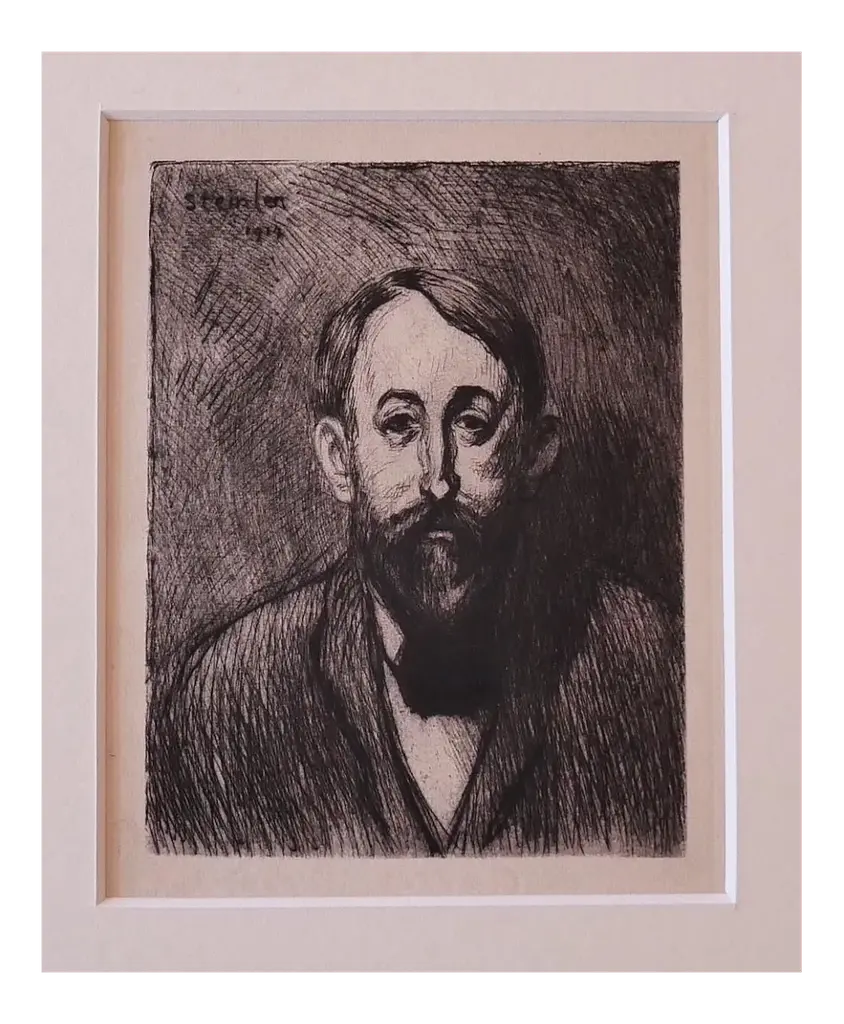
Genre: Judaica Subject: People Medium: Print Surface: Paper Dimensions w/Frame: 15" x 11" Hermann Struck (6 March 1876 – 11 January 1944) was a German Jewish artist known for his etchings. Hermann Struck (Chaim Aaron ben David) was born in Berlin. He studied at the Berlin Academy of Fine Arts. In 1904, he joined the modern art movement known as the Berlin Secession. In 1900, Struck met Jozef Israëls, a Dutch artist, who became his mentor. Both were recognized as leading artists of their time. In 1908, Struck published "Die Kunst des Radierens" ("The Art of Etching"), which became a seminal work on the subject (it included an etching by Edvard Munch). It was a textbook that offered both theory and practical instruction. Struck's students included Marc Chagall, Lovis Corinth, Jacob Steinhardt, Lesser Ury and Max Liebermann. In 1899, upon completing his studies at the Berlin Academy, he was banned from teaching there because he was Jewish. He signed his work with his Hebrew name, Chaim Aaron ben David, and a Star of David. Struck did commissioned portraits of Ibsen, Nietzsche, Freud, Albert Einstein, Herzl, Oscar Wilde and other leading figures of the time. Struck was a fervent Zionist and Jewish activist. He visited the Land of Israel in 1903, displayed his art at the Fifth Zionist Congress, and was a founder of the Mizrachi Religious Zionist movement. At the same time, he was a German patriot and volunteered for military service in World War I serving as a translator, liaison officer and military artist. He was awarded the Iron Cross 1st Class and promoted to an officer for bravery, in 1917 he became the referent for Jewish affairs at the German Eastern Front High Command Struck immigrated to Palestine in 1922, taught at Bezalel Academy and helped establish the Tel Aviv Museum of Art. He visited Berlin every summer until the Nazis rose to power. Abraham (Adolf) Berliner (May 2, 1833 – April 21, 1915) (Hebrew: אברהם ברלינר) was a German theologian and historian, born in Obersitzko, in the Grand Duchy of Posen, Prussia. He received his first education under his father, who was teacher in Obersitzko. He continued his education under various rabbis, preparing himself at the same time for the University of Leipzig, where he received the degree of doctor of philosophy. After serving for some time as preacher and teacher in Arnswalde, Berliner was called (1865) to Berlin as superintendent of the religious school maintained by the society for Talmudic studies (Ḥebrat Shas), and in 1873, when Israel Hildesheimer opened the rabbinical seminary in Berlin, Berliner was elected professor of Jewish history and literature. In this position, as well as in that of author, he has displayed an untiring activity. His edition of Rashi's commentary to the Pentateuch (1866) first made him known as a scholar; he added to his reputation by various historical works, the result of his studies in the archives and libraries of Italy, which country he frequently visited, subventioned by the German government.
Similar products