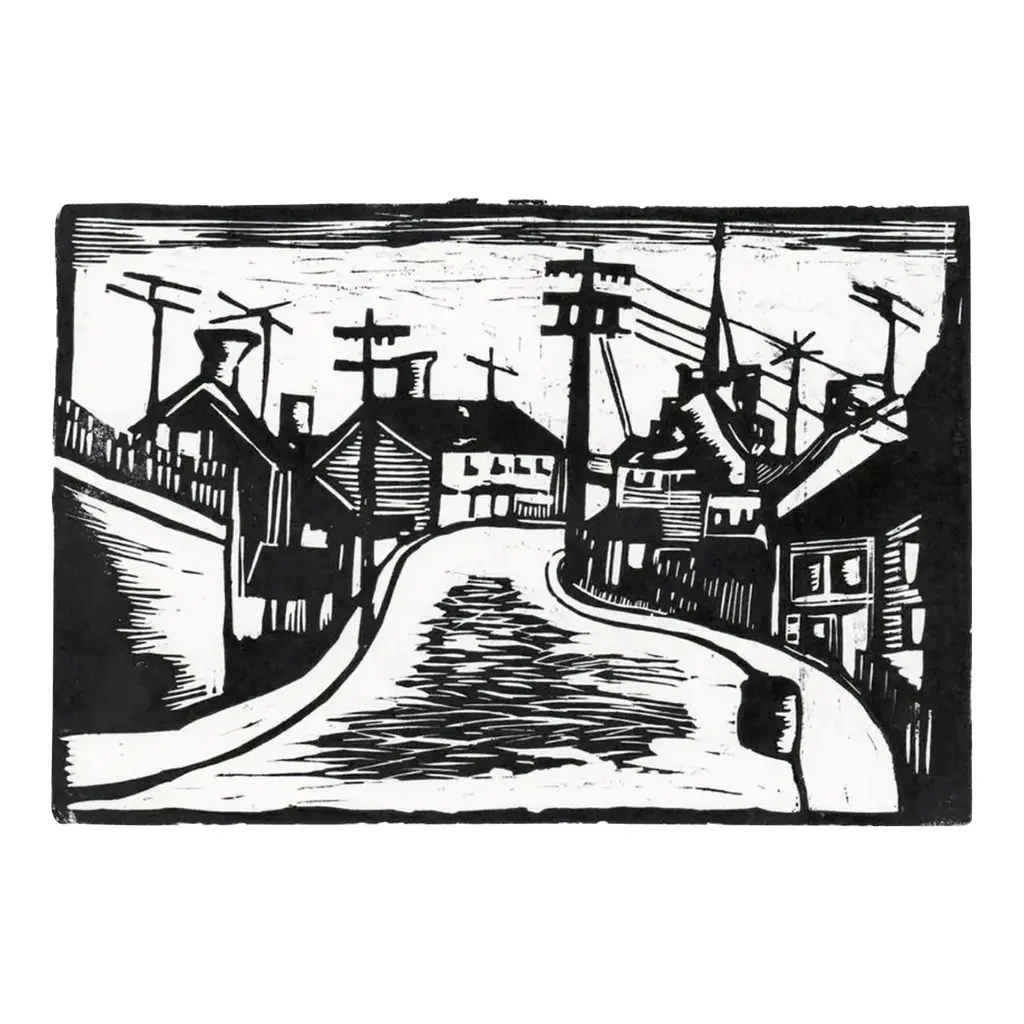
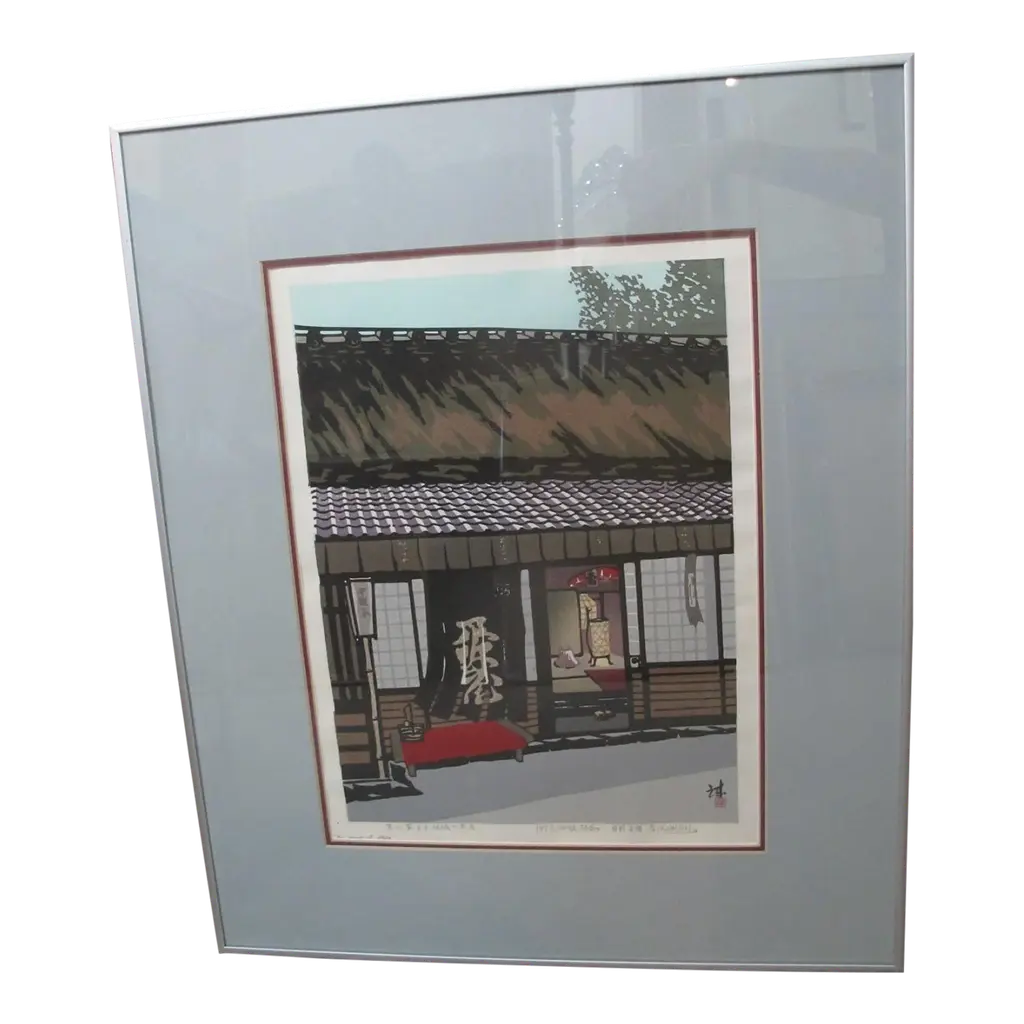
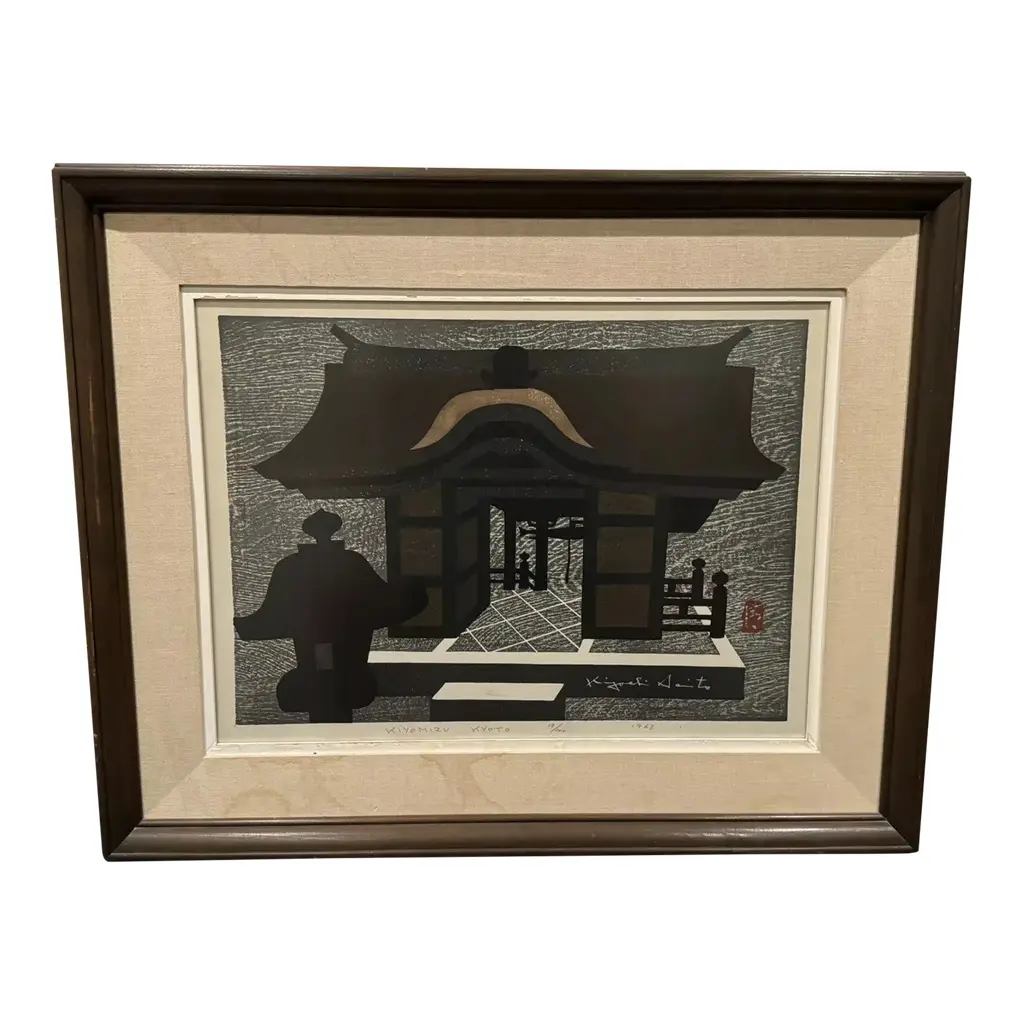
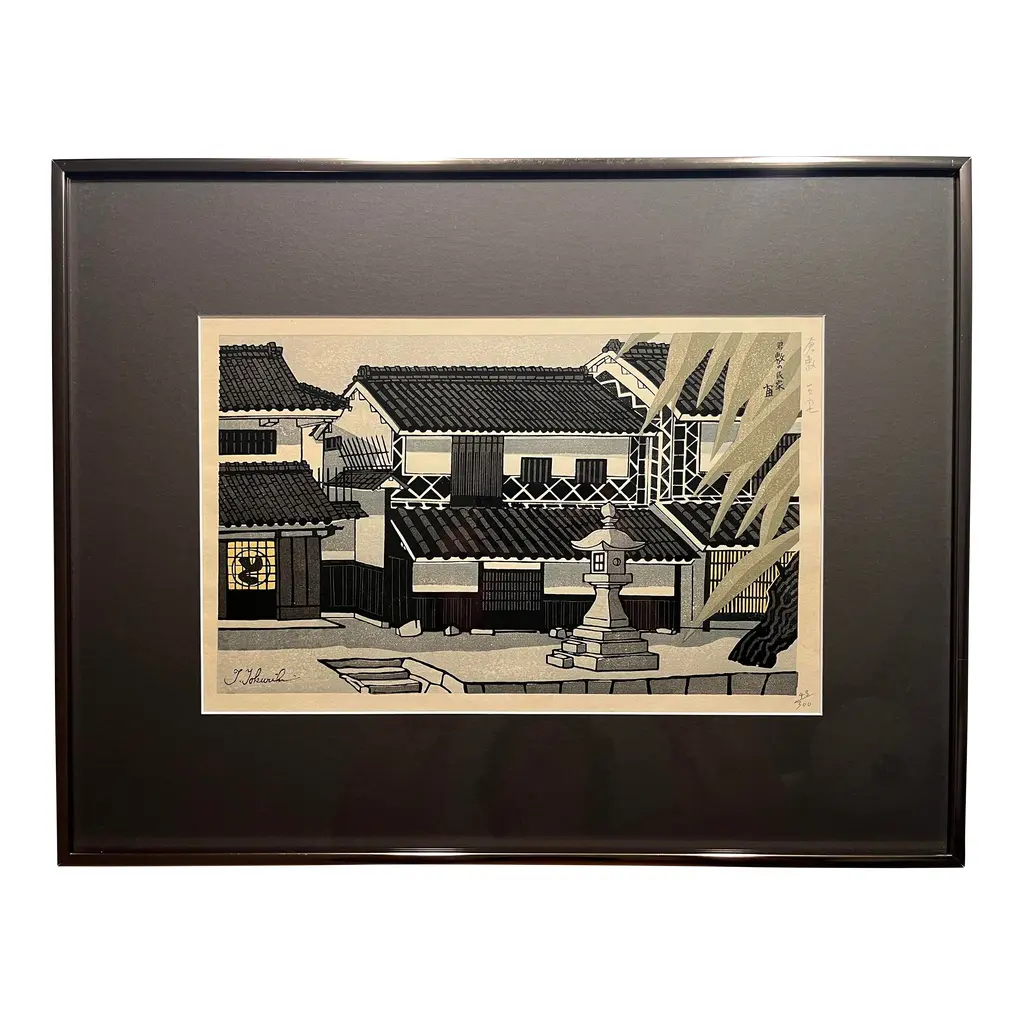
Traditional japanese wood block print "the town of shibori ii " by hideo senba 1992. the woodblock print titled “shibori no machi ii” by hideo senba, created in 1992, depicts a traditional japanese street scene. The image is rendered in black and white, emphasizing strong contrasts and bold lines. The architecture features classic japanese elements, such as tiled roofs and wooden facades with intricate latticework. The long shadows cast across the street suggest the time of day is either early morning or late afternoon, adding depth and perspective to the scene. The composition captures the serene and orderly nature of traditional japanese towns. The circular emblem with a cross-like symbol likely represents a specific sign or family crest, adding a cultural and historical layer to the artwork. Overall, the print reflects a moment of calmness and simplicity, characteristic of traditional japanese aesthetics. measurements : h.55 x w.70 x d.3 cm. process of japanese woodblock printing the traditional process of japanese woodblock printing involves several meticulous steps: 1. Design (hanga) the process begins with the artist creating a detailed design, usually on thin paper. This design serves as the blueprint for the entire print. 2. Transfer to wood (kento) the design is then pasted face down onto a block of cherry wood. The back of the paper is rubbed to transfer the ink outline to the wood surface. 3. Carving (hori) a skilled carver then chisels away the wood around the design, leaving raised lines that will hold the ink. Separate blocks are carved for each color in the final print. This stage requires great precision and craftsmanship. 4. Printing (suri) printing is done by pressing paper onto the inked woodblock. The printer applies ink to the block using brushes and then places a dampened sheet of handmade paper onto it. They use a tool called a baren to rub the back of the paper, ensuring the ink transfers evenly. each color requires a separate block and careful alignment, known as registration. This multi-step process is repeated for each color, often requiring the collaboration of multiple artisans for one print. 5. Drying and finishing once all the colors are applied, the print is carefully dried. It is then inspected for any imperfections. Finished prints might receive additional touches, like embossing or burnishing, to enhance their beauty. conclusion japanese woodblock printing is a highly intricate and collaborative art form that has significantly influenced both japanese and global art history. Its techniques have been passed down through generations, preserving the meticulous craftsmanship and aesthetic values of this traditional art form. This piece has an attribution mark, i am sure that it is completely authentic and take full responsibility for any authenticity issues arising from misattribution
Similar products