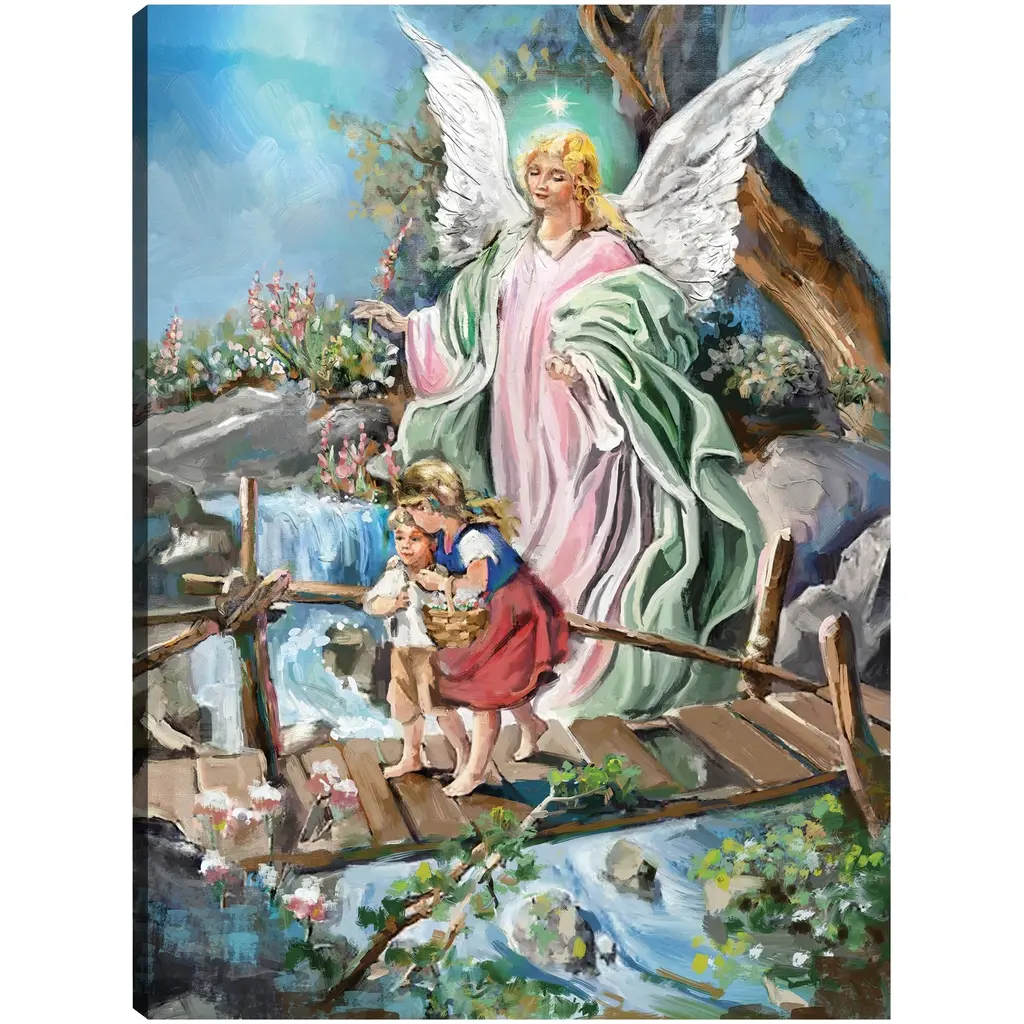
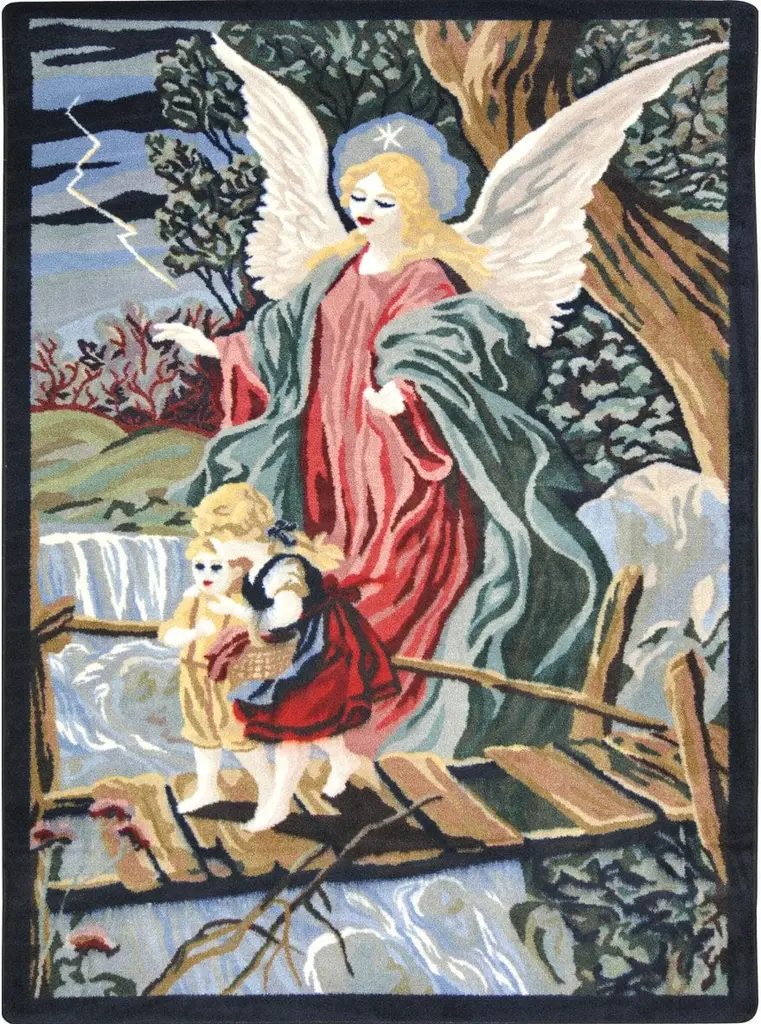
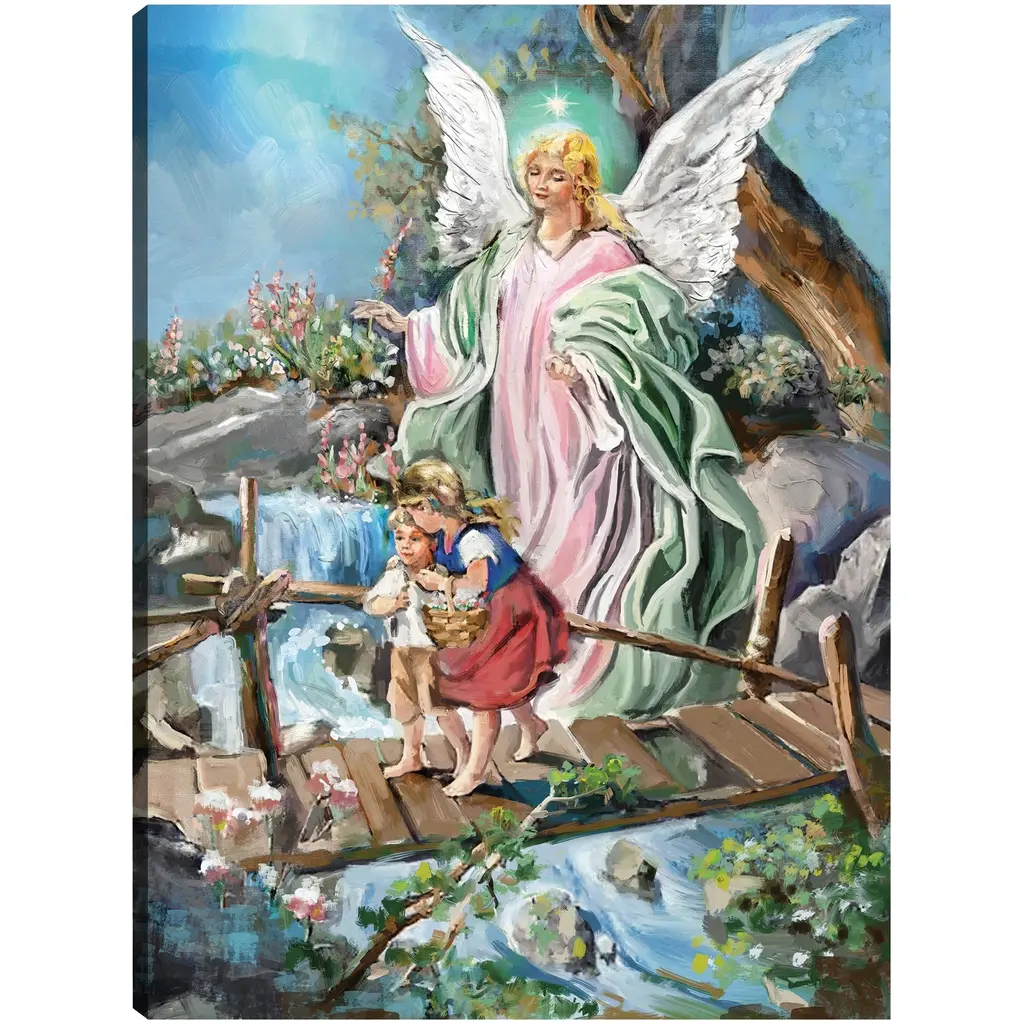
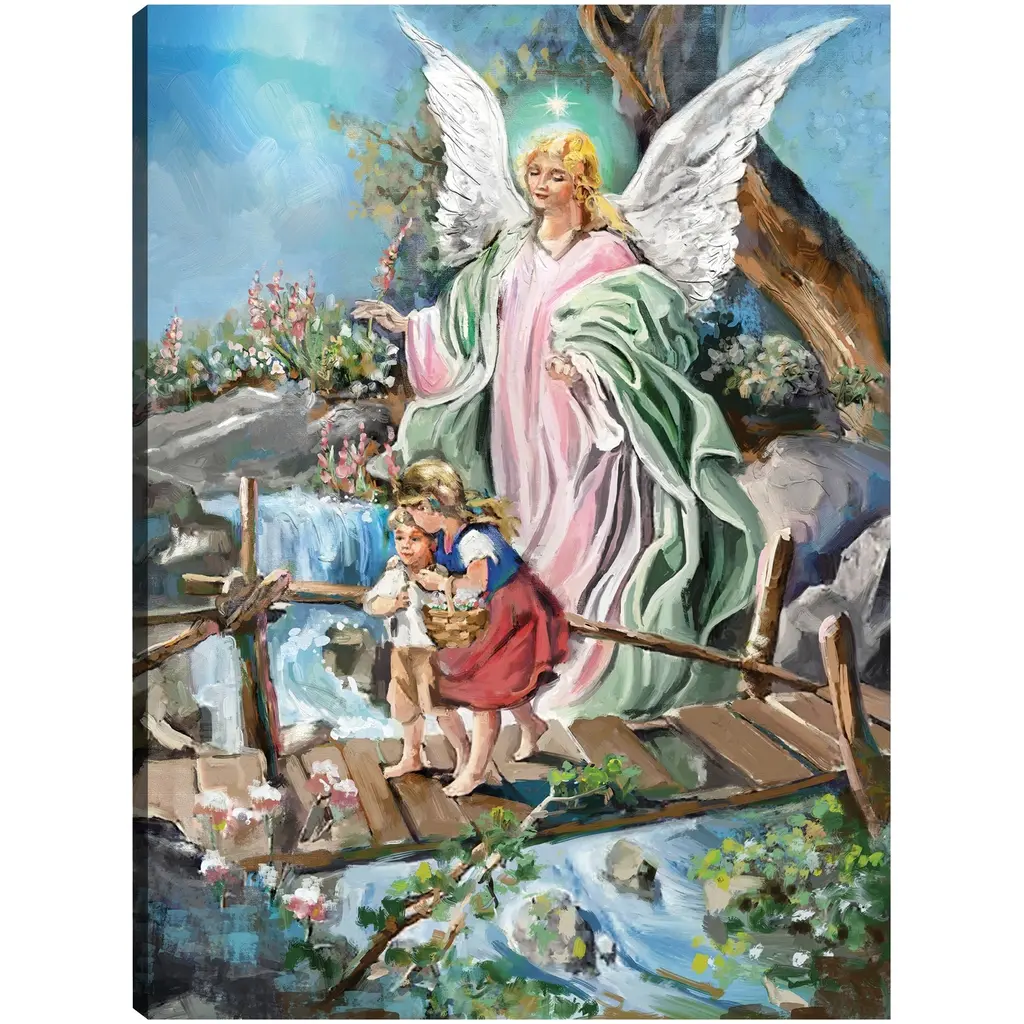
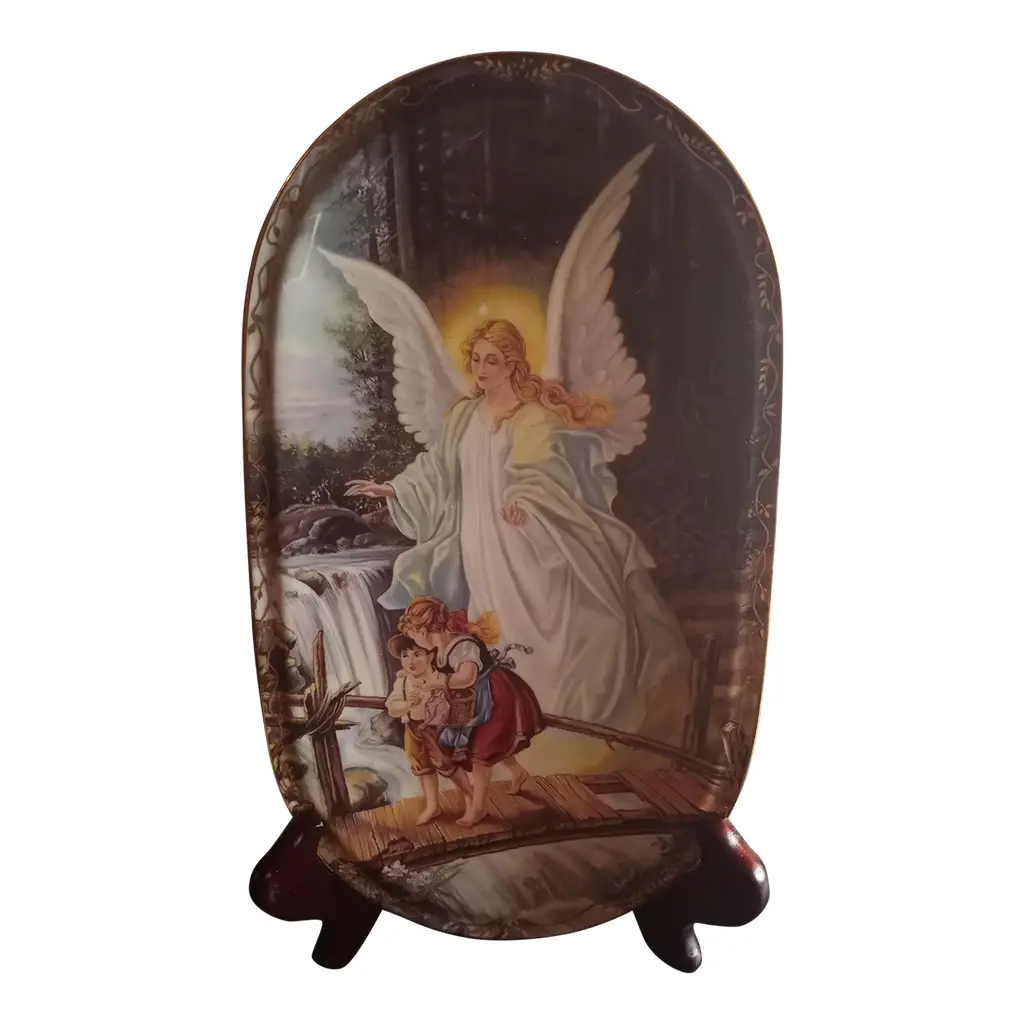
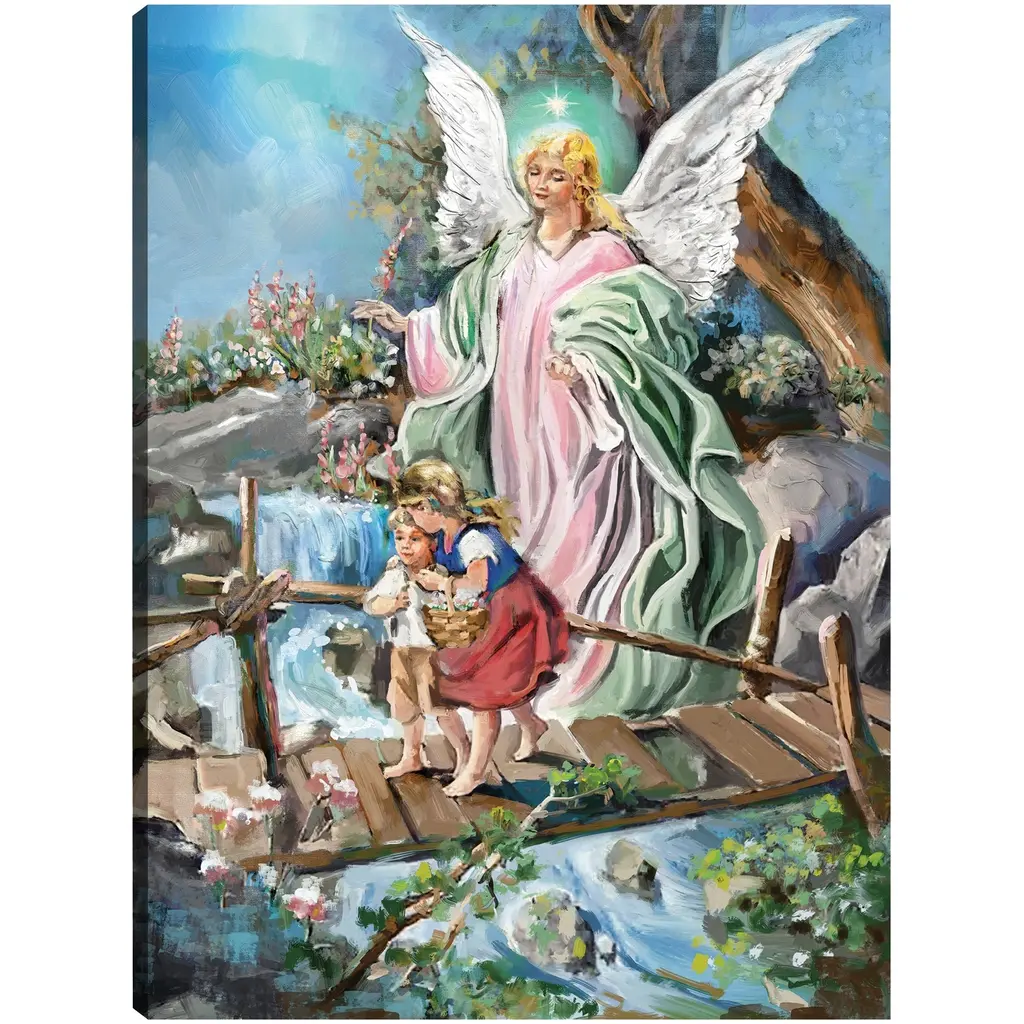
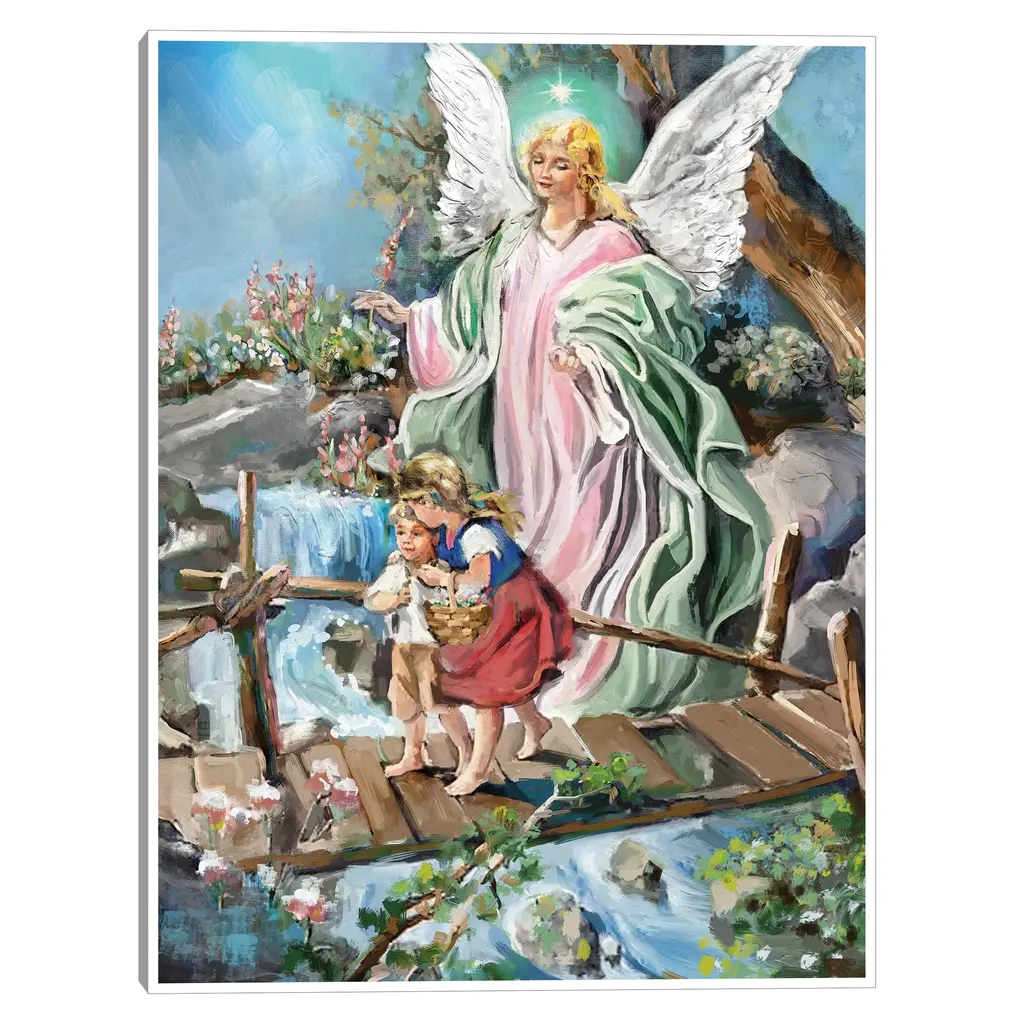
This beautifully composed antique german chromolithograph depicts the holy guardian angel gently guiding and protecting a small child as they cross a narrow wooden bridge above flowing water. The scene is rich in symbolic meaning, representing divine protection, childhood innocence, and spiritual guidance — themes deeply rooted in catholic devotional tradition. The guardian angel is shown in flowing white robes with a pale blue sash, her wide luminous wings fully extended as she leads the child safely forward. A golden halo and radiant star above her head emphasize her divine nature, while her calm and protective posture reinforces the message of constant heavenly care. The child, dressed in soft rose-colored garments and holding a simple walking staff, steps forward with trust and quiet confidence. The surrounding landscape enhances the spiritual narrative: a peaceful waterfall below, a distant church on the cliffs above, and lush greenery framing the path. These details reflect the traditional catholic interpretation of life’s journey guided by faith. The soft atmospheric lighting, subtle color transitions, and fine detail are characteristic of high-quality german chromolithography at the turn of the 20th century. This image was widely cherished in catholic homes, schools, and religious institutions, where it served both as devotional inspiration and as a comforting symbol of protection for children. Today, original examples in strong condition are increasingly scarce and highly sought after by collectors of antique religious art. An ideal piece for catholic art collectors, children’s rooms, chapels, prayer spaces, and anyone seeking a meaningful symbol of spiritual guardianship. condition report good antique condition. Light, even age toning throughout. Minor edge wear and gentle softening at the corners. No tears, no significant losses, and no restoration. Colors remain vibrant, with excellent preservation of gold tones and soft pastel shading. technique chromolithography maker german devotional publisher, germany, circa 1900
Similar products