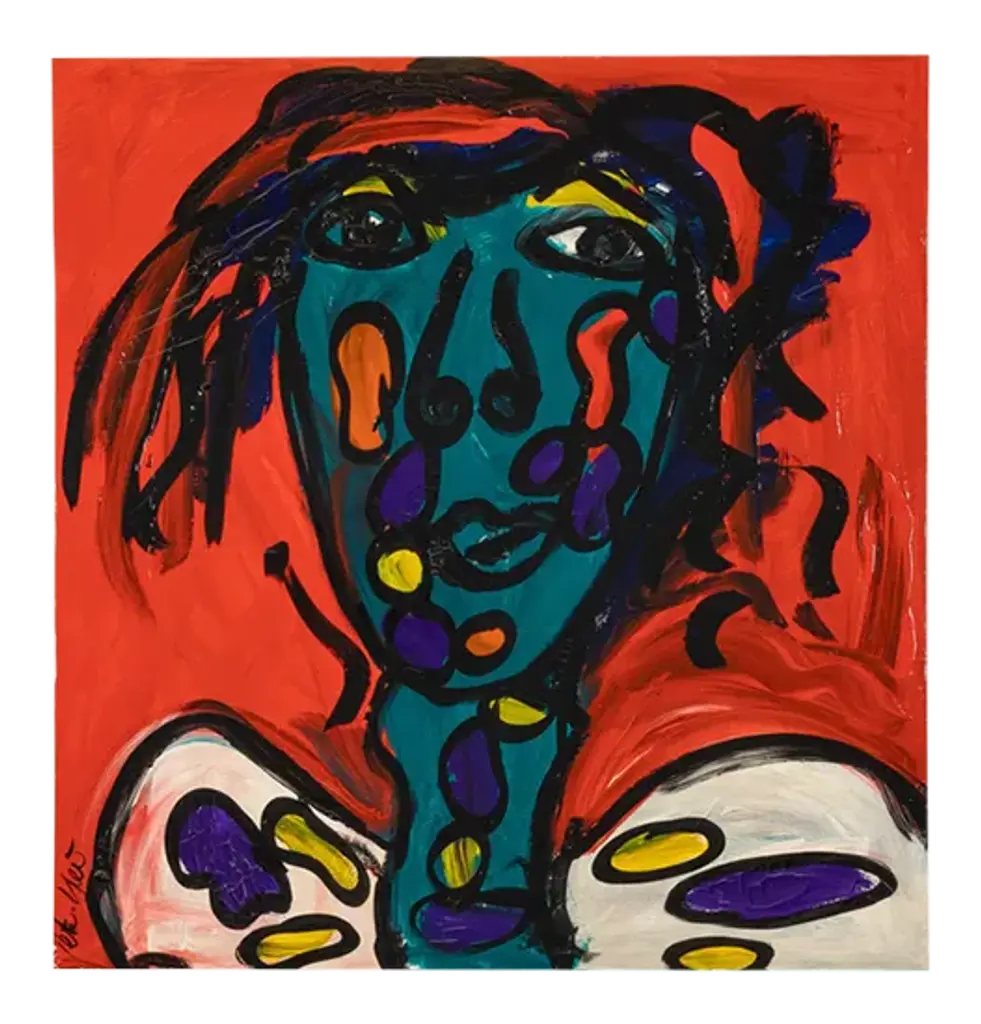
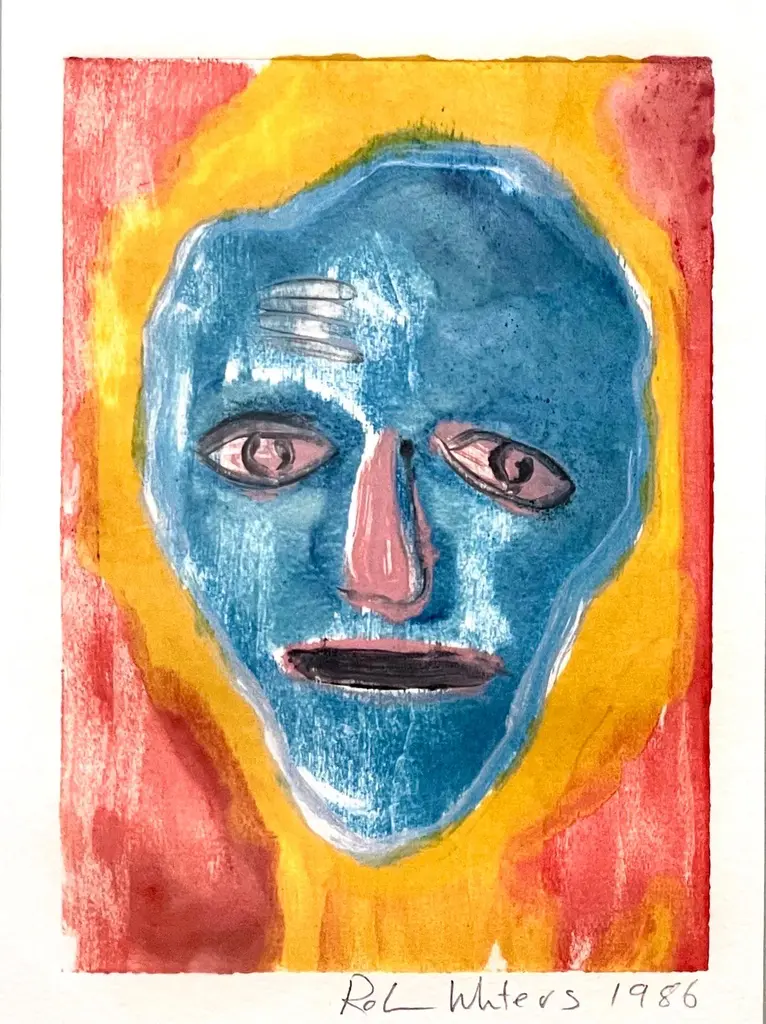
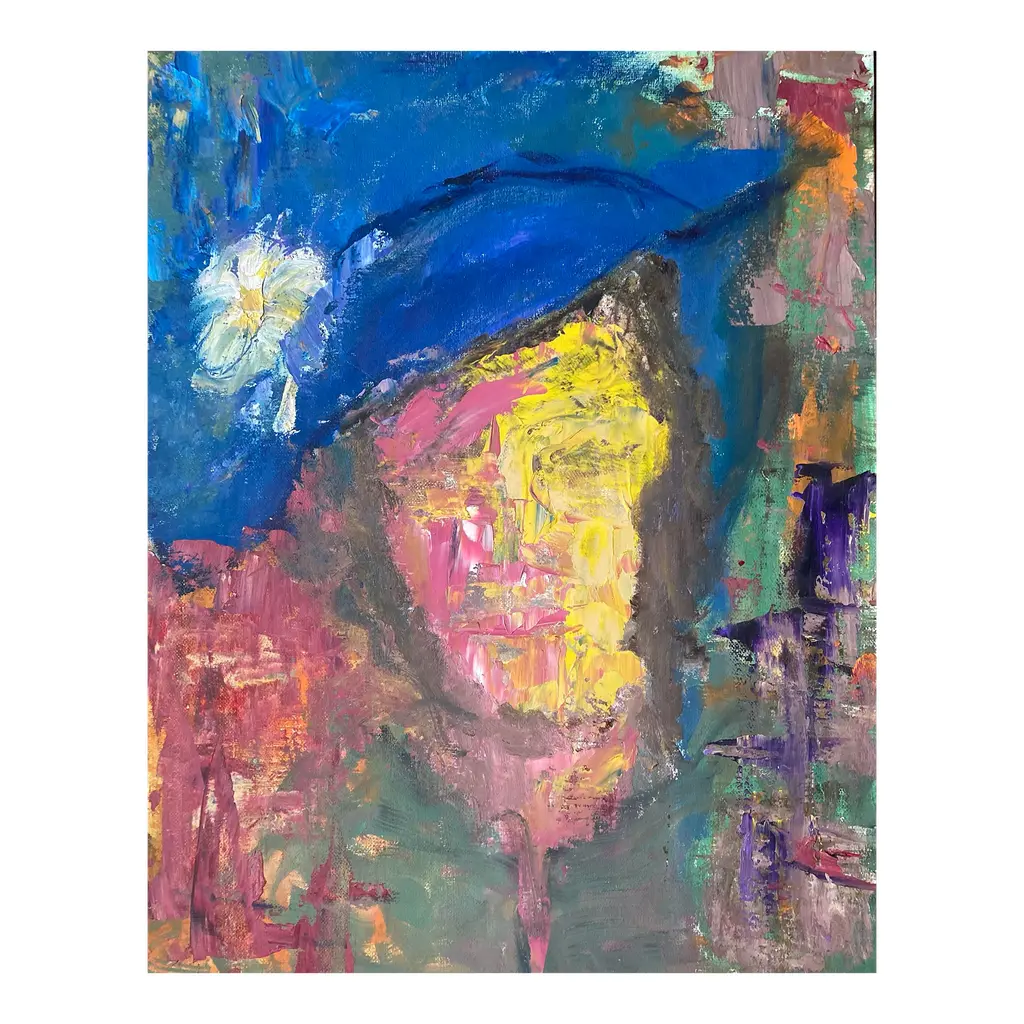
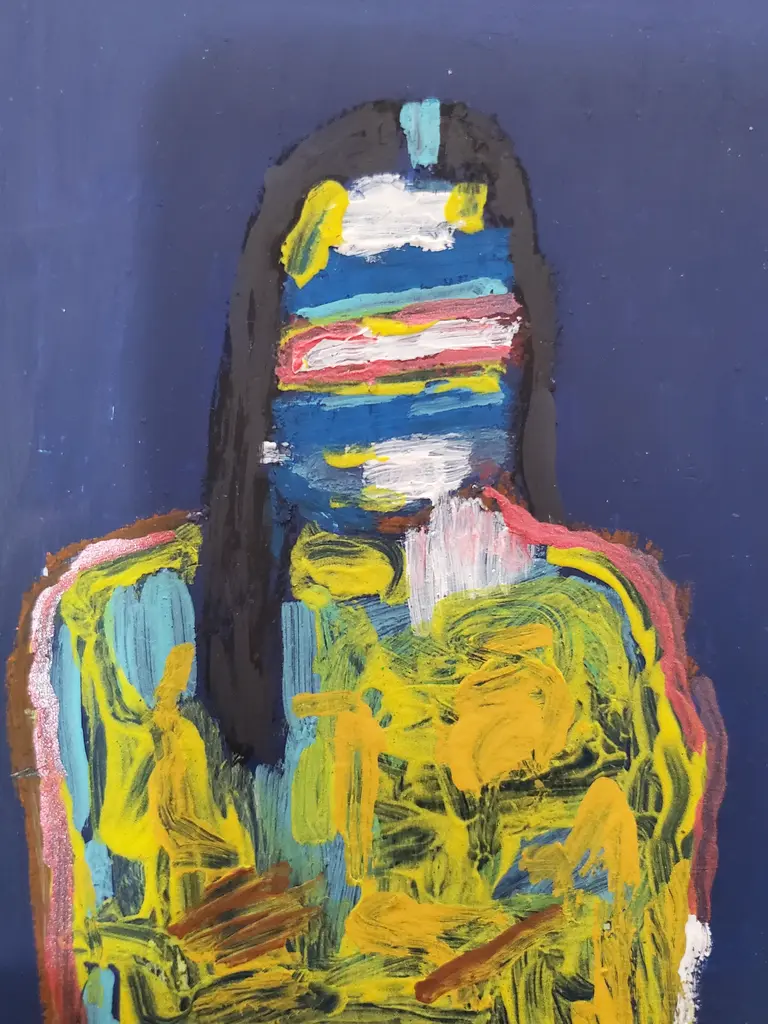
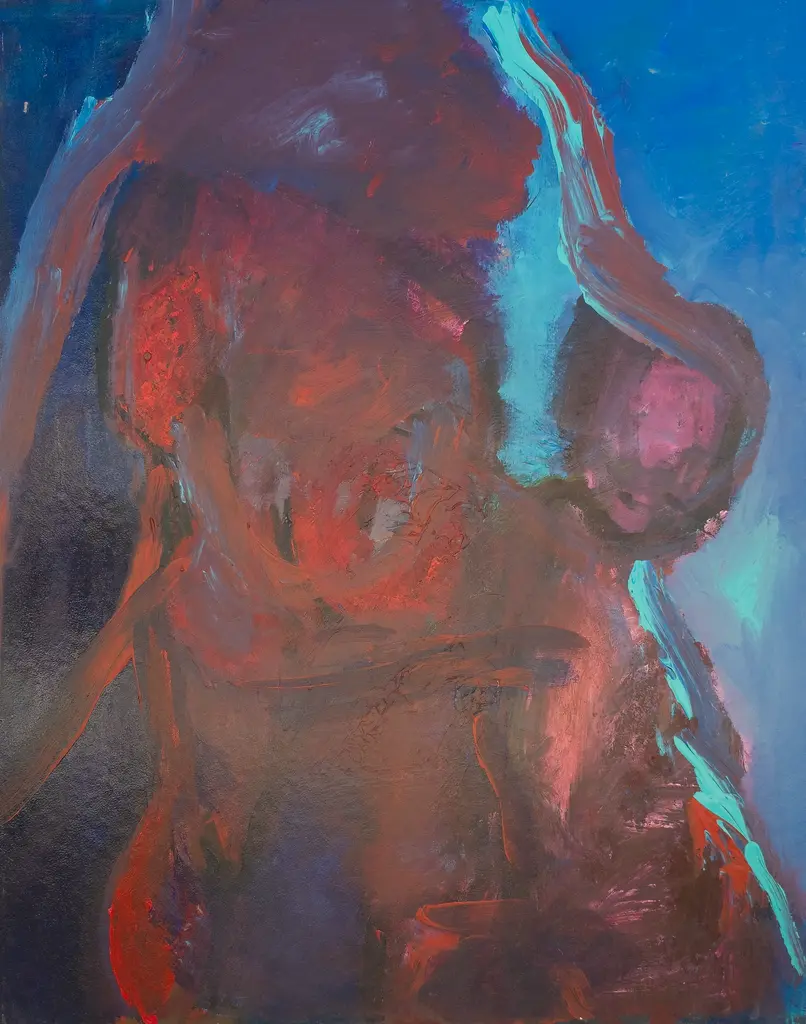
Hot and Cold Blues Virginia Cohn Parkum, c. Unknown In Hot and Cold Blues, Virginia Cohn Parkum presents a self-portrait that feels less like a likeness than an exposure of inner weather. The figure emerges from a dark ground, its torso rendered in a striking turquoise that glows against a field of burnt orange, charcoal, and deep blue. The face is divided into contrasting passages of red and pale gray, creating a mask-like duality that suggests shifting emotional states rather than stable identity. Eyes are closed or lowered, withholding direct engagement and reinforcing a sense of inward retreat. Color functions as the painting’s primary expressive language. The heated reds and ochres surrounding the figure pulse with agitation and intensity, while the cool blue torso introduces a counterforce of detachment, numbness, or calm. These opposing temperatures meet within the body itself, turning the figure into a site of conflict and coexistence. The turquoise surface is not smooth or idealized; it bears the marks of brush movement, as if the artist were mapping sensation rather than anatomy. Parkum’s handling of paint remains urgent and uncorrected. Scraped passages, layered strokes, and incised lines leave visible traces of revision and pressure. The background’s scratched, flame-like marks echo nervous energy, framing the figure in an atmosphere that feels charged and unstable. This tactile surface reinforces the psychological stakes of the work: the body is not simply depicted but worked through. As a self-portrait, the painting resists vanity and instead embraces fragmentation. The split coloration of the face and the disjunction between head and torso suggest a self divided between opposing emotional climates — heat and coolness, exposure and withdrawal, vitality and fatigue. The result is neither confession nor performance, but an honest rendering of interior contradiction. Within Parkum’s broader exploration of the human figure, Hot and Cold Blues stands as a candid confrontation with the self. The painting acknowledges that identity is not singular or resolved; it is layered, unstable, and subject to continual shifts in temperature and tone. -Jonathan Flike
Similar products